

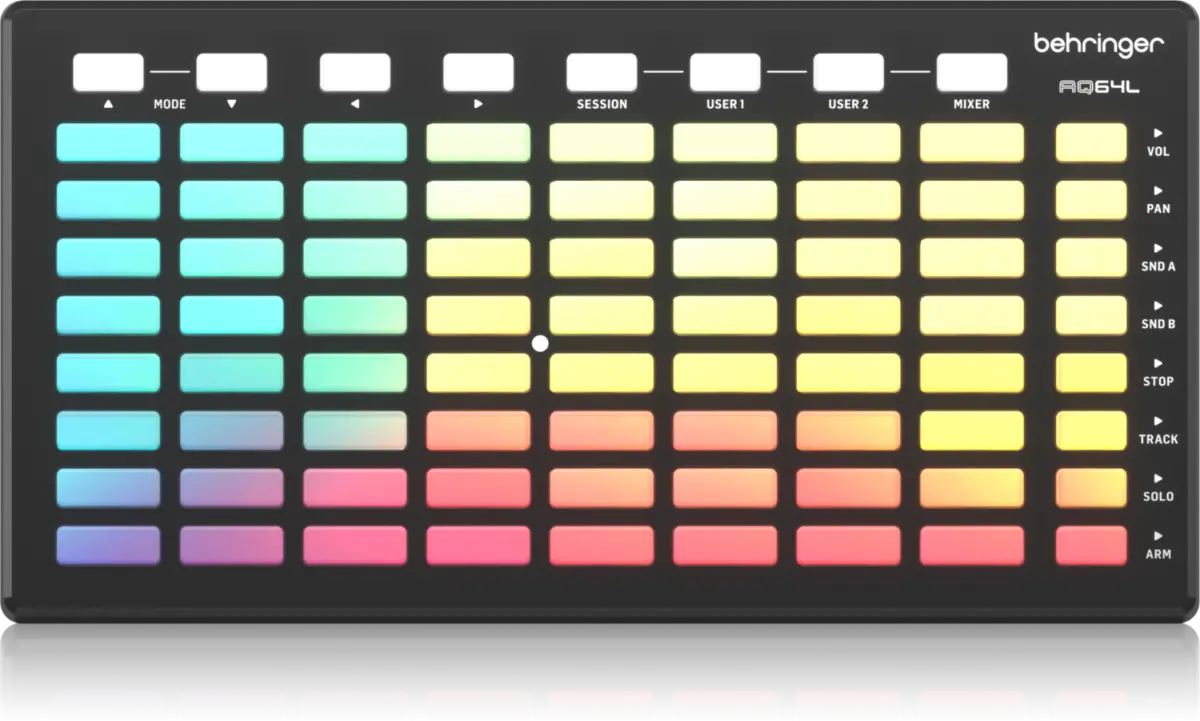
The landscape of digital music production and live performance is witnessing a significant shift toward open-source hardware, a movement further catalyzed by Behringer’s recent announcement of the AQ64L. This new 8×8 RGB grid controller is designed not only as a functional tool for launching audio clips and triggering MIDI events within a Digital Audio Workstation (DAW) but also as a versatile developer platform. By publishing a comprehensive developer kit and encouraging custom firmware installation, Behringer is positioning the AQ64L as a bridge between traditional consumer hardware and the "maker" community of music technology enthusiasts.
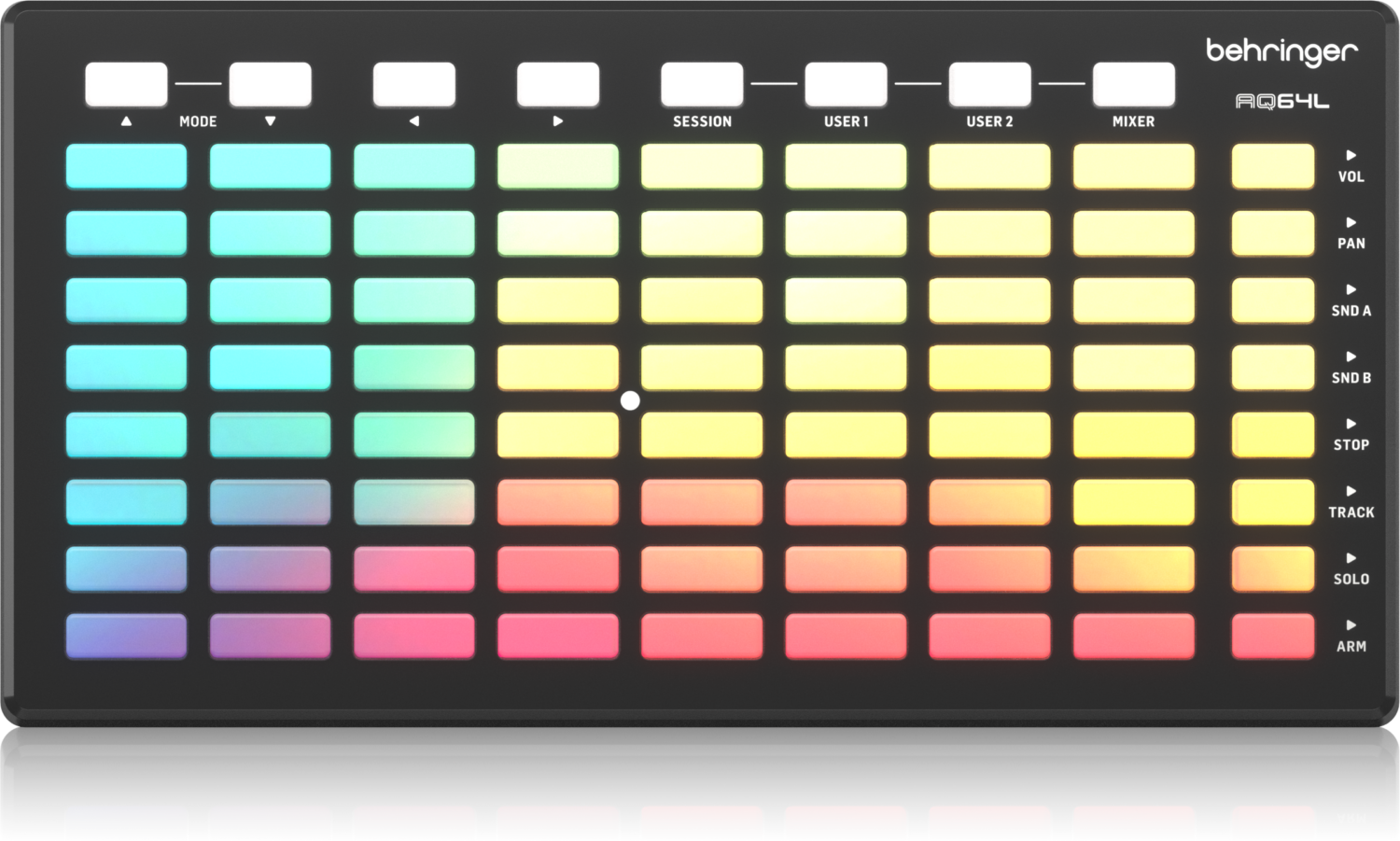
The AQ64L features a primary interface consisting of 64 illuminated, velocity-responsive pads arranged in a standard 8×8 grid. This is supplemented by 16 additional RGB function keys located on the periphery of the main grid, which are dedicated to navigation, mode selection, and mixer control. While grid controllers have become a staple in modern electronic music—popularized by devices such as the Novation Launchpad and the Akai APC series—the AQ64L distinguishes itself through its explicit commitment to open hardware documentation and user-programmability.
Hardware Specifications and User Interface Design
The physical architecture of the AQ64L is optimized for the clip-based workflows that dominate modern electronic music performance. The 64-pad grid provides a tactile surface for triggering loops, samples, and MIDI patterns. The inclusion of RGB lighting across all 80 buttons allows for color-coded feedback, which is essential for managing complex sessions where different colors might represent different types of sounds, such as drums, basslines, or melodic leads.
Beyond the central grid, the 16 function keys serve as the command center for the device. These keys allow users to toggle between various operational modes and navigate the software environment without needing to reach for a computer mouse. This "hands-on" approach is central to the design philosophy of the AQ64L, aiming to minimize the friction between the performer’s intent and the software’s execution.
The device connects via a standard USB MIDI interface, ensuring compatibility with virtually any modern computer system. While it is built to be plug-and-play with major software suites, the internal hardware is designed to handle sophisticated MIDI data streams, making it suitable for both studio recording and high-intensity live environments where latency and reliability are paramount.
Strategic Integration with Ableton Live and FL Studio
Recognizing the market dominance of specific DAW platforms in the realm of clip-based production, Behringer has developed dedicated integration scripts for Ableton Live and FL Studio. These scripts allow the AQ64L to function as a seamless extension of the software.
In Ableton Live, the controller maps directly to the Session View, where the 8×8 grid represents a window of the available clips in the software. Users can launch individual clips, trigger entire scenes, and receive visual feedback regarding which clips are playing, recording, or queued. In FL Studio, the controller integrates with the Performance Mode, providing a similar level of control over the playlist and pattern triggers.
The AQ64L offers several specialized modes to accommodate different stages of the creative process:
- Session/Clip Mode: Primarily for live arrangement and loop triggering.
- Drum Mode: Configures the grid into a layout optimized for finger drumming, often mapping to the 16-pad drum rack standards.
- Keyboard Mode: Maps the pads to musical scales and notes, allowing the grid to be played as a melodic instrument.
- Mixer Mode: Reassigns the pads and function keys to control volume, panning, sends, and track arming/muting.
- User Modes: Two dedicated user modes allow for complete customization, enabling performers to map the controller to specific parameters within third-party plugins or external hardware.
The Open Hardware Initiative and Developer Ecosystem
Perhaps the most significant aspect of the AQ64L announcement is its status as an open hardware platform. Behringer has taken the unconventional step of publishing a full developer kit (SDK) for the controller. This kit, hosted on GitHub via the Music Tribe Open Source repository, includes hardware documentation, example firmware, and the necessary tools for users to build and install their own custom software onto the device.
This move marks a departure from the "closed-loop" systems typically seen in the music industry, where manufacturers protect their proprietary firmware to prevent third-party modifications. By providing the tools for custom firmware, Behringer is inviting the community to expand the device’s capabilities. This could lead to the development of specialized step-sequencers, algorithmic composition tools, or even standalone MIDI utilities that do not require a computer.
The GitHub repository provides transparency into the device’s internal logic, offering a level of longevity that is often missing from digital controllers. If a specific DAW update breaks compatibility, or if a user requires a niche functionality not provided by the factory settings, the community has the resources to develop and share their own solutions.
Chronology of Behringer’s Controller Development
The AQ64L is the latest entry in a long line of Behringer MIDI controllers, reflecting a multi-decade evolution in the company’s product strategy.
- Early 2000s: Behringer released the BCR2000 and BCF2000. These rotary and fader controllers became legendary in the electronic music community for their affordability and deep MIDI implementation. They remained in high demand on the second-hand market for years after their discontinuation.
- 2010s: The company introduced the X-Touch series, focusing on Mackie Control and HUI protocols for traditional studio mixing.
- 2020s: Behringer began expanding into more specialized performance tools, including the Swing (a compact MIDI keyboard) and various polyphonic and monophonic synthesizers.
The development of the AQ64L represents a synthesis of these eras: it combines the tactile, performance-oriented nature of modern grid controllers with the deep, customizable MIDI heritage of the BCR series. The decision to make it open-source suggests that Behringer is paying close attention to the "DIY" synth and controller community that has flourished over the last decade.
Market Context and Competitive Analysis
The AQ64L enters a crowded market where the Novation Launchpad has long been the industry standard. To compete effectively, Behringer is relying on two primary levers: price-to-performance ratio and the "open platform" appeal.
While Novation and Akai offer highly polished, integrated experiences, their systems are largely proprietary. A developer who wants to fundamentally change how a Launchpad processes MIDI data faces significant hurdles. In contrast, the AQ64L is marketed specifically to those who find proprietary limitations restrictive.
Furthermore, the music technology industry has seen a rise in "boutique" open-source controllers like the Monome or the Livid Instruments series. However, these devices are often expensive and produced in small quantities. Behringer’s entry into this space suggests they intend to bring open-source hardware to a mass-market price point, potentially disrupting the high-end boutique market while challenging the established "Big Three" (Novation, Akai, and Ableton).
Broader Implications for the Music Industry
The release of the AQ64L may signal a broader trend toward "interoperability" in music hardware. As software becomes more complex, the demand for hardware that can adapt to different workflows grows. By providing an open SDK, Behringer is acknowledging that they cannot anticipate every possible use case for a 64-pad grid.
This transparency also addresses concerns regarding planned obsolescence. Many MIDI controllers become e-waste when their manufacturers stop updating drivers for new operating systems. An open-source firmware model allows the user community to maintain the device’s relevance long after official support might end.
Furthermore, this move aligns with the growing "Right to Repair" and "Right to Modify" movements globally. By providing hardware documentation and firmware tools, Behringer is empowering users to take full ownership of their equipment, a move that has been met with early praise from technical forums and developer communities.
Official Response and Community Reaction
While official pricing and a specific release date remain unconfirmed, the initial reaction from the producer community has been one of cautious optimism. On platforms like GitHub and various synthesizer forums, developers have already begun analyzing the documentation provided by Music Tribe (Behringer’s parent company).
Inferred reactions from industry analysts suggest that the success of the AQ64L will depend heavily on the robustness of its community-driven software. If a library of high-quality, user-made "apps" or firmware versions emerges quickly, the AQ64L could become a preferred choice for power users. Conversely, if the developer kit proves too complex for the average user, the device will have to rely on its merits as a standard DAW controller.
Behringer has directed interested parties to their official product page and the GitHub repository for the latest updates. The company’s strategy appears to be one of "community-first" engagement, releasing the technical specifications well in advance of the physical units hitting retail shelves.
Conclusion and Future Outlook
The Behringer AQ64L represents more than just another entry into the MIDI controller market; it is an experiment in democratizing hardware customization. By combining a familiar, professional-grade interface with the freedom of open-source development, Behringer is challenging the traditional boundaries between the manufacturer and the end-user.
As the industry moves toward 2025 and beyond, the AQ64L will likely serve as a litmus test for the viability of mass-produced open hardware. If successful, it may encourage other major manufacturers to reconsider their stance on proprietary firmware, leading to a new era of versatile, community-sustained music technology. For now, the AQ64L stands as a promising tool for performers seeking a reliable grid controller and a blank canvas for developers looking to push the boundaries of MIDI control.
