

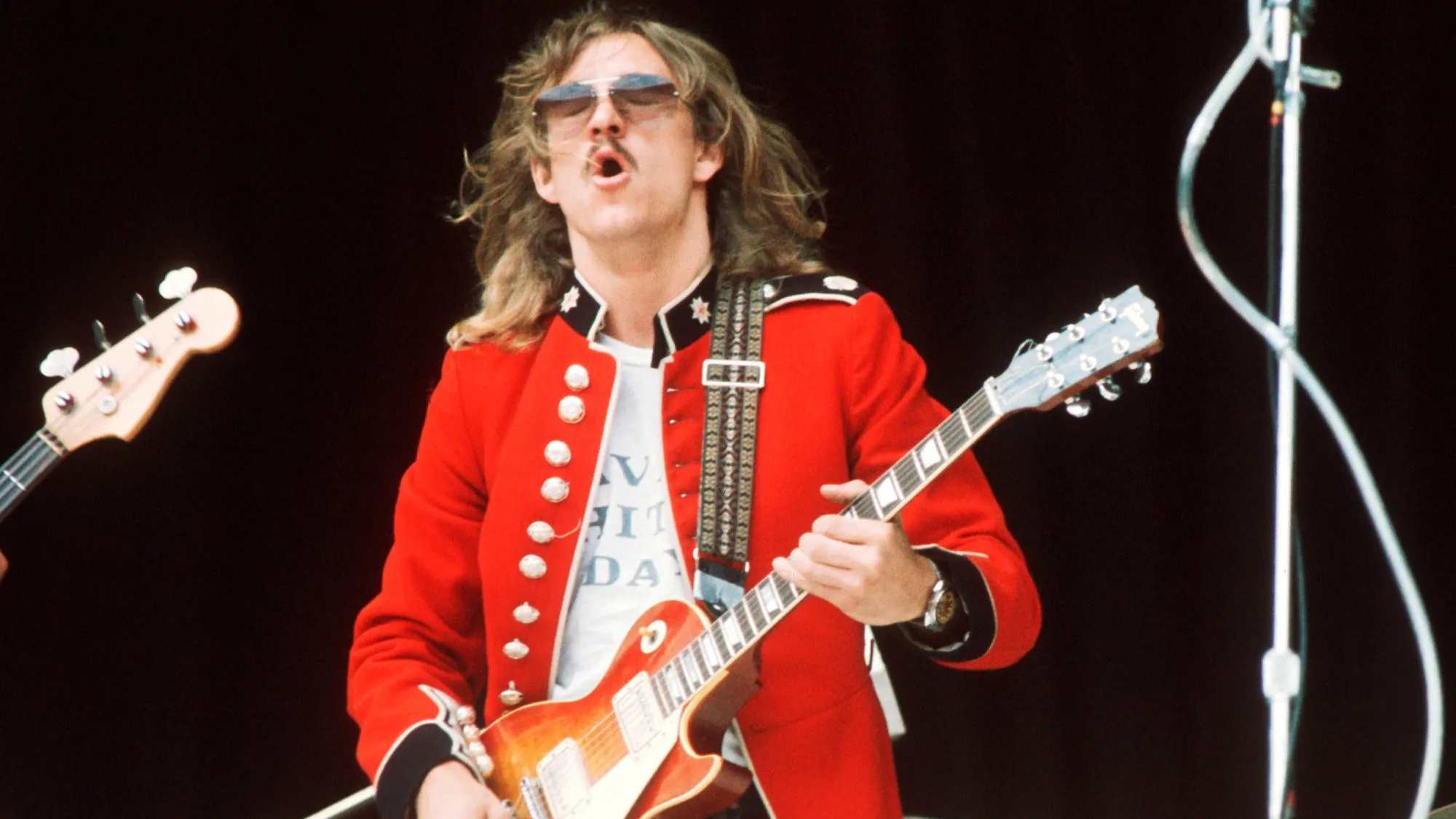
The year 1974 stands as a pivotal moment in the evolution of rock music, marking a transition from the experimentalism of the late 1960s to the polished, high-production era of arena rock and sophisticated pop-rock. This period saw the solidification of the "album-oriented rock" (AOR) format, which would dominate FM radio for the next decade. Among the hundreds of releases that year, three specific tracks—the Eagles’ "Best of My Love," Blue Swede’s "Hooked on a Feeling," and Bad Company’s "Can’t Get Enough"—not only topped the charts but also established the sonic blueprints for their respective genres. These songs represent the diverse landscape of mid-70s music, ranging from the harmonized soft rock of Southern California to the blues-infused hard rock of British supergroups and the global reach of European pop-rock.
The Eagles and the Perfection of the Southern California Sound
Released as part of their third studio album, On the Border, "Best of My Love" became a landmark recording for the Eagles. While the band had already seen success with hits like "Take It Easy," this 1974 release marked their first No. 1 single on the Billboard Hot 100. The track’s journey to the top of the charts was a testament to the band’s evolving internal dynamics and their search for a more robust production style.
The recording of "Best of My Love" occurred during a period of transition for the band. Initially, the Eagles were working with producer Glyn Johns, who had a specific vision for the group as a country-rock ensemble emphasizing acoustic textures and vocal harmonies. However, band members Glenn Frey and Don Henley sought a "grittier" rock sound. This tension eventually led them to producer Bill Szymczyk, though "Best of My Love" remained one of the tracks that showcased the sophisticated vocal arrangements they had perfected under Johns.
The song was co-written by Don Henley, Glenn Frey, and J.D. Souther at the Dan Tana’s restaurant in Los Angeles, a frequent haunt for the city’s musical elite. The lyrics, which explore the bittersweet realization of a fading relationship, resonated deeply with a public experiencing the social malaise of the mid-70s. Musically, the track is defined by its steel guitar flourishes and a three-part harmony that became the Eagles’ signature. According to Billboard data, the song reached the No. 1 spot on March 1, 1975, nearly a year after the album’s release, illustrating the slow-burn success typical of 1970s radio promotion.
Blue Swede and the Transatlantic Pop Phenomenon
While the Eagles were refining American rock, a Swedish group called Blue Swede was making history by bringing a unique, high-energy sound to the global stage. Their 1974 hit "Hooked on a Feeling" is often remembered for its distinctive "ooga chaka" chant, but the song’s history is far more complex than its novelty appeal suggests.
"Hooked on a Feeling" was originally written by Mark James and performed by B.J. Thomas in 1968. Thomas’s version was a traditional pop-rock track featuring an electric sitar, reaching No. 5 on the Billboard Hot 100. However, in 1971, British musician Jonathan King recorded a cover that introduced the "ooga chaka" vocal hook, inspired by the rhythmic chants found in Johnny Preston’s 1959 hit "Running Bear." Blue Swede, led by vocalist Björn Skifs, took King’s arrangement and infused it with a brass-heavy, up-tempo energy that appealed to a wide audience.
The success of Blue Swede’s version was unprecedented for a Swedish act at the time. It reached No. 1 on the Billboard Hot 100 on April 6, 1974, making Blue Swede the first Swedish group to top the American charts—predating the global dominance of ABBA’s "Waterloo" by several months. The track’s enduring legacy was further cemented decades later when it was featured prominently in the soundtrack of the 2014 Marvel Studios film Guardians of the Galaxy, introducing the 1974 classic to a new generation of listeners and resulting in a massive spike in digital streaming numbers.
Bad Company and the Rise of the Hard Rock Supergroup
In the realm of hard rock, 1974 was the year that Bad Company asserted its dominance. Formed from the remnants of several iconic British bands—vocalist Paul Rodgers and drummer Simon Kirke from Free, guitarist Mick Ralphs from Mott the Hoople, and bassist Boz Burrell from King Crimson—Bad Company was the quintessential "supergroup." Their debut self-titled album was the first release on Swan Song Records, the label launched by Led Zeppelin.
The lead single, "Can’t Get Enough," written by Mick Ralphs, became an instant staple of classic rock radio. The song is characterized by its bluesy, straightforward riff and Paul Rodgers’ powerful, soulful vocals. Ralphs famously utilized an open-C tuning on his guitar to achieve the song’s unique, ringing chordal sound, a technical detail that contributed to the track’s massive "wall of sound" on the airwaves.
"Can’t Get Enough" peaked at No. 5 on the Billboard Hot 100 and hit No. 1 on the Cash Box Top 100. Its success signaled a shift in the rock market toward a more commercial, "straight-ahead" style of hard rock that eschewed the progressive complexities of the early 70s in favor of groove and accessibility. The track remains one of the most played songs on classic rock radio stations globally, with industry analysts noting its consistent presence in the "Top 500" lists compiled by terrestrial radio programmers.
A Chronology of 1974: The Cultural Context
To understand the impact of these three songs, one must look at the timeline of 1974, a year of significant cultural and political upheaval that influenced the music industry’s direction:
- January 1974: The United States experiences the height of the oil crisis, leading to high inflation and a national sense of anxiety. Music serves as a primary form of affordable escapism.
- April 1974: Blue Swede’s "Hooked on a Feeling" hits No. 1, proving that international acts can dominate the U.S. market through innovative covers and catchy hooks.
- May 1974: Bad Company releases their debut album. Within months, "Can’t Get Enough" becomes a global anthem, solidifying the commercial viability of the supergroup model.
- August 1974: Richard Nixon resigns the presidency following the Watergate scandal. The cynical political climate leads many listeners toward the introspective and comforting harmonies of Southern California soft rock.
- November 1974: The Eagles release "Best of My Love" as a single. It begins its steady climb up the charts, eventually peaking in early 1975.
Supporting Data: Sales and Chart Longevity
The commercial performance of these tracks highlights their status as more than just "hits"; they were industry-defining successes.
- The Eagles – "Best of My Love": The single helped propel the album On the Border to double-platinum status (over 2 million copies sold in the U.S.). It spent 19 weeks on the Billboard Hot 100.
- Blue Swede – "Hooked on a Feeling": The single sold over one million copies in the U.S. alone in 1974, earning a Gold certification from the RIAA. Its 2014 resurgence saw a 700% increase in sales following the release of Guardians of the Galaxy.
- Bad Company – "Can’t Get Enough": The debut album Bad Company has been certified 5x Platinum by the RIAA. "Can’t Get Enough" remains the band’s most successful single, maintaining high "recurrent" play status on AOR radio for five decades.
Professional Analysis: Implications for the Music Industry
The success of these three tracks in 1974 had long-term implications for how music was produced and marketed. The Eagles’ success with "Best of My Love" proved that country-rock could achieve mainstream pop dominance, paving the way for the "California Sound" to become the dominant radio format of the late 70s. This success eventually culminated in Hotel California, one of the best-selling albums of all time.
Blue Swede’s chart-topper demonstrated the power of the "hook" and the potential for international crossover. It showed that a well-executed cover with a unique gimmick could transcend language and cultural barriers, a lesson that the Swedish music industry took to heart, eventually becoming a global powerhouse in pop production.
Bad Company’s "Can’t Get Enough" validated the business model of the supergroup. It proved that established stars could successfully rebrand and find even greater commercial success by simplifying their sound for the burgeoning arena rock circuit. This paved the way for later groups like Foreigner, Journey, and Boston to dominate the charts using a similar blend of hard rock riffs and pop sensibilities.
Broader Impact and Legacy
Fifty years after their release, these tracks remain ubiquitous. Their longevity is attributed to a combination of high-quality songwriting, distinct vocal performances, and the "golden age" of analog recording techniques that provided a warmth and depth often missing in modern digital productions.
For the "70s kids" who first heard these songs on AM and FM radio, they represent the soundtrack of a transformative decade. For younger generations, they are staples of film soundtracks, video games, and curated "classic rock" playlists. The enduring popularity of "Best of My Love," "Hooked on a Feeling," and "Can’t Get Enough" serves as a reminder that 1974 was a year of exceptional musical craftsmanship, producing anthems that have successfully navigated the transition from vinyl to the digital streaming era without losing their cultural resonance.
