

The landscape of the global music industry has undergone a seismic shift over the last decade, transitioning from a gatekeeper-dominated model to a decentralized, artist-led economy. For independent musicians, the ability to network and collaborate has evolved from a supplementary skill into a core business requirement. Recent industry data indicates that the independent artist sector is the fastest-growing segment of the music business, outperforming the total market growth rate. However, this growth brings increased competition, making strategic networking essential for career sustainability. Professional networking is no longer confined to backstage handshakes or record label offices; it now encompasses a multidisciplinary approach that leverages local communities, digital ecosystems, and direct fan engagement. By adopting a structured approach to collaboration, independent artists can bypass traditional barriers to entry and build resilient, multifaceted careers.
The Evolving Paradigm of Music Collaboration and Networking
Historically, networking for musicians was a linear process involving talent scouts, A&R representatives, and managers. In the contemporary "gig economy" of music, networking has become horizontal. According to a 2023 report by Midia Research, independent artists now generate over $1.5 billion in annual revenue, a testament to the power of self-managed professional networks. This shift necessitates a broader definition of "the scene." Modern networking is less about seeking permission from industry leaders and more about creating value within a community of peers.
The chronology of this shift can be traced back to the early 2010s, with the rise of social media platforms and the democratization of digital audio workstations (DAWs). By 2020, the global pandemic accelerated the adoption of remote collaboration tools, proving that physical proximity was no longer a prerequisite for musical partnership. Today, the most successful independent artists are those who view networking as a holistic practice, integrating their creative output with diverse social and professional environments.

Strategic Integration into Local Interdisciplinary Arts
One of the most effective, yet frequently overlooked, avenues for networking is the local interdisciplinary arts scene. While many musicians limit their social outreach to other music-centric events, significant opportunities exist within visual arts, theater, and performance poetry. The "creative economy," which encompasses these diverse fields, contributes approximately 3% to the global GDP. For a musician, these sectors represent untapped markets for synchronization, live performance, and collaborative branding.
Attending local art galleries and theater productions allows musicians to meet creators who require auditory components for their work. For instance, a visual artist hosting a gallery opening may need an ambient soundtrack to enhance the sensory experience of their installation. Similarly, theater directors frequently seek original scores or sound designers for independent productions. These interactions often lead to high-impact collaborations that introduce a musician’s work to a demographic that might not frequent traditional music venues. By positioning themselves as a "sound solution" for other artists, musicians can diversify their professional portfolios and establish themselves as versatile contributors to the local cultural fabric.
The Role of Structured Workshops and Professional Panels
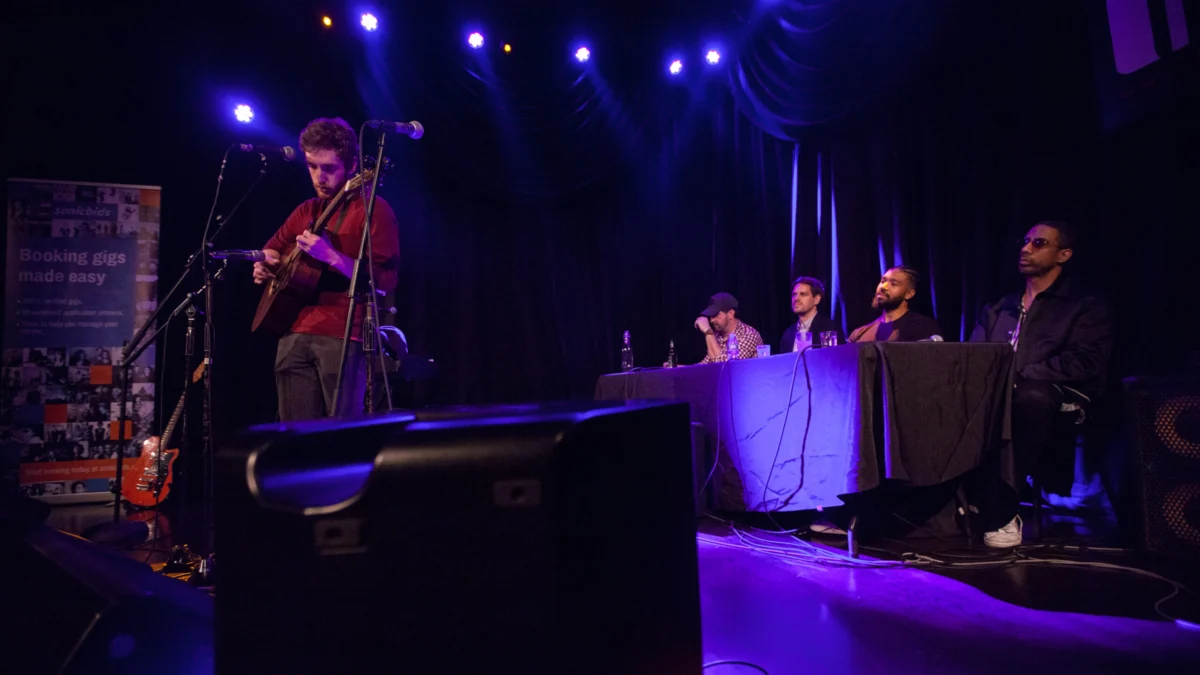
Formalized events, such as the Feedback Collective Panel Discussion and Songwriting Workshops hosted by Sonicbids, represent a critical component of professional development. These structured environments offer a dual benefit: they provide expert insights into the industry while facilitating high-level networking among attendees. Unlike a chaotic club environment, workshops are designed for focused interaction and constructive critique.
In these settings, the hierarchy of the industry is often flattened. An emerging artist may find themselves sitting next to an established producer or a seasoned festival booker. The Feedback Collective model, specifically, emphasizes the importance of the "peer-review" system. Participants are encouraged to share their work in progress, which fosters a culture of transparency and mutual support. Statements from industry professionals who have led these panels suggest that the most valuable connections are often made during the "breakout" sessions, where artists can discuss technical challenges and potential partnerships in a low-pressure environment. For the independent musician, these events serve as a "Third Space"—a professional setting that is neither the home studio nor the stage—where the business of music can be conducted with intentionality.

Leveraging Digital Ecosystems for Global Reach
While mainstream social media platforms like Instagram and TikTok are essential for fan acquisition, they are often less effective for deep professional collaboration. Specialized platforms such as BandLab and SoundCloud have filled this void by creating features specifically designed for co-creation. BandLab, which boasts a user base of over 60 million creators, allows for cloud-based collaboration where artists from different continents can contribute to the same track in real-time.
Data suggests that tracks released as collaborations often see a 20% to 30% higher engagement rate than solo releases, as they benefit from the combined reach of both artists’ audiences. To utilize these platforms effectively, musicians must move beyond passive posting. Engaging with other artists’ work through thoughtful, technical feedback—rather than generic praise—establishes a reputation for professionalism. Initiating a "remix challenge" or a "stem swap" is a low-risk way to test creative chemistry before committing to a full-scale project. This digital-first approach to networking allows independent artists to build a global presence without the overhead costs of international travel.
Professional Volunteering and High-Level Industry Access
Music festivals and large-scale industry conferences are often perceived as impenetrable for independent artists without representation. However, volunteering provides a strategic "backdoor" into these environments. By working behind the scenes in production, artist relations, or logistics, musicians gain an insider’s view of how the industry operates at scale.
Volunteering places an artist in direct contact with event organizers, sound engineers, and touring professionals—individuals who are often inaccessible through traditional means. A 2022 survey of music industry professionals revealed that a significant percentage of "entry-level" hires and professional partnerships originated from volunteer roles at festivals like SXSW or Glastonbury. The shared goal of executing a successful event creates a sense of camaraderie that can be leveraged for future opportunities. When a volunteer demonstrates reliability and a strong work ethic, their subsequent pitch as a musician is met with a higher level of trust. It is a practical application of the "social capital" theory: by contributing value to an organization first, the artist earns the right to seek value in return.

The Economic Impact of Fan-Centric Networking
The final pillar of modern networking is the utilization of an existing fanbase. The "1,000 True Fans" theory, proposed by Kevin Kelly, posits that an artist does not need mainstream stardom to be successful; they only need a dedicated core audience. This audience is not just a source of revenue; it is a powerful networking tool.
Independent musicians can engage their fans in the collaborative process by soliciting input on potential partnerships. Surveys and polls on platforms like Patreon or Discord can reveal connections that the artist was unaware of. For example, a fan might be a professional videographer looking to build a music video portfolio, or they may have a personal connection to a local radio programmer. By involving the fanbase in the decision-making process, artists foster a sense of community ownership. This "bottom-up" networking strategy ensures that collaborations are grounded in the interests of the people most likely to support the final product.
Analysis of Implications and Future Trends
The shift toward these "unexpected" networking strategies indicates a maturing independent music sector. The implications are clear: the successful musician of the future is as much a community builder as they are a creator. This trend is likely to continue as the industry moves toward Web3 and decentralized autonomous organizations (DAOs), where community participation and collaborative governance become the norm.
Fact-based analysis suggests that artists who diversify their networking efforts across these five channels—local arts, workshops, digital platforms, volunteering, and fan engagement—are more resilient to market fluctuations. They are less dependent on a single algorithm or a single revenue stream. Furthermore, these strategies promote a more inclusive industry by lowering the financial and social barriers to entry.

In conclusion, networking for the independent musician is a multifaceted discipline that requires a departure from traditional, music-only environments. By integrating into the broader creative economy and leveraging both high-tech platforms and grassroots community efforts, artists can build the professional infrastructure necessary for long-term success. The path from independence to influence is paved with strategic connections, and for those willing to step outside their comfort zone, the opportunities for growth are unprecedented. The evolution of the music industry has placed the tools of career advancement directly into the hands of the artists; the challenge now lies in the strategic application of those tools.
