

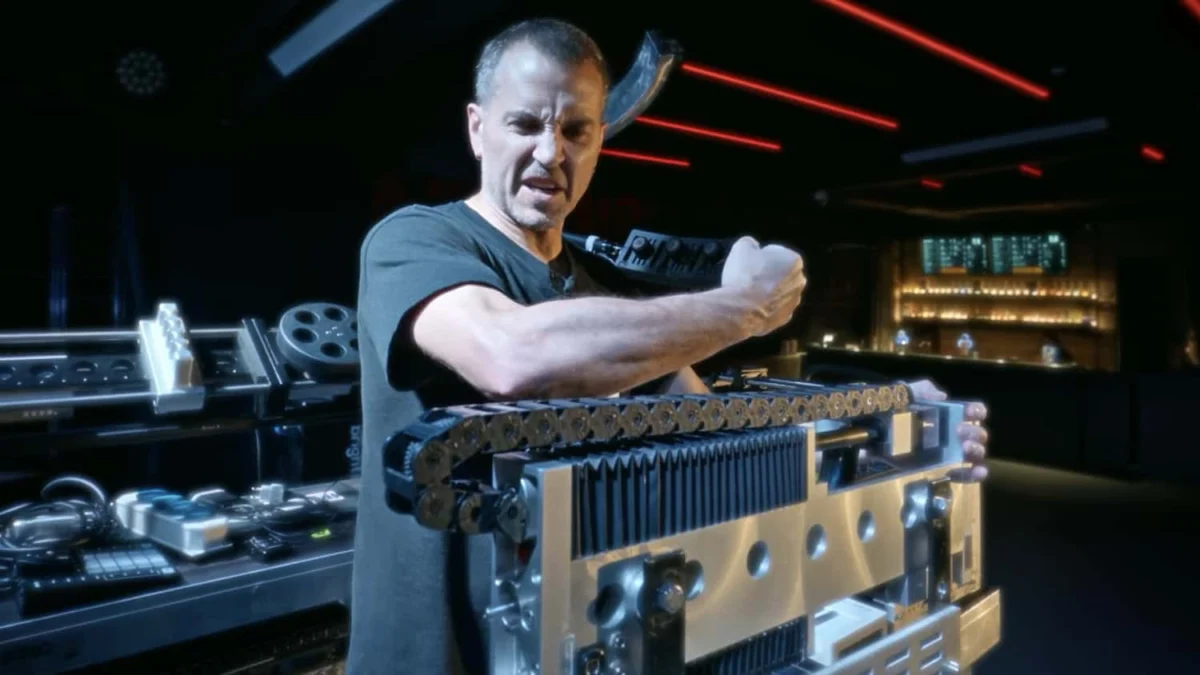
Tristan Shone, the mechanical engineer and visionary artist behind the industrial metal project Author & Punisher, has released a comprehensive mini-documentary detailing the intricate relationship between human exertion and electronic sound. Filmed during a recent European summer tour stop in Krakow, Poland, the documentary provides a rare glimpse into the "Inside the Rig" series, exploring the custom-built machinery that defines Shone’s unique sonic identity. Shone, who holds a Master of Fine Arts from the University of California, San Diego, and has a professional background in mechanical engineering, utilizes his technical expertise to challenge what he perceives as a stagnation in live electronic music performance.
The documentary centers on Shone’s critique of the modern electronic music landscape, which he argues has become overly reliant on pre-recorded backing tracks, automated processes, and superficial stage personas. By contrast, Author & Punisher operates on a philosophy of "performance through physical struggle," where every sound produced is the direct result of a physical action—pulling a heavy steel lever, sliding a high-friction rail, or modulating a vocal through a custom-engineered mask. Shone’s machines, often weighing hundreds of pounds and constructed from industrial-grade aluminum and steel, serve as both musical instruments and sculptural installations, bridging the gap between the mechanical and the melodic.
The Philosophy of Risk in Live Performance
At the heart of Shone’s artistic manifesto is the concept of "live risk." During the Krakow interview, Shone articulated a growing dissatisfaction with the lack of vulnerability in contemporary performances. He noted that when a performance is perfected through the use of auto-tune, synchronized backing tracks, and choreographed movements, it loses the essential human element that defines a "live" experience. For Shone, the possibility of failure is what makes a performance captivating.
"I’m not interested in your costumes and extreme stage presence, running around in the crowd," Shone explained. "I’m more interested in you being able to perform the songs you wrote in a live capacity and that being captivating and powerful." This perspective challenges the current industry trend where high-production value and "stage-ready" aesthetics often take precedence over technical proficiency and real-time execution. Shone advocates for a return to the "limitations" of physical performance, suggesting that the years spent mastering a specific set of tools result in a more authentic connection with the audience than a performance augmented by makeup and pre-recorded audio.
Technical Engineering: The Architecture of Sound
The instruments used by Author & Punisher are not off-the-shelf MIDI controllers but are bespoke creations designed and fabricated by Shone himself using CNC machining, TIG welding, and advanced circuit design. These "Drone Machines" and "Dub Machines" are engineered to provide tactile resistance, forcing the performer to engage their entire body to produce sound.
The rig featured in the Krakow tour includes several key components:
- The Linear Actuator: A sliding rail system that controls pitch and oscillation through horizontal movement. The resistance in the rail requires significant physical force, translating the effort of the musician into the intensity of the sound.
- The Throttles: Hand-held grips modeled after industrial machinery or aircraft controls. These allow Shone to manipulate filters and distortion levels with a tactile precision that standard knobs or faders cannot replicate.
- The Mute Masks: Sophisticated headgear equipped with various microphones and sensors that allow for vocal manipulation while maintaining a claustrophobic, industrial aesthetic.
- The Big Wheel: A massive, weighted rotary controller used for rhythmic sequencing and low-frequency oscillations.
By utilizing these machines, Shone addresses the "uncanny valley" of electronic music—the disconnect between a performer standing behind a laptop and the massive, crushing sounds emanating from the PA system. In an Author & Punisher set, the audience sees the physical labor required to generate each bass drop and percussive strike.
A Chronology of Mechanical Evolution
The evolution of Author & Punisher reflects a nearly two-decade journey of technical and musical refinement. Shone’s work began as an exploration of how sculpture could be integrated into sound, but it quickly transformed into a rigorous study of human-machine interaction.
- 2004–2007: The Genesis. Shone began experimenting with early versions of his drone machines while studying at UCSD. His initial goal was to create a "one-man band" that didn’t rely on traditional instruments like guitars or drums, which he felt were ill-suited to his engineering background.
- 2010: Drone Machines. The release of the album Drone Machines marked a turning point, as Shone’s custom rigs became more stable and tour-ready. This era saw the introduction of the heavy-duty sliding controllers that would become his trademark.
- 2013–2015: Relapse Records and Global Recognition. Signing with Relapse Records for the album Women & Children brought Shone into the mainstream metal and industrial consciousness. His rig expanded to include more complex MIDI integration, allowing for more nuanced compositions.
- 2018–2022: Technical Sophistication and Krüller. With the release of Krüller in 2022, Shone moved toward a more melodic sound, incorporating synthesizers and collaborating with members of the band Tool. This required a redesign of his rig to allow for polyphonic playability and more delicate control schemes while maintaining the industrial weight of his previous work.
Supporting Data: The Shift in Live Music Technology
The critique leveled by Shone against "boring" electronic performances is supported by broader industry data regarding the automation of live music. According to a 2023 industry report on live performance technology, over 75% of major touring electronic and pop acts utilize some form of time-coded automation, including playback engines like Ableton Live synchronized with lighting and visual rigs. While this ensures a "flawless" show, it has led to a documented rise in audience fatigue regarding the "authenticity" of live sets.
Furthermore, the "gear culture" within the electronic music community has seen a massive shift toward "in-the-box" production (software-based). Shone’s insistence on physical hardware—specifically hardware that requires physical exertion—stands in stark contrast to a market where MIDI controllers are becoming increasingly smaller, lighter, and more touch-sensitive. The Author & Punisher rig represents a counter-movement, emphasizing the "weight" of sound in a literal, physical sense.
Industry Context and Reactions
Shone’s approach has garnered significant respect from both the engineering and music communities. Industry veterans have noted that Author & Punisher occupies a space once held by early industrial pioneers like Einstürzende Neubauten or Throbbing Gristle, who utilized found objects and custom electronics to create sound. However, Shone’s work is distinguished by its high level of engineering precision.
Critics have often described his live performances as "confrontational" and "visceral." The lack of traditional stage antics is replaced by a focused, almost blue-collar dedication to the machines. This has led to high-profile touring opportunities, including opening slots for Nine Inch Nails and Tool, bands that also emphasize the intersection of technology and raw performance.
Phil Anselmo (Pantera, Down), who produced Shone’s 2015 album Melk En Honing, previously remarked on the uniqueness of the project, stating that the sheer volume and physical presence of the machines create an atmosphere that cannot be replicated by standard digital means.
Implications for the Future of Electronic Music
The documentary filmed in Krakow serves as more than just a gear tour; it is a call to action for the next generation of electronic musicians. By highlighting the "limitations" of his setup, Shone suggests that creativity is born from struggle. The broader implication for the music industry is a potential re-evaluation of what constitutes a "live" performance.
As artificial intelligence and further automation begin to play a larger role in music creation, the value of the "human-in-the-loop" becomes more significant. Shone’s work provides a blueprint for how artists can utilize advanced technology without sacrificing the tactile, unpredictable nature of human performance. He argues that the future of the genre lies not in more complex software, but in more meaningful physical interfaces.
In conclusion, the "Inside the Rig" documentary offers a profound look at an artist who refuses to take the path of least resistance. Tristan Shone’s Author & Punisher remains a testament to the power of mechanical engineering when applied to the arts, proving that in an era of digital perfection, there is still a deep, resonant hunger for the heavy, the flawed, and the physical. His summer tour through Europe, including the featured performance in Krakow, continues to demonstrate that a performer’s mastery over their tools is ultimately more captivating than any costume or backing track could ever be.
