

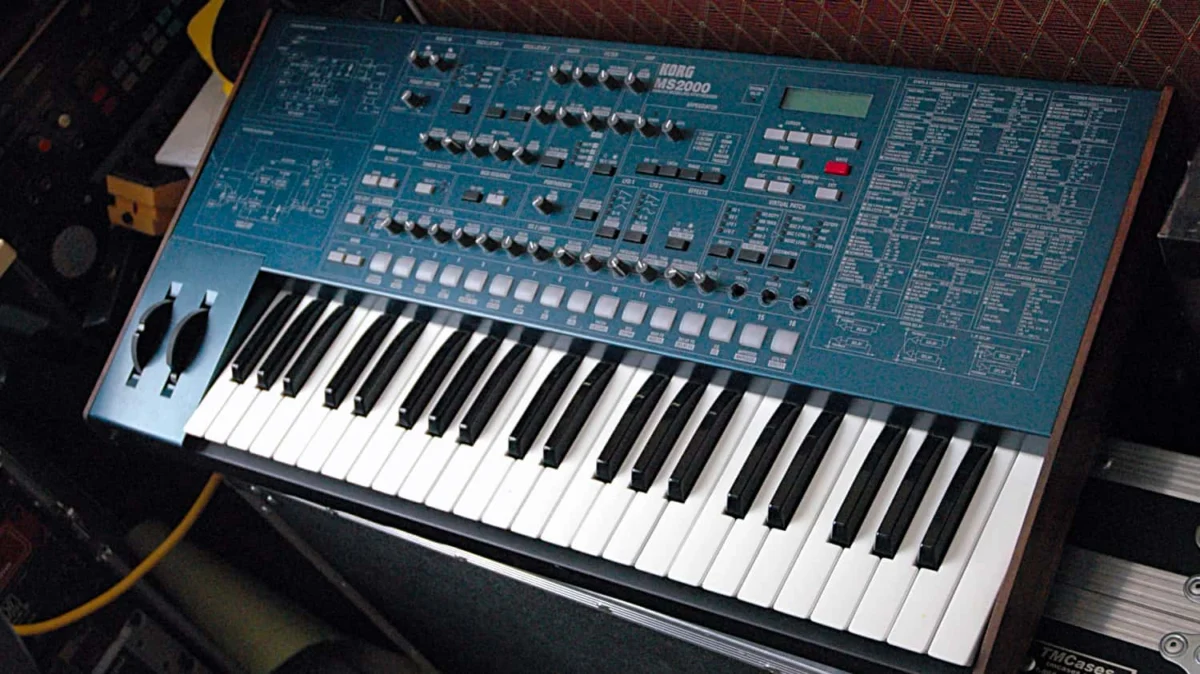
Sound designer and synthesist Ian Dixon has announced the release of a comprehensive, browser-based patch editor and librarian for the Korg MS2000, a move that revitalizes the workflow for owners of this classic virtual analog synthesizer. By leveraging the power of Web MIDI technology, Dixon has created a platform that eliminates the need for proprietary software installations or outdated MIDI drivers, allowing users to manage, edit, and archive their sounds directly through a standard web browser. This tool addresses a long-standing challenge for users of legacy hardware: the difficulty of managing internal memory and complex synthesis parameters through a menu-driven interface designed more than two decades ago.
The Korg MS2000 Editor Librarian serves as a bridge between the tactile, hardware-focused experience of the original instrument and the organizational efficiency of modern digital workstations. It allows for real-time manipulation of the synthesizer’s internal parameters, including oscillators, filters, envelopes, LFOs, and the instrument’s signature motion sequencer. Furthermore, the inclusion of a librarian function enables users to store an unlimited number of patches on their computers, effectively bypassing the MS2000’s native 128-patch memory limitation.
Historical Context and the Legacy of the Korg MS2000
To understand the significance of this new tool, one must look at the historical positioning of the Korg MS2000. Released in 2000, the MS2000 was Korg’s sophisticated entry into the burgeoning virtual analog (VA) market, competing with the likes of the Roland JP-8000, the Yamaha AN1x, and the Access Virus. Designed as a spiritual successor to the legendary MS-20, it featured a retro aesthetic with wooden side panels and a high density of physical knobs and switches.
Under the hood, the MS2000 utilized Korg’s "OASYS" technology to model the behavior of analog circuits. It offered a four-voice polyphonic engine, two oscillators (including DWGS waveforms from the DW-8000), a versatile multi-mode filter, and a powerful "Virtual Patch" system that allowed for complex modulation routing. Perhaps its most distinctive feature was the three-track, 16-step motion sequencer, which allowed for the automation of almost any parameter on the front panel.
Despite its acclaim for sound quality and interface design, the MS2000 shared a common flaw with many instruments of its era: a cumbersome system for managing patch libraries and performing deep edits that required navigating small LCD screens. While the front panel provided immediate access to many functions, the "behind the scenes" management of System Exclusive (SysEx) data remained a technical hurdle for many musicians. The subsequent release of the microKORG in 2002, which utilized the same sound engine in a more portable format, further expanded the user base but also highlighted the need for a unified editing solution.
Technical Specifications and Tool Functionality
The Korg MS2000 Editor Librarian utilizes the Web MIDI API, a W3C standard that allows web applications to interact with MIDI devices connected to a user’s computer. This technology is particularly beneficial for legacy hardware support because it is platform-agnostic, requiring only a compatible browser such as Google Chrome or Microsoft Edge.
The utility provides a comprehensive suite of features designed to modernize the MS2000 user experience:
Patch Management and Librarian Functions
The librarian component allows users to read the entire memory bank from the hardware unit and save it as a local file. This is a critical function for performers and studio engineers who need to swap between different sound sets for various projects. The tool supports the loading of compatible microKORG SysEx banks, which significantly expands the available sound palette for MS2000 owners, given the massive library of third-party sounds developed for the microKORG over the last twenty years.
Real-Time Parameter Editing
The editor provides a visual representation of the synthesizer’s signal path. Users can adjust oscillator waveforms, including the 64 Digital Waveform Generator System (DWGS) waves, and see the results reflected immediately on the hardware. The visual editor for filter and amplitude envelopes provides a level of precision that is difficult to achieve using the hardware’s small display.
The Virtual Patch and Modulation Matrix
One of the more complex areas of the MS2000 is its Virtual Patch system, which allows users to route sources like LFOs or envelopes to destinations like pitch or filter cutoff. The web-based editor simplifies this process by providing a clear routing matrix, making it easier to visualize the modulation architecture of a patch.
Motion Sequencer Controls
The MS2000’s motion sequencer is one of its most powerful features, yet it can be tedious to program manually. Dixon’s editor allows for more intuitive control over these sequences, enabling users to draw in or adjust modulation steps with a mouse, facilitating the creation of complex, evolving textures.
Randomization and "Happy Accidents"
A standout feature of the tool is the controlled randomization function. By allowing the software to generate random values for specific parameters, users can discover unique sounds that they might not have arrived at through intentional programming. This feature is designed to spark creativity and find "happy accidents" that push the MS2000 beyond its traditional sonic boundaries.
Chronology of Development and Release
The development of the Korg MS2000 Editor Librarian follows a growing trend in the music technology community where independent developers fill the gaps left by original manufacturers. While Korg has provided various drivers and basic editors in the past, these often become obsolete as operating systems evolve from Windows XP to Windows 11 or from macOS 9 to modern silicon-based architectures.
The timeline of this release reflects the maturation of Web MIDI:
- 2000: Korg releases the MS2000 and MS2000R.
- 2002: Korg releases the microKORG, using the same internal engine.
- 2015: The W3C Web MIDI API reaches a stable state, allowing developers to begin building browser-based MIDI tools.
- 2020–2023: A resurgence in interest for "early digital" and virtual analog hardware leads to a demand for better integration tools.
- 2024: Ian Dixon releases the TDL-MS2000 Editor Librarian, providing a free, modern solution for the aging hardware.
Analysis of Implications for the Synthesizer Community
The release of this tool has several significant implications for the music production community and the preservation of electronic musical instruments.
Sustainability and Longevity of Hardware
As hardware ages, its reliance on specific software becomes a liability. By moving the editor to a web-based platform, Dixon has essentially "future-proofed" the MS2000. As long as web browsers support the MIDI standard, the MS2000 will remain a viable, easily programmable instrument in a modern studio environment. This contributes to a "Right to Repair" ethos in the music world, where the longevity of a product is extended through community-driven software support.
Democratization of Professional Tools
By offering the editor for free, Dixon has lowered the barrier to entry for high-level sound design. Many professional editors for vintage gear are sold as premium plugins or standalone software. Providing a high-quality librarian for free allows hobbyists and professionals alike to get the most out of their hardware without additional financial investment.
Enhancing the microKORG Ecosystem
Because the MS2000 and the original microKORG share the same synthesis engine, this tool serves a dual purpose. It allows MS2000 owners to tap into the decades of sound design work performed by the microKORG community. This cross-compatibility reinforces the value of both instruments on the secondary market.
Supporting Data: The Enduring Popularity of the MS2000
Market data from secondary sales platforms like Reverb and eBay indicates that the Korg MS2000 has maintained a steady value over the last decade, often selling for more than its original street price in adjusted terms. This is attributed to its unique "grainy" digital character, which many producers prefer over modern, ultra-clean software synthesizers.
Technical analysis of the MS2000 engine shows that its 4-voice limitation, often criticized at launch, actually encourages more deliberate arrangement and sound design. The "Virtual Patch" system provides 4 slots of modulation, a feature that was quite advanced for its time and remains relevant for contemporary electronic genres like techno, ambient, and synthwave.
Official Responses and User Feedback
While Korg has not issued an official statement regarding this third-party tool, the community response has been overwhelmingly positive. Early adopters have noted that the "audition without overwriting" feature is particularly useful. This function allows a user to send a patch to the synth’s edit buffer to hear it without actually saving it to a memory slot, a workflow improvement that speeds up the process of browsing through large SysEx libraries.
Synthesists have also praised the "Randomizer" function. In various online forums, users have reported that the ability to randomize only specific sections—such as just the oscillators or just the effects—allows for "musical" randomization rather than just chaotic noise.
Broader Impact on Music Technology
The TDL-MS2000 Editor Librarian represents a broader shift in how we interact with musical instruments. We are moving away from the "black box" model where an instrument’s utility is tied to the manufacturer’s support cycle. Instead, we are entering an era of "hybridized" instruments, where 20-year-old hardware is given a modern "brain" via web technologies.
This trend is likely to continue as more developers realize the potential of Web MIDI. We have already seen similar tools for the Yamaha DX7, the Roland Boutique series, and various Waldorf synthesizers. Ian Dixon’s contribution ensures that the Korg MS2000 remains not just a piece of nostalgia, but a functional, powerful tool in the arsenal of modern musicians.
The Korg MS2000 Editor Librarian is available immediately and can be accessed through the Digital Lifestyle website. It requires no installation, working instantly upon connection of a MIDI interface to a compatible web browser. For owners of the MS2000, this marks the beginning of a new chapter for an instrument that helped define the sound of the early 21st century.
