

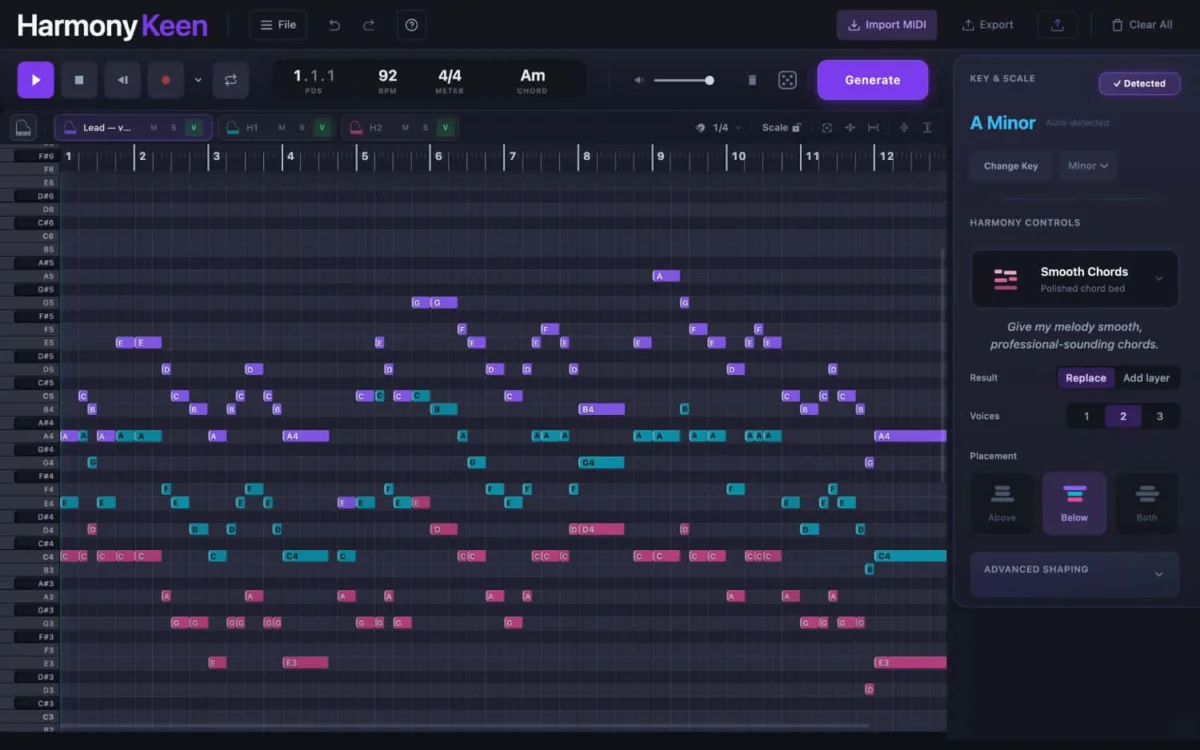
In a significant development for the digital audio workstation (DAW) ecosystem, independent developer Thom Haslam has officially launched HarmonyKeen, a specialized software utility designed to bridge the gap between melodic inspiration and complex harmonic arrangement. Unlike the recent wave of generative tools that rely on probabilistic models or neural networks, HarmonyKeen distinguishes itself by utilizing a deterministic engine rooted in the rigorous principles of classical music theory and voice-leading rules. The tool serves as a "harmony assistant," capable of transforming monophonic MIDI melodies into multi-part arrangements, providing composers with a structural foundation that adheres to the established conventions of Western tonal harmony.
The release comes at a time when the music production industry is increasingly saturated with artificial intelligence (AI) solutions. However, HarmonyKeen’s reliance on a rule-based algorithmic approach offers a level of predictability and transparency that professional composers often find lacking in "black box" AI systems. By reading a user-provided melody in its entirety before processing, the software identifies structural markers such as phrases and cadences, ensuring that the resulting harmony is not merely a vertical stack of notes but a cohesive horizontal progression.
Technical Architecture and Voice-Leading Mechanics
At the core of HarmonyKeen is a sophisticated engine designed to handle the intricacies of voice leading—the art of managing the movement of individual musical lines within a polyphonic texture. For centuries, composers have adhered to specific rules to ensure that harmonies sound fluid and natural, such as avoiding parallel fifths or octaves and ensuring smooth transitions between chord tones. HarmonyKeen automates these calculations, allowing users to input a single-note MIDI file and receive a multi-voice output that respects these historical constraints.
The software functions by first analyzing the input MIDI data to determine the underlying tonality and rhythmic structure. Once the melody is parsed, the engine identifies potential cadence points—musical "punctuation" that signals the end of a phrase. From there, it selects a chord sequence that best supports the melodic contour. The final step involves the writing of additional voices, which can range from a simple secondary counterpoint to a full four-part SATB (Soprano, Alto, Tenor, Bass) arrangement.
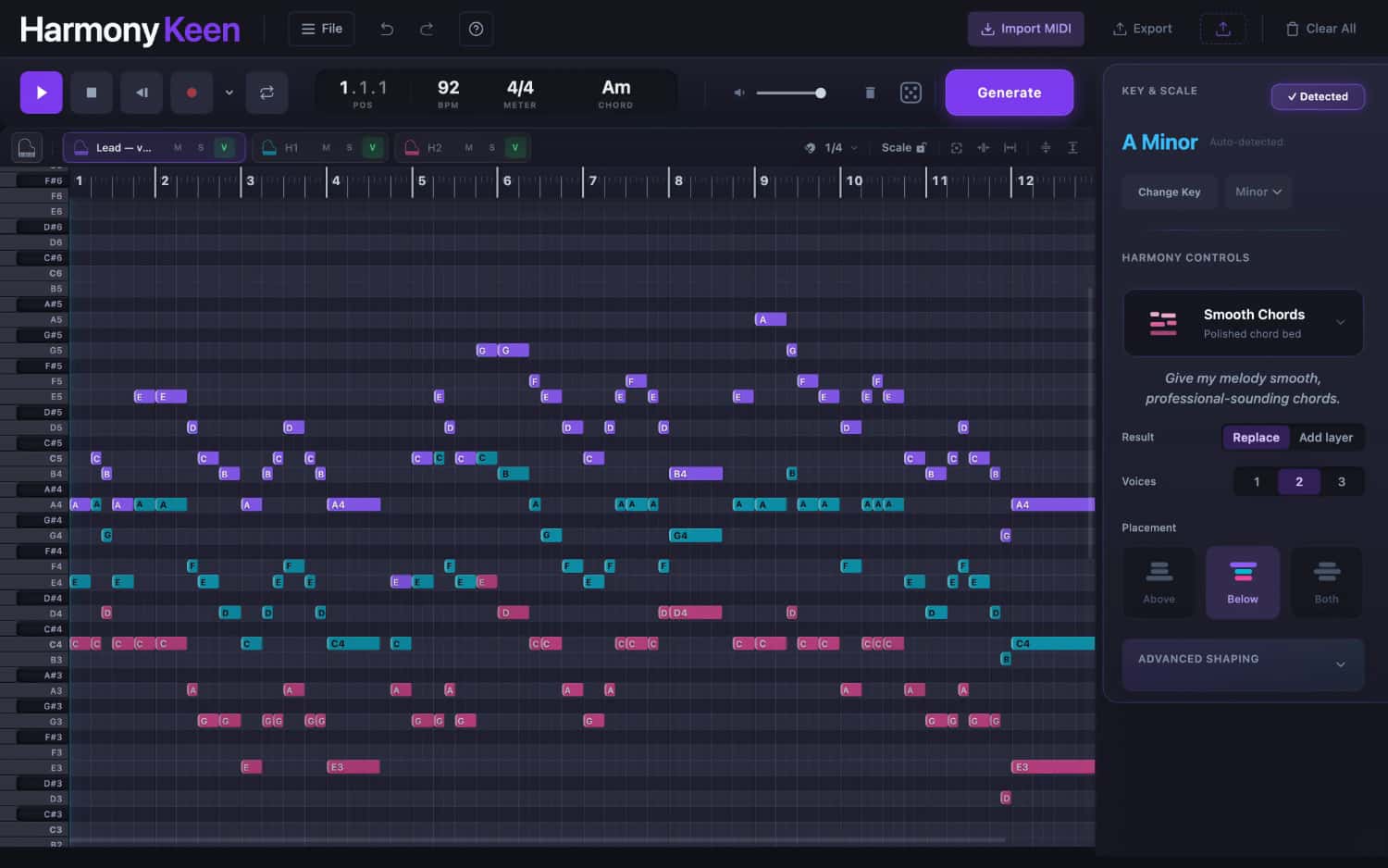
Crucially, the output generated by HarmonyKeen is entirely MIDI-based. This allows the user to route the resulting parts to any virtual instrument or hardware synthesizer within their setup. Because the data remains editable, composers can treat the software’s suggestions as a starting point, refining individual notes or rhythms to suit their specific creative vision. This "glass-box" approach ensures that the human composer remains the final arbiter of the musical output.
Historical Context and the Evolution of Algorithmic Composition
The release of HarmonyKeen is part of a broader historical trajectory involving algorithmic composition. While the term often conjures images of modern computers, the concept of using rules to generate music dates back hundreds of years. In the 18th century, "Musikalisches Würfelspiel" (Musical Dice Games) allowed amateur composers to create minuets by rolling dice to select pre-written musical fragments. Later, in the 20th century, composers like Iannis Xenakis and Lejaren Hiller pioneered the use of mathematical models and early mainframe computers to structure musical works.
In the contemporary era, the market has seen a proliferation of "chord assistance" plugins, such as Scaler, Captain Chords, and Orb Producer. While these tools are effective at suggesting chord progressions, they often focus on block chords or rhythmic "pads." HarmonyKeen enters the market with a specific focus on the linear movement of voices. This makes it particularly valuable for genres where the relationship between individual lines is paramount, such as choral music, string arrangements, and orchestral scoring.
The decision to eschew neural networks in favor of music theory rules is a strategic one. Neural networks are often criticized for their "hallucinations" or their tendency to produce results that, while statistically likely, may lack structural logic. By using a rule-based system, Thom Haslam ensures that the same input with the same settings will yield the same result every time. This consistency is vital for professional workflows where reliability and repeatability are essential.
Detailed Features and Stylistic Versatility
HarmonyKeen is designed to accommodate a wide array of musical styles and complexities. The developer has integrated several modes of operation that cater to different production needs:
- Single Line Counterpoint: This mode adds a second voice to the melody, following traditional rules of counterpoint to create a "duet" feel.
- Close Vocal Harmony: Designed for pop, jazz, and contemporary vocal arrangements, this mode clusters the harmony voices near the melody to create a thick, modern sound.
- Four-Part Writing: Adhering to the classic SATB format, this mode is ideal for hymnody, string quartets, and traditional choral arrangements.
- Fuller Arrangements: This expanded mode allows for more complex textures, suitable for orchestral beds or cinematic scoring.
The software is available in multiple formats to ensure compatibility with various production environments. It ships as a standalone application, which is useful for quick sketching outside of a DAW, as well as VST3 and Audio Unit (AU) plugins for integration into platforms like Ableton Live, Logic Pro, Cubase, and FL Studio.
Market Positioning and Pricing
The commercial strategy for HarmonyKeen reflects a desire to make professional-grade theory tools accessible to a broader audience. The software has launched with an introductory price of $59 USD, a discount from its standard retail price of $79 USD. This pricing positions it as a mid-tier utility—more specialized than basic chord generators but more affordable than comprehensive orchestration suites.
Industry analysts suggest that tools like HarmonyKeen represent a "middle way" in the ongoing debate over automation in the arts. While some purists argue that harmony should only be written by hand, the reality of modern production—with its tight deadlines and high output requirements—makes assistive tools nearly indispensable. By automating the "math" of music theory, HarmonyKeen allows composers to focus on the "art" of melody and timbre.
Inferred Industry Reactions and User Impact
While official testimonials from major studios are typically reserved for later in a product’s lifecycle, initial reactions from the independent production community have been positive. Early adopters have noted the software’s ability to "unstick" a creative block. A common challenge in composition is having a strong melody but struggling to find a harmonic language that feels both fresh and structurally sound. HarmonyKeen addresses this by providing multiple theoretical "correct" options that the user might not have considered.
Educationally, the tool also holds significant potential. For students of music theory, seeing how a software engine applies voice-leading rules to their own melodies can serve as a practical reinforcement of classroom concepts. It acts as a real-time laboratory for testing the implications of different harmonic choices.
Analysis of Implications for the Future of Music Production
The launch of HarmonyKeen highlights a growing trend toward "deterministic creativity." As the initial novelty of AI-generated content begins to wear off, professional creators are looking for tools that offer more control. The "Music Theory vs. Neural Network" distinction made by Haslam is a key selling point in this regard. It appeals to a demographic of producers who value the craftsmanship of music theory but seek the efficiency of modern software.
Furthermore, the focus on MIDI output ensures that HarmonyKeen remains "future-proof." Unlike tools that output proprietary audio loops, MIDI is a universal language. A progression generated in HarmonyKeen today will be just as usable in twenty years, regardless of how synthesizer technology or DAW architectures evolve.
From a broader perspective, HarmonyKeen contributes to the democratization of sophisticated musical techniques. Historically, mastering four-part harmony and voice leading required years of conservatory training. While a software tool cannot replace the deep understanding gained through study, it can lower the barrier to entry for talented individuals who lack formal training but possess a strong melodic instinct.
Chronology of Release and Availability
The development of HarmonyKeen followed an intensive period of algorithmic refinement, with Thom Haslam focusing on the nuances of phrase detection and cadence selection. The official release in late 2024 marks the culmination of this process.
Currently, the software is available for purchase and download directly through the HarmonyKeen website. The bundle includes the standalone version and the plugin formats under a single license, providing flexibility for users who work across different machines or operating systems. The developer has also provided a "Hear It" section on the official site, featuring a diverse range of audio examples that showcase the engine’s capabilities across various genres, from classical textures to contemporary pop.
Final Summary of Impact
HarmonyKeen enters the market as a robust, specialized tool for the modern composer. By focusing on the structural integrity of music theory rather than the unpredictability of neural networks, it offers a unique value proposition: a reliable, deterministic assistant that handles the technical heavy lifting of harmonic arrangement. Whether used as a time-saving utility for professionals or a creative springboard for hobbyists, HarmonyKeen represents a thoughtful integration of traditional musical wisdom and modern software engineering. As the industry continues to navigate the complexities of automated creation, tools that empower the user through structured assistance—rather than replacing them through total automation—are likely to remain at the forefront of professional preference.
