

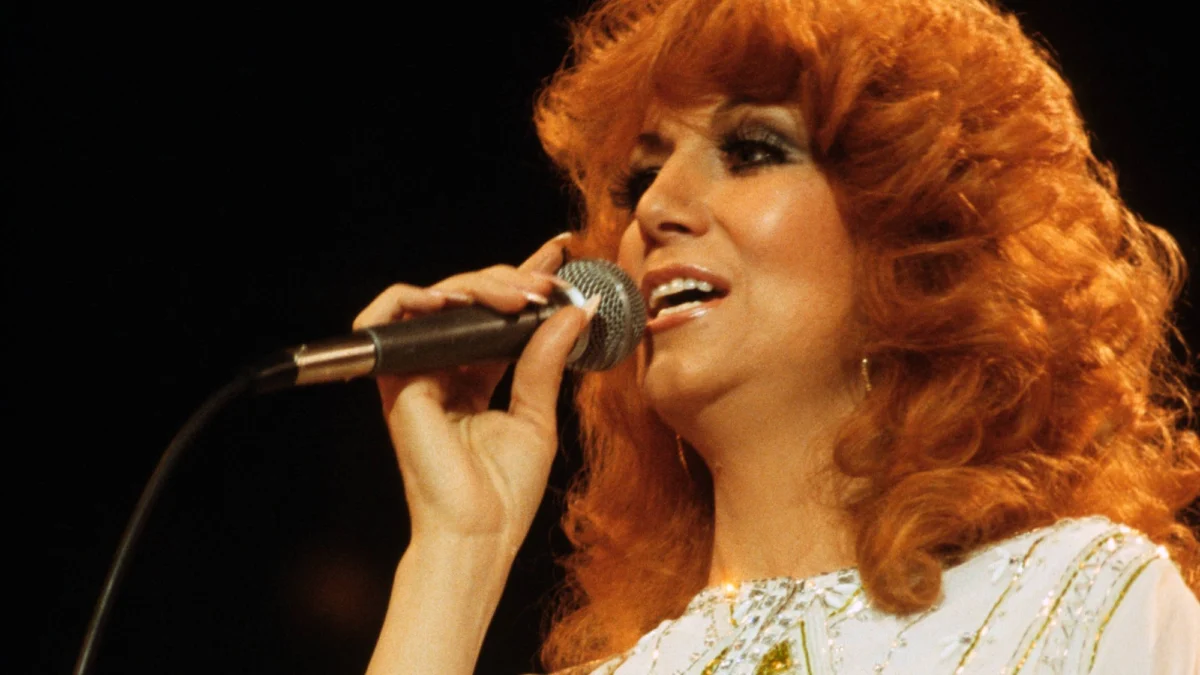
The year 1968 stands as a transformative pillar in the history of American music, particularly within the country genre. As the United States grappled with profound social upheaval, the Vietnam War, and a rapidly shifting cultural landscape, the Nashville music industry underwent a parallel evolution. This period, often characterized by the refinement of the "Nashville Sound," saw a transition from the raw honky-tonk of the previous decade to a more polished, orchestrated production style designed to appeal to broader audiences. Among the myriad of releases that year, three specific singles—Dottie West’s "Country Girl," David Houston’s "Have A Little Faith," and Lynn Anderson’s "Big Girls Don’t Cry"—emerged as definitive markers of the era’s creative peak. These tracks not only dominated the airwaves but also solidified the career trajectories of three of the genre’s most influential figures, leaving an indelible mark on the collective memory of the "60s generation."
The Socio-Cultural Context of Country Music in 1968
To understand the impact of these three songs, one must examine the environment in which they were released. By 1968, country music was no longer a regional curiosity; it was a burgeoning commercial powerhouse. The Grand Ole Opry remained the genre’s spiritual home, but the recording studios of Music Row were increasingly looking toward crossover success on the pop charts. Producers like Billy Sherrill and Chet Atkins were introducing string sections and sophisticated background vocals, a movement that provided a sonic cushion for the era’s turbulent politics.
While rock music was becoming increasingly experimental and psychedelic, country music in 1968 offered a blend of traditional values and modern production. It was against this backdrop that West, Houston, and Anderson released works that resonated with a public seeking both relatability and high-quality musicianship. These artists represented the bridge between the rural roots of the genre and the cosmopolitan future of country-pop.
Dottie West and the Articulation of Identity in "Country Girl"
Dottie West, already an established star and a Grammy winner by 1968, reached a creative milestone with the release of "Country Girl." The song served as the title track for her 1968 studio album and became a Top 15 hit on the Billboard Hot Country Singles chart. What distinguished "Country Girl" was its authorship; West co-wrote the track with Red Lane, a songwriter known for his ability to capture the nuances of rural life.
The lyrics of "Country Girl" functioned as a manifesto of identity: "I was born a country girl; I will die a country girl / My world is made of blue skies and sunshine / Green fields and butterflies / I’m so glad I’m a country girl." This unapologetic embrace of rural heritage was significant at a time when urbanization was rapidly changing the American demographic. West’s delivery—clear, emotive, and technically proficient—bolstered the song’s authenticity.
Chronology of West’s Career Shift
The success of "Country Girl" was followed by the Top 20 hit "Reno," but West’s career subsequently entered a period of relative commercial cooling. For five years following the 1968-1969 peak, West struggled to break back into the Top 20. This hiatus from the upper echelons of the charts ended in 1973 with "Country Sunshine," a song originally written for a Coca-Cola commercial. The thematic link between "Country Girl" and "Country Sunshine" is evident; both songs utilized the imagery of nature and simple living to define West’s public persona. Analysts suggest that "Country Girl" laid the groundwork for West’s eventual transition into the "Country Sunshine" era, which saw her become one of the most recognizable faces in American advertising and music.
David Houston and the Precision of the Nashville Sound
If Dottie West represented the soul of the country identity, David Houston represented the vocal precision of the Nashville Sound. In 1968, Houston released "Have A Little Faith," a song that would become one of his many No. 1 singles. The track was the lead single from his album Already It’s Heaven, and it showcased the formidable songwriting duo of Billy Sherrill and Glenn Sutton.
"Have A Little Faith" was a masterclass in mid-century country production. Sherrill, often called the "Phil Spector of Country Music," utilized Houston’s high, clear tenor to create a record that felt both intimate and grand. The lyrical message was one of optimism: "Have a little faith and love will come to you / So don’t be lonely and don’t be blue / Your one and only is somewhere waiting just for you."
Statistical Performance and Crossover Success
The impact of "Have A Little Faith" extended beyond the country charts. The song reached the Top 10 on the Billboard Easy Listening (now Adult Contemporary) chart, demonstrating the broad appeal of Houston’s style. This crossover success was a hallmark of the 1968 country scene, as artists began to find favor with audiences who typically listened to pop vocalists like Perry Como or Patti Page.
Interestingly, Patti Page herself released a version of "Have A Little Faith" in 1968 on her album Gentle On My Mind. The fact that a major pop star like Page covered the song almost immediately after Houston’s release speaks to the song’s universal melodic appeal and the high regard in which Sherrill and Sutton’s songwriting was held. Houston followed this success with the title track "Already It’s Heaven," which also reached the No. 1 spot, cementing 1968 as a banner year for his career.
Lynn Anderson and the New Feminine Narrative
The third cornerstone of this 1968 trio is Lynn Anderson’s "Big Girls Don’t Cry." Released as the title track of her third studio album, the song reached the Top 15 and further established Anderson as a rising force in the industry. The track was written by her mother, Liz Anderson, a prolific songwriter who penned many of the era’s most successful hits, including Merle Haggard’s "(My Friends Are Gonna Be) Strangers."
"Big Girls Don’t Cry" explored themes of romantic betrayal and resilience: "Then out of nowhere like an angel he came / I fell for his kisses, and he promised me a ring / He held me, caressed me, then told me goodbye / Mama don’t let them tell you that big girls don’t cry."
The Mother-Daughter Creative Partnership
The professional relationship between Liz and Lynn Anderson was one of the most successful familial collaborations in country music history. Liz Anderson provided much of the material for Lynn’s early records, including her debut album Ride, Ride, Ride. This partnership allowed Lynn to navigate the male-dominated industry with songs that often possessed a distinctly feminine perspective, blending vulnerability with a burgeoning sense of independence.
Industry historians note that "Big Girls Don’t Cry" served as a crucial stepping stone toward Anderson’s 1970 global smash "Rose Garden." The polished production and relatable storytelling found in her 1968 work laid the foundation for her to become one of the first female country artists to achieve massive international pop success.
Comparative Analysis: Chart Data and Industry Metrics
The year 1968 was a high-water mark for the Billboard Hot Country Singles chart. A review of the data from that year reveals a high turnover of No. 1 hits, indicating a vibrant and competitive market.
| Artist | Song Title | Peak Position | Songwriter(s) |
|---|---|---|---|
| David Houston | Have A Little Faith | #1 | Billy Sherrill, Glenn Sutton |
| Dottie West | Country Girl | #15 | Dottie West, Red Lane |
| Lynn Anderson | Big Girls Don’t Cry | #12 | Liz Anderson |
While Houston secured the top spot, the "longevity" of West and Anderson’s tracks in recurrent airplay has been noted by radio historians. In 1968, the Country Music Association (CMA) Awards—then in only their second year—reflected this era of excellence. Although Glen Campbell dominated the awards that year, the performances and releases of West, Houston, and Anderson were cited by contemporary critics as evidence of the genre’s increasing sophistication.
Official Responses and Legacy
In retrospective interviews, industry veterans have often pointed to 1968 as the year country music "grew up." Bill Ivey, former Director of the Country Music Foundation, has noted that the late 60s represented a period where "the songwriting became more literary and the production more symphonic."
The legacy of these three songs is preserved not just in digital archives but in the DNA of modern country music. Dottie West’s "Country Girl" helped define the "strong woman" archetype that would be expanded upon by artists like Loretta Lynn and Dolly Parton. David Houston’s success proved that country music could be "classy" and sophisticated, paving the way for the "Countrypolitan" era. Lynn Anderson’s work, fueled by her mother’s songwriting, showcased the power of the female voice in storytelling.
Broader Impact and Implications for the Genre
The enduring popularity of these 1968 hits suggests that they tapped into something more profound than mere catchy melodies. They captured a moment of transition in American life. For the "60s kids" who grew up with these tunes, they represent a connection to a specific time and place—a period of both innocence and awakening.
From a technical standpoint, the records of 1968 established the standards for studio excellence. The clarity of the recordings, the balance of the arrangements, and the discipline of the vocal performances remain benchmarks for contemporary producers. Furthermore, the crossover success of David Houston and the eventual pop stardom of Lynn Anderson illustrated that country music possessed a universal emotional language.
As modern country music continues to grapple with its identity—balancing traditional roots with pop sensibilities—the releases of 1968 serve as a historical roadmap. They prove that it is possible to maintain the "country" heart of a song while dressing it in the sophisticated sounds of the era. The works of West, Houston, and Anderson from 1968 remain more than just nostalgic artifacts; they are essential chapters in the narrative of American music, continuing to inform and inspire new generations of artists and listeners alike.
