

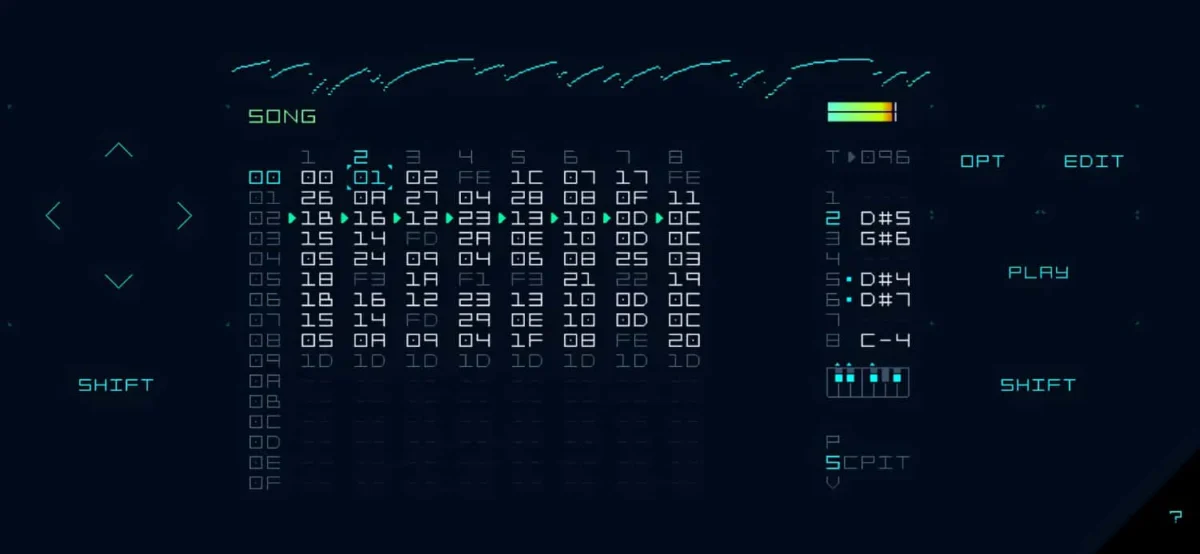
The release of the M8 Music Tracker for iOS marks a significant milestone in the evolution of mobile music production, effectively porting the sophisticated architecture of the Dirtywave M8 hardware tracker to the iPhone and iPad ecosystems. Developed by Timothy Lamb, also known in the electronic music community as Trash80, the M8 has garnered a dedicated following since its hardware debut for its unique combination of portability, powerful synthesis engines, and a workflow inspired by the classic Little Sound Disk Jockey (LSDJ) software. This new iOS iteration retains the full functional depth of the physical unit, offering an eight-track sequencer, a multi-engine synthesizer, a sampler, and a comprehensive MIDI controller interface within a single application. By transitioning from a boutique hardware device to a widely accessible mobile platform, the M8 Music Tracker addresses a growing demand for professional-grade "tracker-style" sequencing in the digital audio workstation (DAW) market.
The Genesis and Evolution of the M8 Platform
To understand the impact of the M8 Music Tracker on iOS, one must examine its origins in the "Headless" M8 and the subsequent hardware releases. The project began as an experimental firmware designed to run on the Teensy 4.1 microcontroller. Enthusiasts could build their own "Headless" units using a Teensy and a computer screen, which allowed Lamb to refine the software’s capabilities through community feedback before the official hardware launched.
The M8 hardware tracker, characterized by its handheld form factor and mechanical keyboard switches, became a cult hit among electronic musicians, particularly those in the chiptune, IDM, and experimental scenes. Its workflow is based on the "tracker" paradigm—a method of music composition that dates back to the late 1980s on the Commodore Amiga. Unlike modern DAWs that use a horizontal timeline and piano roll, trackers utilize a vertical orientation where notes and effects commands are entered into a grid. The M8 modernized this concept by integrating high-fidelity synthesis engines and a streamlined navigation system that relies on a limited number of buttons to perform complex tasks. The arrival of the iOS version represents the culmination of years of firmware optimization, now adapted for ARM-based mobile processors.
Comprehensive Synthesis and Sampling Engines
At the core of the M8 Music Tracker are its diverse internal instruments, which allow users to create full productions without the need for external hardware or software. The iOS version includes all the synthesis models found in the hardware version, ensuring complete project compatibility across platforms.
- Wavsynth: This engine focuses on classic subtractive synthesis and chiptune-style sounds. It provides various waveforms with adjustable pulse width, sync options, and wave-folding capabilities, making it ideal for creating everything from NES-inspired leads to aggressive basslines.
- Macrosynth: Based on the open-source code from Mutable Instruments’ Braids module, this engine is a versatile powerhouse. It includes numerous models, such as virtual analog, FM, granular, and physical modeling. This integration allows users to access a vast palette of complex textures that are typically reserved for modular synthesizer setups.
- FMSynth: A dedicated four-operator Frequency Modulation engine. It offers multiple algorithms and precise control over operators, enabling the creation of metallic percussive sounds, crystalline pads, and the complex harmonic structures synonymous with 1980s digital synthesis.
- Hypersynth: Designed for thick, unison-heavy sounds, this engine is frequently used for "supersaw" leads and lush polyphonic pads. It excels at filling the frequency spectrum and providing the melodic foundations for modern electronic genres.
- Sampler: The M8’s sampling engine is robust, supporting high-quality audio playback with features like slicing, looping, and real-time pitch shifting. Users can record audio directly into the app or import samples via the iOS Files app.
Each of these instruments is integrated into the M8’s eight-track architecture. Because the tracks are monophonic (per step), the M8 utilizes a "tables" system—a micro-sequencer within each instrument—to handle rapid note changes, complex arpeggios, and automated parameter modulation, effectively bypassing the limitations of traditional monophonic sequencing.
Technical Architecture and iOS Integration
The transition to iOS brings several platform-specific enhancements that expand the utility of the M8. The app supports CoreMIDI, allowing it to function as both a sound source and a master sequencer for other iOS apps or external hardware. This is complemented by Inter-App Audio (IAA) support, enabling the M8 to route its audio into other mobile production environments.
One of the most notable features of the iOS release is its support for external peripherals. While the app features a touch-based interface that replicates the M8 hardware buttons, it also supports game controllers (such as those for PlayStation or Xbox) and MIDI controllers like the Novation Launchpad Pro MKIII. This support is crucial for maintaining the "tactile" feel that many users associate with the original hardware. The ability to map physical buttons to the M8’s navigation system allows for a high-speed workflow that touchscreens alone often struggle to replicate.
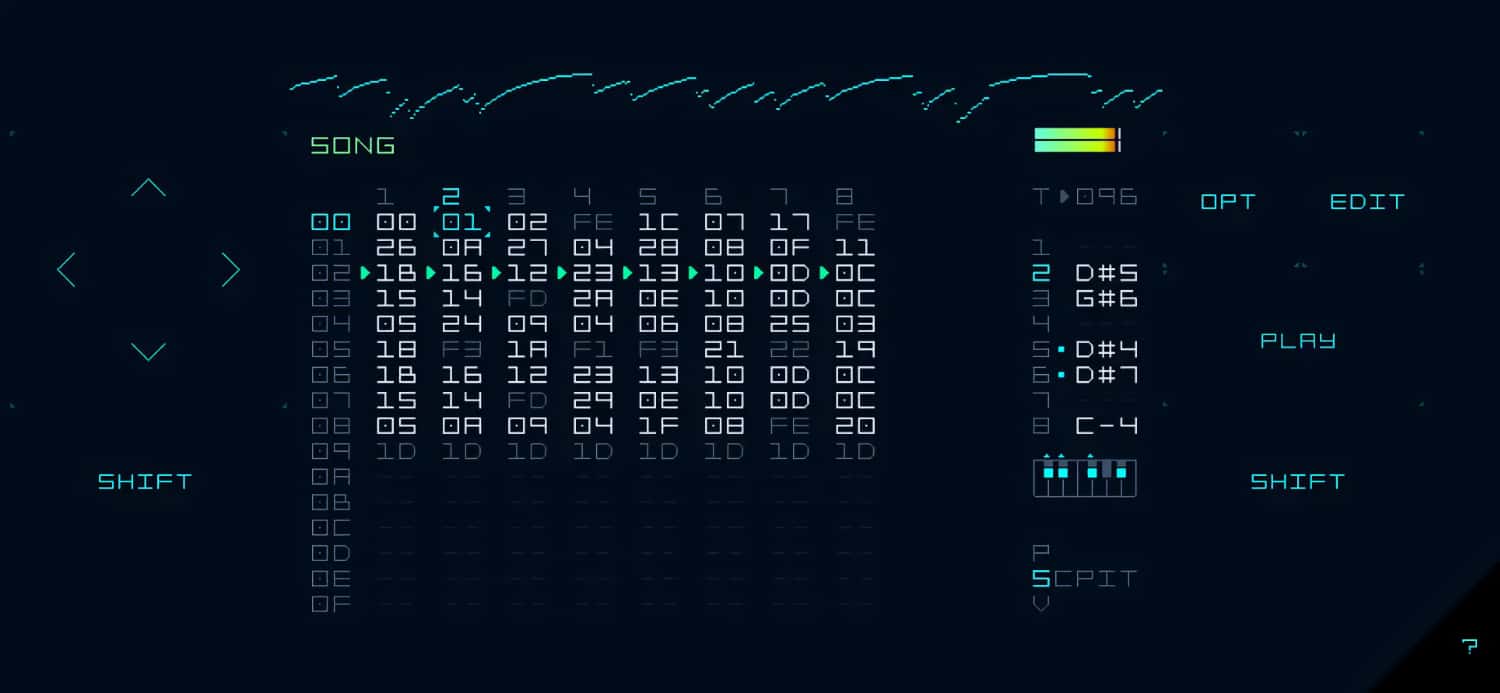
Furthermore, the integration with the iOS Files app simplifies project management. Users can easily move .m8 song files, instrument presets, and sample folders between their mobile device and the M8 hardware. This creates a seamless ecosystem where a musician can start a track on the handheld hardware while traveling and finish it on an iPad with a larger screen and external MIDI connectivity.
The Tracker Workflow: Phrases, Chains, and Tables
The M8 Music Tracker employs a hierarchical structure for song construction that differs significantly from linear sequencing.
- Phrases: The smallest unit of composition, typically consisting of 16 steps. This is where notes, velocities, and "FX commands" (such as filter sweeps or pitch slides) are placed.
- Chains: Phrases are organized into Chains. A Chain can contain up to 16 phrases played in a specific order, allowing for the creation of longer melodic or rhythmic patterns.
- Song View: Chains from the eight different tracks are arranged in the Song View to create a full arrangement.
This structure encourages a modular approach to songwriting. A single phrase can be reused across different chains with different effects applied, making the M8 an exceptionally efficient tool for live performance and generative composition. The inclusion of "Tables" adds another layer of depth; these are 16-step sequences that run at a much higher speed than the main sequencer, allowing for the programming of intricate "glitch" effects, custom envelopes, and sophisticated instrument behavior.
Market Context and Pricing Analysis
At a price point of $29.99 USD, the M8 Music Tracker enters the iOS market as a premium application. While many mobile music apps hover in the $5.00 to $15.00 range, the M8’s pricing reflects its status as a full-featured professional instrument rather than a casual utility. When compared to the cost of the Dirtywave M8 hardware—which typically retails for over $600 and often suffers from limited availability due to component shortages—the iOS version offers an extremely high value-to-cost ratio.
The release also places the M8 in direct competition with other high-end iOS production tools such as Drambo, SunVox, and NanoStudio 2. However, the M8’s specific "tracker" niche and its heritage as a hardware-first device give it a unique standing. For users who find the "piano roll" interface of traditional DAWs cumbersome on a small screen, the M8’s vertical, data-entry-driven workflow provides a viable and often faster alternative.
Industry Impact and Implications
The migration of the M8 to iOS is indicative of a broader trend in the music technology industry: the "softwarization" of boutique hardware. As mobile processing power continues to increase, the gap between dedicated hardware DSP (Digital Signal Processing) and general-purpose mobile CPUs has narrowed. This allows developers like Dirtywave to bring complex, specialized tools to a much wider audience without compromising the integrity of the sound engines.
For the professional music community, the M8 on iOS provides a powerful "sketchpad" that is fully compatible with a high-end hardware counterpart. For the hobbyist, it provides an entry point into the world of trackers and advanced synthesis at a fraction of the hardware’s price. The inclusion of rendered audio export directly within the app further solidifies its position as a complete production environment, capable of taking a project from initial concept to a finished stereo file ready for distribution.
Chronology of Development
- 2020: Timothy Lamb begins public development of the M8 firmware on the Teensy 4.1 platform.
- 2021: The Dirtywave M8 Tracker (Model:01) is officially released, featuring a built-in battery and mechanical switches.
- 2022-2023: Regular firmware updates introduce new engines like Hypersynth and expanded MIDI capabilities.
- Early 2024: Dirtywave announces the Model:02 hardware update with improved screen and build quality.
- September 2024: The M8 Music Tracker is officially launched on the iOS App Store, bringing the full M8 experience to iPhone and iPad users.
As of this release, the M8 Music Tracker remains one of the most sophisticated sequencing environments available on the iOS platform. Its arrival underscores the continuing relevance of the tracker workflow in the 21st century and highlights the growing importance of cross-platform compatibility in modern music production. While the learning curve of a tracker can be steep for those accustomed to traditional DAWs, the depth of control and the portability offered by the M8 on iOS make it a significant addition to the mobile music landscape.
