

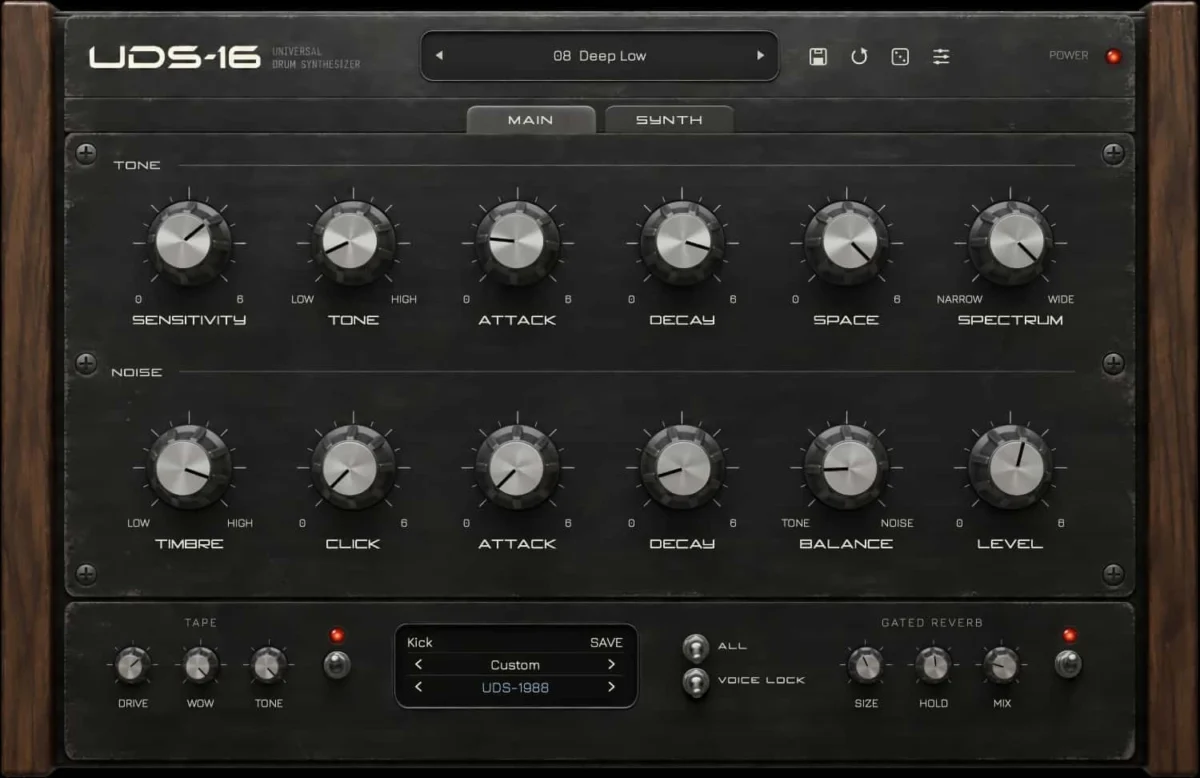
The music technology landscape has witnessed a significant expansion with the official launch of the Tapechild UDS-16, a 16-voice software drum synthesizer designed to bridge the gap between vintage Soviet-era hardware and modern digital production environments. Available for both macOS and Windows, the UDS-16 represents a specialized approach to percussion synthesis, eschewing the common reliance on sample-based playback in favor of real-time mathematical modeling. This release marks a notable moment for producers seeking the "brutalist" and often unpredictable sonic characteristics associated with 1980s Eastern Bloc electronics, now stabilized and optimized for integration into contemporary Digital Audio Workstations (DAWs).
The Historical Context of Soviet Synthesis
To understand the significance of the UDS-16, one must look toward the history of electronic music development in the Soviet Union during the 1980s. Unlike the Western market, which was dominated by the streamlined architectures of Roland, Korg, and Yamaha, Soviet engineers often worked within the constraints of localized component availability. This led to the creation of instruments with unique tonal signatures, characterized by aggressive filters, idiosyncratic envelope curves, and a rugged, industrial aesthetic.
The UDS-16 draws its primary inspiration from two legendary pieces of Soviet hardware: the Lel UDS and the Formanta Rockton. The Lel UDS (Universal Drum Synthesizer) was originally conceived as a flexible analog drum module, often referred to in enthusiast circles as the "Soviet Simmons" due to its ability to produce the hexagonal-drum sounds popular in the 1980s. However, the Lel possessed a grittier, more saturated tone that has become highly sought after in modern industrial, techno, and synthwave genres.
The Formanta Rockton, produced at the same Kachkanar factory that birthed the iconic Polivoks synthesizer, was a sophisticated drum and effects processor. It offered a different flavor of synthesis, often described as more metallic and resonant. By incorporating models based on these machines, Tapechild provides users with a digital recreation of a specific "Iron Curtain" sonic palette that was, for decades, difficult and expensive to acquire in the vintage hardware market.
Technical Architecture and the Four Synthesis Models
The UDS-16 is built upon a 16-voice architecture, allowing for complex rhythmic layering that far exceeds the capabilities of the original hardware units. Each voice can be independently assigned one of four distinct synthesis models, providing a versatile toolkit for sound design.
- Lel UDS-Inspired Model A: This model focuses on the punchy, high-impact transients typical of the original Lel unit. It is optimized for kick drums and toms, utilizing an oscillator structure that mimics the behavior of vintage analog circuits.
- Lel UDS-Inspired Model B: This variation provides a different approach to the Lel architecture, focusing on the "noise" components and decay characteristics. It is particularly effective for creating snares, claps, and unconventional percussive textures.
- Formanta Rockton-Inspired Model: This model recreates the metallic and resonant qualities of the Rockton hardware. It excels at producing hi-hats, cymbals, and industrial "clangs," capturing the specific filter resonance that defined the Formanta factory output.
- Original Tapechild Model: Beyond historical recreation, Tapechild has included an original synthesis engine. This model leverages modern digital signal processing (DSP) to offer a cleaner, more precise sound that complements the three vintage-inspired models, allowing producers to blend old-world character with modern clarity.
A critical feature of the UDS-16 is its commitment to real-time synthesis. Unlike sample-based drum machines, which trigger pre-recorded audio files, the UDS-16 generates every sound from scratch using algorithms. This ensures that every hit is slightly different, avoiding the "machine gun effect" common in digital percussion. Furthermore, real-time synthesis allows for seamless pitch bending, modulation, and parameter automation without the artifacts or "stretching" associated with samples.
Workflow Integration and System Compatibility
Tapechild has developed the UDS-16 to be as accessible as possible for the modern producer. The software is distributed as a VST3 and AU plugin for macOS users, ensuring compatibility with Logic Pro, Ableton Live, Cubase, and other major hosts. Windows users are provided with a VST3 version. Additionally, a standalone version is available for both operating systems, which is particularly useful for live performers who wish to use the drum machine without the overhead of a full DAW.
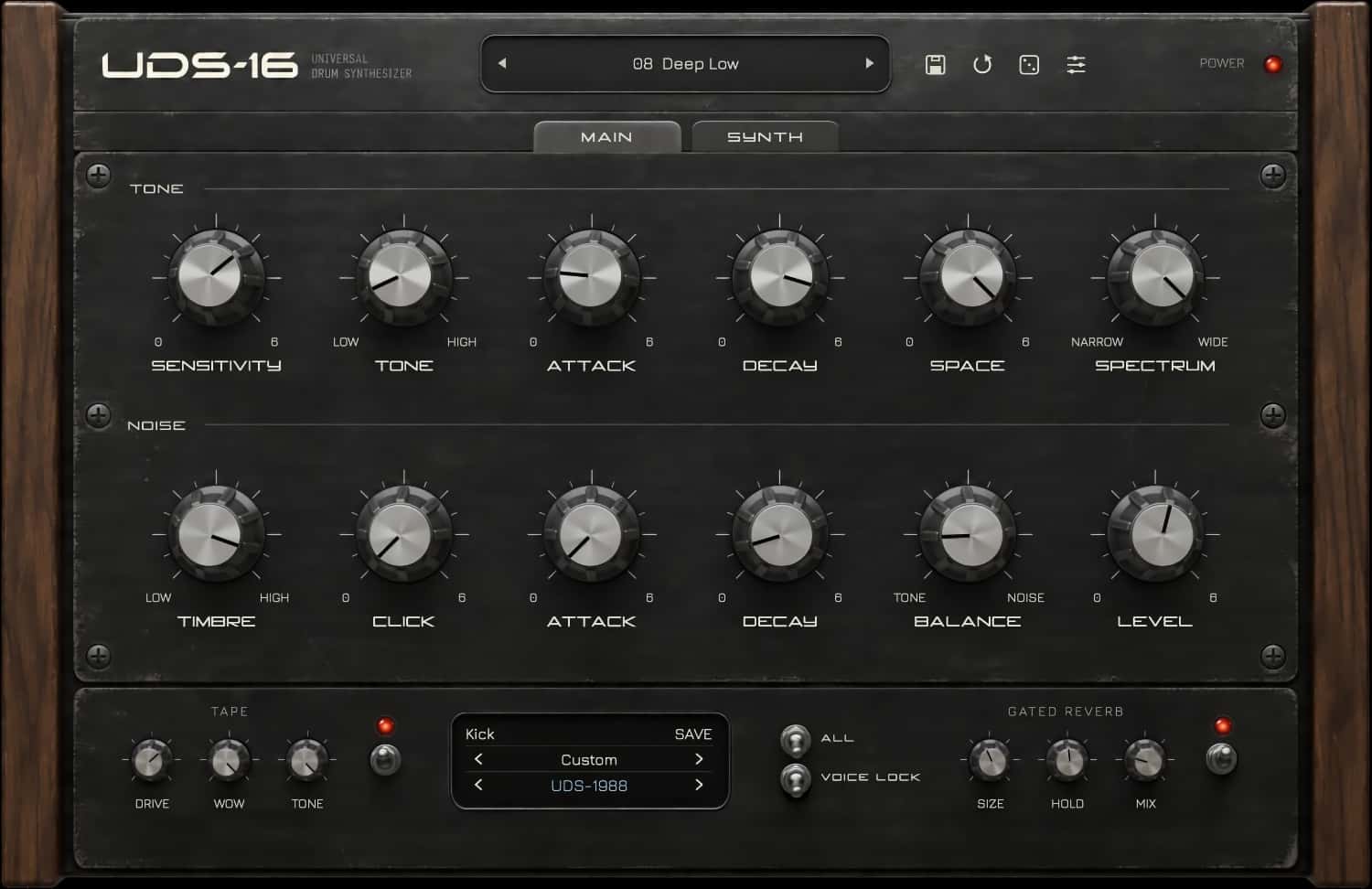
The user interface is designed to reflect the functionalism of the era it celebrates. While it provides deep control over synthesis parameters—including pitch, decay, filter cutoff, resonance, and noise levels—it maintains a layout that encourages experimentation. The 16-voice grid allows for quick switching between different drum sounds, making it a viable tool for both studio composition and live improvisation.
Market Positioning and Industry Implications
The release of the UDS-16 comes at a time when "Sovietwave" and "Coldwave" aesthetics are seeing a resurgence in global music culture. Artists in these genres frequently look for instruments that provide a sense of nostalgia and "lo-fi" authenticity. By offering a dedicated Soviet drum synthesizer, Tapechild is tapping into a niche that has previously been served primarily by expensive hardware or low-quality sample packs.
Industry analysts note that the UDS-16’s pricing strategy is a direct response to the growing "subscription fatigue" among software users. At a one-time purchase price of $49 USD, the instrument positions itself as an affordable alternative to larger, more bloated percussion suites. The inclusion of a license that permits activation on up to three computers is also a user-friendly move, catering to producers who move between a desktop studio and a mobile laptop setup.
The option for offline activation is another significant detail. In an era where many software developers require constant internet "check-ins" for license verification, Tapechild’s decision to allow offline activation is a nod to the needs of professional studios and touring musicians who may not always have reliable internet access.
Detailed Feature Breakdown and Performance Data
While Tapechild has kept the interface streamlined, the underlying engine is capable of significant complexity. The 16-voice polyphony is managed by an optimized DSP engine designed to maintain low CPU overhead. This is a crucial factor for modern productions where dozens of plugins may be running simultaneously.
- Oscillator Section: Each voice features a tunable oscillator capable of generating various waveforms, from pure sines for sub-heavy kicks to more complex waves for harmonic richness.
- Noise Generator: A dedicated noise source is included for each voice, which is essential for recreating the "snare" and "crackle" of vintage analog drum machines.
- Envelope Control: Users have granular control over the attack and decay of both the pitch and the amplitude, allowing for the creation of everything from short, clicky transients to long, atmospheric drones.
- Filter Module: The filter is a key component of the "Soviet sound." The UDS-16 includes resonant filters that can be pushed into self-oscillation, mimicking the aggressive behavior of the Formanta and Lel circuits.
Broader Impact on Electronic Music Production
The introduction of the UDS-16 is expected to influence several sub-sectors of the electronic music industry. In the realm of Techno and Industrial music, the ability to synthesize "brutalist" percussion in real-time offers a level of control that samples cannot match. Producers can automate the decay of a kick drum or the resonance of a snare throughout a track, creating a sense of movement and evolution.
For the "Synthwave" community, the UDS-16 provides a specific historical accuracy. While many plugins emulate the Roland TR-808 or TR-909, few have successfully captured the unique character of the Soviet hardware that was used by experimental bands in the Eastern Bloc during the 80s. This adds a new layer of "flavor" to the genre, moving away from the standard Western pop sounds of the era.
Furthermore, the standalone capability of the UDS-16 suggests its potential as a tool for sound designers in the film and gaming industries. The ability to create harsh, metallic, and mechanical sounds makes it ideal for designing industrial soundscapes or futuristic Foley effects.
Conclusion and Availability
The Tapechild UDS-16 stands as a comprehensive tribute to a specific era of synthesis history, brought forward into the modern age with professional-grade features and a stable digital architecture. By combining the legendary sounds of the Lel UDS and Formanta Rockton with an original synthesis model and 16-voice flexibility, Tapechild has created a tool that is both a historical curiosity and a powerful modern instrument.
The UDS-16 is available for immediate download via the official Tapechild website. The $49 USD price point includes the full version of the software, compatible with macOS (VST3, AU, Standalone) and Windows (VST3, Standalone). With its "no-subscription" model and flexible licensing, the UDS-16 is poised to become a staple in the kits of producers looking for a unique, synthesized edge to their percussion. As the industry continues to look toward the past for inspiration, the UDS-16 serves as a reminder that there is still much to be explored in the unconventional and rugged designs of the Soviet synthesizer era.
