

The evolution of the electric guitar in popular music has frequently been characterized by a trajectory toward increasing complexity and technical bravado. From the pioneering blues-rock of the 1960s to the neoclassical "shred" movement of the 1980s, the prevailing metric for guitar excellence has often been the speed of execution and the density of notes played per measure. However, a parallel narrative exists within the history of rock and roll—one that prioritizes emotional resonance, rhythmic precision, and the strategic use of silence over sheer athletic facility. This minimalist philosophy posits that the most effective guitar parts are often those that exercise the most restraint. By examining four pivotal tracks spanning five decades, musicologists and historians can trace how the "one-note" or "minimalist" solo became a powerful tool for artistic expression, challenging the traditional definition of musical virtuosity.
The Philosophy of Economy in Lead Guitar
The concept of the minimalist guitar solo is rooted in the idea of "economy of notes." While guitarists like Jimi Hendrix or Eric Clapton expanded the instrument’s vocabulary through expansive improvisation, other artists sought to strip the instrument back to its most primal elements. This approach was not necessarily born out of a lack of technical ability, but rather a conscious decision to serve the song’s atmosphere. In a journalistic context, these solos represent a departure from the "guitar hero" archetype, moving instead toward a role as a textural and rhythmic foundation. The following case studies illustrate how different eras of rock utilized minimalism to achieve distinct aesthetic goals.
Neil Young and the Droning Precision of Cinnamon Girl
In 1969, Neil Young released his second studio album, Everybody Knows This Is Nowhere, marking his first collaboration with the band Crazy Horse. The album’s standout track, "Cinnamon Girl," features what is arguably the most famous minimalist solo in rock history. At a time when the San Francisco psychedelic scene was embracing long, winding improvisations, Young opted for a solo that consisted primarily of a single note—a high D—played repeatedly in a rhythmic, percussive fashion.
Technical analysis of the track reveals that Young utilized a "double drop D" tuning (D-A-D-G-B-D), which allowed the open strings to resonate alongside the fretted notes, creating a thick, droning wall of sound. The solo in "Cinnamon Girl" is not a display of finger speed but a study in tension and release. By anchoring the solo to a singular, pulsing note, Young forced the listener to focus on the rhythmic interplay between the guitar and the heavy, lagging beat provided by drummer Ralph Molina.
Critics of the era were initially divided on Young’s "one-note" approach, with some viewing it as a limitation. However, in the decades since, the solo has been re-evaluated as a masterclass in thematic consistency. It mirrors the song’s jagged, distorted riff, providing a cohesive sonic identity that a more traditional, blues-based solo might have disrupted. Young’s work on "Cinnamon Girl," along with other tracks like "Down by the River," established a blueprint for the "anti-hero" guitar style that would later influence the grunge and indie rock movements of the 1990s.
The Beatles and the Claustrophobic Blues of Yer Blues
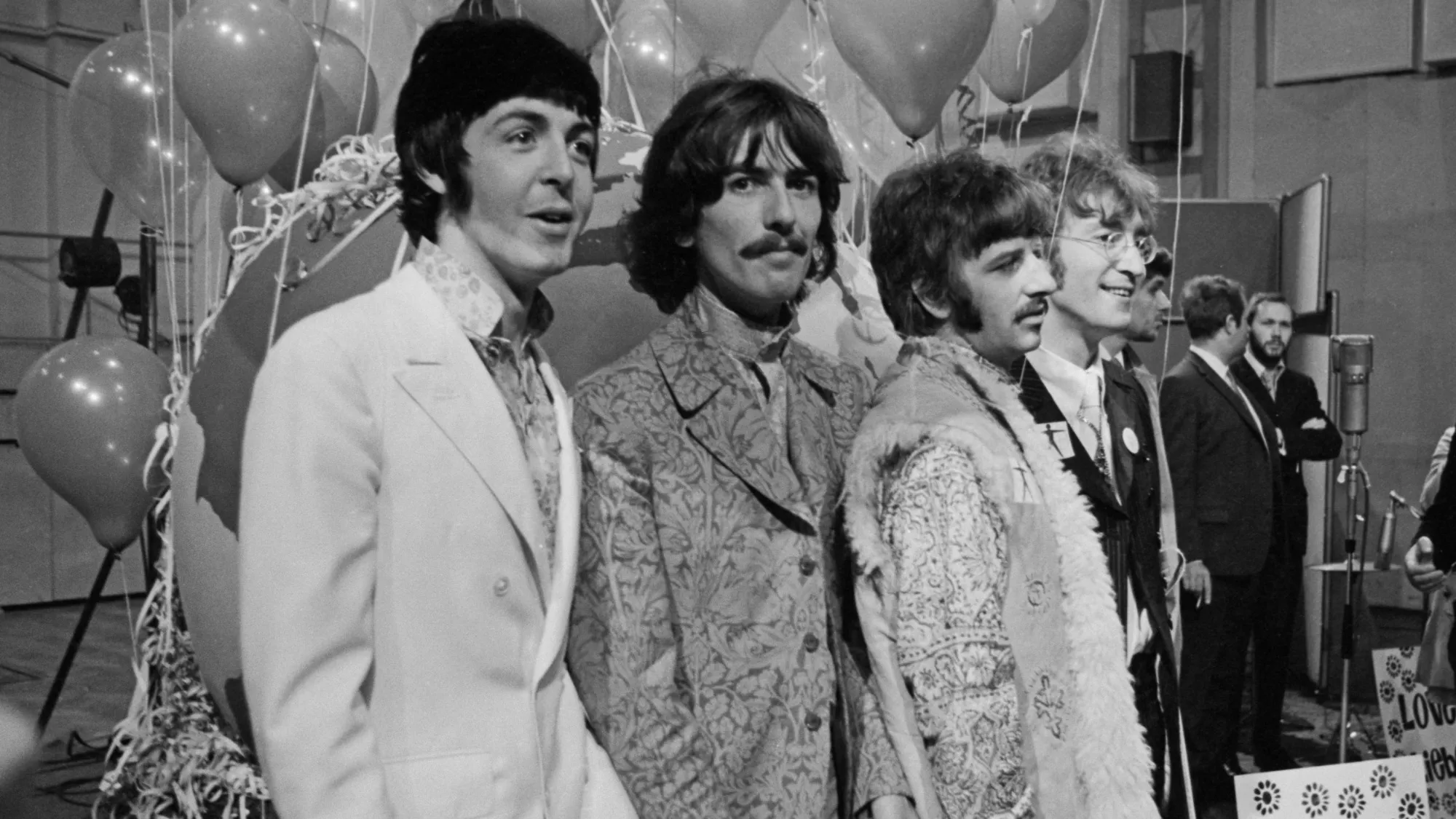
Recorded during the tumultuous sessions for the 1968 self-titled double album (commonly known as the "White Album"), "Yer Blues" represents John Lennon’s attempt to strip away the artifice of the Beatles’ later studio experimentation and return to a raw, primal blues sound. The song was recorded in a small, cramped room—literally a storage closet—at Abbey Road Studios to capture a sense of physical and sonic claustrophobia.
The guitar solos in "Yer Blues," performed by Lennon, reflect this environmental tension. While the track follows a standard 12-bar blues progression in 12/8 time, the leads are intentionally repetitive and dissonant. Rather than navigating the scales with the fluidity of a session musician, Lennon employs a "clattering" style, leaning heavily on minor seconds and repetitive bends. These solos function as an extension of the lyrics, which detail a state of suicidal desperation and loneliness.
Data from the recording sessions indicates that the band performed the track live as a four-piece in that confined space, which contributed to the "bleeding" of instruments into different microphones. This lack of isolation forced a more disciplined approach to the lead parts. Lennon’s solos are not "one-note" in the strictest sense, but they are defined by a stubborn refusal to move beyond a narrow melodic range. This choice reinforced the song’s grim subject matter, proving that in the context of the blues, the repetition of a single "wrong" note can be more evocative than a hundred "right" ones.
The Ramones and the Punk Rock Rebellion of I Wanna Be Sedated
By the late 1970s, rock music had entered an era of unprecedented excess, with progressive rock and stadium rock featuring extended, often indulgent, instrumental breaks. The Ramones emerged from the New York underground with a mandate to dismantle this complexity. Their 1978 single "I Wanna Be Sedated," from the album Road to Ruin, contains a guitar solo that serves as a definitive rejection of the virtuoso tradition.
The solo, performed by Johnny Ramone, consists of a single note played rapidly in a relentless down-stroke fashion. For the duration of the break, the listener is presented with a singular pitch that mirrors the monotonous, numbing frustration described in the lyrics. Johnny Ramone was famously vocal about his disdain for "hippy" solos, once stating that he wanted the band’s music to be "pure, white heat."
From a technical standpoint, the "I Wanna Be Sedated" solo is a rhythmic exercise. It relies on the sheer velocity of the picking hand and the saturated distortion of the amplifier to create a sense of urgency. This approach had a profound impact on the music industry, democratizing the electric guitar for a generation of musicians who felt alienated by the high barrier to entry represented by jazz-fusion and prog-rock. The solo’s success—evidenced by the song’s enduring status as a multi-platinum classic—demonstrated that attitude and intent could supersede formal training in the hierarchy of rock performance.
Coldplay and the Atmospheric Crescendo of Fix You
While the minimalist solo is often associated with the grit of 1960s rock or 1970s punk, it found a new application in the 21st century through the lens of atmospheric pop and arena rock. Coldplay’s 2005 power ballad "Fix You," released on the album X&Y, utilizes a minimalist guitar approach to achieve a cinematic, emotional climax.
The song’s structure is a slow build, beginning with a simple organ motif and gradually incorporating bass, drums, and choral vocals. The guitar solo, performed by Jonny Buckland, does not appear until the final third of the track. Rather than a melodic lead, Buckland employs a series of three-note arpeggios and sustained swells, often utilizing an E-Bow or heavy delay pedals to create a "shimmering" effect.
The effectiveness of the "Fix You" solo lies in its placement and its restraint. By the time the guitar enters, the emotional tension of the song has reached a breaking point. Buckland’s part acts as a harmonic release, reinforcing the melody without distracting from the vocal narrative. According to chart data, "Fix You" peaked at number 4 on the UK Singles Chart and has since become one of the most commercially successful ballads of the decade. Its success is a testament to the power of "textural" guitar playing, where the instrument is used to paint a broad sonic landscape rather than to take center stage for a technical exhibition.
Chronology of Influence and Technical Evolution
To understand the broader implications of these solos, one must look at the chronology of their influence.
- 1969: Neil Young introduces the "one-note" solo, establishing that minimalism can be a deliberate aesthetic choice in folk-rock.
- 1968-1970: The Beatles and the subsequent "blues revival" artists use repetitive leads to convey emotional rawness.
- 1976-1980: The punk movement codifies minimalism as a political and social statement against the music establishment.
- 1990s: Grunge artists like Kurt Cobain and J Mascis cite Young and the Ramones as primary influences, favoring "sloppy" or minimalist leads over "shredding."
- 2000s-Present: Post-rock and indie bands (e.g., Sigur Rós, The National) utilize Buckland-style textures to create expansive, atmospheric soundscapes.
Technical Data and Structural Analysis
Musical analysts often categorize these solos based on their "information density." A traditional solo might contain 15 to 20 unique notes per ten seconds of music. In contrast, the solos in "Cinnamon Girl" or "I Wanna Be Sedated" feature an information density of nearly zero in terms of pitch variation, but a high density in terms of rhythmic subdivisions.
| Track | Year | Guitarist | Primary Technique | Note Count (Approx. Solo Length) |
|---|---|---|---|---|
| Cinnamon Girl | 1969 | Neil Young | Rhythmic pulsing on D | 1-2 distinct notes |
| Yer Blues | 1968 | John Lennon | Repetitive bends/Minor 2nds | 4-5 distinct notes |
| I Wanna Be Sedated | 1978 | Johnny Ramone | Rapid down-strokes | 1 distinct note |
| Fix You | 2005 | Jonny Buckland | Arpeggiated swells | 3-4 distinct notes |
Broader Impact and Industry Implications
The shift toward minimalism has had significant implications for music production and instrument sales. The "less is more" philosophy encouraged the development of effects pedals (delays, reverbs, and loopers) that allowed a single note to carry more weight and duration. Furthermore, it shifted the focus of guitar pedagogy. While technical proficiency remains a goal for many, modern curricula often place equal emphasis on "playing for the song" and understanding the emotional impact of phrasing.
Official responses from the industry, including accolades from organizations like the Rock and Roll Hall of Fame and various "Greatest Guitarist" lists, have increasingly recognized these minimalist players. Neil Young and The Beatles are perennial fixtures on such lists, not for their speed, but for their innovation.
In conclusion, the minimalist guitar solo is a vital component of the rock lexicon. By rejecting the pressure to perform at the limits of human dexterity, artists like Neil Young, John Lennon, Johnny Ramone, and Jonny Buckland proved that the guitar’s true power lies in its ability to communicate a feeling. Whether through a single, defiant note or a wash of atmospheric sound, these solos remain iconic because they understand a fundamental truth of artistry: that the most profound statements are often the simplest ones. As music continues to evolve in the digital age, the lessons of these four solos—restraint, rhythm, and emotional honesty—remain as relevant as ever.
