

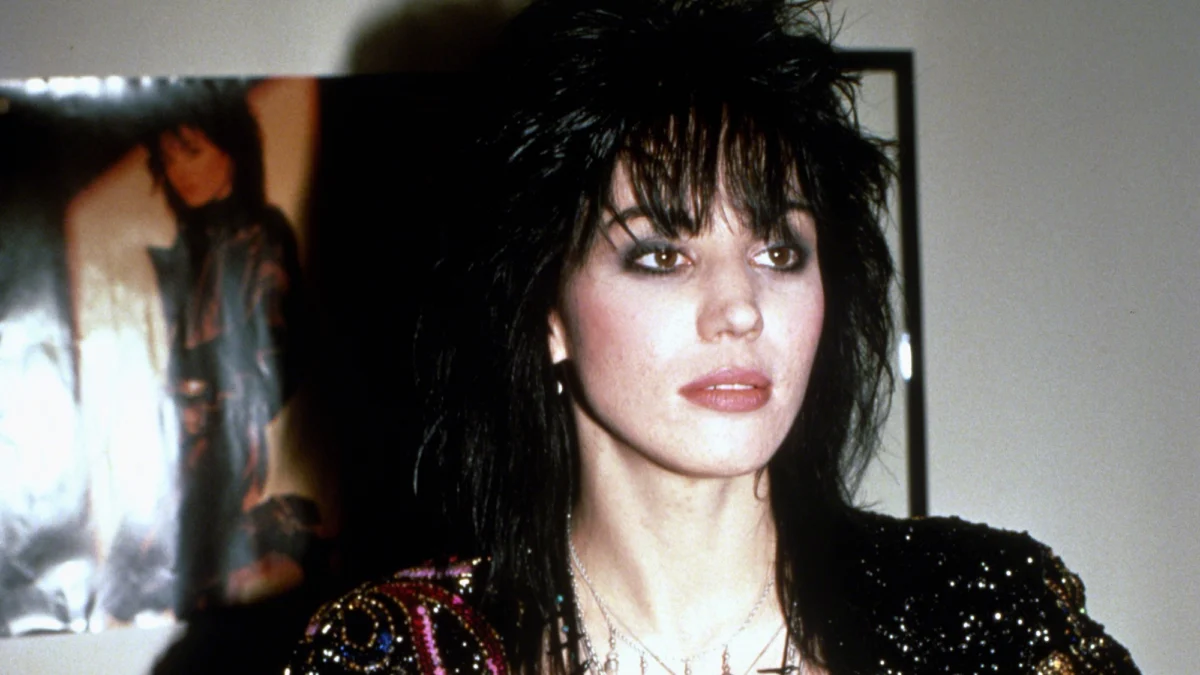
In the contemporary musical landscape, certain songs transcend the boundaries of mere entertainment to become cultural artifacts, woven into the very fabric of global consciousness. Joan Jett’s rendition of "I Love Rock ‘N’ Roll" is perhaps the quintessential example of this phenomenon. While the track is now regarded as a foundational pillar of the rock genre—a song so ubiquitous that it feels as though it has always existed—its journey from a British B-side to a global chart-topper is a complex narrative of artistic intuition, industry systemic bias, and the triumph of independent spirit. The story of "I Love Rock ‘N’ Roll" is not merely the story of a hit single; it is the chronicle of how Joan Jett bypassed a gatekept industry to define her own legacy and, in the process, provided a blueprint for the modern independent music movement.
The Genesis: From London B-Sides to a Response to the Stones
The history of "I Love Rock ‘N’ Roll" begins not in the United States, but in the United Kingdom during the mid-1970s. The song was written in 1975 by Alan Merrill and Jake Hooker of the band The Arrows. At the time, the British rock scene was grappling with its identity as glam rock began to transition into the early whispers of punk. The inspiration for the track was surprisingly specific: it was a direct rebuttal to the Rolling Stones.
According to Alan Merrill, the song was a "knee-jerk response" to the Rolling Stones’ 1974 hit "It’s Only Rock ‘N’ Roll (But I Like It)." Merrill felt that Mick Jagger’s lyrics were somewhat apologetic or dismissive of the genre. In an effort to create a more affirmative, populist anthem, Merrill and Hooker penned a chorus that was undeniable in its simplicity and conviction. Released as a B-side to the single "Broken Down Heart," the song initially failed to make a significant impact on the charts. However, it caught the attention of a young American musician who was touring the UK with her band, The Runaways.
In 1976, while watching The Arrows perform on their weekly television series in London, Joan Jett heard the song for the first time. To Jett, the track possessed an infectious energy that she felt was missing from much of the mainstream music of the era. She recognized its potential as a hit, even if the original creators had not yet seen it reach those heights. This moment of discovery would set the stage for a five-year quest to bring the song to the American public.
The Struggle for Autonomy and the 23 Rejections
Joan Jett’s path to recording "I Love Rock ‘N’ Roll" was fraught with institutional resistance. Following the dissolution of The Runaways in 1979, Jett sought to establish herself as a solo artist. Despite her previous success and visible talent, she encountered a music industry that was profoundly skeptical of a female artist leading a hard rock band.
Jett first attempted to record "I Love Rock ‘N’ Roll" in 1979 with Steve Jones and Paul Cook of the Sex Pistols. This version was released as a B-side to her single "You Don’t Own Me," but it failed to garner significant traction. Undeterred, Jett remained convinced that the song was a "number one record." When she formed her band, The Blackhearts, she and her manager/collaborator Kenny Laguna began shopping her demos to major and minor record labels across the United States.
The response was overwhelmingly negative. Jett famously kept the rejection letters from 23 different record labels. Executives argued that there was no market for a female rock singer who didn’t fit the "pop princess" mold. They viewed her leather-clad, grit-heavy aesthetic as a liability rather than an asset. This systemic rejection forced Jett and Laguna into a radical position: they decided to bypass the traditional label system entirely.
In 1980, they founded Blackheart Records. The label was born out of necessity, funded by Laguna’s savings and operated out of the trunk of his car. They sold records at shows and distributed them to independent record stores, building a grassroots following that the major labels had deemed impossible. This "DIY" (Do-It-Yourself) approach was revolutionary at the time, predating the indie-rock boom of the 1990s and establishing Jett as a pioneer of artist-owned enterprises.
The 1981 Recording and the Rise to Number One
By the time Jett entered the studio in late 1981 to record the version of "I Love Rock ‘N’ Roll" that would become world-famous, she had refined the arrangement with The Blackhearts. The production, handled by Laguna and Ritchie Cordell, emphasized the song’s rhythmic core—the heavy, stomping beat and the iconic handclaps that invite audience participation.
The single was released in early 1982, and its ascent was meteoric. It reached Number One on the Billboard Hot 100 on March 20, 1982, and remained at the top of the charts for seven consecutive weeks. The success was not limited to the United States; the song became a global phenomenon, topping charts in Australia, Canada, and several European nations.
The impact of the song was bolstered by its music video, which featured a grainy, black-and-white performance by Jett and the Blackhearts at a New York City bar. In the early days of MTV, the video’s raw, unpolished energy resonated with a youth audience looking for authenticity. Jett’s defiant gaze and the song’s simple, powerful riff became synonymous with the burgeoning rock-and-roll revival of the early 80s.
Statistical Impact and Industry Repercussions
The commercial success of "I Love Rock ‘N’ Roll" provided a stark empirical rebuke to the 23 labels that had passed on Jett. The single was certified Platinum by the RIAA, representing over two million units sold in the U.S. alone during its initial run. The accompanying album, also titled I Love Rock ‘N’ Roll, reached Number Two on the Billboard 200 and was certified 3x Platinum.
For the industry, the success of an independent label like Blackheart Records was a watershed moment. It proved that an artist with a dedicated fanbase and a clear vision could achieve mainstream dominance without the machinery of a major conglomerate. This success gave Jett the leverage to eventually sign a distribution deal with MCA Records, but notably, she retained ownership of her masters and her label—a level of control that was nearly unheard of for artists, particularly female artists, in that era.
Broader Cultural and Musical Implications
Beyond the numbers, the legacy of "I Love Rock ‘N’ Roll" lies in its role as a gender-neutral anthem. By taking a song originally written and performed by men and making it her own, Jett dismantled the "groupie" or "muse" stereotypes often associated with women in rock. She wasn’t singing about being with the band; she was the band.
The song’s longevity is evidenced by its continued presence in popular culture. It has been covered by artists ranging from Britney Spears to Weird Al Yankovic, and it remains a staple of film soundtracks, sporting events, and karaoke bars. In 2015, Joan Jett & the Blackhearts were inducted into the Rock and Roll Hall of Fame, a ceremony where "I Love Rock ‘N’ Roll" was celebrated as the definitive moment of Jett’s career.
The song also provided a lifelong financial and professional foundation for its original co-writer, Alan Merrill. Until his passing in 2020, Merrill frequently spoke of how Jett’s version of the song had changed his life, acknowledging that her interpretation found the "hit" quality that The Arrows’ version had lacked.
Analysis: Why the Song Endures
From a musicological perspective, "I Love Rock ‘N’ Roll" succeeds because of its economy of design. It utilizes a classic I-IV-V chord progression, which is the bedrock of rock and blues. The lyrics are aspirational and relatable, focusing on the universal experience of a chance encounter in a jukebox joint. Jett’s vocal performance is characterized by a mix of nonchalance and intensity, a "coolness" that defined the rock aesthetic for a new generation.
In reflecting on the song’s success, Jett herself has noted that the achievement felt particularly sweet because of the "blood, sweat, and tears" required to bring it to fruition. The song stands as a testament to the importance of artist intuition. Jett knew the song was a hit in 1976; she spent years fighting an industry that told her she was wrong, only to be proven right on a global scale.
The story of "I Love Rock ‘N’ Roll" is ultimately a narrative of persistence. It serves as a reminder that the gatekeepers of the music industry are not infallible and that a great song, paired with an artist of uncompromising conviction, can break through even the most formidable barriers. Joan Jett didn’t just cover a song; she claimed a genre, and in doing so, she ensured that her name—and her love for rock and roll—would be remembered for generations to come.
