

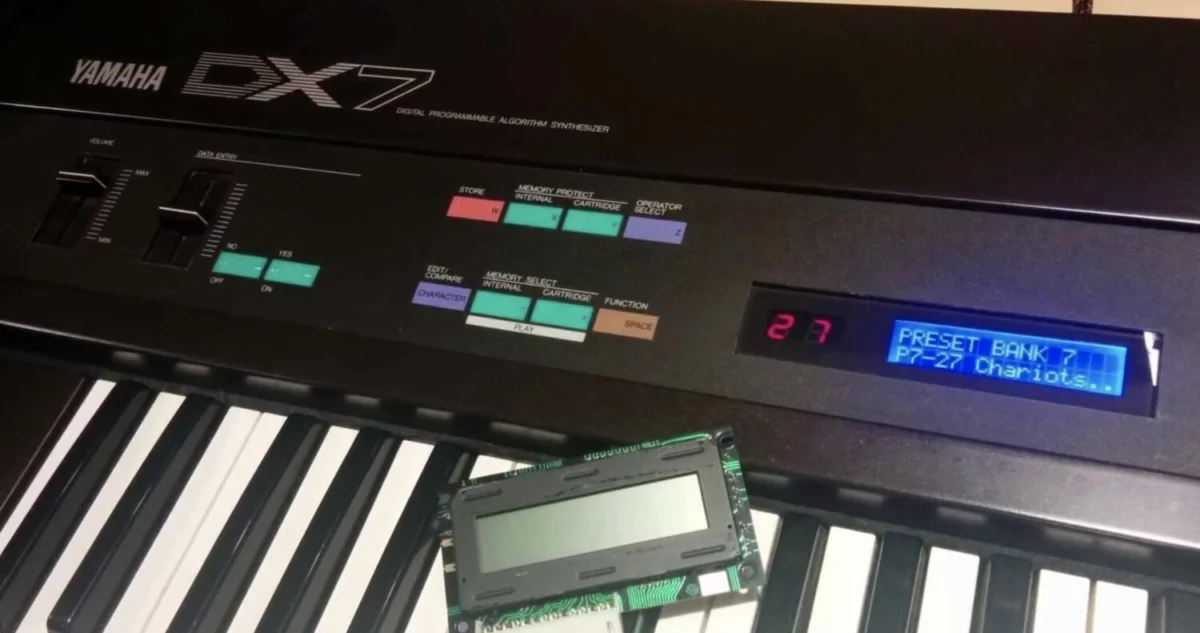
The landscape of digital sound synthesis is undergoing a significant transformation as developer Toon Beerten introduces DX7 AI Studio, a free web-based application designed to demystify the notoriously complex world of Frequency Modulation (FM) synthesis. By leveraging artificial intelligence and natural language processing, the tool allows musicians and sound designers to generate fully functional Yamaha DX7 patches using simple English descriptions. This innovation marks a pivotal moment for owners of vintage hardware and software emulations who have long struggled with the intricate programming requirements of the legendary 1980s-era synthesizer.
The Challenge of Frequency Modulation Synthesis
To understand the significance of DX7 AI Studio, one must first examine the historical context and technical difficulty of the Yamaha DX7. Released in 1983, the DX7 was the first commercially successful digital synthesizer. It utilized FM synthesis, a method developed by John Chowning at Stanford University and licensed by Yamaha. Unlike the subtractive synthesis common in the 1970s—which relied on oscillators, filters, and knobs to shape sound—FM synthesis used a system of six "operators" (sine wave oscillators) that modulated one another in various configurations known as "algorithms."
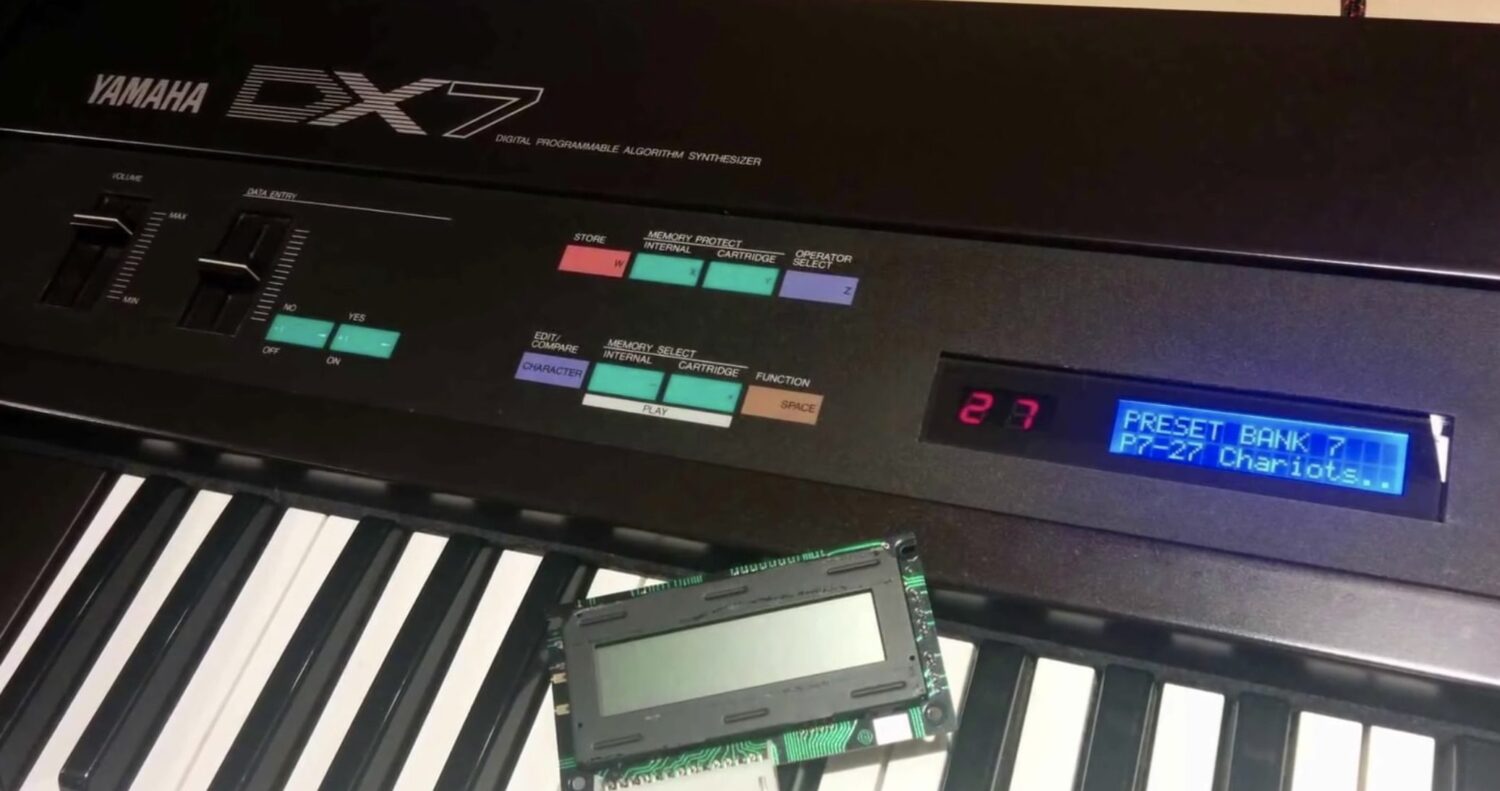
The DX7 featured 32 different algorithms, each dictating how the operators interacted. Programming these sounds required a deep understanding of mathematical ratios and complex envelope generators. Compounding this difficulty was the DX7’s physical interface: instead of the dedicated knobs and sliders found on analog predecessors like the Minimoog or Prophet-5, the DX7 utilized a single data entry slider and a series of membrane buttons. Musicians were forced to navigate a menu-driven system on a small, non-backlit liquid crystal display (LCD).
Consequently, the vast majority of DX7 users relied solely on factory presets. This led to the "DX7 sound" dominating 1980s pop music—ranging from the iconic electric piano used by Whitney Houston to the metallic basslines of Howard Jones—but it also stifled original sound design for those without the patience to master the machine’s architecture.
The Innovation of DX7 AI Studio
Toon Beerten’s DX7 AI Studio aims to bypass these decades-old barriers by providing a "plain English" interface for patch creation. Users are presented with a text input field where they can describe a desired timbre, such as a "warm glassy bell with a slow attack" or a "gritty industrial bass with a metallic resonance." The underlying AI interprets these descriptive adjectives and translates them into the specific numerical values required by the DX7’s six operators, 32 algorithms, and multi-stage envelopes.
The application generates a System Exclusive (SysEx) file, the standard data format for MIDI hardware. This file can then be transmitted directly to an original Yamaha DX7, a DX7II, or modern software emulations like Arturia’s DX7 V or the open-source Dexed. By removing the need for manual parameter entry, Beerten has effectively turned a complex mathematical puzzle into a conversational experience.
Technical Architecture and AI Integration
The developer notes that the tool is designed to let users create patches without needing to "wade into 6-operator algorithm charts." While the specific machine learning model used in DX7 AI Studio has not been disclosed in exhaustive detail, the system functions by mapping linguistic concepts to harmonic structures. In FM synthesis, the relationship between the "carrier" (the operator that produces the audible sound) and the "modulator" (the operator that changes the carrier’s frequency) determines the overtone content.
For example, a "glassy" sound typically requires high-frequency modulation with specific non-integer ratios to create inharmonic sidebands. A "warm" sound, conversely, usually implies fewer high-frequency overtones and a more subdued modulation index. The AI acts as a translator, understanding that the word "warm" should correlate with lower output levels on the modulating operators and perhaps a specific filter-like envelope behavior.
Chronology of FM Synthesis Evolution
The release of DX7 AI Studio is the latest entry in a long timeline of attempts to make FM synthesis more accessible:
- 1973: John Chowning discovers FM synthesis at Stanford University.
- 1983: Yamaha releases the DX7, revolutionizing the industry but creating a "programming wall" for many users.
- 1987: Yamaha releases the DX7II, offering improved fidelity and some UI refinements, though the core programming remains difficult.
- 2001: Native Instruments releases FM7 (later FM8), bringing FM synthesis to the software world with a more visual, "matrix-style" interface.
- 2013: The open-source community releases Dexed, a highly accurate DX7 emulator that becomes the gold standard for patch management.
- 2024: Toon Beerten launches DX7 AI Studio, introducing generative AI as the primary interface for FM sound design.
Industry Response and Musician Perspectives
Initial reactions from the synthesizer community have been largely positive, particularly among "preset-weary" musicians. While purists may argue that the trial-and-error of manual programming leads to happy accidents that AI might miss, the general consensus is that accessibility tools are necessary for the continued relevance of 40-year-old technology.
"It’s actually just fun!" Beerten noted during the tool’s rollout. This sentiment highlights a shift in the philosophy of music technology: moving away from the "gatekeeping" of technical complexity and toward a focus on immediate creative output. For hobbyists who own a DX7 but have never moved beyond the factory "Internal" bank, this tool offers a new lease on life for their hardware.
Professional sound designers have also expressed interest in the tool as a "starting point" generator. By using AI to create a rough approximation of a sound, a designer can then use traditional editors to fine-tune the nuances, saving hours of initial setup time.
Broader Implications for Music Technology
The emergence of DX7 AI Studio reflects a broader trend in the music industry where artificial intelligence is used not to replace the artist, but to interface with legacy equipment. As vintage synthesizers continue to rise in value and popularity, the demand for modern ways to control them has grown. We are seeing a "hybrid era" where 1980s circuitry is controlled by 2020s algorithms.
Furthermore, this development sets a precedent for other difficult-to-program vintage gear. Instruments like the Roland D-50 (Linear Arithmetic synthesis) or the Korg M1 (AI Synthesis) could potentially benefit from similar AI-driven "description-to-patch" interfaces. The democratization of sound design means that the unique textures of these machines are no longer reserved for those with an engineering background.
Technical Data and Accessibility
DX7 AI Studio is currently available as a free, browser-based application. This accessibility is crucial, as it requires no specialized hardware beyond a computer with a MIDI interface (to connect to a physical synth) or a Digital Audio Workstation (DAW) to host a plugin.
Key technical features of the generated patches include:
- Full 6-Operator Support: Unlike simplified 4-operator FM synths (like the Yamaha DX100), the AI utilizes the full complexity of the DX7 engine.
- Envelope Scaling: The AI calculates the R1-R4 and L1-L4 values for each operator to match the "attack" and "decay" descriptions provided by the user.
- SysEx Compatibility: The output is a standard .syx file, ensuring it works across the entire ecosystem of DX-compatible devices.
Conclusion: The Future of Generative Sound Design
As AI continues to permeate the creative arts, tools like DX7 AI Studio demonstrate a practical and ethical application of the technology. Rather than generating a finished song, the AI assists in the creation of a "palette"—the individual sounds that a musician then uses to compose.
By removing the "math barrier" from the Yamaha DX7, Toon Beerten has invited a new generation of musicians to explore the crystalline, metallic, and organic textures of FM synthesis. The tool stands as a testament to the idea that even the most daunting technology of the past can be made intuitive through the innovations of the present. Whether this leads to a resurgence of the "80s sound" or the discovery of entirely new sonic territories remains to be seen, but the doors to the DX7’s complex internal engine have, for the first time, been thrown wide open for everyone.
