

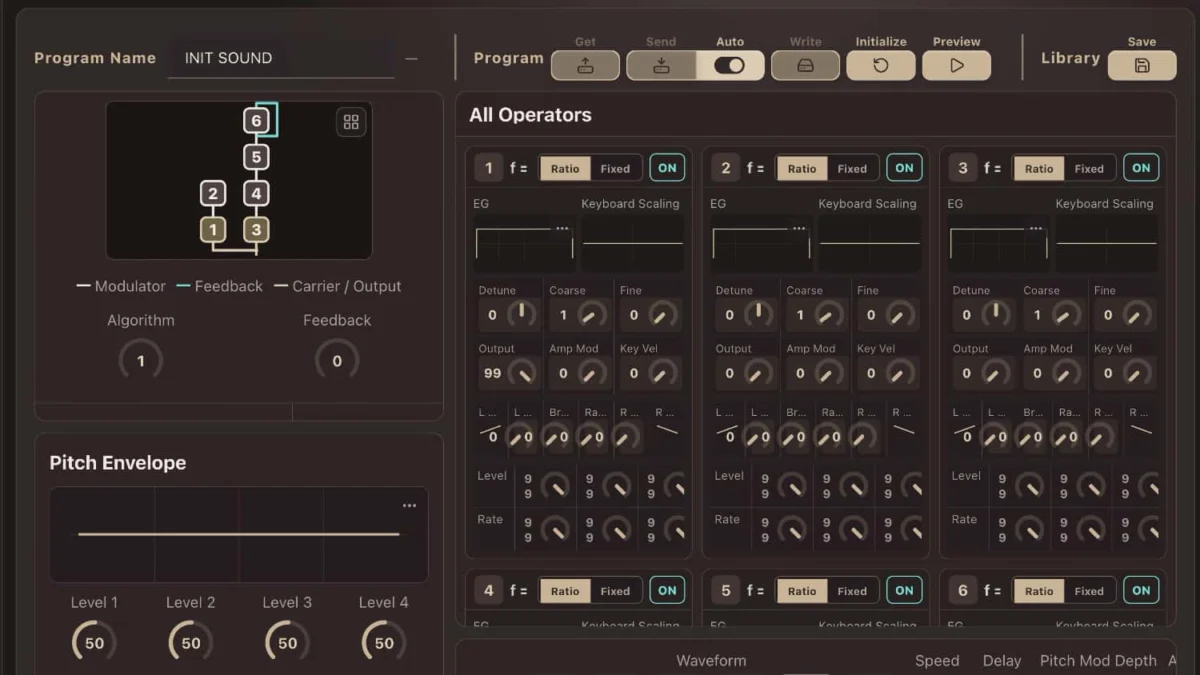
The landscape of portable music production has been significantly expanded with the release of a new, comprehensive sound and sequence editor for the KORG volca fm2, developed by Masaki Ono. This web-based utility offers a sophisticated interface for one of the most popular compact synthesizers on the market, addressing long-standing challenges associated with Frequency Modulation (FM) synthesis programming on small-format hardware. By utilizing the Web MIDI API, the editor allows users to manipulate the intricate parameters of the volca fm2 directly from a browser, providing a visual and intuitive workflow that contrasts sharply with the hardware’s internal menu-diving system.
The KORG volca fm2, a six-voice digital FM synthesizer, has been praised for its ability to replicate the classic sounds of the 1980s, specifically the Yamaha DX7, while maintaining a footprint small enough to fit in a backpack. However, the complexity of its six-operator engine—comprising dozens of parameters for envelopes, operators, and algorithms—often presents a steep learning curve for users limited to the device’s small LED display and multi-function knobs. Masaki Ono’s editor mitigates these hurdles by laying out every parameter of the FM engine in a clear, accessible graphical user interface (GUI), enabling real-time sound design and sequence management.
Technical Specifications and Editor Capabilities
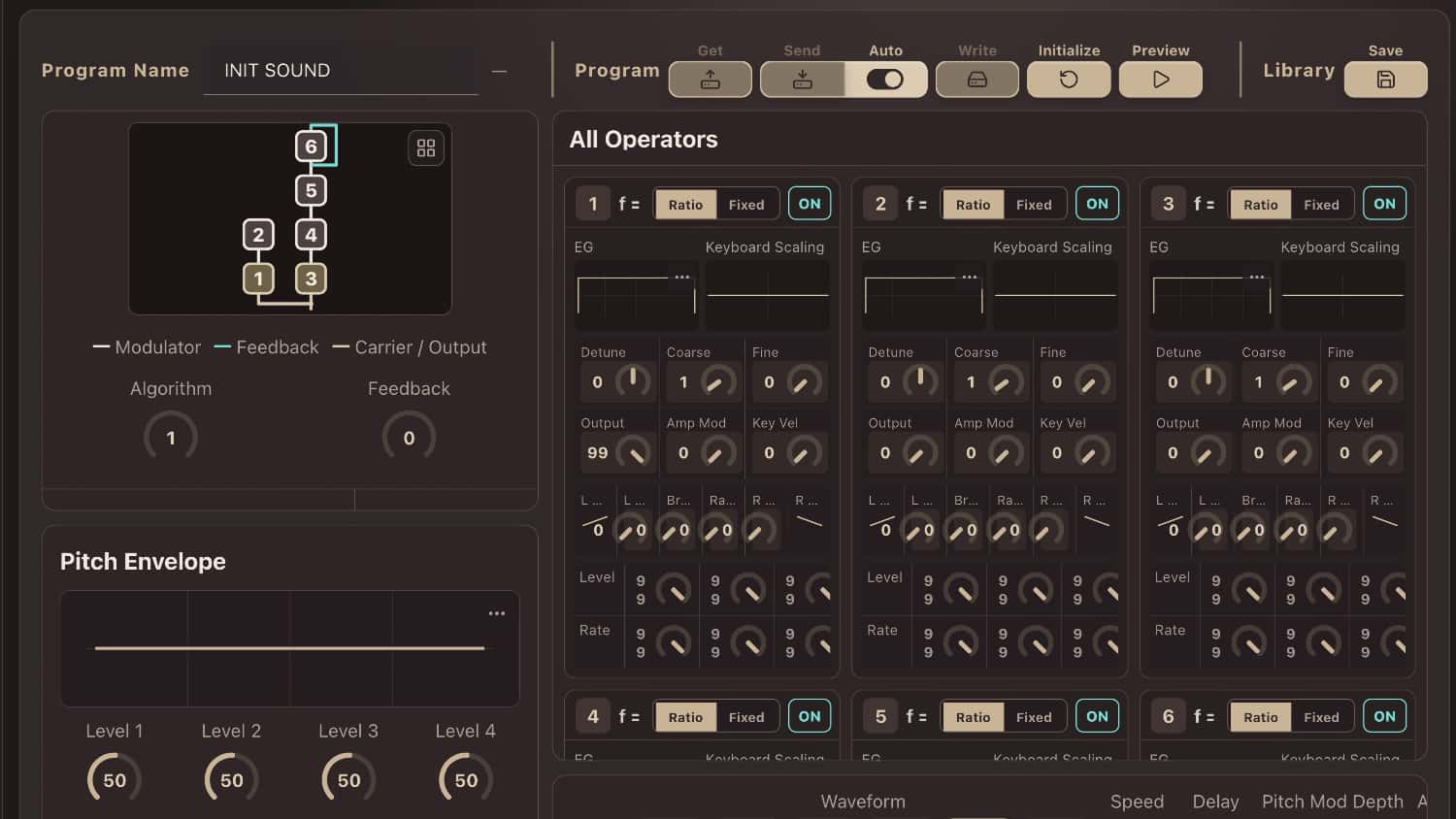
The Masaki Ono editor is designed to function as a bridge between the digital precision of the computer and the tactile output of the volca fm2 hardware. At its core, the tool provides a complete overview of the 32 available algorithms that define the relationship between the six operators. In FM synthesis, the arrangement of these operators—whether they act as "carriers" that produce audible sound or "modulators" that alter the timbre of the carriers—is fundamental to sound creation. The editor visualizes these relationships, allowing users to see exactly how frequency ratios and levels are interacting.
Key features of the editor include:
- Real-time Operator Control: Users can adjust the frequency, level, and envelope generators for all six operators simultaneously. This is a significant improvement over the hardware, which requires toggling through menus to reach individual operator settings.
- Envelope Visualization: The tool provides a graphical representation of the Attack, Decay, Sustain, and Release (ADSR) stages for both the volume and the pitch envelopes, a feature that is entirely absent from the hardware’s physical interface.
- Sequence Management: Beyond sound design, the editor includes a sequencer interface that allows for the creation and modification of patterns. This includes the ability to manage the 16-step sequencer, adjust motion sequencing data, and save patterns for later recall.
- Patch Library Integration: The editor facilitates the importing and exporting of patches. Since the volca fm2 is compatible with original Yamaha DX7 SysEx files, the editor serves as an efficient conduit for auditioning and refining thousands of legacy sounds available in the public domain.
The Evolution of the KORG Volca FM Series
To understand the impact of this new editor, it is necessary to examine the history of the KORG volca line. Launched in 2013, the Volca series was KORG’s response to a growing demand for affordable, battery-powered analog and digital instruments. The original Volca FM, released in 2016, was a three-voice powerhouse that brought the sound of the 1980s to a new generation. While successful, it lacked several features that professional users requested, such as higher polyphony and a MIDI Out port.
In 2022, KORG released the volca fm2, which addressed these primary concerns. The updated model doubled the polyphony to six voices, added a MIDI Out (via a 3.5mm TRS connection), and introduced touch-sensitive velocity via MIDI. The inclusion of MIDI Out was particularly crucial for developers like Masaki Ono, as it allowed for two-way communication between the hardware and software editors. This "handshake" ensures that when a knob is turned on the hardware, the software reflects the change, and vice versa—a process known as parameter synchronization.
The Challenge of Frequency Modulation Synthesis
FM synthesis has historically been regarded as one of the most difficult synthesis methods to master. Developed by John Chowning at Stanford University in the 1960s and later commercialized by Yamaha, the method relies on high-speed frequency modulation to create complex harmonic overtones. Unlike subtractive synthesis, where a filter is used to remove frequencies from a harmonically rich waveform, FM synthesis builds complexity from the ground up.
The difficulty for the average user lies in the non-linear nature of the results; a small change in a modulator’s frequency ratio can transform a mellow flute sound into a harsh, metallic clang. On the volca fm2, these changes are often made blindly, as the screen only displays three characters at a time. The Masaki Ono editor transforms this "blind" programming into a visual science. By seeing the "operator tree" and the corresponding envelope curves, the user can make informed decisions, leading to more intentional sound design rather than accidental discoveries.
Broader Implications for the Synthesizer Community
The release of this editor as a free, web-based tool reflects a growing trend in the music technology industry: the democratization of high-end tools through open-web standards. By using Web MIDI, Ono eliminates the need for users to download and install bulky drivers or proprietary software suites. This makes the tool platform-agnostic, functioning equally well on Windows, macOS, and Linux, provided the user is utilizing a compatible browser like Google Chrome or Microsoft Edge.
While KORG has not officially commented on the release of this third-party tool, the community response has been overwhelmingly positive. Independent developers often fill the gaps left by major manufacturers, who may not have the resources or the incentive to provide long-term software support for budget-tier hardware. The existence of high-quality, free editors often extends the market life of a product, as it becomes more attractive to power users who require deep editing capabilities.
Comparative Analysis with Existing Solutions
Masaki Ono’s editor enters a niche market where several other solutions exist, yet it distinguishes itself through its accessibility and focus on the fm2’s specific features. Previously, users relied on "Dexed," a free VST plugin that acts as a DX7 emulator and librarian. While powerful, Dexed can be cumbersome to set up as a hardware controller within a Digital Audio Workstation (DAW). Other web-based editors, such as "Synthmata" by Oscar Sahun, paved the way for browser-based control, but Ono’s version is specifically optimized for the nuances of the second-generation Volca hardware, including its expanded effects section and velocity sensitivity.
Furthermore, the integration of a sequence editor sets this tool apart. Most FM editors focus solely on the "patch" (the sound itself), neglecting the "sequence" (the musical pattern). By allowing users to visualize the 16-step grid, Ono has provided a tool that assists not just sound designers, but also performers and composers who use the Volca as a central part of their live sets.
Chronology of Development and Availability
The development of the volca fm2 editor follows a timeline of increasing community-led innovation for the KORG Volca series:
- 2016: Release of the original Volca FM; initial third-party editors begin to appear, mostly as Max for Live devices or standalone MIDI utilities.
- 2021: Rumors of a Volca FM successor circulate as the original model faces supply chain issues and aging hardware limitations.
- 2022 (April): KORG officially announces the volca fm2.
- 2022-2023: Early adopters of the fm2 note that while the hardware is improved, the difficulty of programming remains a barrier.
- 2024: Masaki Ono releases the first iteration of the web editor, focusing on the operator parameters.
- Present: The editor is updated to include sequence editing and a more robust patch management system, becoming a "definitive" tool for the device.
The editor is currently available via GitHub Pages, a platform often used by developers to host open-source projects. This hosting method ensures that the tool remains free and accessible without the need for a traditional storefront or subscription model.
Future Outlook and Impact on Sound Design
As music production continues to shift toward a hybrid of hardware and software, tools like the Masaki Ono editor represent the ideal synergy between these two worlds. They preserve the tactile, "hands-on" experience of using a physical instrument while providing the visual feedback and precision of modern software.
For the KORG volca fm2, this editor may well be the "missing link" that elevates it from a "toy-like" portable device to a serious studio tool. With the ability to precisely craft complex FM textures—from crystalline bells and aggressive basses to evolving pads—users are no longer restricted by the physical limitations of the hardware’s interface. The implications for the broader industry are clear: the value of a hardware instrument is increasingly tied to the ecosystem of software tools, whether official or community-developed, that support it. Masaki Ono’s contribution ensures that the volca fm2 remains a relevant and powerful tool in the arsenal of modern electronic musicians.
