

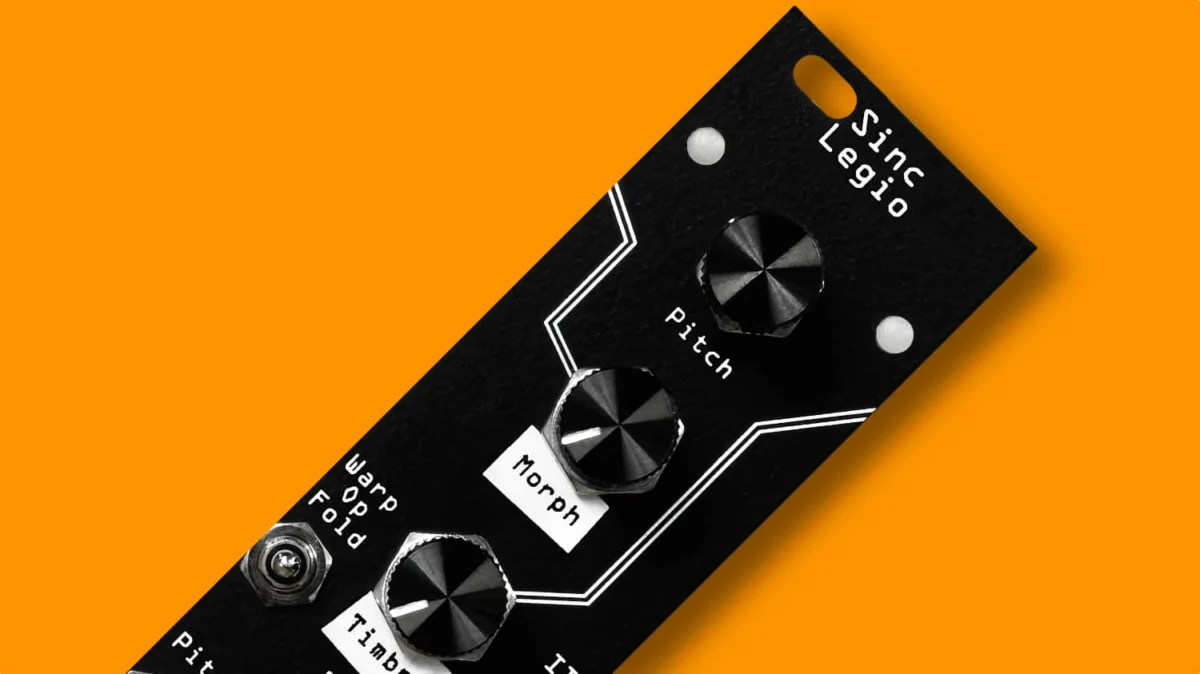
Noise Engineering has officially announced a massive expansion of its Legio ecosystem, releasing 16 new firmware options that transform the 6HP hardware module into a diverse array of synthesis, processing, and utility tools. This release marks a significant milestone in the evolution of the Legio platform, which was originally conceived as a compact, stereo-focused counterpart to the company’s larger 10HP Versio series. By offering these firmwares for free to existing owners, Noise Engineering is reinforcing a "hardware-as-a-platform" philosophy that challenges the traditional modular synthesis model of fixed-function hardware. The Legio platform now supports a total of 23 distinct firmwares, allowing users to repurpose a single piece of hardware as an oscillator, a dynamic processor, a creative delay, or a complex distortion unit with a simple USB connection.
The Architecture of the Legio Platform
The Legio platform is built upon a high-performance Digital Signal Processing (DSP) backend housed within a slim 6HP Eurorack form factor. Despite its small footprint, the hardware is designed for high-fidelity stereo audio, featuring two inputs and two outputs. The interface consists of four knobs, one encoder with an integrated push-button, and two three-position toggle switches. This standardized layout is the foundation upon which all Legio firmwares are built, ensuring that while the function of the module changes, the tactile experience remains consistent.
The hardware is powered by an ARM-based processor capable of handling complex algorithms, ranging from the company’s signature additive synthesis to advanced dynamics processing. The ability to swap firmwares is facilitated through a dedicated web-based portal, which connects to the module via a micro-USB port located on the rear of the PCB. This design choice reflects a growing trend in the Eurorack industry toward flexible, software-definable hardware, providing musicians with a hedge against the high costs and physical space limitations of modular systems.
Chronology of the Legio Ecosystem
The journey of the Legio platform began in mid-2022 with the introduction of three flagship firmwares: Librae Legio, Basimilus Iteritas Legio, and Virt Iter Legio. Librae Legio served as a versatile stereo dynamics processor, offering compression, limiting, and expansion capabilities. Basimilus Iteritas Legio brought a compact version of the company’s legendary percussion synthesis algorithm to the platform, while Virt Iter Legio provided a stereo oscillator based on a unique blend of phase modulation and wavefolding.
In the two years following the initial launch, Noise Engineering focused on refining the firmware-swapping infrastructure and porting algorithms from their software plugins and larger hardware units. The recent release of 16 additional firmwares represents the largest single update in the company’s history for a specific hardware platform. This expansion was driven by user feedback requesting more utility-focused modules and creative effects in the 6HP format, which is often preferred for "travel rigs" or smaller, highly focused systems.
Detailed Analysis of the New Firmware Suite
The 16 new firmware options cover a broad spectrum of modular functions. While the full list includes variations on existing Noise Engineering themes, several standout categories have emerged:
1. Creative Time-Based Effects
The new suite includes several delay and reverb algorithms that emphasize character over transparency. For example, Yester Legio provides a synchronized stereo delay with unique pitch-shifting and feedback characteristics. These firmwares leverage the platform’s stereo architecture to create wide, immersive soundscapes that were previously difficult to achieve in such a small module.
2. Specialized Synthesis Engines
Expanding beyond the Basimilus and Virt Iter algorithms, the new firmware options introduce specialized oscillators. Some focus on granular-style textures, while others utilize complex frequency modulation (FM) to produce metallic, percussive tones. By having access to multiple synthesis engines on one module, a user can switch the core voice of their rack between recording sessions without needing to unmount or purchase new hardware.
3. Advanced Dynamics and Distortion
Noise Engineering has a long-standing reputation for aggressive distortion and precise dynamics control. The new Legio firmwares include dedicated saturation units and multi-band processors. These are designed to be placed at the end of a signal chain to provide "glue" to a mix or to radically reshape the harmonic content of a dry signal.
4. Utility and Filtering
Recognizing the need for core building blocks, the update also includes high-order filters and utility modules. These firmwares turn the Legio into a "Swiss Army Knife," capable of filling whatever hole currently exists in a user’s patch.
Technical Data and Hardware Integration
For modular synthesists, the technical specifications of the Legio platform are as critical as the sound. The module operates with a low latency profile, essential for real-time performance and rhythmic accuracy. The power consumption is optimized for modern Eurorack cases, typically drawing around 150mA from the +12V rail and 5mA from the -12V rail.
The firmware-swapping process is designed to be "platform-agnostic," meaning it works via standard web browsers on Windows, macOS, and Linux. This accessibility ensures that users are not locked into a specific operating system to maintain their hardware. Furthermore, Noise Engineering provides "flash-it-yourself" overlays or reference guides, allowing users to keep track of knob functions when switching between radically different firmwares like a compressor and an oscillator.
Economic and Spatial Implications for the Eurorack Market
The release of 16 firmwares for a single hardware unit carries significant economic implications. The average cost of a high-quality stereo Eurorack module ranges from $250 to $400. By providing 23 modules for the price of one, Noise Engineering has effectively reduced the "per-function" cost of their hardware to less than $15 per module type.
Spatially, the Legio platform addresses the most common complaint among Eurorack users: lack of "HP" (Horizontal Pitch) or rack space. To house 23 separate 6HP modules would require 138HP, nearly two full rows of a standard 84HP case. The Legio platform allows a user to access all these functions within just 6HP, provided they are willing to swap firmwares between patches. This makes the platform an ideal choice for mobile performers and studio users with limited desk space.
Official Responses and Industry Context
While official statements from Noise Engineering emphasize the "community and longevity" aspect of the release, industry analysts view this move as a strategic response to the increasing competition from digital-heavy manufacturers like Expert Sleepers and ALM/Busy Circuits. By creating a robust ecosystem of free software for a fixed hardware purchase, Noise Engineering is building brand loyalty and ensuring their hardware remains relevant even as synthesis trends change.
User reactions within the modular community have been overwhelmingly positive, particularly regarding the "Basimilus" and "Sinc" ports. Musicians have noted that the Legio platform provides a "safety net" for their system; if a specific module is no longer needed for a project, it can be transformed into something else rather than being sold on the second-hand market.
Future Outlook and Broader Impact
The expansion of the Legio platform signals a shift in the modular synthesizer industry toward sustainable and flexible hardware. As global supply chains face challenges and the cost of raw materials fluctuates, the ability to deliver value through software updates is becoming a vital business model for boutique manufacturers.
Looking forward, the Legio platform is expected to receive even more updates as Noise Engineering continues to develop new algorithms for their plugin suite. There is also potential for community-driven firmware or open-source "wrappers," though Noise Engineering currently maintains a proprietary system to ensure stability and audio quality.
In conclusion, the release of 16 new firmwares for the Legio platform is more than just a software update; it is a redefinition of what a single Eurorack module can represent. It offers an unprecedented level of flexibility, making the Legio one of the most versatile 6HP modules ever produced. For the modern synthesist, it represents a shift away from static hardware and toward a dynamic, evolving instrument that grows in value over time. As the modular landscape continues to evolve, the Legio platform stands as a benchmark for how manufacturers can support their customers long after the initial point of sale.
