

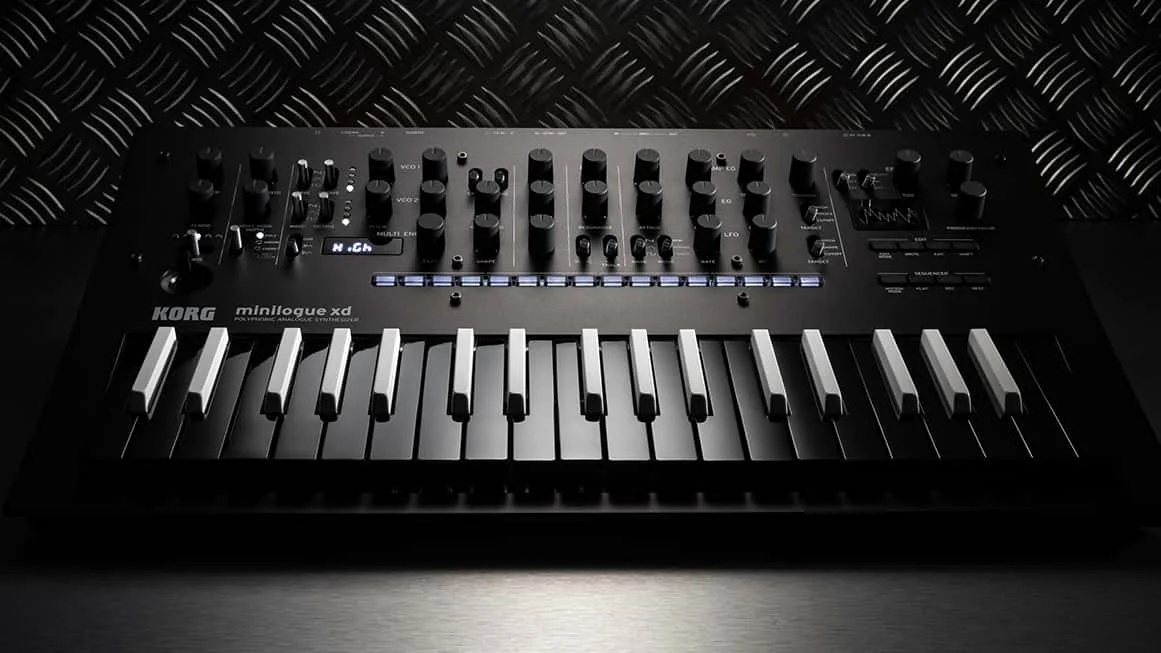
The landscape of modern hybrid synthesis has undergone a significant transformation as independent developers leverage open-source frameworks to bypass the inherent limitations of factory firmware. At the center of this movement is the Korg Logue platform—encompassing the Prologue, Minilogue xd, and NTS-1—which has seen a surge in third-party utility thanks to the release of open-sourced front panel code by the developer Tsoniq. This development allows users and programmers to reassign traditional Voltage Controlled Oscillator (VCO) hardware controls specifically for use with the Multi-Engine, Korg’s proprietary digital oscillator slot. By circumventing the constraints of the final official firmware version 2.10, this custom implementation provides unprecedented access to internal synthesis parameters, including Envelope Generator (EG) data, Amp Note Velocity, and hardware-level envelope routing, facilitating a more nuanced level of digital expression previously unavailable to the standard user base.
The Technical Evolution of the Multi-Engine Architecture
The Korg Logue series was revolutionary upon its release for its inclusion of the Multi-Engine, a digital oscillator that sits alongside traditional analog circuitry. While the analog components provide the warmth and character associated with subtractive synthesis, the Multi-Engine was designed to offer Noise generation, Variable Phase Modulation (VPM), and a "User" slot for custom-coded oscillators. However, the integration between the physical interface and the digital engine was initially limited by the manufacturer’s firmware architecture.
Under standard operating conditions, the physical knobs on the front panel of a Prologue or Minilogue xd are primarily dedicated to the analog VCOs. When a user switches to the Multi-Engine, they are often restricted to a handful of "Edit Select" parameters accessible through a menu-diving process or a limited number of assignable knobs. The introduction of Tsoniq’s open-source front panel code effectively "un-hooks" these physical controls from their hard-wired analog assignments. This allows the hardware interface to function as a dedicated controller for complex digital algorithms, such as those ported from Eurorack modules or bespoke FM synthesis engines.
Beyond mere knob reassignment, the implementation of this custom code unlocks deeper modulation matrices. Developers can now tap into Amp Note Velocity, allowing the digital engine to respond dynamically to the force of a keypress. This is a critical addition for performers seeking the expressive range of a traditional piano or high-end workstation within a hybrid synthesizer. Furthermore, the ability to utilize both hardware envelopes for digital modulation enables sound designers to craft sounds with complex evolving textures that were previously restricted by the firmware’s routing limitations.
Chronology of the Logue SDK and Community Development
The journey toward this level of customization began in early 2018 with the launch of the Korg Prologue. Recognizing the potential for a community-driven ecosystem, Korg released the "logue-sdk," an Application Programming Interface (API) and development kit that allowed third-party developers to write their own oscillators and effects in C++.
- January 2018: Korg announces the Prologue and the open API for the Multi-Engine.
- Early 2019: The Minilogue xd is released, bringing the Multi-Engine to a more affordable, compact form factor and expanding the user base for custom "User" oscillators.
- 2019-2020: Developers like Emilie Gillet (Mutable Instruments) see their open-source Eurorack code (such as Plaits and Braids) ported to the Logue platform by community members, significantly expanding the sonic palette of the hardware.
- 2021: Korg releases Firmware 2.10, which was widely considered the "final" major update for the platform, stabilizing the system but leaving several requested modulation routings and interface improvements off the table.
- 2022-2024: Independent developers like Tsoniq, Mark (often associated with high-level DSP development), and Peter (a key figure in the synthesis coding community) began releasing deeper hardware-level hooks. This era marked the shift from simply writing oscillators to rewriting how the hardware communicates with the digital brain.
The recent release of the Tsoniq front panel code represents the latest milestone in this timeline, shifting the focus from "what" the digital engine can sound like to "how" the user interacts with it.
Advanced Modulation and LFO Phase Integration
One of the most technically significant aspects of the Tsoniq code integration is the access to Low-Frequency Oscillator (LFO) phase data. In standard firmware versions, the LFO is often "key-synced" or restricted to global cycles that do not allow for complex phase offsets between different voices or layers. By accessing the raw phase data of the LFO, developers can now construct "Quad Phase LFOs" and multirate modulation schemes.
A Quad Phase LFO allows for four separate modulation signals to be generated from a single source, each offset by 90 degrees. This is essential for creating wide stereo images, complex rhythmic patterns, and non-key synced modulations that feel "organic" rather than repetitive. For the professional sound designer, this means the Logue platform can now emulate the behavior of high-end modular systems where phase relationship is a primary tool for movement.
Additionally, the reassignment of VCO controls provides a bridge for expression controllers. Parameters that were once hidden in sub-menus can now be mapped to the physical pitch and mod wheels or external expression pedals. This effectively implements the "synth hooks" that the community felt were missing from the official 2.10 firmware release, turning the Logue series into a more formidable tool for live performance.
Supporting Data: Performance and Flexibility Comparisons
To understand the impact of these community-driven updates, it is necessary to compare the capabilities of the stock firmware against a system utilizing the Tsoniq front panel modifications.
| Feature | Official Firmware 2.10 | Tsoniq/Open-Source Custom Code |
|---|---|---|
| VCO Knob Mapping | Fixed to Analog Oscillators | Fully Reassignable to Multi-Engine |
| Velocity Sensitivity | Limited to MIDI/Internal Routing | Direct Access to Amp/EG Velocity |
| LFO Control | Standard Global/Key Sync | Quad Phase / Multirate / Phase Data Access |
| Envelope Access | Single Dedicated Multi-Engine Env | Access to both Hardware Envelopes |
| Menu Diving | Required for Digital Parameter Edits | Minimized via Physical Knob Mapping |
| Layering (Prologue) | Analog + Digital (Limited Mod) | Analog + Fully Modulated Digital Layer |
Data gathered from community forums and developer repositories suggests that the use of custom front panel code increases the "parameter-to-knob" ratio by nearly 300% for the digital Multi-Engine. This significantly reduces the cognitive load on the performer and encourages more spontaneous sound design.
Industry Implications and the Role of Open Source
The success of the Logue platform as a "hackable" synth highlights a growing trend in the music technology industry: the move toward open-source hardware/software hybrids. By providing a robust SDK, Korg effectively outsourced the longevity of their product to the user base. The contributions of developers like Emilie Gillet have been instrumental in this regard. Gillet’s decision to make Mutable Instruments’ code open-source allowed for its integration into the Logue ecosystem, providing users with world-class digital synthesis models for free or at a low cost.
This collaborative environment creates a "win-win" scenario for manufacturers and consumers. The manufacturer sees prolonged interest and sales of their hardware long after official support has ceased, while the consumer receives a product that continues to evolve and gain features over time.
However, this reliance on community development also raises questions regarding technical support and warranty. Users implementing Tsoniq’s code or other custom firmware-level modifications often do so at their own risk, as these changes fall outside the scope of official Korg support. Despite this, the stability of the Tsoniq code has been praised by early adopters for its ability to integrate seamlessly with the existing Prologue and Minilogue xd architecture.
Expert Analysis: The Future of Hybrid Synthesis
The ability to "mix in" VCOs while adding a fully-featured digital layer on the Prologue represents the pinnacle of hybrid synthesis. Analysts suggest that the Logue platform’s success will likely influence future product designs from major manufacturers. The demand for "deeper hooks" into hardware envelopes and LFOs indicates that the modern synthesist is no longer satisfied with a "black box" approach to digital engines.
The work of Tsoniq, Mark, and Peter serves as a proof-of-concept for what can be achieved when hardware is treated as a flexible platform rather than a static tool. As more developers adopt these open-source front panel protocols, we can expect to see a new generation of "user" oscillators that are as complex and interactive as standalone digital synthesizers.
The Logue platform has proven to be an exceptional host for "hacking" full digital synths into a traditional keyboard format. By allowing the hardware to be reconfigured to meet the needs of the software, the community has effectively bypassed the limitations of the physical interface. This ensures that the Korg Logue series will remain a relevant and powerful tool in the synthesist’s arsenal for years to come, long after the final official firmware update was logged.
