

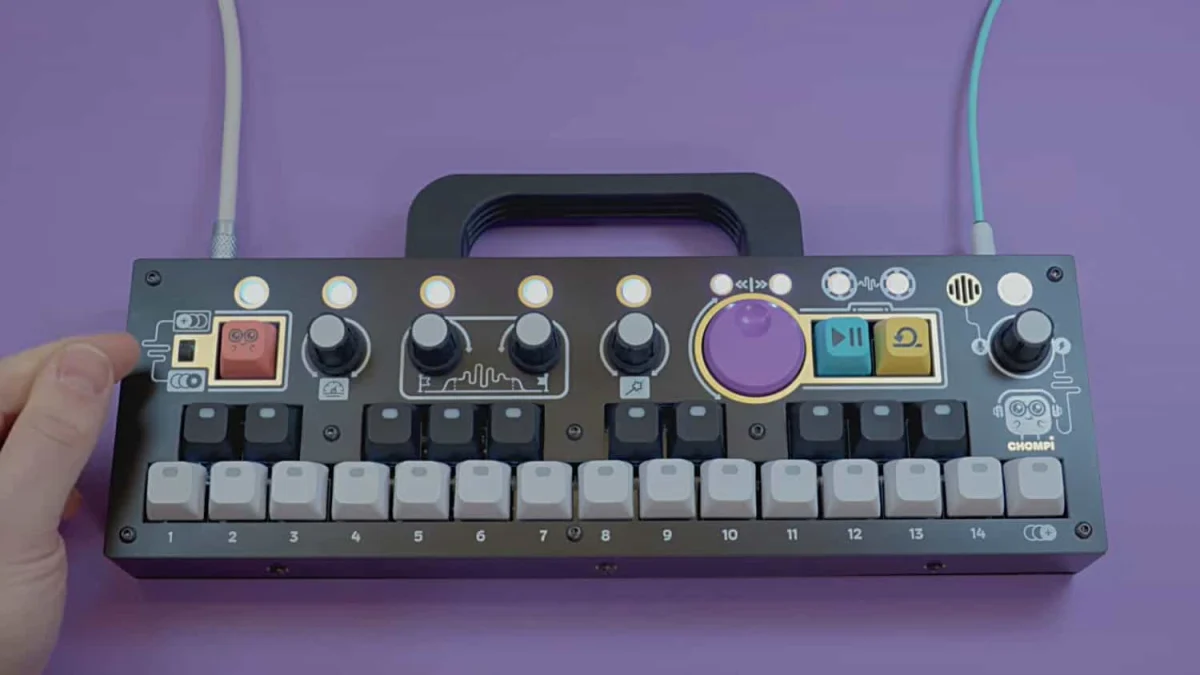
The landscape of boutique music hardware and digital signal processing has witnessed a significant shift following the announcement by Chase Bliss regarding the cessation of development for the Chompi sampling keyboard. In a move that aligns with a growing industry trend toward digital preservation and community-driven development, Chase Bliss and the Chompi Club have officially released the device’s firmware under an open-source license. This transition has facilitated the immediate emergence of Nibbi, a free software plugin developed by TemeculaDSP. Nibbi serves as a digital recreation of the Chompi architecture, allowing users to access the hardware’s unique sampling and sound manipulation capabilities within modern Digital Audio Workstations (DAWs) as a VST, Audio Unit (AU), or AAX plugin.
The decision to transition the Chompi firmware to an open-source model comes after Chase Bliss engineers determined that the physical hardware had reached its inherent processing limits. By migrating the codebase to the public domain, the developers have ensured that the instrument’s sonic legacy remains accessible to musicians and developers, regardless of the availability of the original physical units.
The Evolution and Hardware Constraints of the Chompi Sampler
The Chompi sampler was originally conceived as a specialized, tactile instrument designed to simplify the sampling process while providing a unique, "lo-fi" aesthetic. Developed through a collaboration between Chase Bliss—a company primarily known for its high-end, experimental guitar pedals—and the Chompi Club, the hardware gained a significant following for its unconventional interface and immediate workflow.
At the core of the Chompi’s hardware was the Daisy Seed platform, an embedded micro-controller designed by Electro-Smith specifically for high-fidelity audio applications. While the Daisy Seed is a powerful tool for boutique developers, the specific demands of the Chompi’s multi-layered looping, real-time effects processing, and sampling engine eventually exhausted the available RAM and CPU cycles of the hardware. In July 2024, Chase Bliss formally announced that while the hardware remained functional, further firmware updates to expand its feature set were no longer technically feasible without compromising the stability of the device.
To prevent the software architecture from becoming a "dead-end" technology, the decision was made to open-source the C++ codebase. This allows the community to modify the code for custom hardware projects or, as demonstrated by TemeculaDSP, port the algorithms into the software domain.
Technical Specifications and the Emergence of Nibbi
The release of Nibbi by TemeculaDSP represents the first major secondary implementation of the open-sourced Chompi code. By porting the firmware into a plugin format, TemeculaDSP has effectively democratized the "Chompi sound," which was previously gated behind a hardware price point and limited production runs.
Nibbi mirrors the core functionality of the original hardware, focusing on several key pillars of sound design:
- Sampling and Chromatic Playback: Users can record audio directly into the plugin or load existing samples, which are then mapped across the MIDI keyboard for chromatic playability.
- Tape-Style Looping: The plugin retains the hardware’s signature looping engine, which mimics the behavior of analog tape machines. This includes the ability to layer sounds and manipulate loop points in real-time.
- Lo-Fi Effects Suite: A primary draw of the original hardware was its integrated effects, specifically designed to emulate vintage character. Nibbi includes these algorithms, covering lo-fi saturation, wow and flutter (pitch instability), and specialized filters.
- Spatial Processing: The plugin features the original delay and reverb algorithms, which were tuned to complement the sampling engine’s grainy, textured output.
By providing Nibbi as a free download, TemeculaDSP has leveraged the open-source release to offer a professional-grade tool to the wider production community. The plugin is compatible with both macOS and Windows, supporting 64-bit architectures across all major DAW platforms.
Chronology of Development and Open-Source Transition
The timeline of the Chompi project highlights the rapid lifecycle often seen in modern boutique music technology:
- Early 2023: The Chompi sampler is introduced via a highly successful crowdfunding campaign, highlighting a demand for tactile, "fun" sampling interfaces.
- Late 2023 – Early 2024: The hardware enters full production and distribution. Chase Bliss continues to iterate on the firmware, adding features such as improved MIDI implementation and refined effects.
- July 23, 2024: Chase Bliss officially announces the end of life for Chompi firmware development. The statement cites hardware limitations as the primary factor, noting that the "Daisy Seed" platform was being pushed to its absolute limits.
- Late July 2024: In coordination with Chompi Club, the firmware is uploaded to public repositories under an open-source license, inviting developers to explore and repurpose the code.
- August 2024: TemeculaDSP announces and releases Nibbi, the first comprehensive port of the firmware into a DAW-compatible plugin format.
The Role of Open Source in Instrument Longevity
The move by Chase Bliss and Chompi Club is part of a broader, though still relatively rare, movement within the electronic instrument industry. Historically, when a digital instrument reaches the end of its commercial life or hardware limits, the software driving it is often lost to time—a phenomenon known as "bit rot."
Industry analysts point to companies like Mutable Instruments as a precedent. When Mutable Instruments ceased operations, founder Émilie Gillet released the code for several highly popular Eurorack modules (such as Clouds and Braids) as open source. This led to a massive influx of third-party hardware "clones" and software versions (most notably in the VCV Rack environment), ensuring that the designs remained a staple of the synthesizer community long after the original company stopped manufacturing them.
The release of the Chompi firmware serves a similar purpose. It protects the investment of current hardware owners—who may now see community-driven bug fixes or alternative "hacked" firmwares—while allowing the software-based production world to benefit from the original research and development.
Analysis of Market Implications and Community Reaction
The release of Nibbi as a free plugin has significant implications for the boutique hardware market. Typically, hardware manufacturers are hesitant to release software versions of their products for fear of cannibalizing hardware sales. However, Chase Bliss’s unique position as a boutique, artist-centric brand allows for a different strategy.
Accessibility vs. Tactility
The primary value proposition of the Chompi hardware was never solely its internal code, but its physical interface—the mechanical keys, the specific knob feel, and the portability. By releasing Nibbi, the developers acknowledge that the "experience" of the hardware cannot be fully replicated by a mouse and keyboard. Consequently, the plugin acts as a functional archive of the sound, while the hardware remains a premium tactile instrument.
Impact on the "Lo-Fi" Plugin Market
The "lo-fi" aesthetic—characterized by pitch wobbles, bit reduction, and noise—is currently a dominant trend in music production. By entering this market with a free, high-quality tool derived from a respected hardware unit, TemeculaDSP and Chase Bliss have set a high bar for other developers. This may put pressure on other manufacturers to offer more transparent support for their legacy products.
Official Responses and Developer Sentiment
While formal corporate statements have focused on the technical necessity of the move, the sentiment among the developer community has been largely positive. Developers on platforms such as GitHub and various synthesis forums have noted that the Chompi code is well-documented, making it an excellent resource for those learning about digital signal processing (DSP) and embedded audio systems.
TemeculaDSP’s rapid turnaround in releasing Nibbi suggests that the Chompi codebase was designed with portability in mind, despite its hardware-specific optimization. This suggests that other developers may soon follow with different interpretations of the hardware, perhaps integrating the Chompi engine into other open-source platforms like Organelle or ELZ_1.
Future Outlook for the Chompi Architecture
The transition of Chompi from a closed-loop hardware product to an open-source ecosystem marks the beginning of a new chapter for the design. With Nibbi now available to anyone with a computer, the "Chompi sound" is likely to appear in a much wider array of musical genres and productions.
Furthermore, the open-source nature of the firmware opens the door for "community firmware" for the original hardware. Much like the third-party "Parasites" firmware for Mutable Instruments modules, it is possible that independent coders will find ways to optimize the existing Chompi code even further, perhaps finding clever ways to bypass the hardware bottlenecks identified by Chase Bliss.
In conclusion, the release of Nibbi is more than just the launch of a free plugin; it is a case study in how modern hardware manufacturers can responsibly manage the end-of-life process for digital instruments. By prioritizing the availability of the software over proprietary secrecy, Chase Bliss, Chompi Club, and TemeculaDSP have ensured that the Chompi’s unique contribution to sound design will continue to evolve in the digital realm. Nibbi is currently available for download via the TemeculaDSP website, offering a professional-grade sampling and looping solution at no cost to the end user.
