

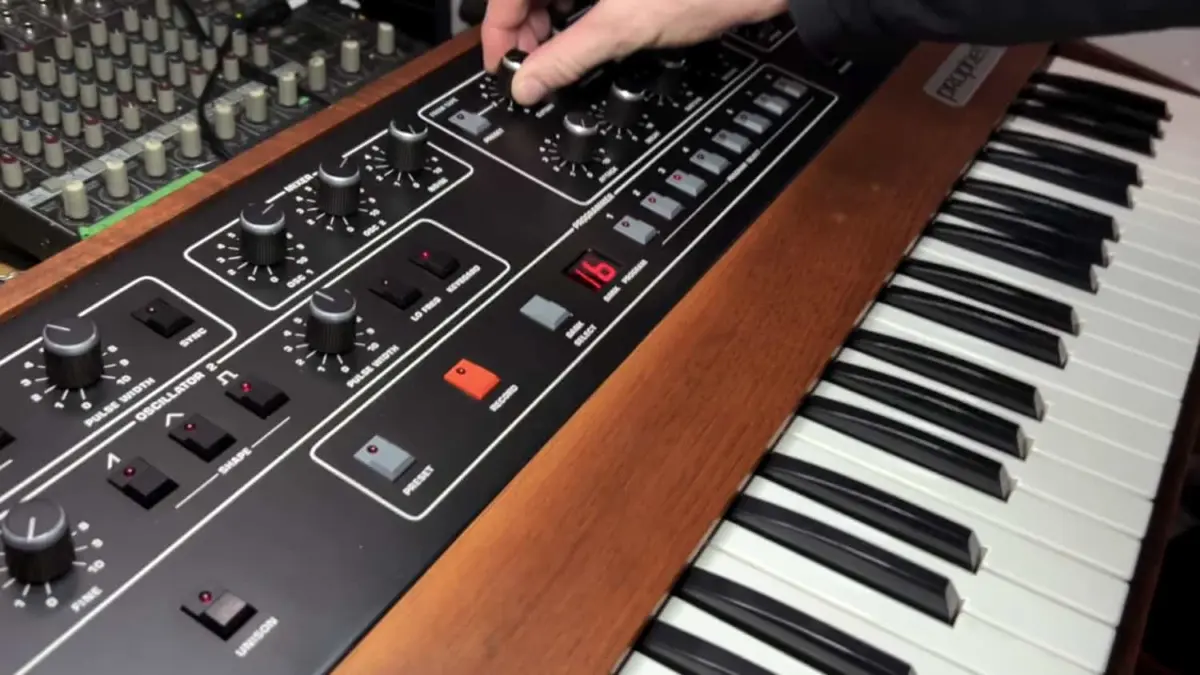
The landscape of modern analog synthesis is witnessing a significant shift as community-driven software developments begin to augment the capabilities of flagship hardware. A new open-source project, titled prophet-rev4-mods, has been released to provide owners of the Sequential Prophet-5 and Prophet-10 Rev4 synthesizers with a suite of high-demand features previously absent from the factory specifications. This alternate firmware introduces a polyphonic step sequencer, a versatile arpeggiator, octave shifting capabilities, and patch-level sequence memory, effectively transforming the performance profile of these iconic instruments. By leveraging the existing digital control architecture of the Rev4 hardware, the project brings modern utility to a design that was intentionally built to honor its 1978 predecessor’s minimalist workflow.
Technical Overview and Core Functionality
The prophet-rev4-mods project is an unauthorized, third-party firmware modification designed specifically for the Fourth Revision (Rev4) of the Prophet-5 and Prophet-10. Unlike previous iterations of the Prophet series, the Rev4 utilizes a modern micro-controller to manage its analog voices, which allows for the injection of new logic-based features without necessitating physical hardware changes.
The centerpiece of this update is the addition of a polyphonic step sequencer. While the original Prophet-5 was lauded for its sound, it lacked internal sequencing, requiring external CV or MIDI triggers for complex melodic patterns. The new firmware allows users to record and play back polyphonic sequences directly on the unit. Furthermore, the integration of patch-level sequence memory ensures that specific sequences can be saved and recalled alongside their corresponding timberal patches, a feature typically reserved for more modern digital-hybrid synthesizers.
The arpeggiator implementation provides several classic modes, including Up, Down, and Assign, which can be synced to an external MIDI clock. This addresses one of the most frequent criticisms of the Rev4 hardware: the lack of a built-in arpeggiator, which is a standard feature on Sequential’s other contemporary offerings like the Prophet-6 and the Trigon-6. Additionally, the firmware introduces a dedicated octave shift function, allowing players to quickly transpose the keyboard range without diving into global menus or adjusting the oscillators manually.
Historical Context: The Evolution of the Prophet-5
To understand the impact of the prophet-rev4-mods project, one must consider the historical weight of the hardware it modifies. The Sequential Circuits Prophet-5, originally released in 1978, was the first fully programmable polyphonic synthesizer. Designed by Dave Smith and John Bowen, it revolutionized the industry by allowing musicians to store and recall patches—a feat made possible by the then-emerging microprocessor technology.
The Prophet-5 went through three major revisions during its initial production run (1978–1984). The Rev 1 and Rev 2 utilized SSM (Solid State Microtechnology) chips, known for their volatile but "creamy" sound, while the Rev 3 transitioned to CEM (Curtis Electromusic Specialties) chips, which offered greater stability. When Sequential (then under the Focusrite umbrella) announced the Rev4 in 2020, it was marketed as the "best of all Prophets," featuring a "Vintage" knob to simulate the behavior of various revisions and including both authentic Curtis and SSI filters.
However, in an effort to maintain the "purist" experience of the original 1970s hardware, Sequential omitted several modern conveniences. The Rev4 launched without an internal sequencer or arpeggiator, focusing instead on the tactile, one-knob-per-function interface. The prophet-rev4-mods project represents a community-led effort to bridge the gap between this vintage purism and the functional requirements of modern electronic music production.
Chronology of Development and Release
The development of prophet-rev4-mods follows a tradition of "synth hacking" that dates back to the 1980s, where third-party engineers would create expansion boards or modified EPROMs for Roland, Moog, and Sequential instruments.
- October 2020: Sequential releases the Prophet-5 and Prophet-10 Rev4. The instruments receive universal acclaim for their sound but note is taken of their limited feature set compared to the Prophet-6.
- 2021–2023: Sequential releases several official firmware updates, including Main OS 2.1.0, which improved MIDI stability and added support for the expansion of the Prophet-5 to a Prophet-10 via a voice expansion card.
- 2024: Independent developers began exploring the firmware structure of the Rev4. Given that the Rev4 uses a more accessible processor architecture than vintage units, the possibility of "patching" the OS became viable.
- Current Release: The prophet-rev4-mods project is made public on GitHub. The author confirmed successful testing on a Prophet-10 Rev4 hardware unit as recently as October 2024 (with some documentation humorously referencing 2026, likely a typo in the repository’s initial notes).
The project is currently hosted as an open-source repository under the MIT license, encouraging other developers to contribute to the codebase and refine the features.

Installation Requirements and Safety Protocols
As this is not an official Sequential product, the installation process requires a higher degree of technical literacy than a standard manufacturer update. The firmware is provided as a "patch" rather than a standalone file.
To install the modifications, users must possess:
- An original copy of Sequential’s official Main OS 2.1.0 firmware file.
- A MIDI SysEx (System Exclusive) transfer utility, such as SysEx Librarian (macOS) or MIDI-OX (Windows).
- The prophet-rev4-mods patching tool provided in the GitHub repository.
The process involves applying the community-created patch to the official firmware file to create a modified .syx file, which is then transmitted to the synthesizer over a standard MIDI or USB connection. The repository includes a critical "recovery" section, detailing how to flash the original Sequential firmware should the installation fail or the user wish to return the instrument to its factory state.
The developer has issued a caveat: while the firmware has been tested on the Prophet-10 Rev4, the 5-voice version (Prophet-5 Rev4) remains technically untested on hardware by the lead developer, though the code structures are nearly identical. Users are warned that installing third-party firmware carries the risk of voiding warranties or, in extreme cases, "bricking" the device’s digital control board.
Industry Implications and Community Response
The emergence of prophet-rev4-mods highlights a growing trend in the synthesizer industry where the longevity and utility of hardware are increasingly tied to community software support. Similar projects have existed for years—such as the "Tauntek" firmware for vintage Oberheim and Roland synths—but seeing this occur for a flagship product that is still actively being sold by the manufacturer is a rarer occurrence.
From a market perspective, this firmware modification increases the value proposition of the Prophet-5/10 Rev4. For many buyers, the choice between a Prophet-6 and a Prophet-5 Rev4 often came down to a trade-off: the Prophet-6 offered an arpeggiator, sequencer, and effects, while the Prophet-5 offered the "authentic" large-format keys and the legendary 1970s signal path. By adding these digital features via software, the Rev4 becomes a more formidable competitor to modern polyphonic analogs like the Arturia PolyBrute or the Moog Muse.
While Sequential (a division of Focusrite) has not issued an official statement regarding the prophet-rev4-mods project, the company has historically maintained a respectful distance from the modding community. The late Dave Smith was known for his focus on "musicality over specifications," and while Sequential provides robust official support, they typically do not endorse third-party software that alters the core OS of their machines.
Analysis of the "Open Source" Synth Movement
The decision to release prophet-rev4-mods under an MIT license is significant. It ensures that the code remains free and accessible, preventing the commercialization of a tool that relies on Sequential’s proprietary base code. This ethos aligns with the broader "Right to Repair" and "Right to Mod" movements within the tech industry.
By making the firmware open source, the developer has allowed for a decentralized form of research and development. If a bug is found in the arpeggiator’s swing timing or the sequencer’s MIDI note-off handling, any member of the community with coding expertise can submit a "pull request" to fix it. This stands in contrast to the traditional manufacturer model, where users must wait for official update cycles which may prioritize new product launches over legacy hardware refinements.
Conclusion
The prophet-rev4-mods project represents a significant milestone for the Sequential community. It provides a non-invasive way to enhance one of the most respected analog synthesizers on the market, adding layers of performance functionality that align the instrument with modern studio workflows. While the risks of third-party firmware installation remain a factor for owners to consider, the availability of these features—free of charge and built on an open-source foundation—underscores the enduring creativity of the electronic music community. As the Prophet-5 and Prophet-10 continue to anchor professional studios worldwide, these community-driven enhancements ensure that the "Prophet sound" remains as versatile in the 21st century as it was in the 20th.
