

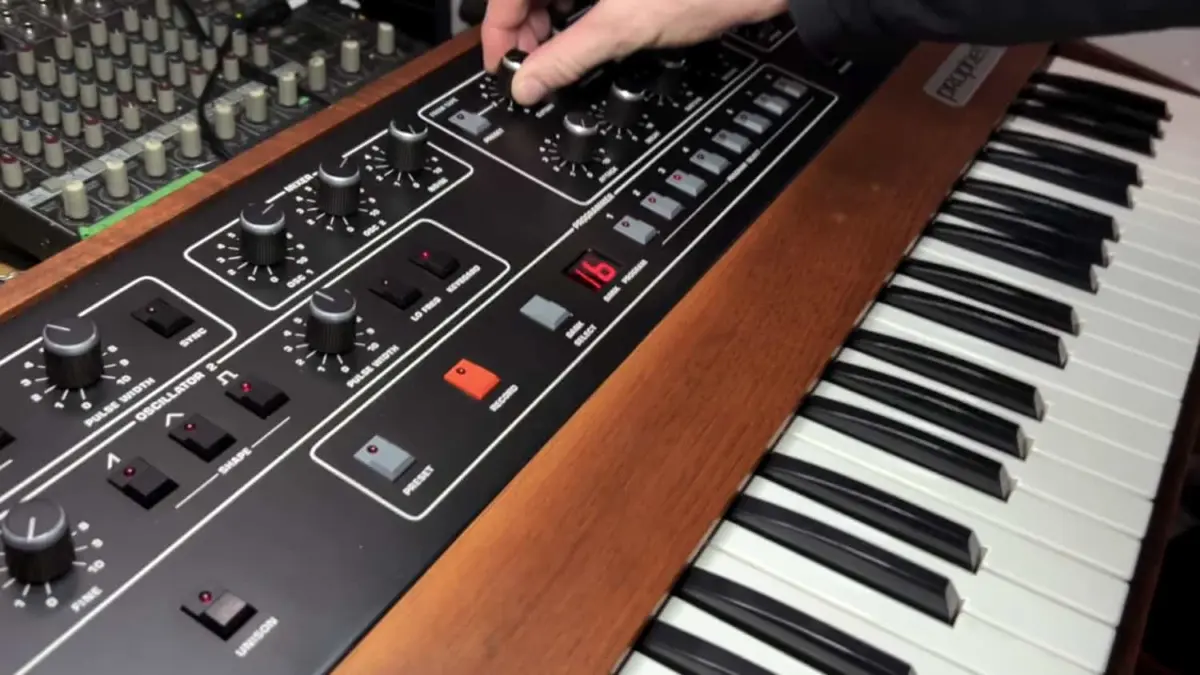
The landscape of modern analog synthesis is witnessing a significant shift as independent developers increasingly leverage the digital control systems of high-end hardware to unlock latent capabilities. In a recent development within the synthesizer community, a new open-source project titled prophet-rev4-mods has emerged, offering a comprehensive alternate firmware for the Sequential Prophet-5 and Prophet-10 Rev4. This project introduces a suite of features—including a polyphonic step sequencer, a versatile arpeggiator, and octave shifting—that were notably absent from the original hardware design, effectively bridging the functional gap between these vintage-reissue instruments and more contemporary polyphonic synthesizers.
The Evolution of the Prophet-5 and the Rev4 Architecture
To understand the significance of the prophet-rev4-mods project, one must consider the historical and technical context of the Sequential Prophet-5. Originally released in 1978 by Dave Smith and Sequential Circuits, the Prophet-5 was a landmark instrument, being the first fully programmable polyphonic synthesizer. Its design philosophy prioritized a direct, "one-knob-per-function" interface and a raw, powerful analog sound. After decades of various revisions and a long hiatus, Sequential released the "Rev4" in 2020. This modern iteration was designed to be the definitive version, incorporating the best elements of the original Rev1, Rev2, and Rev3 models by including both the SSI 2140 and CEM 3340 filters.
Despite its critical acclaim and commercial success, the Prophet-5 Rev4 remained a "purist" instrument. Unlike its siblings in the Sequential lineup, such as the Prophet-6 or the OB-6, the Prophet-5 Rev4 was released without a built-in arpeggiator or sequencer. Dave Smith’s vision for the Rev4 was to maintain the authentic workflow of the original 1970s hardware while modernizing the reliability and MIDI implementation. However, as the demands of modern studio and stage environments have evolved, a segment of the user base has expressed a desire for the performance-oriented tools found in modern poly-synths. The prophet-rev4-mods project addresses these specific desires by utilizing the existing CPU overhead of the Rev4’s digital control system.
Technical Specifications and Enhanced Feature Set
The prophet-rev4-mods firmware is a sophisticated software patch that modifies the official Sequential Main OS 2.1.0. By remapping certain button combinations and utilizing the instrument’s internal clock and MIDI handling, the developer has successfully integrated several high-demand features without necessitating any physical changes to the hardware.
Polyphonic Step Sequencer
The centerpiece of the update is the polyphonic step sequencer. On the original Rev4, sequencing was only possible via external MIDI gear or a Digital Audio Workstation (DAW). The new firmware allows users to record and playback complex polyphonic sequences directly on the unit. This is particularly transformative for the Prophet-10, where the ten-voice polyphony allows for dense harmonic structures and layered rhythmic patterns that can now be triggered internally.
Advanced Arpeggiator
The added arpeggiator brings a standard suite of modes, including Up, Down, Up/Down, and Random. While seemingly basic, the integration of an internal arpeggiator into the Prophet-5’s signal path allows for a more tactile performance experience, enabling users to manipulate the filter cutoff, resonance, and the "Vintage" knob in real-time while the notes are being cycled. The arpeggiator can be synced to an external MIDI clock, ensuring it remains in tempo with other studio equipment.
Octave Shifting and Patch-Level Memory
The firmware also introduces a streamlined octave shifting mechanism, a feature that significantly improves the playability of the Prophet-5’s five-octave Fatar keybed. Furthermore, the "patch-level sequence memory" is a critical workflow enhancement. This feature allows specific sequences to be saved alongside individual patches, meaning that when a user recalls a preset, the associated melodic or rhythmic sequence is immediately available. This mirrors the functionality found in modern Sequential instruments and provides a level of performance preparation previously unavailable to Rev4 owners.
Development Timeline and Community Origins
The development of prophet-rev4-mods follows a long tradition of "community-driven" firmware enhancements for classic synthesizers. A notable historical precedent is the "Gligli" firmware for the Sequential Prophet-600, which transformed a budget-friendly 1980s synth into a high-performance machine by replacing its aging Z80 processor and rewriting the control code.
The prophet-rev4-mods project began as an exploration of the Rev4’s firmware structure. According to the project’s documentation on GitHub, the author successfully tested the modification on a Prophet-10 Rev4 in October 2024. While the Prophet-5 Rev4 shares almost identical architecture (differing primarily in voice count), the developer noted that the firmware remained untested on the five-voice hardware at the time of the initial repository launch. This transparency is a hallmark of open-source development, where the community is invited to contribute to testing and bug reporting.

The project is hosted on GitHub under the MIT license, a permissive free software license that allows users to handle the software with very few restrictions. This ensures that the code remains accessible to the public and can be audited or improved upon by other developers in the synthesizer community.
Installation Methodology and Safety Protocols
Installing alternate firmware on high-value professional equipment carries inherent risks, a fact that the developer emphasizes in the project documentation. The process does not involve "cracking" the hardware but rather involves a "patching" workflow.
To implement the modifications, users must possess the official Sequential Main OS 2.1.0 firmware file. The prophet-rev4-mods utility applies the new features to this official file, creating a custom SysEx (System Exclusive) file. This custom file is then transmitted to the synthesizer via a MIDI interface using standard SysEx transfer tools.
Because the project is not affiliated with, or endorsed by, Sequential (now a part of Focusrite Group), installing the firmware likely voids the manufacturer’s warranty. To mitigate the risk of "bricking" the device (rendering it non-functional), the developer has provided a detailed recovery path. Users can restore the original factory state by simply re-installing the official Sequential firmware via SysEx. This "non-destructive" approach to modification has made the project an attractive prospect for power users who are comfortable with digital maintenance.
Broader Implications for the Synthesizer Industry
The emergence of prophet-rev4-mods highlights a growing tension between "purist" hardware design and "feature-rich" software capabilities. Manufacturers like Sequential often make deliberate design choices to omit features to preserve a specific user experience or to differentiate between product lines. However, as the processing power of the microcontrollers used in analog synths increases, the line between what a machine is and what it can do becomes increasingly blurred.
This project also underscores the importance of the "Right to Repair" and the "Right to Modify" movements within the music technology sector. By providing tools that allow users to customize their hardware, independent developers are extending the lifecycle of these instruments and tailoring them to modern needs.
Industry analysts suggest that such community projects can serve as a "litmus test" for manufacturers. If a third-party firmware becomes widely adopted, it signals a clear market demand for those features. In some cases, manufacturers have been known to "officially" adopt community-developed features in subsequent updates, though Sequential has historically maintained a strict separation between its official development cycle and third-party contributions.
Conclusion and Future Outlook
The prophet-rev4-mods project represents a significant milestone for the Sequential Prophet-5 and Prophet-10 Rev4. By adding an arpeggiator and sequencer, the project effectively transforms the Rev4 into a more versatile instrument that can compete with the feature sets of contemporary digital and hybrid synthesizers while retaining its legendary analog signal path.
As of late 2024, the project continues to gain traction on platforms like GitHub and various synthesizer forums. While it remains a tool for the technically inclined and the adventurous, its existence proves that the "Golden Age" of the Prophet-5 is far from over. With the power of community-driven software, the iconic "Five" and "Ten" are being reimagined for a new generation of musicians who demand both vintage tone and modern functionality.
The success of this project may encourage similar efforts for other "purist" analog reissues, potentially leading to a new era where the software limitations of analog hardware are viewed as temporary hurdles rather than permanent fixtures. For now, Prophet-5 and Prophet-10 owners have a choice: maintain the classic, streamlined experience intended by Dave Smith, or embrace the expanded horizons offered by the prophet-rev4-mods project. Regardless of the choice, the Prophet remains one of the most discussed and evolving instruments in the history of electronic music.
