

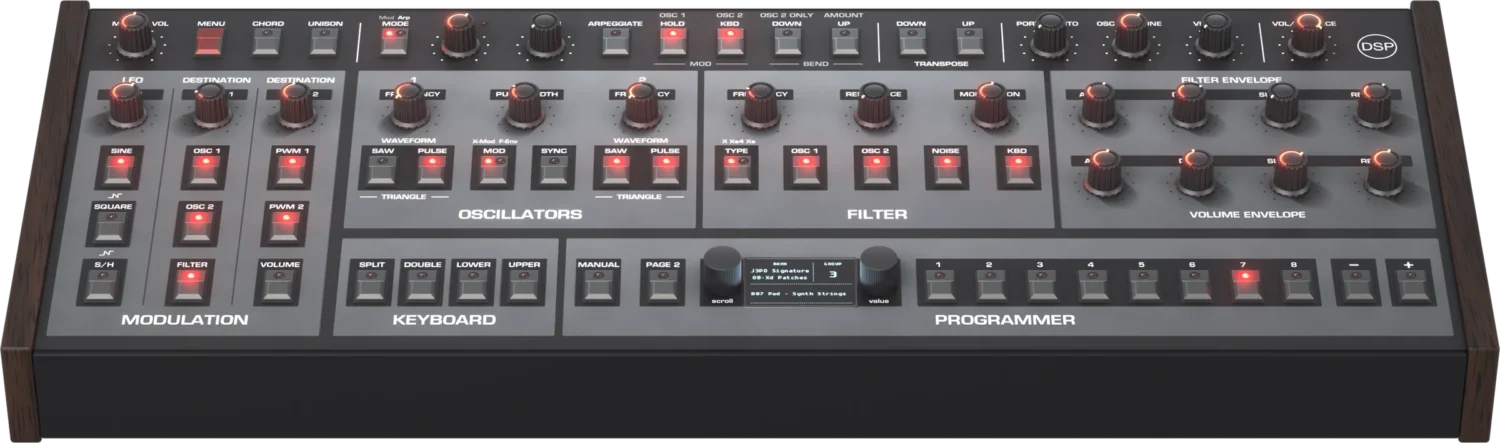
The professional audio software landscape has reached a new milestone with the dual release of OB-Xd 4 and Retromulator 2.4 by discoDSP. This major update cycle represents a significant leap forward in the precision of virtual analog synthesis, offering musicians and sound designers a bridge between the revered hardware of the past and the flexible digital workflows of the future. By focusing on rigorous hardware modeling and expanding the capabilities of their multi-instrument platform, discoDSP is positioning itself as a primary contender in the high-fidelity emulation market.
The Evolution of OB-Xd 4: Precision Modeling of the OB-X8
The flagship of this release is OB-Xd 4, a comprehensive overhaul of discoDSP’s celebrated Oberheim-inspired synthesizer. While previous iterations of the OB-Xd were praised for capturing the "spirit" of the Oberheim sound, version 4 takes a more scientific approach. The engine has been entirely rebuilt based on extensive measurements of the Oberheim OB-X8, a modern hardware masterpiece that itself combines the circuits of the legendary OB-X, OB-Xa, and OB-8.
To achieve this level of accuracy, the engineering team at discoDSP recorded the oscillators, filter curves, and resonance characteristics of a physical OB-X8 unit. These recordings were then compared sample-by-sample against the digital output of the software. This methodology ensures that the non-linearities, harmonic saturation, and subtle imperfections of the analog hardware are mirrored in the virtual environment.
Beyond the raw sound of the oscillators, the update addresses the "behavioral" aspects of the synthesizer. The firmware logic governing the envelopes, Low-Frequency Oscillators (LFOs), portamento, and voice allocation has been synchronized with the OB-X8’s internal operations. This means that the way a sound evolves over time or how notes transition during legato playing now feels indistinguishable from the hardware experience.
A Trio of Classic Filters and New Performance Modes
One of the most defining characteristics of the Oberheim sound is its filter architecture. OB-Xd 4 incorporates three distinct filter types, allowing users to traverse the history of the brand within a single interface:
- The SEM Filter: Based on the original Synthesizer Expander Module, this multi-mode filter is famous for its smooth, creamy character and state-variable design.
- The OB-X Filter: A discrete 12dB/octave low-pass filter known for its aggressive yet musical resonance.
- The OB-Xa Filter: The classic CEM3320-based filter that defined the sound of 1980s pop and rock.
To complement these filters, discoDSP has introduced new performance configurations. The "Split" mode allows users to assign different sounds to specific regions of the keyboard, while "Double" mode layers two voices for massive, thick textures. The inclusion of a "Binaural" mode is particularly noteworthy for modern producers; it spreads the synthesizer’s voices across the stereo field, creating a sense of three-dimensional space and movement without the need for external processing.
Integration and Hardware Connectivity
In an era where many producers utilize a hybrid setup, discoDSP has addressed the need for seamless hardware-software integration. OB-Xd 4 features a built-in USB librarian specifically designed for owners of the Oberheim OB-X8 hardware. This utility facilitates two-way editing, allowing the software to act as a comprehensive remote control for the hardware.
Users can perform bank transfers, backups, and restores directly through the plugin interface. Furthermore, the librarian supports operating system updates for the hardware unit, simplifying the maintenance of the physical synthesizer. For those who do not own the hardware, the inclusion of MIDI Learn and MIDI Polyphonic Expression (MPE) support ensures that the plugin is fully compatible with modern controllers, such as the ROLI Seaboard or LinnStrument, allowing for expressive, per-note modulation of parameters.
Retromulator 2.4: Expanding the Multi-Instrument Ecosystem
While OB-Xd 4 focuses on the Oberheim legacy, the update to Retromulator 2.4 broadens discoDSP’s reach into other classic synthesis architectures. Retromulator is designed as a host platform that can run multiple instrument "cores" simultaneously, and version 2.4 introduces two significant additions: Nordic 2 and MiniD.
Nordic 2: The Return of the Red Synth
Nordic 2 is a recreation of the Clavia Nord Lead 2, one of the most influential virtual analog synthesizers of the late 1990s. Unlike other emulations that require the original hardware’s firmware or ROM data—often a legal and technical hurdle for users—Nordic 2 is a ground-up recreation that functions independently.
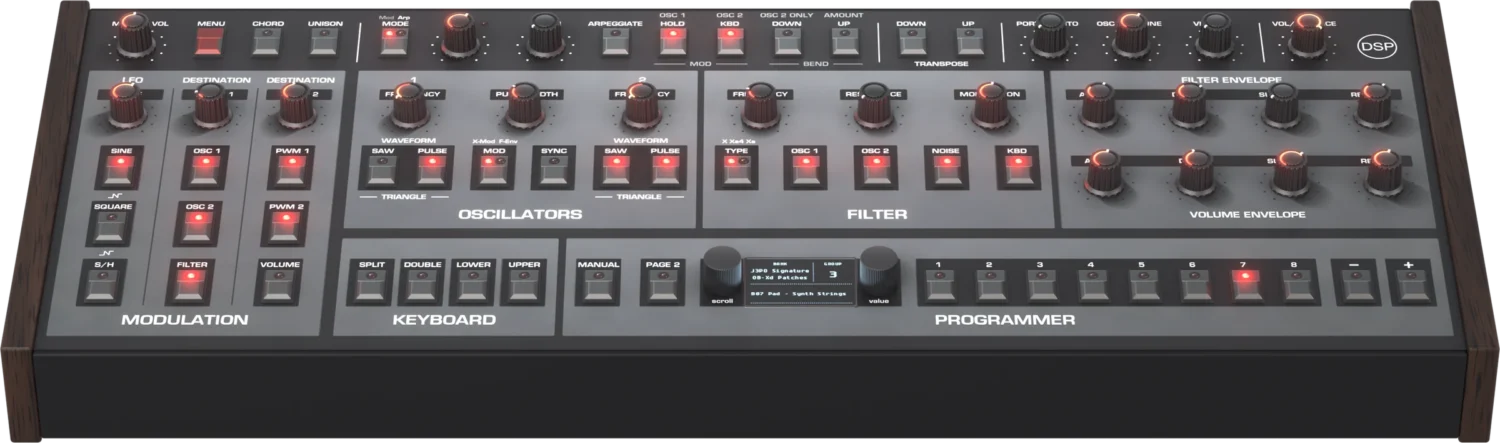
The software significantly outperforms the original hardware in terms of polyphony, offering 64 voices compared to the 16 voices found on the original unit. It maintains the beloved four-part Performance mode, enabling complex layers and multi-timbral setups. Crucially for long-time fans of the "Red Synth," Nordic 2 is compatible with existing Nord Lead 2 and N2X sound banks, ensuring that decades of patch programming remain accessible to modern producers.
MiniD: The Monophonic Foundation
The second new core, MiniD, is a three-oscillator analog monosynth modeled after the most famous synthesizer in history. By utilizing hardware measurements, discoDSP has replicated the iconic transistor ladder filter, which is responsible for the deep, punchy bass and searing leads associated with 1970s synthesis.
While MiniD excels as a monosynth, discoDSP has added polyphonic, unison, and double-voice modes to expand its utility. This allows users to take the classic "Ladder" sound into territories the original hardware could never reach, such as rich polyphonic pads or massive eight-voice unison stacks.
Architecture and Workflow Enhancements
Retromulator 2.4 is not just about new sounds; it is about how those sounds are managed. The platform supports racks of up to eight instrument cores in a single instance. This modular approach allows for:
- Individual Mixing: Each core has its own volume and panning controls.
- Advanced Routing: Independent MIDI channels for each instrument core.
- Performance Mapping: Sophisticated key and velocity splits, allowing a single keyboard to trigger a MiniD bass on the left hand and a Nordic 2 pad on the right.
- Preset Management: The ability to save entire "rack presets," encompassing all eight instruments and their respective settings, for instant recall during live performances or studio sessions.
Market Context and Industry Impact
The release of these updates comes at a time when the demand for high-quality analog emulation is at an all-time high. Competitors such as Arturia, GForce Software, and Softube have all released their own takes on classic hardware, but discoDSP’s decision to model the OB-Xd 4 specifically after the modern OB-X8 gives them a unique edge. It appeals to both the vintage purist and the modern hardware owner.
Furthermore, discoDSP remains one of the few high-end developers consistently supporting the Linux platform alongside macOS and Windows. This commitment to cross-platform compatibility ensures that professional-grade synthesis tools are available to the growing community of Linux-based audio engineers and enthusiasts.
Industry analysts suggest that the introductory pricing strategy—$99 for each product through the end of 2026—is a tactical move to capture market share before the price reverts to the standard $199 MSRP. This makes the technology accessible to home studio producers while maintaining its status as a professional-grade tool.
Chronology of Development
The path to OB-Xd 4 and Retromulator 2.4 has been one of steady iteration. The original OB-Xd began as an open-source project before discoDSP took over its development to provide professional support and expanded features. Over the last several years, the developer has focused on refining the DSP (Digital Signal Processing) algorithms to reduce aliasing and improve CPU efficiency.
The development of Retromulator 2.4 follows the success of discoDSP’s "Discovery Pro," which paved the way for the Nordic 2 engine. By consolidating these technologies into a single, rack-based platform, the company has created a versatile ecosystem that reduces the need for multiple disparate plugins, thereby streamlining the user’s creative process.
Final Specifications and Availability
OB-Xd 4 and Retromulator 2.4 are available for immediate download from the discoDSP website. The technical specifications for the releases are as follows:
- Operating Systems: macOS (Intel/Silicon), Windows (10/11), and Linux (64-bit).
- Plugin Formats: VST, VST3, AU, and AAX.
- OB-Xd 4 Key Features: OB-X8 modeling, SEM/OB-X/OB-Xa filters, Binaural mode, MPE support, USB Librarian.
- Retromulator 2.4 Key Features: 8-core rack system, Nordic 2 (64-voice VA), MiniD (Transistor Ladder modeling), full MIDI mapping.
- Pricing: $99 introductory price per instrument; $199 standard MSRP after December 31, 2026.
As the music production world continues to blend the boundaries between digital convenience and analog character, discoDSP’s latest offerings provide a robust solution for those seeking the unmistakable warmth and power of the Oberheim and Nord legacies. Whether through the precise sample-matched modeling of the OB-Xd 4 or the multi-core flexibility of Retromulator 2.4, these tools represent a significant contribution to the modern synthesist’s arsenal.
