

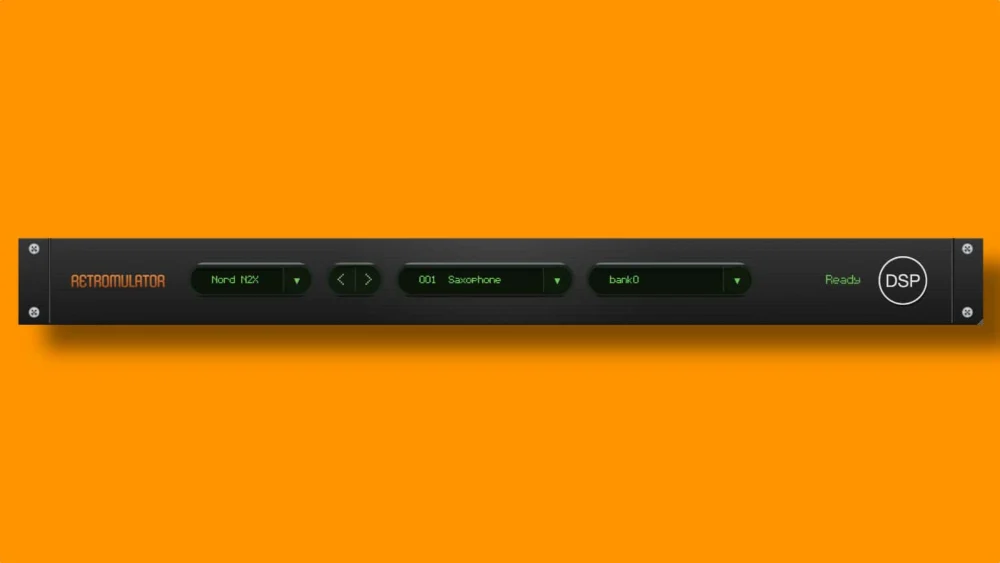
discoDSP, a long-standing developer in the professional audio software industry, has officially announced the release of Retromulator, a groundbreaking software instrument designed to provide cycle-accurate emulation of several legendary digital hardware synthesizers. Unlike traditional virtual instruments that attempt to recreate the sound of vintage hardware through mathematical approximations or sampling, Retromulator utilizes low-level emulation (LLE) to replicate the actual circuitry and logic of the original hardware chips. This release marks a significant milestone in the preservation of digital musical heritage, offering musicians and producers access to the authentic behavior of iconic instruments within modern digital audio workstations (DAWs).
Technical Foundations of Low-Level Emulation
At the core of Retromulator is a sophisticated emulation engine that targets the specific integrated circuits (ICs) found in high-end synthesizers from the 1980s, 1990s, and early 2000s. The plugin is built upon the Gearmulator framework, an open-source project developed by the dsp56300 team, which has gained notoriety in the synthesizer community for its work in emulating the Motorola DSP 56300 family of processors.
The Motorola DSP 56300 was the "brain" behind a generation of virtual analog synthesizers. Retromulator’s ability to execute a cycle-accurate emulation of this processor allows it to run the original binary firmware—the Read-Only Memory (ROM)—of the hardware units. Because the software is running the exact same code that the physical hardware ran, every nuance of the filter resonance, oscillator behavior, and envelope timing is preserved.
In addition to the Motorola DSP emulation, Retromulator features a comprehensive emulation of the Yamaha DX7’s internal architecture. This includes the Hitachi HD6303R sub-CPU and the specialized Yamaha YM21280/YM21290 EGS/OPS chipset. While many FM (Frequency Modulation) software synthesizers exist, they often use modern algorithms that produce a "cleaner" sound than the original 1983 hardware. Retromulator’s approach ensures that the specific digital-to-analog conversion characteristics and the inherent mathematical "grit" of the original Yamaha silicon are faithfully reproduced.
A Suite of Seven Iconic Synthesizers
Version 1.0 of Retromulator supports seven distinct synthesizer engines, each of which played a pivotal role in the evolution of electronic music:
- Yamaha DX7: The instrument that defined the sound of the 1980s. Its complex FM synthesis provided the crystalline bells, aggressive basses, and realistic electric pianos heard on countless hit records.
- Access Virus A/B/C/TI: Often cited as the king of virtual analog synthesis, the Virus series became the backbone of trance, techno, and drum and bass. By emulating the DSP 56300, Retromulator brings the "Darkstar" and "Hypersaw" textures to the software realm with unprecedented accuracy.
- Waldorf MicroQ: Known for its aggressive modulation capabilities and high-quality filters, the MicroQ was a compact powerhouse in the early 2000s.
- Waldorf Microwave II/XT: A wavetable synthesis legend that carried the torch from the PPG Wave. Its gritty, industrial, and evolving textures are a staple for film composers and sound designers.
- Nord Lead 2X: Clavia’s Nord Lead series revolutionized the industry by introducing a "one knob per function" interface and a raw, punchy sound that mimicked classic subtractive analog synths.
- Roland JP-8000: The synthesizer responsible for the "Supersaw" waveform, which became the defining sound of late-90s dance music.
The Role of Original Firmware (ROMs)
A critical aspect of Retromulator’s operation is its requirement for original ROM firmware. Because the plugin acts as a virtual host for the hardware’s operating system, it cannot function without the binary data extracted from the physical chips of the original synthesizers.
discoDSP emphasizes that users must provide their own ROM files, which are not included with the plugin due to copyright and licensing restrictions held by the original manufacturers (such as Yamaha, Roland, and Access). This requirement places Retromulator in a similar legal and functional category as video game console emulators, where the software provides the environment, but the user must provide the "game" or system software. This approach ensures that the plugin remains a legal tool for hardware owners who wish to move their workflow into a digital environment while maintaining the exact sonic profile of their physical units.
Chronology and Development History
The path to Retromulator’s release is rooted in the "DSP56300 Emulation" project, a community-driven effort that began several years ago. The project sought to reverse-engineer the Motorola DSPs to ensure that the unique sounds of discontinued hardware would not be lost to time as physical components—such as capacitors, power supplies, and LCD screens—inevitably fail.
In 2023 and early 2024, the dsp56300 team made significant strides in optimizing the emulation code, allowing it to run efficiently on modern multi-core CPUs. discoDSP, recognizing the potential for a unified, professionally supported interface for this technology, integrated the Gearmulator core into its ecosystem. This collaboration resulted in Retromulator, which provides a streamlined user experience, full DAW integration, and cross-platform compatibility that was previously difficult to achieve with raw community builds.

Cross-Platform Availability and Licensing Model
Retromulator is designed for professional studio environments, offering support for macOS, Windows, and Linux. It is available in VST3 and Audio Units (AU) formats, as well as a standalone application for live performance or sound design sessions outside of a DAW.
In a move that reflects the project’s open-source roots, discoDSP has distributed Retromulator under the GNU General Public License v3 (GPL v3). This means the software is available to use with no feature restrictions and no commercial use limitations. However, discoDSP offers a paid license option. Purchasing a license does not "unlock" features, but rather serves as a way for the community to support ongoing development and entitles the user to priority technical support. This "pro-consumer" model allows the technology to remain accessible while providing a sustainable path for future updates and the addition of more synth engines.
Industry Implications and Analysis
The introduction of Retromulator arrives at a time when the "vintage digital" market is experiencing a massive resurgence. Prices for hardware units like the Access Virus TI and the Roland JP-8000 have climbed steadily on the second-hand market. Retromulator offers a solution for producers who desire these specific sounds but are deterred by the high cost and maintenance requirements of 20-to-40-year-old hardware.
From a technical standpoint, Retromulator challenges the current industry standard of "component modeling." While companies like Arturia and Softube model the behavior of analog circuits, digital-to-digital emulation (LLE) is a different beast entirely. It eliminates the "interpretation" factor of the developer; if the emulation of the processor is correct, the sound is, by definition, 100% identical to the hardware output.
However, the reliance on user-provided ROMs remains a hurdle for mainstream adoption. While many ROMs can be found in community archives or extracted via MIDI dump from physical units, the process requires a level of technical literacy that exceeds that of a standard "plug-and-play" VST. Despite this, for the purist and the professional, the trade-off is negligible compared to the benefit of having a "virtual" Access Virus or Nord Lead that is indistinguishable from the real thing.
Broader Impact on Software Synthesis
Retromulator’s release may prompt other developers to explore low-level emulation for discontinued digital gear. As the industry moves further away from the era of specialized DSP chips and toward general-purpose CPU processing, the ability to "containerize" old hardware logic is becoming essential for archival purposes.
The inclusion of Linux support is also noteworthy. While the Linux audio ecosystem has grown significantly, it often lacks the high-profile commercial releases found on Windows and macOS. By supporting Linux, discoDSP is catering to a niche but dedicated segment of the production community that prioritizes open-source standards and system stability.
Final Outlook
As discoDSP moves forward with Retromulator, the roadmap likely includes the addition of more DSP-based synthesizers from the same era, such as those from Korg or E-mu Systems, provided the underlying processors can be successfully emulated. For now, version 1.0 stands as a robust tribute to the digital revolution of the late 20th century, bridging the gap between the tactile history of hardware and the convenience of modern software.
Musicians interested in exploring Retromulator are encouraged to visit the discoDSP website to review the documentation regarding ROM compatibility and system requirements. With its combination of cycle-accurate precision and a community-focused licensing model, Retromulator is poised to become an essential tool for anyone seeking the authentic sound of the digital synthesizers that shaped modern music.
