

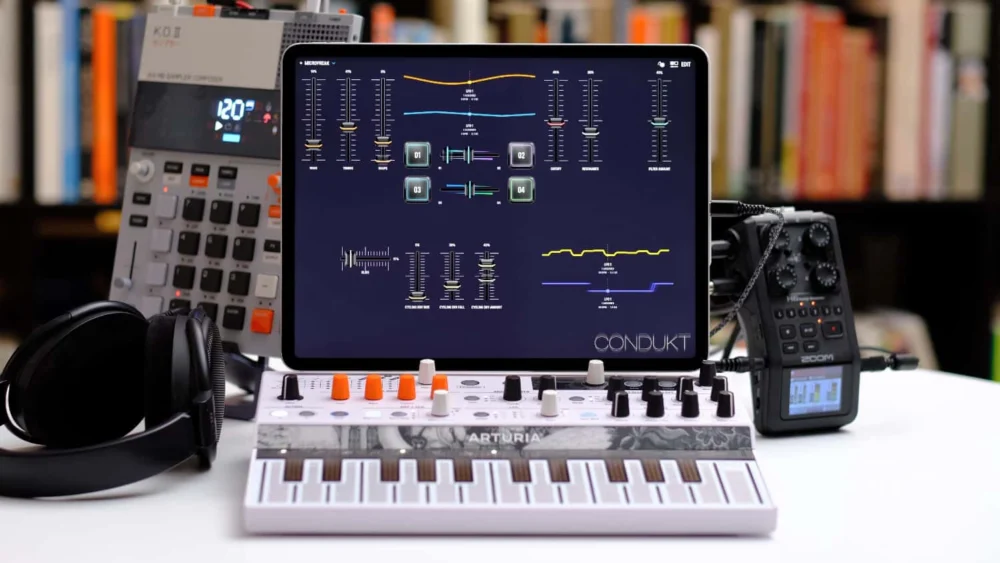
The landscape of digital music production and hardware integration has seen a significant evolution with the official release of Condukt, a comprehensive "Universal MIDI controller" application designed for iOS, iPadOS, and macOS. Developed to bridge the gap between the tactile world of hardware synthesizers and the versatile touch-screen interfaces of modern mobile and desktop devices, Condukt enters the market as a centralized hub for studio management. By providing a sophisticated software layer over physical gear, the application aims to streamline the workflows of electronic musicians, sound designers, and live performers who often grapple with the limitations of hardware menus and fixed physical control surfaces.
The Core Functionality of the Condukt Ecosystem
At its primary level, Condukt serves as a bidirectional communication bridge. While many hardware synthesizers, particularly vintage models or compact modern units, suffer from "menu diving"—the process of navigating complex sub-menus on small screens to change single parameters—Condukt externalizes these controls. The application features a robust database that includes custom-mapped templates for over 200 synthesizers, samplers, and drum machines. This database covers a wide spectrum of the industry’s most prominent manufacturers, ranging from legacy Roland and Korg units to contemporary boutique offerings from companies like Teenage Engineering and Dreadbox.
The interface is designed to transform an iPad or Mac into a high-resolution control surface. Users are presented with a customizable array of knobs, faders, and buttons that correspond directly to the internal parameters of their connected hardware. This allows for real-time manipulation of filters, oscillators, envelopes, and effects without requiring the user to touch the hardware unit itself. For musicians working in cramped studio environments or those utilizing rack-mounted gear that is physically difficult to reach, this remote accessibility represents a significant ergonomic improvement.
Advanced Modulation and Sequencing Capabilities
Beyond simple parameter control, Condukt introduces a suite of creative tools that often exceed the native capabilities of the hardware it controls. The application includes several types of integrated sequencers, allowing users to drive their hardware through complex rhythmic and melodic patterns. These sequencers are designed to take advantage of the touch-screen interface, offering a more intuitive method of pattern creation than the traditional step-entry methods found on many older synthesizers.
Furthermore, Condukt adds a layer of modulation that may not exist within the original hardware’s architecture. By utilizing the processing power of the iOS or macOS host device, users can assign Low-Frequency Oscillators (LFOs) and complex envelopes to hardware parameters via MIDI Continuous Controller (CC) messages. This effectively "upgrades" older or simpler synthesizers, giving them the modulation depth typically reserved for high-end modern workstations or complex modular systems. The ability to synchronize these modulations with a master clock ensures that hardware-driven performances remain rhythmically cohesive within a larger production environment.
Historical Context: The Evolution of MIDI Control Surfaces
To understand the impact of Condukt’s release, it is necessary to examine the chronology of MIDI (Musical Instrument Digital Interface) technology. Since its inception in 1983, MIDI has been the industry standard for communication between musical instruments. However, the early decades of MIDI were characterized by hardware-to-hardware connections that required significant technical knowledge to map and configure.
The 2010s marked a turning point with the rise of the iPad as a serious music production tool. Early applications like Lemur and TouchOSC proved that touch screens could serve as viable alternatives to physical MIDI controllers. However, these platforms often required users to build their own interfaces from scratch—a time-consuming process that acted as a barrier to entry for many musicians.
The development of Condukt represents the next phase in this timeline: the "Universal" pre-mapped controller. By providing a pre-built database of 200+ instruments, the developers have removed the configuration hurdle, allowing users to achieve "plug-and-play" functionality with their hardware. This shift reflects a broader trend in the music technology industry toward streamlining the "DAW-less" (Digital Audio Workstation-less) workflow, where musicians use software primarily as a utility to enhance their physical instruments rather than as the sole source of sound.
Supporting Data and Market Analysis
The release of Condukt comes at a time when the global electronic musical instrument market is seeing sustained growth. According to market research, the demand for hardware synthesizers has surged as musicians seek tactile experiences away from computer screens. However, the paradox of this trend is that as setups become more hardware-centric, the need for a central digital brain to manage the various devices becomes more acute.
Data regarding iOS music production also supports the viability of Condukt’s launch. The "Pro Audio" segment of the App Store has become one of the most stable niches for developers, with users increasingly willing to pay premium prices for specialized tools. At a price point of $19.99 USD, Condukt positions itself as a professional-grade utility. When compared to the cost of dedicated hardware MIDI controllers—which can range from $200 to over $1,000—a software-based solution that leverages existing hardware (an iPad or Mac) offers a high value-to-cost ratio for the end user.
The developer has supported the launch with an extensive library of video demonstrations on their official YouTube channel. These videos showcase the app’s low-latency performance and its ability to handle high-density MIDI data across multiple channels simultaneously. This transparency in demonstration is a response to common user concerns regarding the stability of MIDI over wireless (Wi-Fi/Bluetooth) and wired (USB-MIDI) connections in a live performance setting.
Industry Implications and User Reception
While formal reviews from major trade publications are still forthcoming, early reactions from the synthesizer community suggest that Condukt addresses a specific pain point in the modern studio. The "hybrid" workflow—using a computer or tablet to control analog hardware—is now the standard for many professional producers.
Industry analysts suggest that the "Universal" nature of the app could put pressure on hardware manufacturers to improve their own software integration. Currently, many manufacturers provide "editors" for their synths, but these are often platform-specific, buggy, or aesthetically outdated. Condukt’s unified interface provides a consistent user experience across different brands, which may encourage more musicians to explore gear from manufacturers they previously avoided due to difficult user interfaces.
Furthermore, the app’s inclusion of legacy hardware support provides a lifeline for "vintage" gear. Many synthesizers from the 1990s and early 2000s have excellent sound engines but are notoriously difficult to program due to small LCD screens and limited physical buttons. By bringing these instruments into a modern touch-screen environment, Condukt effectively bridges a thirty-year gap in technology.
Technical Specifications and Requirements
Condukt is built to utilize the latest frameworks in Apple’s ecosystem. On iOS and iPadOS, it leverages the low-latency MIDI capabilities of the operating system, supporting both Core MIDI and MIDI 2.0 protocols where applicable. On macOS, the application takes advantage of the larger screen real estate to allow for the simultaneous control of multiple instruments, making it a viable candidate for a "master control station" in a professional recording studio.
The application supports connectivity through several mediums:
- USB-MIDI: Direct connection via camera connection kits or USB hubs.
- DIN-MIDI: Connection through standard MIDI interfaces.
- Bluetooth MIDI: For wireless control with minimal cable clutter.
- Network MIDI (RTP MIDI): For controlling gear over a local area network.
The database of 200+ instruments is reported to be an expanding list, with the developer indicating that future updates may include user-requested maps and further refinements to existing profiles.
Future Outlook: The Role of Software in Hardware Management
The launch of Condukt signals a broader shift in how musicians interact with their gear. As the distinction between "software" and "hardware" continues to blur, tools that facilitate the seamless integration of both will become essential. The success of Condukt will likely depend on the frequency of its database updates and its ability to maintain low-latency performance as MIDI standards continue to evolve.
In an era where "workflow" is often cited as the most important factor in creative output, Condukt offers a compelling proposition: the power of digital flexibility paired with the character of analog hardware. By centralizing the control of a diverse array of instruments into a single, cohesive interface, the application provides a solution to the fragmentation that has long plagued multi-instrument setups.
Condukt is currently available for purchase on the Apple App Store. The $19.99 USD price tag includes the full feature set, including the complete database of instrument profiles and all sequencing tools. As the music technology community continues to adopt mobile platforms for professional use, Condukt stands as a significant example of how modern software can breathe new life into the hardware of the past and present.
