

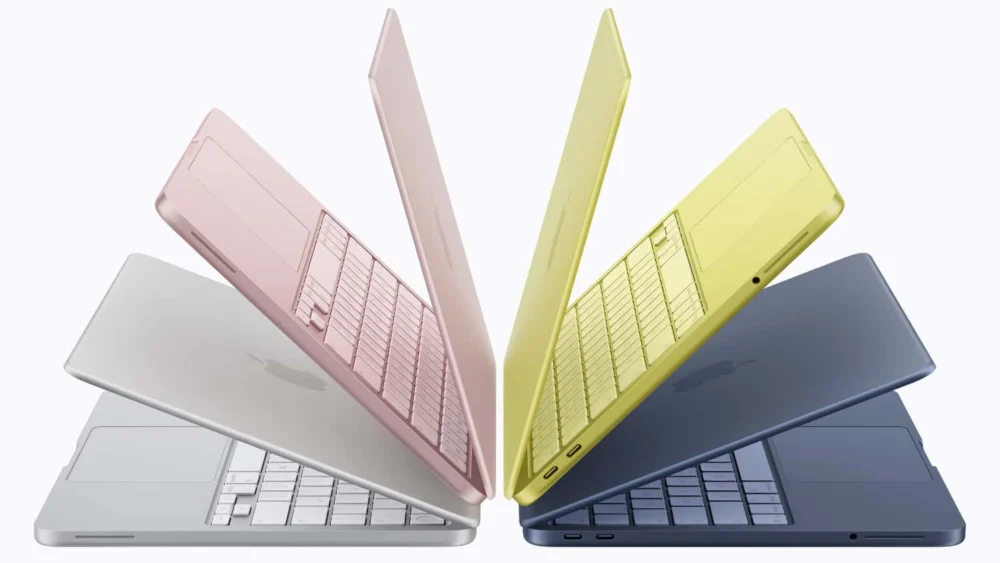
Apple has officially unveiled the MacBook Neo, a $599 laptop positioned as the most accessible entry point into the macOS ecosystem in the company’s history. Announced during a keynote event this week, the MacBook Neo represents a strategic pivot for the Cupertino-based tech giant, targeting the mid-tier consumer market that has historically been dominated by Windows-based PCs and Google’s Chromebooks. While the device is marketed as an entry-level machine, industry analysts and technology pundits are already drawing parallels between this release and the 1998 debut of the original iMac, suggesting the Neo could be the most consequential hardware release for Apple in over a quarter-century.
The MacBook Neo arrives at a time when the global personal computing market is grappling with a widening gap between high-end professional workstations and budget-friendly consumer devices. By offering a laptop at the $599 price point, Apple is directly challenging the established hierarchy of the laptop industry. The device features a streamlined design that maintains the premium aesthetic of the MacBook Air and MacBook Pro lines, utilizing a recycled aluminum chassis and the company’s proprietary Apple Silicon architecture to deliver performance levels that were previously unattainable at this price bracket.
A Historical Precedent: From the iMac G3 to the MacBook Neo
To understand the potential impact of the MacBook Neo, one must look back to the late 1990s. In 1998, Apple was a company in transition, facing financial instability and a dwindling market share. The release of the iMac G3 was met with significant skepticism from the tech press. Critics at the time pointed to the lack of a legacy floppy disk drive and the reliance on the then-unproven USB standard as fatal flaws. Furthermore, the "i" in iMac—standing for "Internet"—was dismissed by some as a marketing gimmick during an era when mainstream publications were still questioning the long-term viability of the World Wide Web.

Despite the initial backlash, the iMac G3 became a cultural icon and a commercial juggernaut. It simplified the computing experience for the average user and proved that design and ease of use could command market dominance. The MacBook Neo appears to be following a similar trajectory. By removing the financial barrier to entry while maintaining the core "Mac experience," Apple is betting that a new generation of users will choose macOS over cheaper, plastic-constructed competitors.
Technical Specifications and Market Positioning
The MacBook Neo is built upon the foundation of Apple Silicon, the ARM-based chip architecture that debuted in 2020. This transition away from Intel processors has allowed Apple to achieve a level of vertical integration that is unique in the industry. Because Apple designs its own chips, operating systems, and hardware, it can optimize the MacBook Neo to run efficiently on hardware that would traditionally be considered "underpowered" by Windows standards.
While official benchmarks are still being finalized, early reports indicate the Neo utilizes a modified version of the M-series chip, optimized for thermal efficiency and battery longevity. The device boasts a 13-inch Retina display and a battery life rated for up to 18 hours of typical use. To achieve the $599 price point, Apple has made strategic hardware trade-offs. The device features a limited port selection—likely two USB-C ports—and starts with a base configuration of 8GB of unified memory and 256GB of solid-state storage.
For professional content creators, these specifications may seem restrictive. High-end video editing and complex 3D rendering require the higher thermal ceilings and expanded memory capacities found in the MacBook Pro. However, for the "everyday user"—students, office workers, and casual web browsers—the MacBook Neo offers a level of build quality and software stability that is often missing from the $500–$700 Windows laptop segment.

Industry Reactions and the Competitive Landscape
The response from the technology journalism sector has been swift and largely transformative. Windows Central, a publication typically focused on the Microsoft ecosystem, issued a stark warning to PC manufacturers, stating that "Microsoft better be panicking." The publication noted that the budget laptop market has long been saturated with "e-waste"—devices with poor build quality, dim screens, and bloated software. The MacBook Neo, by contrast, provides a premium user experience that threatens to erode the market share of brands like Dell, HP, and Lenovo in the consumer space.
Tom’s Guide echoed these sentiments, suggesting that the Neo could effectively end the dominance of Chromebooks in the education sector and among casual users. The publication noted that for an additional $100 to $200 over a high-end Chromebook, consumers can now own a fully-featured laptop capable of running professional-grade software like the Adobe Creative Cloud suite and Apple’s own Logic Pro and Final Cut Pro.
Marques Brownlee, a prominent technology analyst, highlighted that the MacBook Neo’s existence is a direct result of Apple’s departure from Intel. Brownlee noted that the efficiency of Apple Silicon allows for a fanless design and high performance-per-watt, features that are difficult to replicate in budget Windows laptops without significant compromises in battery life or portablity.
Implications for the Music Production Industry
The music industry has long maintained a symbiotic relationship with Apple hardware. Currently, an estimated 70% of professional musicians and audio engineers utilize macOS as their primary platform. The stability of Apple’s Core Audio drivers and the ubiquity of the MacBook Pro in recording studios have made the Mac the industry standard.

The introduction of the MacBook Neo is expected to solidify this lead by lowering the "cost of entry" for aspiring musicians. The device comes pre-installed with GarageBand, a powerful digital audio workstation (DAW) that has served as the starting point for countless artists. By providing a $599 machine that can reliably run GarageBand and even entry-level sessions in Logic Pro, Apple is securing its future within the creative community.
However, the Neo’s hardware limitations remain a point of discussion for power users. The lack of multiple Thunderbolt ports may require the use of external hubs for musicians using complex setups involving MIDI controllers, audio interfaces, and external hard drives. Additionally, the non-upgradable nature of the unified memory means that users must be certain that 8GB or 16GB will meet their long-term needs. Despite these hurdles, the consensus among audio professionals is that the Neo will become the "standard-issue" laptop for music students and hobbyists, further entrenching macOS as the dominant platform for audio development.
Economic Analysis: The iPhone Effect and Market Scale
Apple’s ability to price the MacBook Neo at $599 is a testament to the company’s massive economies of scale. Having sold over 3 billion iPhones, Apple possesses a manufacturing and supply chain infrastructure that is unrivaled. The components used in Apple Silicon chips are produced in such high volumes that the per-unit cost is significantly lower than that of third-party processors.
Currently, Apple holds approximately 9% to 10% of the global laptop market. Financial analysts predict that the MacBook Neo could help Apple double this market share within the next three to five years. By capturing the "profitable middle" of the market—users who want more than a Chromebook but cannot justify a $1,500 MacBook Pro—Apple is positioned to replicate the success it has seen in the smartphone market. While Apple accounts for about 23% of global smartphone sales, it captures roughly 85% of the total industry profits. The MacBook Neo is a strategic tool designed to apply this same high-margin, high-volume model to the personal computer industry.

The Future of Multi-Device Ecosystems
The launch of the MacBook Neo also accelerates the trend of "fluid computing," where users move seamlessly between devices. With features like Universal Control, Handoff, and iCloud synchronization, a musician can record a voice memo on an iPhone, arrange the melody on an iPad, and finalize the mix on a MacBook Neo. This ecosystem "stickiness" makes it increasingly difficult for users to switch to competing platforms, as the value of the hardware is amplified by its integration with other Apple devices.
As the MacBook Neo begins shipping to consumers, the industry will be watching closely to see how competitors respond. Will Microsoft and its partners be able to produce a $600 Windows laptop that matches the Neo’s build quality and battery life? Or will Apple’s vertical integration prove to be an insurmountable advantage?
While the MacBook Neo may be an "entry-level" device in terms of its price and internal specifications, its impact on the market is likely to be anything but basic. By democratizing access to the Mac, Apple is not just selling a laptop; it is expanding its digital empire into the hands of millions of new users, potentially reshaping the landscape of personal computing for the next decade. Only time will tell if the Neo achieves the legendary status of the iMac, but for now, the "Mac for the masses" has arrived, and the industry will never be the same.
