

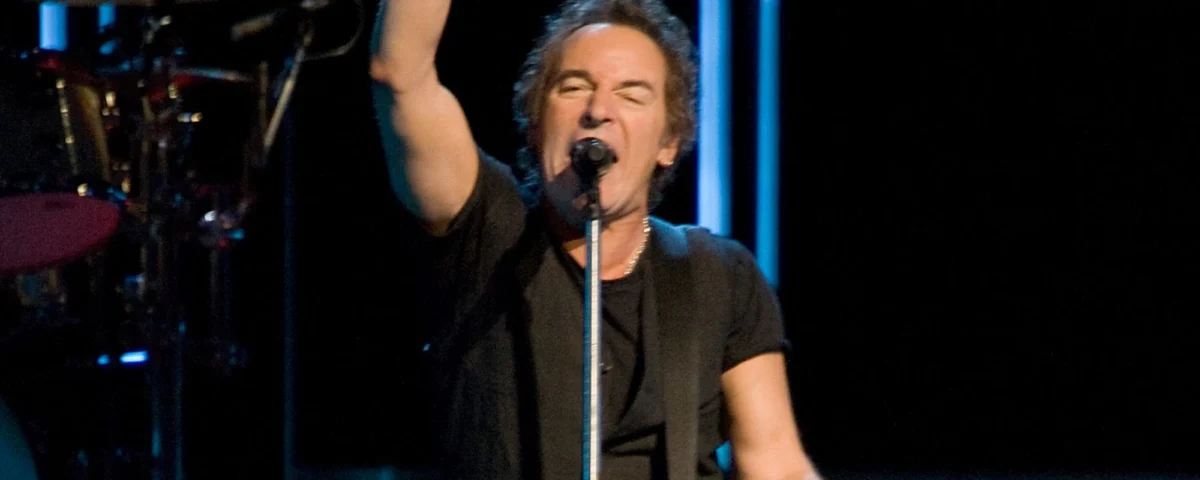
The enduring legacy of the E Street Band is often defined not just by its commercial success or its marathon live performances, but by the profound personal bonds between its members and their leader, Bruce Springsteen. For over four decades, this collective of musicians from the Jersey Shore has functioned less as a traditional backing group and more as a fraternal organization, anchored by a shared history that predates their global superstardom. Among the original architects of this "E Street sound" was Danny Federici, whose mastery of the Hammond B3 organ, glockenspiel, and accordion provided the atmospheric texture essential to Springsteen’s cinematic storytelling. While the band has weathered many transitions, few moments in its history carry the emotional weight of Federici’s final performance on March 20, 2008, at the Conseco Fieldhouse in Indianapolis—an event that marked the end of an era for one of rock and roll’s most storied partnerships.
The Foundations of the E Street Brotherhood
To understand the significance of Danny Federici’s final appearance, one must look back at the origins of the E Street Band. Federici and Springsteen began their musical journey together in the late 1960s, navigating the vibrant but competitive club scene of Asbury Park, New Jersey. Federici was a mainstay in Springsteen’s early projects, including the power trio Steel Mill and the Bruce Springsteen Band. When Springsteen signed his solo contract with Columbia Records and released Greetings from Asbury Park, N.J. in 1973, Federici was there, his organ swells providing the ecclesiastical backbone to Springsteen’s "street-poetry" lyrics.
Federici, nicknamed "The Phantom" for his ability to disappear and reappear in the shadows of the stage, was known for a fluid, intuitive playing style. Unlike many rock keyboardists who favored aggressive, percussive solos, Federici focused on color and movement. His work on tracks like "4th of July, Asbury Park (Sandy)" and "Hungry Heart" defined the melodic identity of the band. Springsteen’s leadership style—often described as demanding and disciplined—was predicated on a "music first" philosophy. While many of their contemporaries were consumed by the excesses of the 1970s and 80s rock lifestyle, the E Street Band maintained a reputation for professional rigor, a trait Springsteen instilled to ensure the longevity of their live performances.
A Private Battle Amidst a Global Tour
The E Street Band’s professional resolve was put to the ultimate test during the Magic Tour in 2007. The album Magic represented a return to the classic E Street sound after several years of Springsteen pursuing solo and folk projects. However, behind the scenes, the band was grappling with the health of one of its pillars. Federici had been privately battling melanoma, a virulent form of skin cancer, for three years. Despite the diagnosis, he remained committed to the tour, performing across the United States and Europe throughout the fall of 2007.
In November 2007, the physical toll of the illness and the intensity of the treatment regimen made it impossible for Federici to continue the full touring schedule. On November 21, 2007, Springsteen issued a formal statement announcing that Federici would be taking a leave of absence to pursue treatment at the Memorial Sloan-Kettering Cancer Center in New York City. "Danny is one of the pillars of our sound," Springsteen stated at the time. "He has played beside me as a great friend for more than 40 years. We eagerly await his healthy and speedy return."
To fill the void, the band recruited Charles Giordano, who had previously played with Springsteen’s Sessions Band. Giordano was tasked with learning the intricate arrangements of the E Street catalog while maintaining the spirit of Federici’s original parts. While the tour continued with Giordano, the absence of "The Phantom" was keenly felt by both the band and the fans.
The March 20, 2008, Indianapolis Performance
The Magic Tour reached the Conseco Fieldhouse in Indianapolis on March 20, 2008. While the audience expected a standard, high-energy Springsteen show, the atmosphere shifted dramatically an hour into the set. Without prior announcement, Springsteen introduced his lifelong friend to the stage. Federici, though visibly weakened by his ongoing medical battle, walked out to the whimsical strains of "The Daring Young Man on the Flying Trapeze." The choice of entrance music was a poignant nod to Federici’s resilience and his metaphorical "high-wire act" of performing while terminally ill.
The reunion was not merely a ceremonial appearance; Federici took his place at the organ for several songs, including "The Promised Land" and "Spirit in the Night." Observers noted that the band’s energy reached a fever pitch during this segment. Music journalist Kieran Lane, who reviewed the concert, described an "electric energy" that permeated the venue. The presence of Federici seemed to galvanize the musicians, who played with the precision of a "well-oiled machine," seemingly aware that they were participating in a rare and fleeting moment of history.
For the duration of his time on stage that night, the illness appeared to recede into the background. Federici’s fingers found the familiar grooves of the Hammond B3, providing the signature swells that had defined the band’s sound since the early 1970s. It was a demonstration of the professional discipline Springsteen had always demanded, but it was also a profound act of friendship and closure.
Medical Context and the Final Days
Following the Indianapolis show, Federici returned to New York to continue his treatment. Melanoma, particularly when it reaches advanced stages, is notoriously difficult to treat. According to data from the National Cancer Institute, the five-year survival rate for metastatic melanoma in the late 2000s remained significantly lower than for many other forms of cancer, despite advances in immunotherapy and targeted treatments that were then in their infancy.
Tragically, the Indianapolis performance would be Federici’s final time on stage. Less than a month later, on April 17, 2008, Danny Federici passed away at the Memorial Sloan-Kettering Cancer Center. He was 58 years old.
In the wake of his death, the Springsteen organization released a statement that reflected the deep personal loss: "Danny and I worked together for 40 years—he was the most wonderfully fluid keyboard player and a pure natural musician. I loved him very much. We grew up together." The band postponed several upcoming tour dates to allow the members to grieve and attend Federici’s funeral, which was held in Red Bank, New Jersey.
Impact on the E Street Sound and Legacy
The passing of Danny Federici was the first death of a core E Street Band member since its formation, and it forced a reckoning with the mortality of a group that had long seemed invincible. The band’s 2009 album, Working on a Dream, was dedicated to his memory, and it featured some of his final studio recordings, including the accordion work on "The Last Carnival."
Federici’s death also led to the establishment of the Danny Federici Melanoma Fund. The foundation was created to raise money for research and to increase public awareness about the importance of early detection and skin examinations. Springsteen and the band have remained active in supporting this cause, frequently using their platform to highlight the dangers of the disease that took their friend.
The loss of Federici was followed three years later by the death of saxophonist Clarence Clemons in 2011. These two losses fundamentally altered the DNA of the E Street Band. While musicians like Charles Giordano and Jake Clemons (Clarence’s nephew) have stepped in to carry the torch, the absence of the original "pillars" is acknowledged in every Springsteen performance. During the 2012-2013 Wrecking Ball Tour, Springsteen began a tradition of dedicating a segment of the show to Federici and Clemons, featuring a video montage of their years together.
Analytical Implications: The End of the "First Era"
From a journalistic and historical perspective, Danny Federici’s final performance in Indianapolis serves as a bookend to the "First Era" of the E Street Band. This era was characterized by a specific type of regional loyalty and a sound that was inextricably linked to the Asbury Park boardwalk culture of the mid-20th century. Federici was the sonic architect of that "Jersey Shore" sound—a blend of R&B, rock, and soul, filtered through the lens of a classic American keyboardist.
The fact that Federici chose to spend one of his final weeks of life on a stage in Indiana speaks to the unique culture Springsteen built within the band. It was a culture where the work—the show—was the highest form of expression and the ultimate sign of respect. For Federici, returning to the stage was not about the applause, but about fulfilling his role in the "machine" one last time.
Today, the E Street Band continues to tour, and Springsteen’s performances remain legendary for their length and intensity. However, for the fans who were present at the Conseco Fieldhouse on March 20, 2008, the memory of Federici’s surprise appearance remains a definitive moment in rock history. It was a display of the "Blood Brothers" bond that Springsteen often sang about—a bond that persisted through decades of fame, through the rigors of the road, and ultimately, through the face of mortality itself. Federici’s legacy lives on in the sprawling discography of the E Street Band, his notes continuing to provide the ethereal, haunting atmosphere that makes a Bruce Springsteen song instantly recognizable.
