

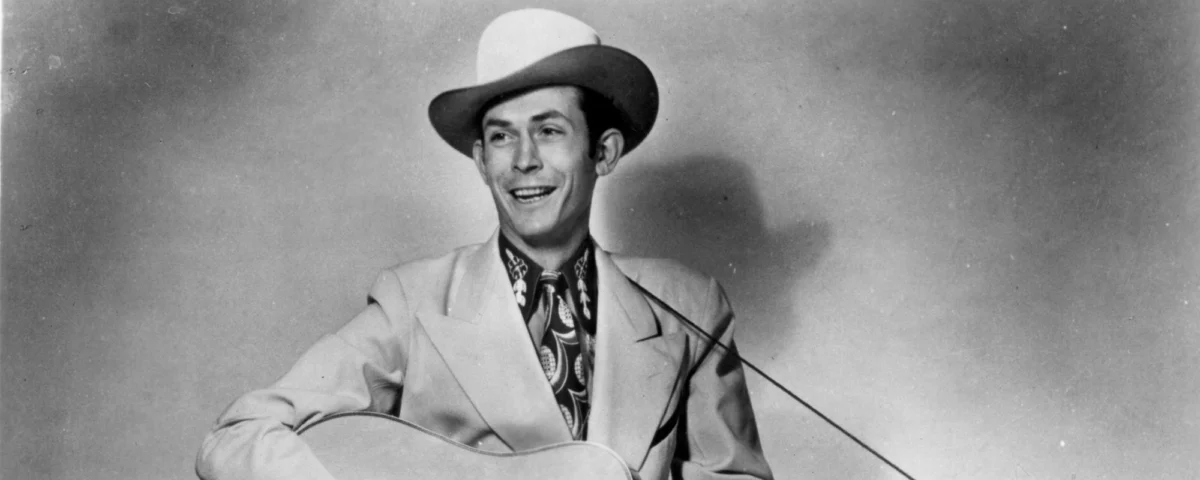
On March 30, 1949, Hank Williams entered the Castle Studio in Nashville, Tennessee, to record a song that would further cement his status as the premier voice of American country music, a track titled Wedding Bells. This recording session took place at a pivotal moment in Williams’ career, occurring just as he was transitioning from a regional sensation to a national icon. Following the explosive success of his first No. 1 hit, Lovesick Blues, the pressure was on Williams and his producer, Fred Rose, to prove that his success was not a fluke. Wedding Bells served as that proof, reaching No. 2 on the Billboard Country & Western charts and demonstrating Williams’ unique ability to interpret the "heartbreak ballad" with a level of sincerity that resonated across the United States.
The recording of Wedding Bells is not only significant for its chart performance but also for the historical nuances surrounding its authorship and the technical environment of the Nashville recording industry in the late 1940s. While Williams is often celebrated as the "Hillbilly Shakespeare" for his prolific songwriting, Wedding Bells was one of the few major hits in his catalog that he did not write himself. The story behind the song’s origin involves a complex web of "song selling" that was common in the era, highlighting the often-overlooked contributors to the foundation of the Nashville sound.
The Authorship Controversy and the Knoxville Connection
The official credits for Wedding Bells list Claude Boone as the songwriter. Boone, a guitarist and vocalist who performed with Bill Carlisle’s Kentucky Boys, was the first to record the song in 1947. However, music historians and biographers, most notably Colin Escott in his definitive work Hank Williams: The Biography, have long established that the true author was Arthur Pritchett. Pritchett, who performed under the stage name Arthur Q. Smith, was a Knoxville-based musician known for his immense talent and his tragic penchant for selling his compositions for meager sums to fund his struggles with alcoholism.
According to historical accounts, Pritchett sold the rights to Wedding Bells to Claude Boone for a mere $25. When adjusted for modern inflation, this amount equates to approximately $447 in 2024. This practice was not an isolated incident for Pritchett; he is rumored to have sold several other songs that became country standards, often relinquishing all future royalties for immediate cash. The transaction underscores the economic desperation of many Depression-era musicians and the lack of robust intellectual property protections for songwriters during the early development of the Nashville music industry.
Despite the lack of credit, the song’s lyrical structure—a narrative of a man watching the love of his life marry another—fit Williams’ "Lovesick" persona perfectly. The themes of unrequited love and public humiliation were central to the honky-tonk genre that Williams was helping to define.
The Castle Studio Sessions and the Nashville Sound
The recording took place at Castle Studio, which was Nashville’s first professional recording facility. Located in the Tulane Hotel at the corner of Eighth Avenue North and Church Street, Castle Studio was founded by three WSM radio engineers: Aaron Shelton, Carl Jenkins, and George Reynolds. Before the establishment of Castle, most country artists had to travel to New York City, Chicago, or Los Angeles to record. The existence of Castle Studio allowed Nashville to begin its journey toward becoming "Music City, USA."
During the session on March 30, 1949, Williams was backed by a version of his band, the Drifting Cowboys, along with seasoned session musicians. The production was overseen by Fred Rose, the co-founder of Acuff-Rose Music. Rose acted as a mentor to Williams, often editing his lyrics and ensuring that the musical arrangements remained commercially viable without losing their emotional grit.
The B-side of the Wedding Bells single was a song titled I’ve Just Told Mama Goodbye. In a testament to Williams’ rising popularity, the B-side also found success, reaching the top 10 on the charts. This "double-sided" success was a rare feat and signaled to MGM Records that Williams was their most valuable asset in the burgeoning country market.
Chronology of Hank Williams’ Rise to Prominence
To understand the impact of Wedding Bells, it is necessary to examine the trajectory of Williams’ career leading up to 1949. His path to stardom was characterized by initial rejection followed by a rapid, almost meteoric ascent.
- 1946: The Sterling Records Era. Williams began his recording career with Sterling Records. His debut single, Never Again (Will I Knock on Your Door), was released in early 1947. While these early recordings showed promise and were commercially successful in regional markets, they failed to make an impact on the national Billboard charts.
- 1947: The Move to MGM. On the strength of his Sterling recordings and his songwriting potential, Fred Rose secured a deal for Williams with the newly formed MGM Records. His first major hit for the label was Move It on Over, which reached No. 4 and introduced a rhythmic, blues-influenced style that would later be cited as a precursor to rock and roll.
- 1948: Establishing a Presence. Williams continued to release singles such as Honky Tonkin’ and I’m a Long Gone Daddy, which maintained his presence on the charts but did not yet reach the top spot.
- Early 1949: The Lovesick Blues Breakthrough. In February 1949, Williams released Lovesick Blues, a cover of a 1920s show tune. The song became a massive No. 1 hit and led to his legendary debut at the Grand Ole Opry in June 1949, where he performed six encores.
- March 30, 1949: The Wedding Bells Session. Capitalizing on the momentum of Lovesick Blues, Williams recorded Wedding Bells. The song peaked at No. 2 and spent several months on the charts, solidifying his status as a consistent hitmaker.
Data and Chart Performance Analysis
The commercial performance of Wedding Bells provided significant data points for the industry. In 1949, the country music market was expanding rapidly as post-war audiences sought out relatable, emotional content.
- Peak Position: No. 2 on the Billboard Country & Western Records chart.
- Duration: The song remained on the charts for 21 weeks, an exceptional run for the era.
- B-Side Performance: I’ve Just Told Mama Goodbye peaked at No. 6, making the record one of the top-selling 78 RPM discs of the year.
- Comparative Success: At the time of its release, Williams was competing with established acts like Eddy Arnold and Red Foley. The success of Wedding Bells proved that Williams’ "hard country" style could compete with the more polished "crooner" style of Arnold.
The success of the single also had a profound impact on MGM Records’ bottom line. Williams’ ability to sell records in the South and Midwest provided the capital for MGM to expand its country division, eventually leading to the signing of other legendary artists.
Impact on the Country Music Genre and Industry Reactions
The industry reaction to Wedding Bells was overwhelmingly positive, though it also sparked discussions about the nature of "hillbilly" music. Trade publications of the time, such as Billboard and Cashbox, noted Williams’ ability to bridge the gap between rural audiences and urban listeners.
Contemporary analysts suggest that Wedding Bells helped refine the "tear-in-my-beer" trope that would become a staple of country music. By choosing a song he didn’t write but could perform with total conviction, Williams demonstrated the importance of the "interpreter" in country music—a tradition later carried on by artists like George Jones and Patsy Cline.
While official statements from the 1940s are sparse, the retrospective analysis from the Country Music Hall of Fame emphasizes that this specific session at Castle Studio was a turning point. It proved that Williams was not a "one-hit wonder" after Lovesick Blues. Instead, it showed he was a versatile artist capable of handling both up-tempo yodeling numbers and somber, narrative ballads.
Implications for the Legacy of Arthur Q. Smith
The story of Wedding Bells also serves as a cautionary tale regarding the history of music publishing. Arthur Q. Smith’s involvement—or lack thereof in the credits—has become a point of study for musicologists. It highlights the systemic issues within the early 20th-century music business where creators often lacked the resources or legal representation to protect their works.
In the decades following Williams’ death, the recognition of Smith’s contribution has grown. While he died in relative obscurity in 1963, the acknowledgment of his role in writing Wedding Bells and other hits has ensured that his name remains a part of the historical record of the Nashville songwriting community. This has led to a broader appreciation for the "ghostwriters" of the era who helped build the foundations of the genre.
Conclusion and Broader Historical Impact
Hank Williams would go on to release 27 more singles before his untimely death on January 1, 1953, at the age of 29. Of those, nearly all reached the top 10, with seven hitting No. 1. Songs like Cold, Cold Heart, Your Cheatin’ Heart, and Hey, Good Lookin’ would eventually eclipse Wedding Bells in terms of cultural longevity. However, the recording of Wedding Bells on March 30, 1949, remains a vital chapter in his biography.
It was the bridge between his early struggles and his final years of superstardom. It was the song that proved he could dominate the charts with material from outside sources, and it was a key moment in the rise of Nashville as a recording powerhouse. Today, Wedding Bells is remembered as a quintessential example of the "Golden Age" of country music—a period defined by simple melodies, profound emotional honesty, and the unmistakable, haunting voice of Hank Williams.
The legacy of this recording session continues to influence modern artists. From the neo-traditionalist movement of the 1980s to the contemporary stars of the 21st century, the template set by Williams at Castle Studio—honest storytelling backed by a steady honky-tonk beat—remains the gold standard for the genre. As we reflect on this anniversary, the story of Wedding Bells serves as a reminder of the complex interplay between talent, commerce, and the enduring power of a well-told story in song.
