

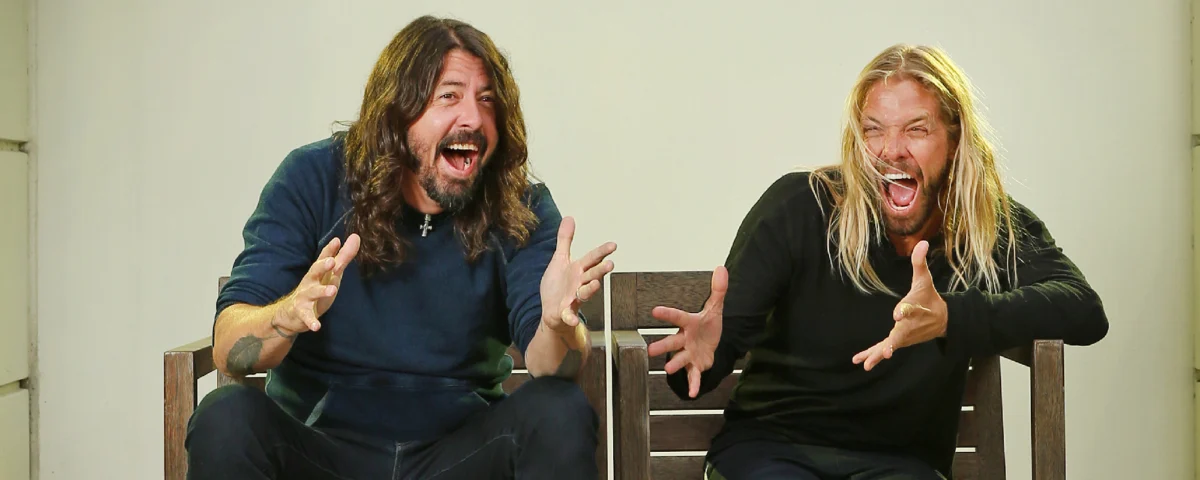
Dave Grohl, the multi-instrumentalist and frontman of the Foo Fighters, has long been regarded as one of the most resilient figures in the global music industry. Having transitioned from the drummer of Nirvana to the architect of one of the world’s most successful stadium rock bands, Grohl’s career has been marked by unparalleled highs and profound, public tragedies. In a recent and deeply personal interview with the Guardian, Grohl opened up about the psychological toll of his experiences, his eventual embrace of professional therapy, and the vivid, "visitation-like" dreams he continues to have of his late bandmates, Taylor Hawkins and Kurt Cobain.
The conversation offers a rare glimpse into the internal life of a man who has spent three decades navigating the complexities of fame while mourning the loss of those closest to him. Grohl’s reflections center on the concept of "visitation dreams"—experiences so lucid and emotionally resonant that they transcend the typical boundaries of subconscious processing. For Grohl, these dreams have become a bridge to the past, providing a sense of closure or connection that remained elusive during his waking hours.
The Visionary Dreams of Taylor Hawkins
The death of Taylor Hawkins on March 25, 2022, sent shockwaves through the music world. As the Foo Fighters’ drummer since 1997, Hawkins was more than a collaborator; he was Grohl’s "best friend and partner in crime." Following a period of intense mourning and a subsequent return to the stage, Grohl revealed that he recently experienced a dream involving Hawkins that felt indistinguishable from reality.
During the interview, Grohl recounted falling asleep on a couch in front of a television, only to find himself in a state of hyper-realistic consciousness. In this dream state, he believed he had woken up to find Hawkins sitting directly next to him. Grohl described Hawkins as looking "fantastic," noting specific details such as his tanned skin and perfectly styled hair. The emotional weight of the encounter was immediate. Grohl recalled saying, "Oh my God, we miss you so much," to which Hawkins responded with a smile.
The dream took a metaphysical turn when Grohl asked Hawkins where he was, hoping to glean some insight into the nature of the afterlife. According to Grohl, Hawkins smiled again and began to answer with the word "Dude—," before the musician suddenly woke up. Grohl expressed a sense of frustration at the interruption, noting that he felt he was on the verge of uncovering a profound secret. Despite the abrupt ending, the experience provided a sense of peace, reinforcing the idea that his friend remained "happy" in whatever realm he now occupied.
A Recurring Pattern of Visitation
The experience with Hawkins is not an isolated incident for Grohl. He admitted that throughout his life, he has been visited in his sleep by other significant figures who have passed away, including his former Nirvana bandmate Kurt Cobain, his father, his mother Virginia, and his long-time friend Jimmy.
Grohl described these occurrences as "visitations" rather than standard dreams. In these moments, he is often aware that he is dreaming, yet the presence of his loved ones feels entirely authentic. "It’s as if they’ve never left," he remarked, suggesting that these subconscious encounters serve as a vital mechanism for maintaining a bond with the deceased. For a musician whose life has been punctuated by sudden and violent ends—most notably Cobain’s suicide in 1994—these dreams offer a form of continuity that the physical world cannot provide.
Chronology of Loss: From Seattle to Bogota
To understand the depth of Grohl’s reflections, one must examine the timeline of loss that has defined his trajectory. Each milestone of his career has been shadowed by the departure of a key figure.
- April 1994: The death of Kurt Cobain. Following the end of Nirvana, Grohl retreated from the public eye, unsure if he would ever play music again. This period eventually led to the creation of the Foo Fighters’ debut album, which Grohl recorded almost entirely by himself as a form of catharsis.
- March 2022: Taylor Hawkins is found dead in his hotel room in Bogota, Colombia, hours before the Foo Fighters were set to perform at the Estéreo Picnic Festival. The band immediately cancelled all remaining tour dates.
- August 2022: Virginia Grohl, Dave’s mother and a constant source of inspiration, passes away. Virginia was a public school teacher and the author of From Cradle to Stage, a book exploring the lives of mothers of famous musicians.
- June 2023: The Foo Fighters release But Here We Are, an album widely recognized as a tribute to both Hawkins and Virginia Grohl. The record deals explicitly with themes of abandonment, grief, and the struggle to move forward.
The Shift Toward Therapy and Emotional Transparency
For decades, Grohl admitted to "running" from the idea of therapy. In the hyper-masculine world of 1980s punk rock and 1990s grunge, discussing mental health was often stigmatized or viewed as a sign of weakness. Grohl’s strategy for dealing with the 1994 loss of Cobain was largely to stay busy, throwing himself into the relentless machinery of touring and recording.
However, the double tragedy of 2022—losing both his musical soulmate and his mother within months—rendered his old coping mechanisms ineffective. Grohl acknowledged that he could no longer keep his emotions confined to his head. Being present with his mother during her final moments served as a catalyst for a deeper emotional opening. He described a shift from intellectualizing his pain to "letting it into his heart."
This transition led him to seek professional therapy, a move he had avoided for years. The process allowed him to deconstruct the "insatiable monster" of validation that he felt had driven much of his career. By confronting the trauma of his past, Grohl has been able to find a more sustainable way to carry his grief without letting it define his entire existence.
Supporting Data: The Impact of Loss on Creative Output
The intersection of grief and creativity is well-documented in the Foo Fighters’ discography. Industry analysts point to the band’s 2023 album, But Here We Are, as a significant turning point in their artistic narrative.
- Critical Reception: The album received some of the highest critical marks of the band’s career, with a Metacritic score of 86, indicating "universal acclaim." Critics noted that the raw honesty of the lyrics provided a depth that had been missing from some of the band’s more commercial recent efforts.
- Commercial Performance: Despite the somber subject matter, the album debuted at number one on the UK Albums Chart and reached the top ten in the United States. This suggests a strong resonance with a fanbase that has matured alongside Grohl and is similarly dealing with themes of aging and loss.
- The Role of "The Teacher": The ten-minute epic "The Teacher," dedicated to his mother, represents a stylistic departure for the band, leaning into progressive rock elements to mirror the complexity of long-term grief.
The Next Generation and the Future of the Foo Fighters
As Grohl navigates his personal healing, he is also overseeing the transition of the Foo Fighters into a new era. The appointment of Josh Freese as the band’s new drummer was a calculated move, bringing in a veteran session musician who could respect Hawkins’ legacy while providing the technical stability the band needed to continue.
Furthermore, Grohl’s influence is extending into the next generation of his family. His daughter, Violet Grohl, recently signed a record deal with Republic Records. While Grohl has claimed to be "totally uninvolved" in her professional decisions—to the point of not knowing she had signed the deal until after the fact—his journey through the industry serves as both a roadmap and a cautionary tale for her. The younger Grohl’s entry into the industry comes at a time when her father is more vocal than ever about the importance of mental health and emotional authenticity in the face of fame.
Broader Implications and Analysis
Grohl’s openness about his "visitation dreams" and his journey through therapy reflects a broader shift in the music industry. In an era where musicians like Bruce Springsteen, Demi Lovato, and Kendrick Lamar have been transparent about their mental health struggles, Grohl’s testimony adds the perspective of a "legacy" artist who has survived multiple eras of rock history.
Psychologists note that "visitation dreams" are a common phenomenon among those experiencing bereavement. These dreams often serve as a "provisional reality" that allows the dreamer to say things they didn’t get to say in life or to see the deceased in a state of health and happiness. For a public figure like Grohl, sharing these experiences helps destigmatize the non-linear nature of grief.
The narrative of Dave Grohl is no longer just about the survival of a rock star; it is about the evolution of a man learning to balance the weight of the past with the demands of the present. By embracing therapy and acknowledging the presence of his "visitors," Grohl has found a way to honor the memory of Kurt Cobain and Taylor Hawkins while ensuring that the Foo Fighters remain a vital, living entity. His story suggests that while the "secrets of the afterlife" may remain just out of reach, the process of seeking them can lead to a profound sense of peace in this life.
