

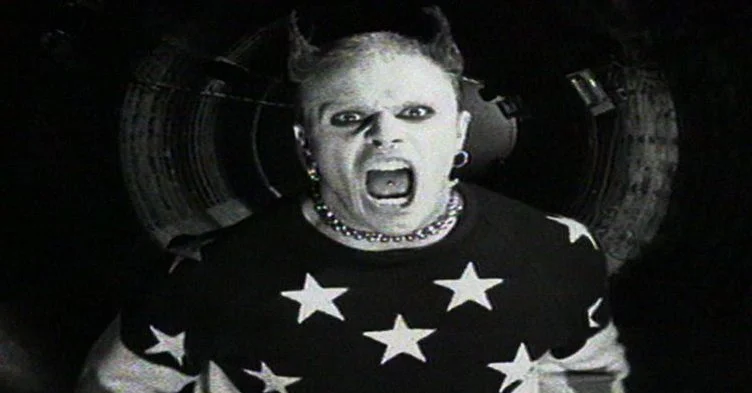
The release of Firestarter in March 1996 marked a definitive shift in the global musical landscape, signaling the moment electronic dance music breached the fortress of mainstream rock and pop to claim a permanent seat at the table of cultural zeitgeist. As the lead single from The Prodigy’s third studio album, The Fat of the Land, the track did more than just climb the charts; it redefined the visual and sonic identity of British counterculture. Written by the band’s mastermind Liam Howlett alongside the late Keith Flint, the song served as the world’s introduction to Flint not merely as a dancer, but as the snarling, charismatic frontman who would become the face of a generation. Today, three decades after its initial assault on the airwaves, Firestarter remains a case study in transgressive art, industrial-strength production, and the enduring power of the "punk-rave" aesthetic.
The Genesis of a Sonic Revolution
To understand the magnitude of Firestarter, one must look at the state of the music industry in the mid-1990s. The United Kingdom was in the throes of "Cool Britannia," dominated by the melodic guitar pop of Britpop. Meanwhile, the electronic scene was largely confined to clubs and underground raves. The Prodigy, having already achieved significant success with Music for the Jilted Generation in 1994, were looking to evolve. Liam Howlett, the group’s primary composer and producer, sought a sound that was harder, more aggressive, and capable of bridging the gap between the energy of a rave and the raw power of a rock concert.
The recording process for Firestarter was characterized by Howlett’s meticulous use of sampling, a technique that would eventually lead to a complex web of songwriting credits. The track’s iconic, distorted guitar riff was sampled from The Breeders’ 1993 song "S.O.S.," while the vocal "Hey!" was lifted from The Art of Noise’s "Close (to the Edit)." Other samples included elements from Ten City’s "Devotion." By layering these disparate elements over a breakbeat foundation and a heavy, oscillating bassline, Howlett created a track that felt both futuristic and primal.
The Transformation of Keith Flint
Before 1996, Keith Flint was known primarily as a dancer within the group, providing high-energy visual support for the band’s live performances. Firestarter changed the trajectory of his career and the band’s legacy forever. When Flint stepped into the vocal booth, he delivered a performance that was less about melodic singing and more about rhythmic, menacing spoken-word delivery. His lyrics—"I’m the trouble starter, punkin’ instigator"—were a manifesto of chaos that perfectly complemented Howlett’s abrasive production.
The decision to put Flint at the forefront was a calculated risk that paid off immediately. He embodied the "Firestarter" persona with a manic intensity that resonated with disaffected youth worldwide. This transition turned The Prodigy from a highly respected dance act into a global stadium powerhouse, capable of headlining major festivals alongside the world’s biggest rock bands.
Visual Controversy and the Aldwych Tube Station
The impact of Firestarter was exponentially increased by its music video, directed by Walter Stern. Filmed in black and white within the abandoned Aldwych tube station in London, the video featured a hyperactive Flint performing in a striped sweater, his hair styled into two neon-colored horns. The imagery was stark, claustrophobic, and genuinely unsettling for the era’s television standards.
Upon its debut on the BBC’s Top of the Pops, the video became the subject of intense national debate. The BBC received a record-breaking number of complaints—reportedly over 1,000—from parents who claimed the video was too frightening for children. Rather than hurting the single’s prospects, the controversy acted as a catalyst for its success. The "scary" reputation of the video cemented The Prodigy’s status as the "bad boys" of the electronic scene, fueling a rebellious appeal that saw the track dominate the airwaves.
Global Chart Dominance and Commercial Data
The commercial performance of Firestarter was nothing short of a phenomenon. Upon its release, it debuted at number one on the UK Singles Chart, staying there for three weeks. Its success was not limited to the British Isles; the track reached the top spot in 16 different countries, including Finland, Norway, and New Zealand.
In the United States, a market notoriously difficult for British electronic acts to crack at the time, Firestarter reached number 30 on the Billboard Hot 100. This was a significant achievement, as it helped pave the way for The Fat of the Land to debut at number one on the Billboard 200 the following year—a feat previously unheard of for a dance-oriented album. To date, Firestarter has been certified Platinum in the UK and remains one of the best-selling electronic singles of all time. The success of the single propelled The Fat of the Land to sell over 10 million copies worldwide, making it one of the defining albums of the 1990s.
The Art of the Sample: Technical Analysis
The complexity of Firestarter’s composition is often overshadowed by its aggressive energy. Liam Howlett’s production style on the track was a masterclass in the "Big Beat" genre. The use of the Roland W-30 sampler allowed Howlett to manipulate sounds in a way that felt organic yet industrial.
The inclusion of Kim Deal’s guitar hook from The Breeders was a stroke of genius that gave the track a "grunge" sensibility, making it palatable to fans of alternative rock. Meanwhile, the Art of Noise sample provided a rhythmic punctuation that made the track instantly recognizable. Because of these samples, the official songwriting credits for Firestarter include Anne Dudley, Trevor Horn, J.J. Jeczalik, Gary Langan, Paul Morley (The Art of Noise), and Kim Deal (The Breeders). This collaborative, albeit unintentional, effort highlights the collage-like nature of 90s electronic music production, where the past was constantly being recycled to create the sound of the future.
Tragedy and the 2019 Turning Point
The history of Firestarter is inextricably linked to the life and tragic passing of Keith Flint. In March 2019, Flint was found dead in his home in Essex at the age of 49. His death sent shockwaves through the music community, with tributes pouring in from artists across all genres, from Ed Sheeran to The Chemical Brothers.
Following Flint’s death, The Prodigy cancelled all scheduled tour dates and entered a period of mourning. However, when the remaining members—Liam Howlett and Maxim—returned to the stage for their 25th-anniversary tour of The Fat of the Land in 2022, they faced the challenge of how to handle their most famous track without its central figure. Their solution was a poignant tribute: instead of using a replacement vocalist or a simple backing track, the band performed an instrumental version of Firestarter accompanied by a green laser outline of Flint’s iconic silhouette dancing on stage. This move was met with emotional acclaim from fans and critics alike, ensuring that Flint’s presence remained a core part of the live experience.
Broader Cultural Impact and Implications
The legacy of Firestarter extends far beyond the confines of the music industry. It influenced fashion, with Flint’s "double-mohawk" and oversized streetwear becoming staples of the late-90s rave aesthetic. It also influenced the film and gaming industries; the track appeared in various soundtracks, including the influential racing game WipEout 2097, further embedding the sound of The Prodigy into the digital culture of the era.
Analytically, Firestarter represented the "mainstreamization" of the underground. It proved that electronic music could possess the same visceral, dangerous energy as punk rock. It broke down the barriers between genres, leading to the rise of the "Electronic Press Kit" era where DJs and producers became the new rock stars. The song’s success forced radio programmers to rethink their playlists and helped establish the "Big Beat" movement—alongside acts like The Chemical Brothers and Fatboy Slim—as a commercially viable force.
Conclusion: Three Decades of Burning Bright
Thirty years after Firestarter first ignited the charts, its flame shows no signs of flickering. It remains a staple of festival sets, a frequent inclusion in "Best of" lists, and a touchstone for new generations of electronic producers. The track serves as a testament to the vision of Liam Howlett and the incomparable charisma of Keith Flint.
The Prodigy’s ability to blend the chaotic energy of the rave scene with a polished, industrial production allowed Firestarter to transcend the limitations of its time. It was a track that captured the anxiety, energy, and rebellion of the mid-90s, and it continues to resonate in a world that is still finding its way through the "trouble" and "instigation" that Flint so memorably sang about. As the music world celebrates this three-decade milestone, Firestarter stands as a towering achievement in British music history—a song that didn’t just start a fire, but fundamentally changed the temperature of global pop culture.
