

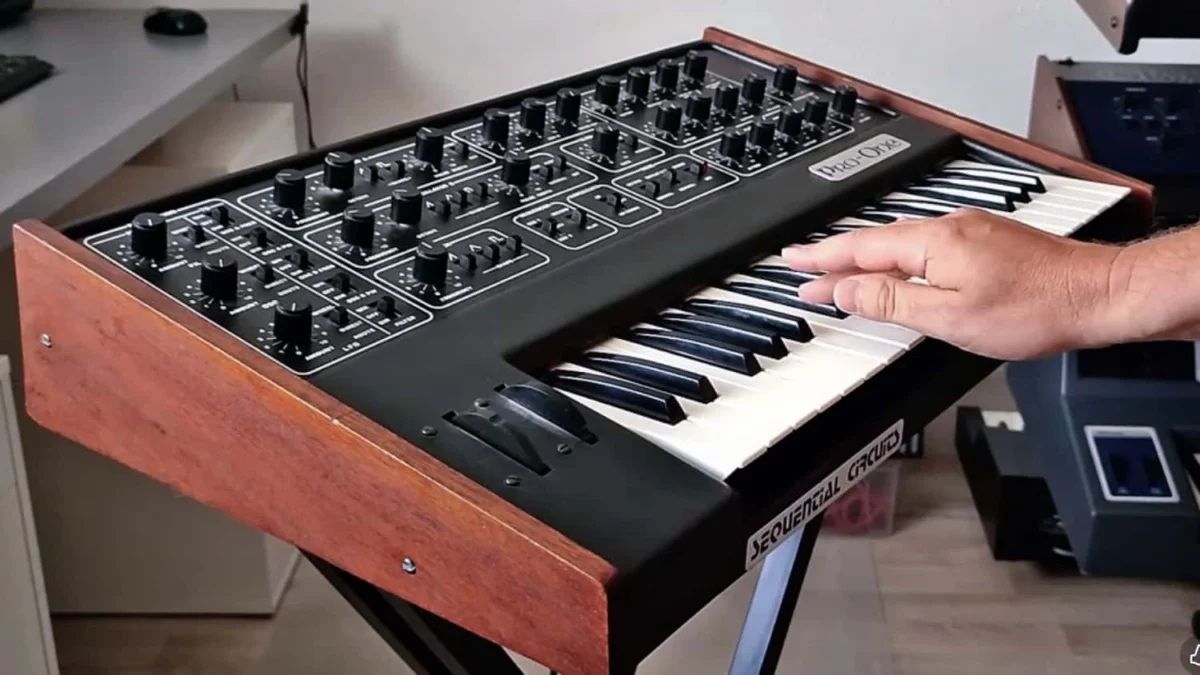
The Sequential Circuits Pro-One, a monophonic analog synthesizer released in 1981, remains one of the most influential instruments in the history of electronic music, having defined the sonic landscape of the synth-pop, new wave, and industrial genres. Conceived by Dave Smith and John Bowen as a compact, affordable alternative to the legendary Prophet-5, the Pro-One distilled the power of its polyphonic predecessor into a single-voice powerhouse that became a staple in recording studios across the globe. A recent retrospective by RetroSound has brought this vintage hardware back into the spotlight, demonstrating its versatility through a series of recreations of 1980s hits, most notably those by the British duo Yazoo.
Technical Architecture and the Curtis Sound
To understand the enduring appeal of the Pro-One, one must examine the internal components that produced its aggressive and "raw" analog character. Unlike many of its contemporaries, the Pro-One was built using integrated circuits from Curtis Electromusic Specialties (CEM). Specifically, it utilized the CEM 3340 voltage-controlled oscillators (VCOs) and the CEM 3320 four-pole low-pass filter. This combination allowed for a stability and punchiness that was often lacking in earlier discrete-component synthesizers.
The architecture of the Pro-One features two VCOs, a white noise generator, and a flexible modulation matrix that was remarkably sophisticated for a budget-oriented monophonic synth. Its "Modulation" section allowed users to route the Filter Envelope and Oscillator B to the frequency of Oscillator A, the pulse width of Oscillator A, and the filter cutoff. This internal routing capability enabled the creation of complex, evolving timbres and "screaming" sync leads that became synonymous with the early 1980s. Furthermore, the inclusion of a basic but effective 40-note sequencer and an arpeggiator provided musicians with the tools to create the driving, repetitive patterns essential to the emerging dance and pop music of the era.
Chronology of Development and Market Impact
The timeline of the Pro-One’s development and eventual dominance reflects the rapid evolution of music technology at the start of the 1980s.
- 1981 – The Launch: Sequential Circuits introduced the Pro-One as a response to the growing demand for portable, affordable synthesizers. Retailing for approximately $645 at launch, it was positioned to compete with the Moog Rogue and the Roland SH-101.
- 1982 – The Yazoo Era: Vince Clarke, having recently departed Depeche Mode, formed Yazoo with Alison Moyet. Clarke famously relied on the Pro-One for the vast majority of the instrumentation on their debut album, Upstairs at Eric’s.
- 1983 – Global Saturation: The synthesizer became a fixture in European and American studios, appearing on tracks by Berlin, Eurythmics, and various industrial acts like Skinny Puppy.
- 1984 – The Digital Pivot: With the rise of the Yamaha DX7 and the advent of MIDI, Sequential Circuits began to shift its focus toward digital-analog hybrids and the Prophet-600. Production of the Pro-One eventually ceased as the industry moved toward polyphony and FM synthesis.
- 1990s to Present – The Analog Renaissance: The Pro-One experienced a massive resurgence in the 1990s within the techno and acid house scenes. Its aggressive filter and fast envelopes made it a favorite for basslines. In the modern era, the Pro-One is a highly sought-after collector’s item, leading to several hardware clones and software emulations.
The Vince Clarke Influence and the Yazoo Sound
The relationship between Vince Clarke and the Sequential Pro-One is perhaps the most significant partnership between an artist and an instrument in the synth-pop genre. Following his work on Depeche Mode’s Speak & Spell, Clarke sought a more robust and flexible sound for his new project, Yazoo.
In the RetroSound demonstration, several Yazoo tracks are highlighted, including "Don’t Go," "Only You," and "Situation." In "Don’t Go," the Pro-One is responsible for the iconic, high-energy lead riff and the percussive bassline. Clarke’s technique involved meticulously sequencing the Pro-One using a Roland MC-4 Microcomposer, a process that required a deep understanding of CV/Gate control. Because the Pro-One lacked MIDI, its integration into Clarke’s setup required a direct voltage interface, which contributed to the tight, mechanical feel of the tracks.
The "Situation" bassline is another prime example of the Pro-One’s CEM-based punch. The fast attack of the envelopes allowed for a "snappy" quality that could cut through a mix without the need for excessive equalization. For "Only You," the synthesizer demonstrated its softer side, providing the melodic counterpoints and pads that complemented Alison Moyet’s soulful vocals. This range—from aggressive industrial textures to delicate pop melodies—solidified the Pro-One as a versatile studio workhorse.
Beyond Yazoo: The Pro-One in Global Pop and New Wave
While Yazoo may be the most prominent user, the Pro-One’s footprint extends across various chart-topping hits of the 1980s. The RetroSound video identifies several key performances that showcase the synthesizer’s diverse applications.
In Berlin’s "Metro," the Pro-One provides the driving, rhythmic pulse that defines the track’s new wave aesthetic. The track "Major Tom (Coming Home)" by Peter Schilling utilizes the Pro-One for its atmospheric sequences and sci-fi-inspired sound effects, capitalizing on the instrument’s extensive modulation capabilities.
The Eurythmics’ "Here Comes The Rain Again" also features the Pro-One, demonstrating how the synthesizer could be integrated with orchestral arrangements. Dave Stewart and Annie Lennox utilized the instrument to provide a synthetic "edge" to their sophisticated pop production. In these contexts, the Pro-One was often used to provide the "glue" between acoustic instruments and the more rigid electronic elements of the 80s studio.
Supporting Data: The Pro-One’s Market Position and Legacy
Data from vintage synthesizer marketplaces suggests that the Pro-One has appreciated in value significantly over the last four decades. Originally sold for under $700, well-maintained units now frequently command prices between $2,500 and $3,500 on the secondary market. This appreciation is attributed to the "Curtis sound," which many purists believe cannot be perfectly replicated by modern digital oscillators.
In terms of production volume, Sequential Circuits manufactured approximately 10,000 units of the Pro-One. There were two main versions: the early "J-wire" keyboard version and the later "membrane" or "rubber dome" keyboard version. The J-wire units are generally preferred by collectors for their superior tactile response and reliability, although the internal synthesis circuitry remained largely identical across both iterations.
The impact of the Pro-One is also evident in the modern manufacturing landscape. In 2019, Behringer released the "Pro-1," a circuit-for-circuit clone of the original hardware in a desktop format. The success of this clone, alongside software emulations like u-he’s "Repro-1," underscores the continued demand for the specific sonic footprint of the 1981 original.
Professional Analysis: Why the Pro-One Remains Relevant
Industry experts and sound designers often point to the Pro-One’s "gain staging" as the secret to its sound. The oscillators are known to "hot-wire" the filter, meaning they hit the filter stage with a high level of signal, creating a natural saturation that sounds pleasing to the human ear. This is a contrast to many modern digital synthesizers, which can sound "thin" or "clinical" without the addition of external effects.
Furthermore, the Pro-One’s lack of presets—while a limitation for some—forced musicians to engage in "subtractive synthesis" in real-time. Every sound heard on the Yazoo records or Berlin’s "Metro" was a result of manual knob manipulation. This tactile connection between the artist and the electronics resulted in sounds that were unique to each recording session.
From a historical perspective, the Pro-One represents the bridge between the experimental modular era of the 1970s and the preset-driven digital era of the mid-1980s. It offered the complexity of a modular system through its modulation matrix but housed it in a chassis that was portable enough for a touring musician.
Broader Impact and Implications for the Future of Music
The revival of interest in the Pro-One, fueled by videos such as those from RetroSound, indicates a broader cultural shift toward "authentic" analog sounds in a world dominated by software. For contemporary producers, the Pro-One offers a "weight" and "presence" that fills the frequency spectrum in a way that digital instruments often struggle to emulate.
The Pro-One’s legacy also lives on through the continued work of Sequential (formerly Dave Smith Instruments). Before his passing in 2022, Dave Smith oversaw the creation of the Prophet-6 and the Pro-3, both of which draw direct inspiration from the Pro-One’s architecture. The Pro-3, in particular, is viewed as the spiritual successor to the Pro-One, combining analog oscillators with modern digital controls and a much more expansive modulation sequencer.
As the music industry continues to cycle through vintage aesthetics, the Sequential Circuits Pro-One stands as a testament to the power of focused, high-quality analog design. Its role in shaping the hits of the 80s was not merely a matter of convenience; it was a result of a specific sonic identity that provided the grit, energy, and emotion required by the era’s most innovative artists. Whether through the driving sequences of Yazoo or the atmospheric textures of the Eurythmics, the Pro-One has earned its place as one of the most significant instruments in the pantheon of modern music history.
