

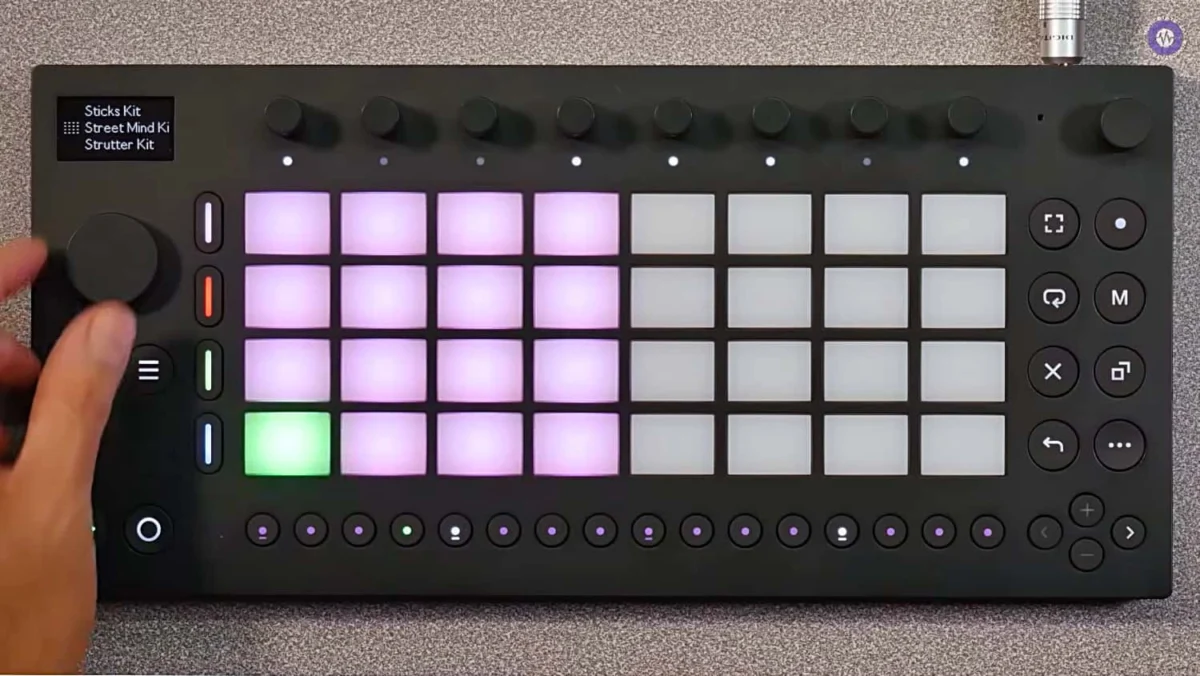
Cycling ’74 has officially announced the release of RNBO Move Takeover, an experimental alpha feature that allows sound designers and electronic musicians to export custom instruments and effects created within the RNBO environment directly onto the Ableton Move hardware. This development marks a significant shift in the utility of portable music-making devices, transforming the Ableton Move from a dedicated groovebox into a versatile, programmable platform for bespoke digital signal processing (DSP). By leveraging the visual patching capabilities of the Max-based RNBO library, users can now bypass standard factory sounds and internal engines to implement their own algorithmic compositions, unique synthesis methods, and specialized audio processors in a standalone hardware format.
The introduction of RNBO Move Takeover represents the latest chapter in the long-standing collaboration between Cycling ’74 and Ableton. Since Ableton’s acquisition of Cycling ’74 in 2017, the two companies have worked to tighten the integration between the Max/MSP visual programming language and Ableton Live through the Max for Live platform. However, the release of RNBO in late 2022 introduced a new paradigm: the ability to compile Max-style patches into highly optimized C++ code that can run independently of the Max environment. This capability has now been extended to the Ableton Move, a compact standalone instrument launched in late 2024, providing a bridge between complex software development and portable hardware performance.
The Architecture of RNBO and the Takeover Concept
To understand the implications of RNBO Move Takeover, it is necessary to examine the underlying technology of the RNBO environment. RNBO (pronounced "rainbow") is a subset of the Max/MSP ecosystem specifically designed for export and portability. While traditional Max patches require the Max runtime to function, RNBO patches are compiled into standalone code. This allows them to be embedded in web pages via WebAssembly, integrated into VST or AU plugins, or flashed onto hardware targets such as the Raspberry Pi or the Daisy Seed.
The "Takeover" aspect of the new feature refers to a specific workflow where the Ableton Move’s standard operating environment is augmented or partially replaced by a custom RNBO-generated engine. In this experimental alpha phase, the Move Takeover allows the device to function as a host for these custom patches. This effectively turns the hardware’s 32 velocity-sensitive pads, touch strips, and encoders into controllers for whatever logic the user has programmed within the RNBO visual editor.
This development addresses a common limitation in the standalone hardware market: the "black box" nature of proprietary devices. Most grooveboxes and synthesizers are limited to the oscillators, filters, and effects provided by the manufacturer. By opening the Move to RNBO, Cycling ’74 and Ableton are providing a "white label" hardware experience, where the physical interface remains consistent, but the internal "brain" of the device can be entirely reimagined by the user.
Historical Context and Development Timeline
The path toward RNBO Move Takeover has been shaped by over three decades of evolution in visual programming and hardware integration.
- 1990s – The Rise of Max/MSP: Originally developed at IRCAM and later commercialized by Cycling ’74, Max became the industry standard for experimental music and interactive media.
- 2009 – Max for Live: The introduction of Max for Live allowed users to build their own devices directly within the Ableton Live environment, blurring the lines between the DAW and the programming language.
- 2017 – The Merger: Ableton acquired Cycling ’74, ensuring that the development of Max would be closely aligned with the future of Ableton’s hardware and software ecosystem.
- 2022 – The Launch of RNBO: Cycling ’74 released RNBO, specifically targeting the need for "exportable" code. This was a response to a growing community of developers who wanted to use Max’s visual logic but needed to run it on non-computer platforms.
- October 2024 – Ableton Move Launch: Ableton released "Move," a portable, battery-powered groovebox designed for quick sketching and mobile production. Its internal architecture, based on a Linux-driven ARM processor, hinted at the potential for deeper customization.
- November 2024 – RNBO Move Takeover Alpha: The current release introduces the ability to bridge these two worlds, allowing RNBO code to run natively on the Move hardware.
Technical Specifications and Included Tools
The experimental alpha release is not merely a software update but a comprehensive development kit. To facilitate the transition for users who may not be expert programmers, Cycling ’74 has included several pre-made instruments and templates.
Among the flagship offerings in the Takeover package is a version of Granulator 3. Originally developed by Robert Henke (one of the co-creators of Ableton Live and the artist known as Monolake), Granulator is a staple of granular synthesis. Its inclusion in the RNBO Move Takeover allows users to perform complex sample-mangling and textural synthesis on a portable device, a task that typically requires significant CPU resources and custom software.
Additionally, the package includes a no-input feedback simulator. This patch emulates the unpredictable and often chaotic sonic behavior of routing a mixer’s output back into its input—a technique popular in industrial and experimental noise music. By bringing this to the Move, developers are demonstrating that the hardware can handle non-linear, experimental logic that goes beyond standard subtractive or FM synthesis.
To assist in the creation of new tools, the alpha provides:
- Hardware Mapping Templates: Patches that pre-configure the Move’s 32 pads and eight encoders to communicate with RNBO parameters.
- Helper Patches: Modular components for common tasks like MIDI handling, clock synchronization, and audio input/output routing.
- Optimized DSP Library: A collection of RNBO objects specifically tuned for the ARM-based architecture of the Move to ensure low-latency performance.
Strategic Implications for the Music Technology Industry
The launch of RNBO Move Takeover is a strategic move that places Ableton and Cycling ’74 in direct competition with "open-source" hardware manufacturers like Critter & Guitari (Organelle) and Monome (Norns). These devices have long been favorites of the boutique electronic music community because they allow users to load custom scripts and patches.
However, the Ableton Move has the advantage of a more robust manufacturing chain, widespread retail availability, and deep integration with the Ableton Live ecosystem. By adding RNBO compatibility, the Move becomes a hybrid device: a consumer-friendly groovebox for the mass market and a sophisticated development platform for the academic and experimental communities.
Industry analysts suggest that this move could signal a broader trend toward "hardware-agnostic" software development. As mobile processors become more powerful, the distinction between a "computer" and a "synthesizer" continues to erode. By providing a streamlined way to move code from a visual editor to a handheld device, Cycling ’74 is lowering the barrier to entry for custom hardware development.
Community and Developer Reactions
While the feature is currently in an "Experimental Alpha" stage, the initial reaction from the Max/MSP developer community has been largely positive. Early adopters have noted that the ability to take a patch developed on a laptop and immediately "perform" it on a dedicated hardware interface with physical buttons and encoders is a transformative workflow.
"The potential to have a ‘bespoke’ instrument in your backpack that isn’t just a generic MIDI controller is the holy grail for many of us," noted one developer in an online forum. "With RNBO Move Takeover, the hardware becomes whatever I need it to be for a specific performance—a polyphonic FM synth one night, and a generative ambient drone machine the next."
However, because the software is in alpha, there are caveats. Users must be comfortable with a certain level of technical troubleshooting, and the "Takeover" process currently requires a specific firmware environment that may differ from the standard Ableton Move user experience. Cycling ’74 has emphasized that this is a period for testing and feedback, intending to refine the integration based on how the community utilizes the tool.
Future Outlook and Potential Impact
As RNBO Move Takeover moves from alpha toward a more stable release, the implications for live performance and studio production are profound. If the platform gains traction, it could lead to a marketplace of user-created "Move Engines," where creators share or sell their unique RNBO patches specifically formatted for the Move hardware.
Furthermore, this development reinforces the value of the RNBO license itself. By expanding the list of supported hardware targets to include a popular device like the Ableton Move, Cycling ’74 is making a compelling case for visual programming as a core skill for the modern musician. The ability to "code" one’s own instruments is no longer restricted to those with a degree in computer science; it is becoming an extension of the creative process for any artist willing to engage with the visual logic of the Max environment.
In conclusion, the RNBO Move Takeover is more than a simple feature update; it is a bridge between the infinite possibilities of software and the tactile, reliable nature of hardware. It empowers the user to define the limits of their equipment, ensuring that the Ableton Move remains a relevant and evolving tool in an increasingly crowded market of music production technology. As the experimental phase continues, the industry will be watching closely to see how this synergy between visual patching and standalone hardware reshapes the landscape of electronic music.
