

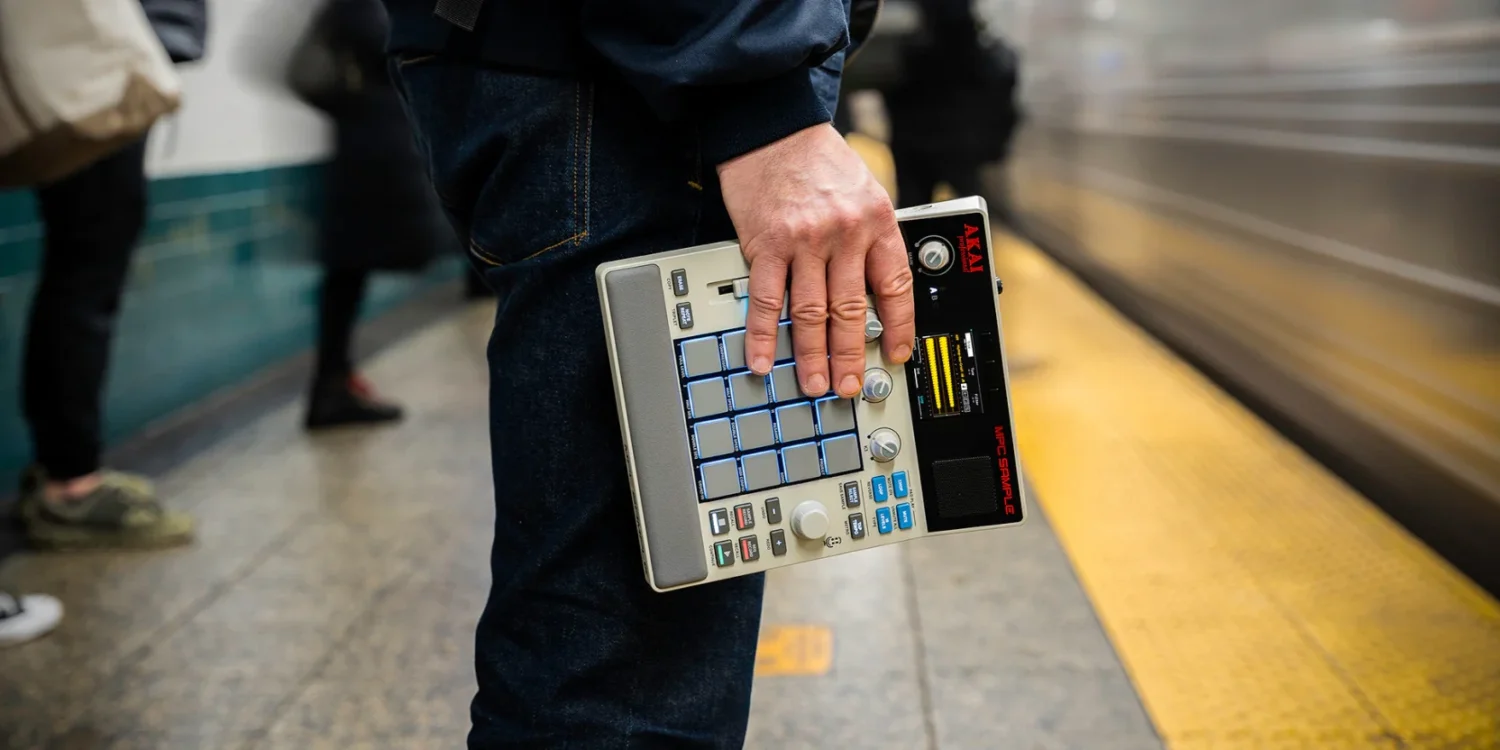
The Akai Pro MPC Sample represents a strategic pivot for Akai Professional, a brand that has dominated the beat-making landscape since the introduction of the MPC60 in 1988. While the company’s recent "One," "Live," and "X" series devices have focused on providing a "DAW-in-a-box" experience with extensive internal synthesis engines, the MPC Sample returns the focus to the core essence of the brand: tactical, high-fidelity sampling and sequencing. By offering the core MPC workflow at a sub-$500 price point, Akai is directly challenging competitors like the Roland SP-404MKII, the Novation Circuit Rhythm, and the Teenage Engineering EP-133 K.O. II.
Technical Architecture and Hardware Overview
The hardware configuration of the MPC Sample balances portability with the tactile feedback required for professional performance. The unit features the signature 16-pad matrix, which has been the industry standard for finger drumming and sequence triggering for decades. These velocity-sensitive, pressure-sensitive pads are central to the MPC experience, providing a physical interface that software-based controllers often struggle to replicate.
In terms of connectivity and input/output (I/O) capabilities, the MPC Sample is designed for versatile studio integration. It includes standard 1/4-inch audio inputs for direct sampling from external sources, such as turntables, synthesizers, or microphones. The device also supports MIDI I/O, allowing it to act as the "brain" of a larger hardware setup, sequencing external gear while simultaneously handling internal sample playback. Furthermore, the inclusion of USB connectivity facilitates seamless file transfers and integration with the MPC desktop software, ensuring that projects started on the portable unit can be polished in a more expansive digital environment.
One of the most significant technical hurdles for portable samplers is memory management and processing power. The MPC Sample utilizes a streamlined version of the MPC standalone operating system, optimized for sample manipulation rather than heavy plugin synthesis. This allows the device to maintain a responsive user interface even when handling complex sequences with multiple layers of automation.
Workflow and Sequencing Innovations
The workflow of the MPC Sample is built upon the traditional MPC "Sequence-Track-Program" hierarchy, but with refinements aimed at modern speed requirements. Eliraz’s analysis highlights the efficiency of the "Note Repeat" and "Live Record" functions, which allow producers to capture ideas instantaneously. The device’s sequencing engine remains one of its strongest selling points, offering high-resolution timing and the famous "MPC Swing" that has defined the rhythmic character of hip-hop, house, and electronic music for thirty years.
A notable feature discussed in the technical review is the "Step Edit" functionality. This allows for surgical precision when adjusting MIDI data, enabling users to tweak the velocity, timing, and duration of individual notes within a sequence without stopping playback. This non-linear approach to composition is complemented by the "Undo" history and "Sequence Recall" features, which provide a safety net for experimental production techniques.
The device also introduces advanced "Time Correct" and "Automation" capabilities. Users can record knob movements or pad-based filter sweeps directly into the sequencer, creating dynamic, evolving textures. This level of automation was previously reserved for higher-end models, making its inclusion in a $399 device a significant value proposition for budget-conscious creators.
Advanced Sampling, Warping, and Loop Management
At its core, the MPC Sample is a dedicated sampling powerhouse. The device supports real-time sampling and resampling, the latter of which allows users to bake effects and performance gestures into new audio files, effectively freeing up processing power and creating unique sonic fingerprints. The "Warp" and "Stretch" algorithms are particularly noteworthy; they allow for the manipulation of audio tempo and pitch independently of one another. This is crucial for producers who work with loops of varying BPMs, as it enables seamless synchronization without the "chipmunk" effect associated with traditional pitch shifting.
The "Pad Filters" and "Phasing Loops" capabilities provide additional layers of sound design. Each pad can be assigned its own filter settings, envelope followers, and LFOs, allowing a single drum kit to be transformed into a complex soundscape. The review by Eliraz demonstrates how these parameters can be manipulated in real-time to create tension and release during a live performance, a feature that is highly sought after by modern electronic musicians.
The Role of Built-in Effects and Flex Beat
The MPC Sample comes equipped with a suite of professional-grade effects, including the "Flex Beat" and "Pad FX" modules. Flex Beat is a rhythmic manipulation tool that allows for stutter effects, half-time playback, and complex gating patterns, similar to popular software plugins used in trap and lo-fi production. These effects are integrated directly into the hardware, providing low-latency performance that is essential for live improvisation.
The "Knob FX" section allows for macro-control over multiple parameters using the device’s physical encoders. This tactile approach to effects processing encourages a more "instrument-like" relationship with the sampler, moving away from the mouse-and-keyboard interaction of a traditional DAW. Additionally, the inclusion of a dedicated compressor and various saturation models ensures that the output from the MPC Sample is "radio-ready" without the immediate need for external mixing tools.
Market Positioning and Competitive Analysis
The release of the MPC Sample comes at a time when the "DAW-less" movement is gaining significant momentum. Many producers are looking for ways to escape computer screens and return to dedicated hardware. By pricing the unit at $399, Akai is positioning itself against several key rivals:
- Roland SP-404MKII: Long considered the king of lo-fi sampling, the SP-404MKII offers a more "effects-first" workflow. The MPC Sample counters this with its superior sequencing capabilities and more traditional pad-based interface.
- Novation Circuit Rhythm: While the Circuit Rhythm is highly portable and intuitive, it lacks the deep sample editing and visual feedback provided by the MPC’s screen and software architecture.
- Teenage Engineering EP-133 K.O. II: This device targets the ultra-portable, "toy-like" aesthetic market. The MPC Sample, by contrast, is positioned as a professional tool that happens to be affordable.
Supporting data suggests that the entry-level music production market is one of the fastest-growing segments in the industry. As high-quality audio production becomes more accessible, the demand for hardware that offers a "pro" feel at a "prosumer" price point has surged. Akai’s decision to maintain compatibility between the MPC Sample and its larger siblings (the MPC Live II and MPC X) is a strategic masterstroke, as it allows users to enter the ecosystem at a low cost and upgrade their hardware later without losing their project library.
Official Context and Industry Implications
While Akai Pro has not released a formal statement regarding the specific sales targets for the MPC Sample, industry analysts suggest the move is intended to capture the "mobile producer" demographic—individuals who create music on commutes, in coffee shops, or while traveling. The "Autosampler" feature, a highlight of the Loopop review, further emphasizes this. It allows users to automatically create sampled versions of their favorite software instruments or external hardware synths, effectively turning the MPC Sample into a portable library of their entire studio sound.
The broader implications for the music technology industry are profound. As processing power becomes cheaper, the line between "entry-level" and "professional" gear continues to blur. The MPC Sample offers features—such as time-stretching, complex sequencing, and high-quality I/O—that were exclusive to flagship models less than a decade ago.
Conclusion and Future Outlook
The Akai Pro MPC Sample stands as a testament to the enduring relevance of the sampling workflow. By distilling the essential elements of the MPC experience into a compact, affordable, and powerful unit, Akai has provided a new generation of producers with a gateway into professional music production. The insights provided by Ziv Eliraz and other early adopters highlight a device that, while stripped of some of the "bells and whistles" of its more expensive counterparts, sacrifices very little in terms of creative potential.
As the device reaches more studios and live stages, its impact on the sound of modern music will likely become evident. Whether used as a standalone sketchpad, a live performance tool, or a dedicated drum machine within a larger setup, the MPC Sample is poised to become a staple of the 2020s production landscape. Its success confirms that in the world of music technology, the quality of the workflow and the tactility of the interface remain the most critical factors for artists worldwide.
