

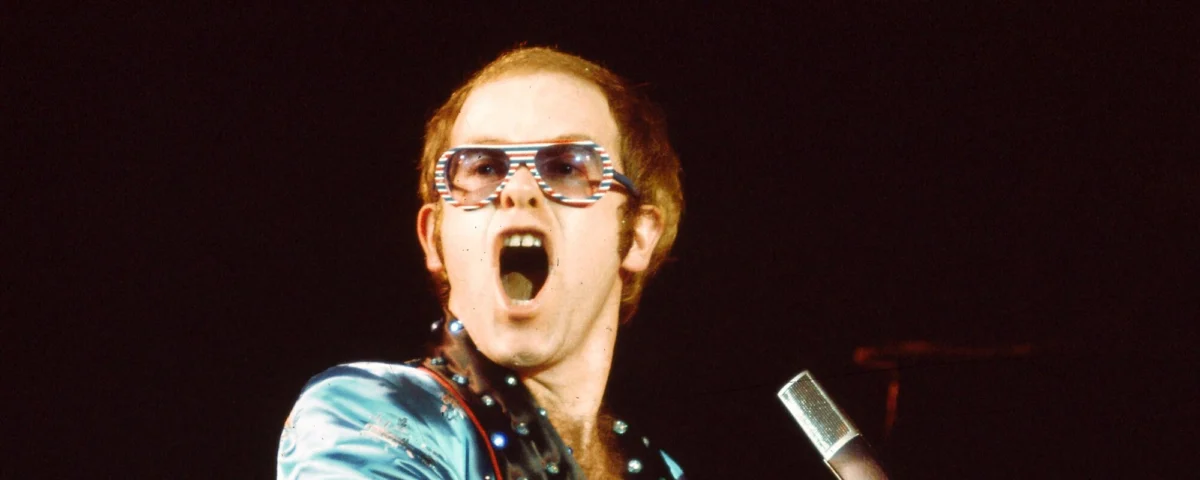
On April 13, 1974, the landscape of American popular music reached a significant milestone as Elton John’s "Bennie and the Jets" ascended to the No. 1 position on the Billboard Hot 100. This achievement solidified John’s status as the preeminent global superstar of the 1970s and marked a pivotal moment in the history of crossover music. Despite the song’s eventual ubiquity and its status as a cornerstone of the glam rock era, its journey to the top of the charts was characterized by artist skepticism, unconventional production techniques, and a grassroots radio movement that bypassed traditional industry expectations.
The track served as a centerpiece of the double album Goodbye Yellow Brick Road, a project that is widely considered Elton John’s magnum opus. At the time of its chart-topping success, "Bennie and the Jets" was not merely a commercial triumph; it was a stylistic anomaly that blended soul, R&B, and futuristic rock in a way that resonated across diverse demographics. Five decades later, the song remains an essential study in the synergy between Elton John’s melodic instincts and Bernie Taupin’s visionary lyricism.
The Creative Genesis: A Fusion of Science Fiction and Glam Rock
The origins of "Bennie and the Jets" lie in the unique collaborative dynamic between Elton John and his long-time lyricist, Bernie Taupin. Unlike many songwriting duos who work in tandem, John and Taupin famously worked separately—Taupin providing the lyrics first, and John composing the music around them. For this specific track, Taupin’s inspiration was rooted in a satirical, futuristic concept of the music industry itself.
Taupin’s lyrics describe a fictional, androgynous rock band led by the titular Bennie. The imagery was heavily influenced by the provocative photography of Helmut Newton and the burgeoning "glam" aesthetic that dominated the early 1970s. Taupin envisioned a world where rock stars were almost robotic or alien-like, reflecting the era’s fascination with science fiction and the alienation of fame. He described the concept as a "wacky science fiction idea" about an "android band," a theme that mirrored the theatricality of contemporaries like David Bowie’s Ziggy Stardust.
Musically, Elton John approached the composition as an homage to the glam rock movement, but with a distinct nod to the American vocal groups of the 1950s and 60s. The song’s most recognizable vocal trait—John’s use of falsetto—was a deliberate tribute to Frankie Valli and the Four Seasons. The musical arrangement was built around a syncopated, staccato piano riff that felt both vintage and avant-garde. This juxtaposition of Taupin’s cold, futuristic lyrics and John’s warm, soulful piano performance created a tension that would eventually define the song’s appeal.
Production Innovations and the Illusion of a Live Performance
One of the most enduring myths regarding "Bennie and the Jets" is that it was recorded during a live concert. In reality, the track was recorded entirely in a studio setting at the Château d’Hérouville in France. The decision to make it sound like a live recording was a post-production choice made by producer Gus Dudgeon.
Dudgeon felt the song’s "swing" and its "laid-back" tempo would benefit from the energy of an audience. To achieve this, he took recordings of audience applause and whistles from a 1972 performance by Elton John at the Royal Festival Hall and layered them over the studio track. He also included sounds from a Jimi Hendrix concert and a small group of people recorded in the studio to create a more intimate, "club-like" atmosphere.
The technical execution of the "fake live" sound included:
- Reverb and Echo: Heavy use of reverb on the piano and vocals to simulate a large hall.
- Audience Interaction: Strategically placed whistles and shouts that seem to respond to John’s piano trills.
- The "One-Two" Count: A rhythmic handclap sequence that encouraged listener participation, a technique that would later make the song a staple of live stadium performances.
The Reluctant Single: A Conflict of Strategy
Despite the creative effort poured into the track, Elton John was vehemently opposed to releasing "Bennie and the Jets" as a single in the United States. He believed the song was too "weird" for Top 40 radio and feared it would flop, potentially damaging the momentum of the Goodbye Yellow Brick Road album.
In the United Kingdom, the song was relegated to the B-side of "Candle in the Wind." However, MCA Records, John’s American label, saw a different potential. They noticed an organic groundswell of interest that the artist himself had not anticipated. The label’s decision to ignore John’s protests proved to be one of the most successful executive gambles in the history of the record industry.
The song’s path to the No. 1 spot was not dictated by a massive marketing budget, but by a specific geographic catalyst: the Windsor, Ontario-based radio station CKLW. Known as "The Big 8," CKLW had a massive reach that extended into Detroit, Michigan, and much of the American Midwest.
The CKLW Catalyst and the Detroit Connection
The success of "Bennie and the Jets" is inextricably linked to Rosalie Trombley, the legendary music director at CKLW. Trombley, often referred to as "The Girl with the Golden Ear," had a reputation for identifying hits that other directors missed. She recognized that "Bennie and the Jets" possessed a rhythmic quality that appealed specifically to R&B and soul audiences in Detroit.
Trombley placed the song in heavy rotation, and the response was instantaneous. Detroit listeners, particularly in the African American community, began requesting the song in record numbers. This regional success created a domino effect; as the song dominated the Detroit market, radio stations in other major urban centers like Chicago, New York, and Philadelphia began to take notice.
By early 1974, "Bennie and the Jets" was no longer just a rock song; it was a crossover hit. It eventually reached No. 15 on the Billboard Hot Soul Singles chart, an extraordinary feat for a white British artist at the time. This R&B success provided the necessary lift to propel the song to the very top of the Billboard Hot 100 on April 13, 1974.
Breaking Barriers: The Soul Train Milestone
The crossover success of the song culminated in a historic television appearance. In May 1975, Elton John performed "Bennie and the Jets" on Soul Train, the influential music variety show hosted by Don Cornelius. This was a landmark event for several reasons:
- Racial Integration in Media: John was only the third white performer to ever appear on the show, following Gino Vannelli and Average White Band. He was the first white "superstar" of his caliber to do so.
- Cultural Validation: The performance solidified John’s acceptance within the Black music community. He famously recounted how nervous he was to perform for the Soul Train dancers, but he was met with a rapturous reception.
- Timing: This appearance occurred months before David Bowie’s famous Soul Train performance, placing Elton John at the forefront of the blue-eyed soul movement of the mid-70s.
Analysis of Impact and Long-Term Legacy
The reign of "Bennie and the Jets" at No. 1 was more than a fleeting chart moment; it signaled a shift in the way pop music was consumed and marketed. It proved that audiences were willing to embrace experimental sounds—such as the song’s unconventional 4/4 time signature that feels slightly "off-kilter"—if the melodic core was strong enough.
Data regarding the song’s impact includes:
- Sales: The single was certified Gold by the RIAA on April 8, 1974, just days before it hit No. 1, and it has since achieved multi-platinum status through digital sales and streaming.
- Album Success: The popularity of the single helped Goodbye Yellow Brick Road remain at the top of the Billboard 200 for eight consecutive weeks, eventually selling over 30 million copies worldwide.
- Cover Versions: The song’s versatility has been proven by a wide array of covers, ranging from Mary J. Blige and the Beastie Boys to P!nk and Miguel, demonstrating its enduring appeal across genres.
The song also played a critical role in the "Eltonmania" that gripped the mid-70s. Between 1972 and 1975, Elton John achieved seven consecutive No. 1 albums in the United States. "Bennie and the Jets" was the second of his nine No. 1 singles on the Billboard Hot 100, following "Crocodile Rock."
Conclusion: The Enduring Power of Bennie
Looking back from a modern perspective, the success of "Bennie and the Jets" serves as a reminder of the power of radio and the unpredictability of public taste. Elton John’s initial doubt about the song highlights a common theme in music history: artists are often the least qualified to judge the commercial potential of their most innovative work.
The song’s legacy is preserved not just in chart data, but in its cultural footprint. It remains a mandatory inclusion in Elton John’s live performances, often serving as a vehicle for extended piano improvisation. Its blend of glam rock theatricality, R&B soulfulness, and studio ingenuity ensures that "Bennie and the Jets" continues to be celebrated as a definitive anthem of 20th-century popular music. As it reached the summit of the charts fifty years ago today, it did more than just sell records; it bridged the gap between different musical worlds and established a blueprint for the modern pop superstar.
