

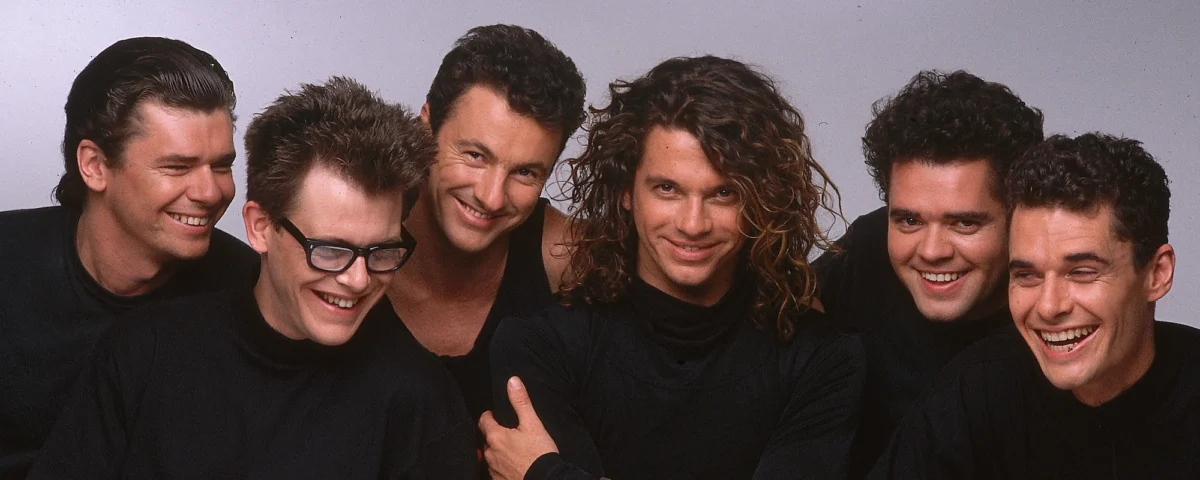
The early 1990s represented a period of profound transition for INXS, an era defined by a departure from the polished, stadium-filling pop-rock of their "imperial phase" toward a grittier, more experimental sound. Following the global success of their 1987 breakthrough Kick and its 1990 successor X, the Australian sextet found themselves at a creative crossroads. By 1992, the band had released their eighth studio album, Welcome to Wherever You Are, a record that drew heavy inspiration from the burgeoning alternative rock scene and the experimentalism of U2’s Achtung Baby. However, rather than embarking on a conventional world tour to support the release, the band made the unconventional decision to return almost immediately to the studio. This decision led them to the Isle of Capri in Italy and eventually to a historic, cross-generational collaboration with the legendary "High Priest of Soul," Ray Charles.
The Shadow of Copenhagen: A Turning Point for Michael Hutchence
To understand the raw, often turbulent energy of the Full Moon, Dirty Hearts sessions, one must look back to August 1992. While in Copenhagen, Denmark, lead singer Michael Hutchence was involved in an altercation with a taxi driver that resulted in a severe head injury. The incident left Hutchence with a fractured skull and permanent anosmia—the total loss of his sense of smell and taste. This medical trauma had a profound impact on Hutchence’s psychological state and creative output. Friends and bandmates noted a shift in his personality; the charismatic frontman became more prone to bouts of depression and uncharacteristic aggression.
This internal turmoil coincided with the band’s desire to strip away the glossy production of their earlier work. Andrew Farriss and Hutchence began writing material that reflected this darker, more visceral headspace. The writing process commenced at Hutchence’s home in the south of France before the band moved to the Villa di Castiglione on the Isle of Capri. This isolation was intentional, designed to break the relentless cycle of touring and recording that had defined the band since the early 1980s.
The Capri Sessions and the Pursuit of a Rawer Sound
Recording for Full Moon, Dirty Hearts took place between November 1992 and February 1993. The band enlisted producer Mark Opitz, who had previously worked on their 1982 album Shifting Gears and the seminal Shabooh Shoobah. The goal was to capture a "live" feel, leaning into the distortion and garage-rock sensibilities that were dominating the airwaves in the wake of the grunge explosion.
The album was characterized by its collaborative spirit. The title track, "Full Moon, Dirty Hearts," featured a haunting duet with Chrissie Hynde of The Pretenders. Hynde’s punk-inflected vocals provided a perfect foil for Hutchence’s soulful delivery, setting a precedent for the high-profile guest appearances that would define the project. However, the most surprising collaboration was yet to come, born not of a calculated marketing strategy, but of a serendipitous proximity in a Parisian recording studio.
A Chance Encounter in Paris
In early 1993, while INXS was in Paris to record additional overdubs and finalize the tracks, they discovered that Ray Charles was working in a neighboring studio. The prospect of approaching a musical deity like Charles was daunting for the band. Andrew Farriss and Hutchence had originally conceived two songs as potential duets: the title track and a song titled "Make Your Peace." Initially skeptical that Charles would have any interest in an Australian rock outfit, they nevertheless decided to share their work with him.
The band initially sent Charles a copy of the title track, but logistical and musical hurdles emerged. Andrew Farriss later recalled in the liner notes for the 2001 compilation Shine Like It Does: The Anthology that while Charles expressed interest, the song’s key was outside his comfortable vocal range. With time running out and the band hesitant to re-record the entire backing track, they pivoted to a different composition: "Please (You Got That…)."
"Please (You Got That…)" was a rhythmic, soul-inflected track that resonated immediately with Charles. He warmed to the melody and the lyrical interplay, agreeing to record his parts with the band. The collaboration eventually moved from Paris to Charles’s own studio in Los Angeles, where the final vocal takes were captured.
The Recording Session: "Mr. Charles" and the "Sir"
The sessions in Los Angeles were marked by a blend of professional reverence and lighthearted humor. The members of INXS, despite their own global stardom, were visibly awestruck by Charles’s presence. Tim Farriss, the band’s guitarist, recounted a humorous anecdote involving the blind maestro’s legendary wit and sharp ears. During a break in recording, while Michael Hutchence had stepped out of the room, Charles approached Tim Farriss, placing a hand on his shoulder. Mistaking Tim for Michael, Charles praised the vocal performance, saying, "Michael, I love the way you’re singing this thing. It’s so cool."
Tim felt the weight of the moment, realizing he had to correct the legend. When he informed Charles that he was not, in fact, Michael, Charles reportedly "laughed his head off," appreciating the comedy of the situation.
The professional relationship between Hutchence and Charles was one of mutual respect. During the tracking of the vocals, Hutchence took the bold step of offering direction to Charles to ensure the "INXS tone" was maintained. Hutchence sang a specific line to demonstrate the desired phrasing, to which Charles replied with characteristic grace, "Sir [Michael], I know I will eventually get it right." This exchange highlighted the rare dynamic of a contemporary rock star guiding a pioneer of soul, a testament to the creative synergy of the "Please (You Got That…)" sessions.
Visual Identity and Public Reception
To support the single, the band filmed a music video in New York City with acclaimed director Matt Mahurin. Known for his dark, atmospheric work with artists like Metallica and R.E.M., Mahurin captured the gritty, urban energy of the track. The video featured Charles and the band in a series of stylized, high-contrast shots that reflected the album’s aesthetic shift.
The collaboration reached its public peak when INXS and Ray Charles performed "Please (You Got That…)" on The Late Show with David Letterman. The performance remains a significant moment in the band’s history, showcasing a seamless blend of Hutchence’s rock swagger and Charles’s timeless R&B phrasing.
Despite the pedigree of the collaborators, Full Moon, Dirty Hearts met with a polarized reception upon its release in November 1993. In Australia, the album peaked at #3, and it reached #4 in the United Kingdom. However, in the United States, where the band had previously enjoyed massive success, the album struggled, peaking at only #53 on the Billboard 200. Critics were divided; some praised the band’s bravery in pursuing a less commercial, more aggressive sound, while others felt the album lacked the infectious hooks of their previous work.
Historical Context and Legacy
The 1993 release of Full Moon, Dirty Hearts occurred during a volatile period for the music industry. The rise of grunge had shifted the focus of major labels and radio programmers away from the polished "New Wave" survivors of the 1980s. INXS was caught between their legacy as pop icons and their desire to be seen as serious rock musicians.
The collaboration with Ray Charles, however, has aged as a highlight of the band’s catalog. It served as a bridge between the soul influences that had always underpinned INXS’s music—such as the funk-driven basslines of Garry Gary Beers and the saxophone work of Kirk Pengilly—and the traditional American R&B that Charles pioneered.
In 2019, the legacy of the session was further enriched by the release of the documentary Mystify: Michael Hutchence, directed by Richard Lowenstein. The accompanying soundtrack, Mystify: A Musical Journey with Michael Hutchence, included a previously unreleased studio outtake of "Please (You Got That…)." This recording provided fans with a "behind-the-curtain" look at the session, featuring candid banter between Charles and the band. These snippets of conversation underscored the genuine warmth and artistic curiosity that fueled the partnership.
Broader Implications and Analysis
The making of Full Moon, Dirty Hearts and the "Please" collaboration serves as a case study in the evolution of a global rock band. It illustrates the challenges of maintaining creative relevance in a rapidly changing cultural landscape and the personal tolls of fame and physical injury. For Michael Hutchence, the album was a cathartic, if difficult, project that allowed him to explore the darker facets of his artistry.
For the band as a whole, working with Ray Charles was a validation of their musicality. It proved that their appeal transcended the "pretty boy" image often projected by the media, earning them the respect of one of the most influential figures in music history. While Full Moon, Dirty Hearts may not have reached the commercial heights of Kick, it remains a vital chapter in the INXS story—a testament to a time when a group of Australian rockers and a soul legend found common ground in a Parisian studio, creating a moment of unexpected and enduring harmony.
