

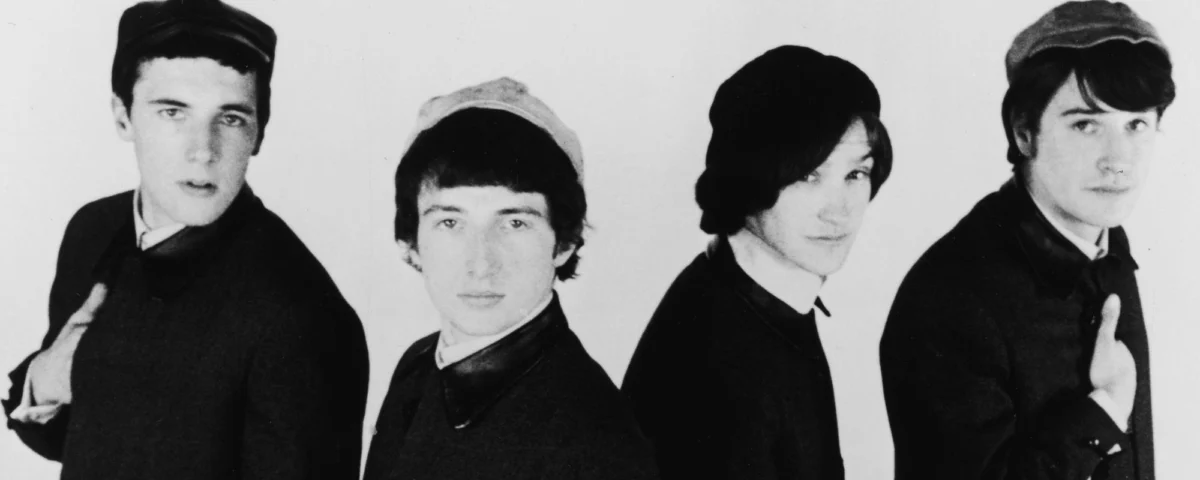
The paradox of human connection often manifests through the shared experience of loneliness, a sentiment that has anchored the cultural longevity of The Kinks’ 1967 classic, Waterloo Sunset. While the song is frequently cited as a pinnacle of the British Invasion and a definitive anthem of London, its origins and the technical intentions behind its production reveal a deeper, more personal narrative of social alienation. In a comprehensive 2025 interview with Mojo magazine, Ray Davies, the primary songwriter and frontman of The Kinks, provided a retrospective analysis of his creative state during the mid-1960s, describing his songwriting as a "secret kingdom" that allowed him to communicate with a world from which he felt fundamentally detached.
The Genesis of an Urban Pastoral: 1966-1967 Chronology
The development of Waterloo Sunset occurred during a transformative period for The Kinks. By 1966, the band had transitioned from the raw, riff-driven proto-punk of "You Really Got Me" and "All Day and All of the Night" toward a more sophisticated, observational style of songwriting. This shift was partly necessitated by the American Federation of Musicians’ ban on the band performing in the United States, which lasted from 1965 to 1969. Effectively exiled from the world’s largest music market, Ray Davies turned his gaze inward, focusing on the minutiae of English life.
The song was recorded at Pye Studios in London between February and April 1967. Initially titled "Liverpool Sunset," Davies eventually pivoted the setting to Waterloo Station, a location that held personal significance for him, having been the site of several pivotal moments during his art school years and his early career. The track was released in May 1967 as a lead single for the album Something Else by The Kinks, arriving precisely as the "Summer of Love" was beginning to peak. While many of their contemporaries were exploring psychedelic escapism, The Kinks offered a grounded, melancholy portrait of urban solitude.
The Architecture of Ray’s Kingdom: Communication Through Song
In his 2025 reflection, Ray Davies emphasized that his prolific output during the late 1960s was not merely a professional pursuit but a psychological survival mechanism. He described his younger self as someone who struggled with basic social interactions, finding the world outside his immediate domestic sphere to be overwhelming. "I don’t talk very much to people. I never did," Davies remarked to Mojo, noting that songwriting became his primary mode of externalizing his internal world.
This "Secret Kingdom," as he termed it, allowed him to maintain a distance while still participating in the cultural zeitgeist. By creating characters like the voyeuristic narrator of Waterloo Sunset, Davies could explore human intimacy vicariously. The narrator of the song famously watches the characters Terry and Julie from a window, declaring that he does not "need no friends" as long as he has the view of the sunset over the Thames. This sentiment, Davies admits, was a direct reflection of his own desire for seclusion—a "cult of one" that paradoxically invited millions of listeners into his private emotional space.
Technical Analysis of the Waterloo Sunset Production
The enduring appeal of Waterloo Sunset is attributed not only to its lyrical content but to its highly specific production choices, which Davies and his brother, lead guitarist Dave Davies, curated to reflect the song’s themes of timidity and observation.
Vocal Layering and "The Peeping Voice"
Ray Davies’ vocal performance on the track is characterized by its softness and a sense of vulnerability. He revealed in the recent interview that this was a deliberate choice, intended to make the singer sound like a "quiet voice peeping over the top." This effect was compounded by the fact that Davies was suffering from a cold during the recording session, which added a nasal, fragile quality to the delivery. The production team utilized a "slapback" echo and significant reverb to place the vocals within an atmospheric "wash," simulating the hazy, dreamlike quality of a sunset.
Dave Davies’ Rhythmical Guitar Innovations
Dave Davies provided the song’s signature guitar work, which he described as being heavily influenced by 1950s rock and roll records. The descending bassline and the shimmering, watery guitar tone were achieved through a combination of a Vox AC30 amplifier and a specific vibrato setting. Dave noted that the "rhythmical guitar style" was born out of a period of experimentation and uncertainty. The interplay between the rhythmic acoustic strumming and the lead electric lines created a sense of movement that mimicked the flow of the River Thames, providing a structural counterpoint to the static, stationary position of the narrator.
Supporting Data: Chart Performance and Global Impact
Despite being released during one of the most competitive years in music history—the same year that saw the release of The Beatles’ Sgt. Pepper’s Lonely Hearts Club Band and Pink Floyd’s The Piper at the Gates of Dawn—Waterloo Sunset achieved significant commercial success.
| Country | Peak Chart Position |
|---|---|
| United Kingdom (UK Singles Chart) | 2 |
| Australia (Go-Set) | 4 |
| Ireland (IRMA) | 3 |
| Netherlands (Single Top 100) | 1 |
| Norway (VG-lista) | 7 |
| West Germany (Official German Charts) | 7 |
In the United Kingdom, the song was famously kept off the number one spot by Procol Harum’s "A Whiter Shade of Pale." However, its long-term impact has far outstripped its initial chart performance. In 2021, Rolling Stone ranked Waterloo Sunset at number 14 on its list of the "500 Greatest Songs of All Time." Furthermore, a 2004 poll by Time Out London named it the greatest song ever written about the city, highlighting its status as an unofficial anthem for Londoners.
Reactions and Interpretations: The "Terry and Julie" Mystery
For decades, fans and critics speculated that the "Terry and Julie" mentioned in the song were a reference to actors Terence Stamp and Julie Christie, the quintessential "it couple" of 1960s London. This theory added a layer of celebrity glamor to the song’s narrative. However, Ray Davies has consistently maintained that the characters were fictional, or perhaps inspired by his own family members.
Musicologists have noted that the ambiguity of the characters is what allows the song to remain relatable across generations. By focusing on two anonymous lovers seen from a distance, the song captures the universality of urban anonymity. Statements from contemporary artists, including Paul Weller and Damon Albarn, have often cited Waterloo Sunset as a masterclass in songwriting, specifically for its ability to find beauty in the mundane and the lonely. Albarn, in particular, has noted that the song’s "Englishness" provided a blueprint for the Britpop movement of the 1990s, where bands like Blur sought to reclaim a sense of place in their music.
Broader Implications: Loneliness in the Digital Age
The 2025 Mojo interview highlights a renewed relevance for Waterloo Sunset in the context of modern social dynamics. Davies’ description of his "Secret Kingdom" resonates with the contemporary experience of digital isolation, where individuals often observe the world through the "window" of a screen, much like the narrator of the song observes the Waterloo bridge.
The song serves as a historical document of the transition from the communal optimism of the early 1960s to the more fractured, introspective period that followed. It challenged the prevailing "peace and love" narrative of 1967 by suggesting that paradise could be found not in a crowd, but in the solitary appreciation of a fleeting moment.
From a sociological perspective, the track illustrates the concept of "the lonely crowd," a term coined by David Riesman to describe individuals in modern society who are physically close to others but socially and emotionally distant. Davies’ ability to articulate this state—preferring the safety of his own home and the "paradise" of his own thoughts—remains a powerful commentary on the human condition.
Conclusion: The Enduring Paradise
As Waterloo Sunset nears its 60th anniversary, its status within the rock canon remains unchallenged. Ray Davies’ recent reflections suggest that the song was more than just a hit; it was a manifesto for the introverted. By embracing his own feelings of alienation, Davies created a work that provided comfort to millions of others feeling the same way.
The technical precision of the recording, the accidental brilliance of the vocal delivery, and the evocative guitar work of Dave Davies combined to create an "atmosphere" that Ray Davies argues is the true meaning of the song. It is a reminder that while loneliness may be an irony of life, through art, it becomes a bridge—much like the one at Waterloo—connecting the isolated kingdoms of the individual to the collective experience of humanity.
