

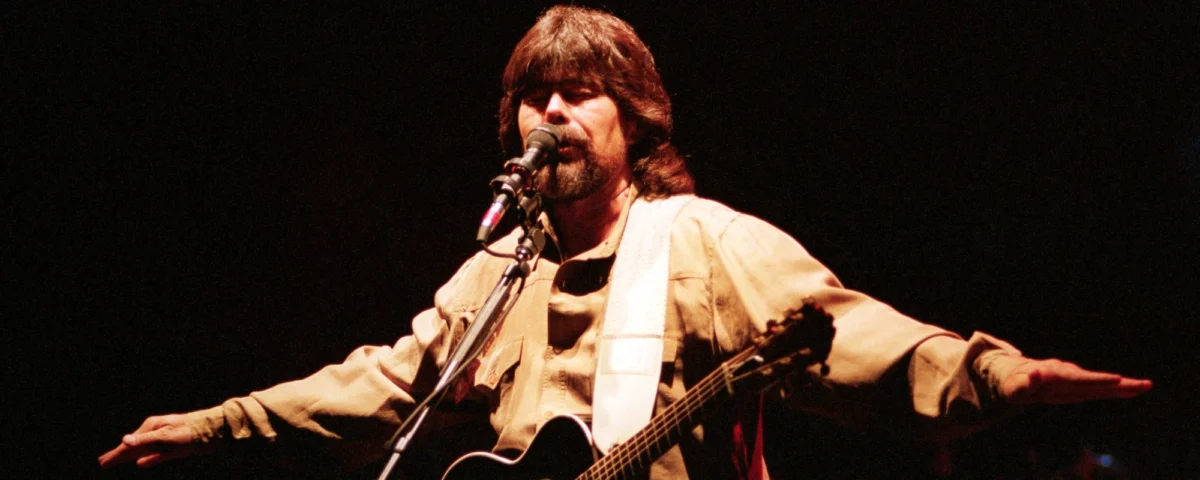
On April 16, 1983, the legendary country music group Alabama reached a significant milestone in their storied career when their single “Dixieland Delight” ascended to the number one position on the Billboard Hot Country Songs chart. This achievement marked the band’s first of three chart-toppers that year and served as the eighth installment in a historic, record-breaking streak of 21 consecutive number-one singles. While the song began as a commercial radio success, its legacy has expanded far beyond the airwaves, evolving into a cultural cornerstone for the University of Alabama’s football program and a symbol of Southern identity. Despite its deep association with the state of Alabama, the song’s origins are rooted in the landscape of its neighboring rival, Tennessee, creating a unique historical irony that persists decades later.
The Rise of Alabama and the Release of Dixieland Delight
By the early 1980s, the band Alabama—comprising cousins Randy Owen, Teddy Gentry, and Jeff Cook, along with drummer Mark Herndon—had revolutionized country music by blending traditional bluegrass and country elements with the energy and production values of rock and roll. Their 1983 album, The Closer You Get, was highly anticipated following the massive success of their previous efforts, Feels So Right and Mountain Music.
“Dixieland Delight” was selected as the lead single for the album and was released to radio stations in late January 1983. The track made its debut on the Billboard country charts on February 12, 1983. Over the course of the next two months, the song demonstrated steady upward momentum, fueled by its infectious fiddle hook and relatable lyrics about a weekend escape. By mid-April, it had successfully displaced other contemporary hits to claim the top spot. Although it held the number-one position for only one week, its impact on the country music landscape was immediate, helping The Closer You Get achieve multi-platinum status and solidifying the band’s dominance in the genre.
Chronology of a Country Classic
The timeline of “Dixieland Delight” reflects a rare trajectory where a song’s cultural relevance grows stronger over time rather than fading into nostalgia.
- January 1983: Alabama releases “Dixieland Delight” as the lead single for their fourth studio album.
- February 12, 1983: The song enters the Billboard Hot Country Songs chart.
- April 16, 1983: The song hits number one, marking a pivotal moment in the band’s "21 No. 1s" streak.
- Late 1980s – 1990s: The song becomes a staple of Southern radio and a fixture in the band’s live performances.
- Early 2000s: The University of Alabama’s athletic department begins playing the song during home football games at Bryant-Denny Stadium, typically during the break between the third and fourth quarters.
- 2014: The University of Alabama administration implements a ban on the song during games due to the inclusion of profanity in fan-led chants.
- 2018: Following a period of negotiation between student leaders and the administration, the song is reinstated, accompanied by a plea for fans to maintain decorum.
The Tennessee Inspiration Behind the Alabama Anthem
One of the most intriguing aspects of “Dixieland Delight” is its geographic origin. While the band Alabama is synonymous with Fort Payne, Alabama, the man who wrote the song, Ronnie Rogers, found his inspiration in the rolling hills of Tennessee. In a 2023 interview, Rogers detailed the spontaneous nature of the song’s creation. He recalled driving down a country road in Leipers Fork, Tennessee—a small community outside of Franklin—when the initial rhythm and lyrics began to take shape.
Rogers noted that the line “rolling down the backwoods, Tennessee byway” was a literal description of his surroundings at that moment. After reaching a dead-end road, he had composed nearly half the song and the chorus. To complete the narrative of a peaceful, rural afternoon, Rogers sought further inspiration in nature. He described walking into the woods and observing a whitetail deer, a red-tailed hawk, and a groundhog. These observations were woven directly into the lyrics, creating the vivid imagery of the "high-timber line" and the "peace of mind" described in the verses.
The irony that an anthem played to stir up fans of the Alabama Crimson Tide actually celebrates the scenery of Tennessee—the home of one of Alabama’s fiercest rivals—is not lost on sports historians. However, Rogers intentionally tailored the finished product for the band Alabama. Knowing they were searching for material for their next record, he finalized the arrangement with their specific vocal harmonies and high-energy style in mind.
Supporting Data and Commercial Success
The success of “Dixieland Delight” was not an isolated event but part of a broader era of chart dominance for the band. During the 1980s, Alabama was arguably the most successful act in country music history.
- Chart Longevity: Between 1980 and 1987, the band achieved 21 consecutive number-one singles on the Billboard charts, a feat that remains a benchmark in the industry.
- Album Performance: The Closer You Get reached number one on the Billboard Top Country Albums chart and peaked at number 16 on the Billboard 200. It was eventually certified 4× Platinum by the RIAA.
- Award Recognition: In the same year "Dixieland Delight" topped the charts, the band won the Country Music Association (CMA) Award for Entertainer of the Year and Album of the Year.
The song itself is characterized by its 4/4 time signature and a tempo of approximately 116 beats per minute, making it ideal for both radio play and stadium sing-alongs. Its use of the fiddle as a primary melodic driver bridged the gap between traditional Appalachian music and the contemporary country-pop sound of the 1980s.
The Bryant-Denny Tradition and the Profanity Controversy
The transition of “Dixieland Delight” from a radio hit to a stadium anthem occurred organically. For years, Lynyrd Skynyrd’s “Sweet Home Alabama” was the undisputed musical symbol of the university. However, “Dixieland Delight” eventually overtook it in terms of crowd participation. The tradition involves the stadium’s sound system playing the song while the crowd provides a "call-and-response" chant during the pauses in the chorus.
The chant, which includes derogatory references to rivals such as Auburn University, Louisiana State University (LSU), and the University of Tennessee, eventually became a point of contention. The university administration, concerned about the broadcast image of the school and the sportsmanship displayed by the student section, removed the song from the stadium playlist in 2014.
The ban lasted for several years, during which fans frequently petitioned for the song’s return. In 2018, Greg Byrne, the University of Alabama’s Director of Athletics, announced that the song would be reinstated for the "Third Saturday in October" game against Tennessee. The decision came after the Student Government Association (SGA) campaigned for its return, promising to encourage fans to use "cleaner" versions of the chant. While the profanity has not been entirely eradicated, the song remains a fixture of the Alabama game-day experience, serving as a high-energy transition into the final quarter of play.
Broader Impact and Cultural Implications
The enduring popularity of “Dixieland Delight” illustrates the powerful intersection of music, regional identity, and collegiate athletics. For many fans, the song is more than a piece of 1980s country-pop; it is a multi-generational link to their heritage and their community.
From a music industry perspective, the song represents the peak of the "group" era in country music. Before Alabama, the genre was dominated by solo artists. Alabama’s success paved the way for future bands like Diamond Rio, Lonestar, and Old Dominion. The song’s ability to remain relevant 41 years after hitting number one is a testament to the songwriting of Ronnie Rogers and the quintessential "Alabama sound"—a mix of tight harmonies, relatable storytelling, and driving instrumentation.
Furthermore, the song’s Tennessee origins and its Alabama adoption serve as a reminder of the shared cultural landscape of the American South. Despite the fierce rivalries on the football field, the music that defines the region often transcends state lines. As "Dixieland Delight" continues to play in Bryant-Denny Stadium and on classic country stations across the nation, it stands as a definitive example of a song that captured a moment in time in 1983 and transformed into a timeless cultural phenomenon.
