

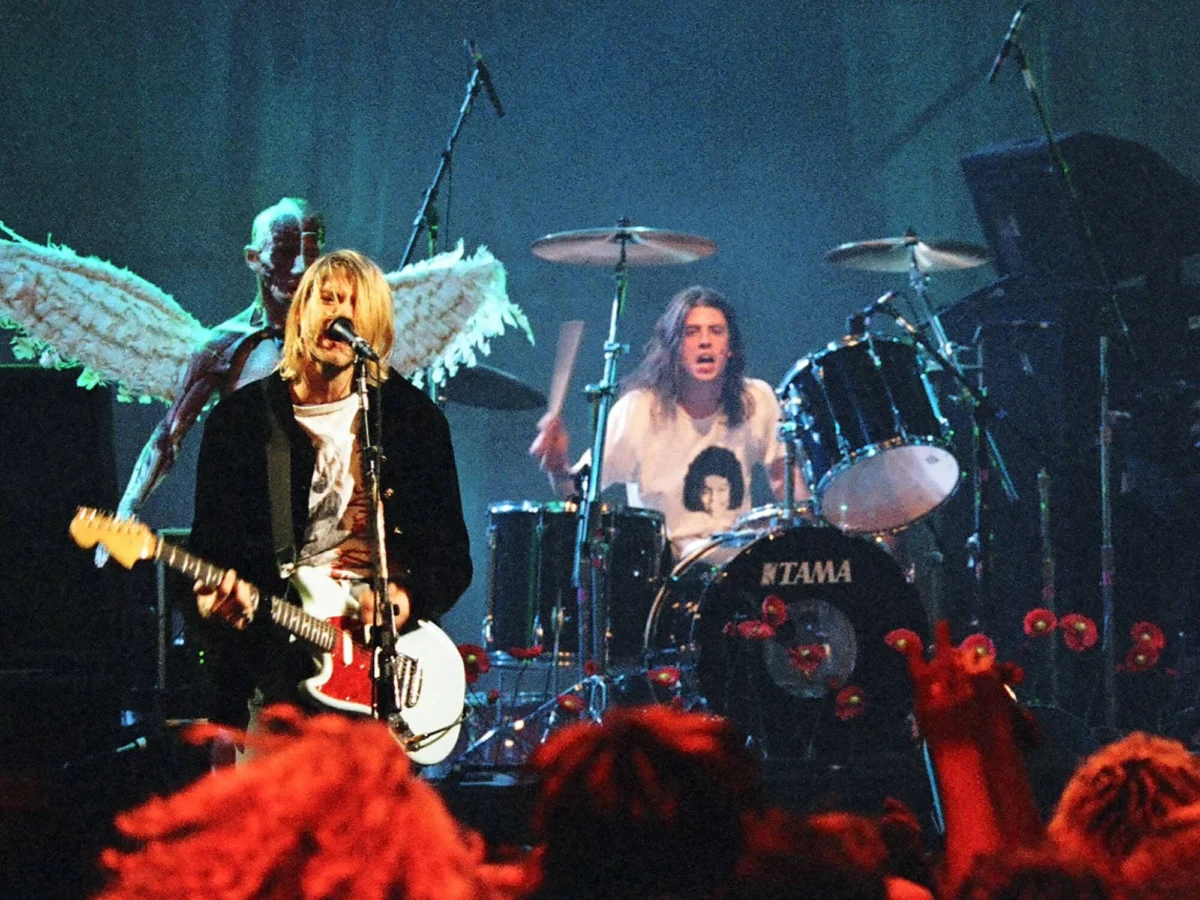
Sudden, world-conquering success might sound like the ultimate dream for any aspiring musician, but for a 22-year-old Dave Grohl, that reality quickly became a profound source of anxiety and disorientation. In a recent candid interview on Logan Sounds Off with Logan Kelly, the iconic Foo Fighters frontman and former Nirvana drummer offered a rare glimpse into the psychological toll of overnight superstardom, detailing the unexpected pressures and the personal coping mechanisms he developed during one of music history’s most explosive eras. His reflections shed light not only on his own journey but also on the often-unseen struggles that accompany unparalleled fame, particularly for young artists thrust into the global spotlight.
The interview served as a powerful testament to the unexpected burdens that can accompany the fulfillment of a rock star fantasy. Grohl, now a seasoned veteran with decades of experience fronting one of the world’s biggest bands, spoke with a clear perspective, yet the memories of that tumultuous period evidently remain vivid. He recounted how Nirvana’s meteoric rise, propelled by their groundbreaking album Nevermind, was a phenomenon none of the band members – Kurt Cobain, Krist Novoselic, and himself – had anticipated.
"We didn’t think that it would be as popular as it became," Grohl admitted, acknowledging the raw talent within the band. "But I knew that the songs were so good. Kurt [Cobain] wrote amazing songs. His voice was so amazing and as a band we made this crazy noise and so I knew that it was special but I didn’t really think anyone else would understand the way that we did." This sentiment encapsulates the common experience of artists emerging from niche subcultures, creating music primarily for themselves and their immediate community, only to find it resonating on an unforeseen global scale. The disconnect between their underground roots and their mainstream explosion created an immediate chasm between their reality and public perception.
The Unforeseen Avalanche: Nirvana’s Ascent and the Grunge Revolution
To fully grasp the magnitude of Grohl’s anxiety, one must understand the context of Nirvana’s unprecedented ascent. Emerging from the vibrant, yet largely localized, Seattle grunge scene of the late 1980s and early 1990s, Nirvana was initially a band steeped in the DIY ethos of punk rock. When Dave Grohl joined Kurt Cobain and Krist Novoselic in 1990, completing the classic lineup, they were a powerful, raw, and undeniably talented trio with a cult following. Their debut album, Bleach (1989), released on the independent Sub Pop label, had garnered critical acclaim within the indie circuit but hadn’t hinted at the seismic shift to come.
The release of Nevermind on September 24, 1991, through DGC Records, was a watershed moment. While the label had modest expectations, perhaps hoping to sell a few hundred thousand copies, the album’s lead single, "Smells Like Teen Spirit," rapidly became an anthem. Propelled by its iconic music video, which received heavy rotation on MTV, the song captured the zeitgeist of a disaffected generation. Within months, Nevermind was selling hundreds of thousands of copies weekly, famously displacing Michael Jackson’s Dangerous from the top of the Billboard 200 chart in January 1992. This wasn’t merely a commercial success; it was a cultural revolution. Grunge, once an underground movement, suddenly became the mainstream, dismantling the dominance of hair metal and ushering in a new era of alternative rock. The band went from playing small clubs to headlining arenas, their faces plastered on magazine covers worldwide, all within a dizzying span of months.
The Personal Toll of Public Acclaim
For Grohl, this rapid transition was less a dream come true and more a disorienting nightmare. "So when it became hugely popular it kind of freaked us all out. We were not expecting that to happen and it’s a lot to deal with. We were young too. I think I was 22 years old and I didn’t have much life behind me at that point. So yeah, it kind of freaked us all out." His age is a critical factor here. At 22, most individuals are still navigating their early adulthood, establishing identity, and building foundational life experiences. To be suddenly thrust into a relentless cycle of global touring, media scrutiny, and fan hysteria, without the emotional maturity or a pre-existing framework to process it, is an immense psychological challenge. The loss of anonymity alone can be profoundly unsettling, as every public outing becomes an event, every action dissected, and every personal space invaded.
As Nirvana’s profile skyrocketed, so did the internal and external pressures. Grohl candidly described the escalating anxiety: "It got to the point where I would have anxiety. The shows were getting bigger and I was nervous about that. Crazy shit was happening – shows were turning into riots." The raw energy of early Nirvana concerts, often characterized by stage diving, mosh pits, and equipment destruction, began to take on a more chaotic and potentially dangerous dimension as crowds swelled. The band’s performances were less about controlled spectacle and more about cathartic release, which, when amplified to an arena scale, could indeed verge on riots, creating a palpable sense of unpredictability and fear for the performers. This environment, coupled with the relentless demands of touring and recording, left little room for personal decompression or processing the whirlwind of their lives.
Seeking Solace: Retreating to Reality
In the face of this overwhelming chaos, Grohl developed a crucial coping mechanism: a deliberate retreat to the normalcy of his past. "Whenever I had that anxiety or felt uncomfortable with it I would just go back to Virginia to my mother’s house and I would sleep in my childhood bedroom and hang out with my buddies from high school and be like ‘okay well life is still real.’ Like there’s still real life here." This act of returning to his roots served as a vital anchor, grounding him amidst the surreal landscape of rock stardom. His childhood bedroom, his mother’s presence, and the familiar camaraderie of old friends offered a stark contrast to the deafening roar of stadiums and the relentless glare of the media. It was a conscious effort to reconnect with his pre-fame identity, a reminder that the person behind the drum kit was still Dave Grohl, the kid from Virginia.
This strategy highlights a fundamental human need for stability and authenticity, especially when one’s public persona threatens to eclipse their private self. By physically removing himself from the epicentre of his fame, Grohl was able to recalibrate and maintain a sense of perspective. He implicitly underscores the importance of a reliable support system and a connection to one’s past as safeguards against the isolating and disorienting effects of extreme public life.
The Shadow of Unmet Needs: A Reflection on Kurt Cobain
Grohl’s reflections inevitably lead to a poignant, albeit indirect, commentary on his bandmate, Kurt Cobain. "I think everybody needs that," Grohl stated, referring to his coping mechanism of retreating to normalcy. "I think Kurt maybe didn’t have that and being the front person of the band he really did bear the brunt and responsibility of whatever it was. That could be difficult for anybody, especially at a young age. But I’ve always kind of relied on that."
This observation is deeply insightful and carries significant weight, especially in the tragic context of Cobain’s eventual suicide in April 1994. As the primary songwriter and frontman, Cobain was unequivocally the public face of Nirvana. He was the lyrical architect, the enigmatic figure around whom the band’s mystique revolved. This position inherently carried an immeasurable burden of expectation, artistic pressure, and public scrutiny. While Grohl could retreat to his mother’s house, Cobain, as the perceived "voice of a generation," likely found such escape far more challenging, if not impossible. His private struggles with addiction, chronic pain, and mental health issues were exacerbated by the relentless demands of fame, which offered little sanctuary or understanding. Grohl’s statement, while not explicitly speculative, powerfully implies that Cobain may have lacked the consistent, grounding "real life" anchor that Grohl himself found indispensable, contributing to his inability to cope with the immense weight of his role. This highlights the unique vulnerability of frontmen and primary creatives, who often bear the brunt of public adoration and criticism, with fewer avenues for anonymous escape.
A New Safety Net: The Enduring Power of the Foo Fighters
Decades later, Grohl has found a different kind of safety net, one built within the very fabric of his current band, the Foo Fighters. Having navigated the turbulent aftermath of Nirvana and forged a new, enduring legacy, Grohl’s current coping mechanisms are a testament to personal growth and the power of shared experience. "It’s funny now as a band since we’ve been together for so long, just as I would lean on or retreat to my family when I was young, I can do that now with our band," he explained. "We’ve just been together for so long that if I’m losing my fucking mind and the band is really busy and things are crazy, I can sort of step into the band instead of out of it for comfort."
This evolution speaks volumes about the nature of healthy professional relationships and the development of a mature support system. The Foo Fighters, formed in 1994, have become more than just a musical collective; they are a cohesive unit, a chosen family forged through shared triumphs, challenges, and years on the road. Bandmates like bassist Nate Mendel, who has been with Grohl since the Foo Fighters’ inception, represent a consistent, understanding presence. This internal support system allows Grohl to find solace and stability within the very environment that might otherwise be a source of stress. It signifies a profound shift from needing to escape the professional realm to finding comfort and stability within it, a rare achievement in the notoriously volatile music industry.
Broader Implications: Fame, Mental Health, and the Music Industry
Dave Grohl’s candid revelations underscore a critical, often overlooked aspect of celebrity: the profound psychological toll of massive success. His experience with Nirvana is not an isolated incident but rather a recurring theme throughout music history. From Elvis Presley’s struggles with isolation, to the intense scrutiny faced by Michael Jackson, to the tragic battles of Amy Winehouse, the narrative of artists grappling with the dark side of fame is pervasive. The relentless demands, the erosion of privacy, the constant public judgment, and the sheer volume of sensory input can overwhelm even the most resilient individuals.
In recent years, there has been a growing, albeit belated, recognition within the music industry and wider society about the importance of mental health for artists. Organizations and initiatives are now working to provide resources and support, acknowledging that the pressures of the profession are unique and intense. Grohl’s willingness to openly discuss his anxiety during Nirvana’s peak contributes significantly to destigmatizing these conversations. It serves as a powerful reminder that even those who appear to be living the dream can be struggling immensely beneath the surface. His journey from needing to physically distance himself from his fame to finding solace within his band offers a valuable blueprint for developing robust coping strategies and fostering supportive environments in high-pressure careers.
Beyond these introspective observations, Grohl remains a vibrant and engaged figure in the contemporary music landscape. His interview also touched upon his continuing passion for discovering new music, revealing a newfound fascination with Quebec rock duo Angine de Poitrine. He enthusiastically noted how their music "absolutely blew my fucking mind," demonstrating his enduring love for the artistry that initially drew him into the world of music, a passion that clearly transcends the pressures of stardom.
Ultimately, Dave Grohl’s reflections on his Nirvana anxiety offer more than just a historical anecdote. They provide a vital human perspective on the paradoxical nature of success, emphasizing that even the most coveted achievements can come with unforeseen and significant costs. His story is a testament to resilience, the importance of genuine human connection, and the ongoing journey of self-preservation in the face of overwhelming external forces. It’s a poignant reminder that behind every legendary performance and chart-topping album are individuals navigating complex emotional landscapes, forever shaped by the very triumphs that define their legacy.
