

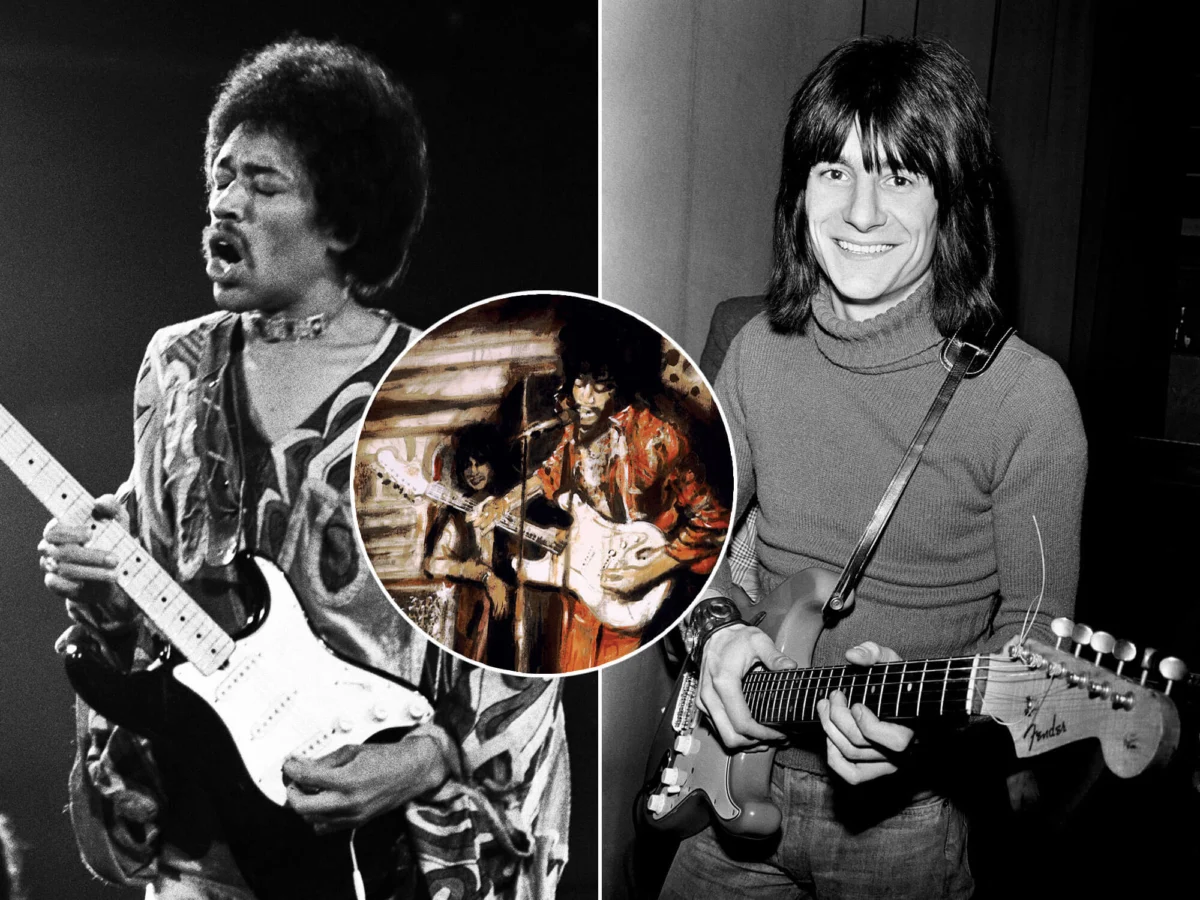
Rolling Stones luminary Ronnie Wood has offered an unprecedented glimpse into his formative years and the profound connections that shaped his illustrious career, particularly recalling his shared living experience and musical interactions with the unparalleled guitar maestro Jimi Hendrix. These intimate recollections, extracted from Wood’s forthcoming book, Fearless: The Anthology, and exclusively shared with Guitar.com, shed new light on the personal side of two rock legends during the vibrant, transformative era of the late 1960s. Wood’s memoir not only chronicles his journey through iconic bands but also enriches it with his visual artistry, featuring a poignant painting depicting him alongside Hendrix at New York’s famed Scene Club in 1968, underscoring the depth of their bond.
A Shared Abode in the Epicenter of Swinging London
The late 1960s in London was a crucible of creativity, a period famously dubbed "Swinging London," where music, fashion, and art converged to redefine cultural norms. It was against this dynamic backdrop that Ronnie Wood, then establishing his presence in the music scene with the Jeff Beck Group, found himself sharing a residence with Jimi Hendrix. The house, located in the affluent Holland Park district, belonged to the American soul singer Pat "P.P." Arnold, who had relocated to London and become an integral part of its burgeoning music community. This arrangement placed Wood and Hendrix in close proximity, fostering a camaraderie that transcended mere professional acquaintance.
Wood recounts Hendrix as a "sweet man" and a surprisingly "quiet" flatmate, a stark contrast to the often flamboyant and explosive stage persona that had captivated audiences worldwide. This personal insight reveals a more introspective side of Hendrix, a man deeply immersed in his craft even in the domestic sphere. For Wood, who would later achieve global superstardom with The Faces and The Rolling Stones, living with Hendrix was a profoundly influential period. He remembers being "mind-blown" by Hendrix’s effortless mastery of the guitar, particularly his ambidexterity. "He’d just sit back and play right-handed or left-handed guitar – that ambidextrousness blew my mind," Wood writes, confessing his own struggles with attempting to play left-handed, likening it to "giving a child a guitar." This observation highlights not just Hendrix’s unique physical dexterity but also the sheer natural talent that set him apart.
The Holland Park residence, therefore, was more than just a place to sleep; it was an informal academy, a space where musical ideas were exchanged, and legends observed each other in their most unvarnished states. Such communal living arrangements were not uncommon among musicians in that era, reflecting a bohemian spirit and a necessity born from the nascent stages of their careers. These informal settings often became incubators for groundbreaking music and lasting friendships, with Holland Park serving as a quiet witness to the burgeoning genius of two future rock icons.
Musical Synergy and Mutual Admiration
Beyond shared living quarters, Wood’s account delves into the musical connection he forged with Hendrix. Wood, then primarily known as a bassist with the Jeff Beck Group, found an unexpected champion in Hendrix. "During the time I was with the Jeff Beck Group," Wood explains, "Jimi liked how I played bass and he’d say to Jeff, ‘Let the bass player play,’ so Jeff would have to let me take long solos." This endorsement from Hendrix, a musician revered for his revolutionary guitar work, was a significant validation for the young Wood. It speaks volumes about Hendrix’s generosity of spirit and his discerning ear for talent, recognizing Wood’s capabilities beyond the typical rhythm section role. These extended bass solos not only provided Wood with invaluable performance experience but also deepened his connection with Hendrix through shared musical exploration.
The informal jamming sessions were a regular occurrence. "We’d have jamming sessions. He used to just turn up and come and play," Wood recalls, painting a picture of spontaneous musical combustion. These were not structured rehearsals but rather organic explorations, a testament to the free-flowing creative energy that defined the era. On other occasions, the interactions were more intimate and instructional. "Sometimes we’d get out the acoustics and swap blues licks for him to warm up before a show," Wood details. This particular anecdote reveals a more vulnerable side of Hendrix, who, despite his towering stage presence, harbored insecurities about his vocal abilities. "He always said, ‘I don’t like my voice.’ And I’d say, ‘Don’t worry, your guitar playing takes care of that.’" This exchange underscores the mutual respect and comfort between the two musicians, with Wood offering encouragement to a man who, to the rest of the world, seemed utterly fearless. It reinforces the image of Hendrix as a humble artist, constantly striving for perfection, even while achieving unparalleled levels of innovation.
Jimi Hendrix: An Enduring Legacy of Innovation
Jimi Hendrix’s impact on music, particularly guitar playing, remains unparalleled. Arriving in London in 1966, he swiftly revolutionized the electric guitar, pushing its sonic boundaries with feedback, distortion, and wah-wah effects in ways previously unimaginable. His debut album, Are You Experienced, released in 1967, exploded onto the scene, forever altering the landscape of rock music. Tracks like "Purple Haze," "Foxy Lady," and "Hey Joe" showcased a blistering virtuosity combined with an innovative approach to sound that captivated a global audience. His performances at Monterey Pop Festival in 1967 and Woodstock in 1969 became legendary, cementing his status as a cultural icon.
Wood’s observations, particularly concerning Hendrix’s ambidexterity, provide a micro-level insight into this larger-than-life talent. Hendrix was naturally left-handed but often played right-handed guitars restrung for left-hand playing, sometimes even playing right-handed guitars in their original configuration. This adaptability was a hallmark of his intuitive approach to the instrument, allowing him to explore sounds and techniques beyond conventional methods. His ability to switch between hands, or even play complex passages with either hand, contributed to his unique fluidity and dynamic range. This "mind-blowing" quality, as Wood describes it, was not merely a parlor trick but a fundamental aspect of Hendrix’s revolutionary style, enabling him to manipulate the guitar in ways that defied previous understanding. His short but incandescent career, tragically cut short in 1970, left an indelible mark, influencing generations of musicians and ensuring his place as arguably the greatest electric guitarist of all time. Wood’s personal anecdotes serve as invaluable footnotes to this monumental legacy, humanizing the legend and offering a unique perspective from a fellow traveler on the rock and roll journey.

Ronnie Wood: Chronicler, Musician, and Artist
Ronnie Wood’s career trajectory is a testament to his adaptability, talent, and enduring passion for music. Before joining The Rolling Stones in 1975, he honed his craft through a series of significant bands. He began with The Birds in the early 1960s, a rhythm and blues outfit that garnered a loyal following in London’s club scene. His stint as the bassist for the Jeff Beck Group from 1967 to 1969 was crucial, placing him at the heart of the burgeoning psychedelic and hard rock movements. It was during this period that his path crossed with Hendrix. Following his departure from the Jeff Beck Group, Wood transitioned to guitar, joining Rod Stewart, Ian McLagan, Kenney Jones, and Ronnie Lane to form The Faces, a band celebrated for their raucous live performances and distinctive blend of rock and roll, blues, and R&B. His distinctive guitar style, characterized by a soulful, blues-infused sensibility, became a defining element of The Faces’ sound.
Beyond his musical prowess, Wood is also an accomplished painter. His artwork often depicts his bandmates, fellow musicians, and scenes from his life on the road, offering a unique visual diary of rock history. The painting of him and Hendrix at New York’s Scene Club in 1968, featured in Fearless: The Anthology, is a prime example of this synthesis of his passions. The Scene Club itself was a legendary venue on the New York nightlife circuit, a hotspot for musicians and artists, and a fitting backdrop for an encounter between two such figures. Wood’s ability to capture these moments not just in memory but also on canvas adds a rare dimension to his storytelling, providing tangible evidence of these cherished interactions. This dual identity as a musician and artist makes him a uniquely qualified chronicler of his own extraordinary life, offering perspectives that are both audibly and visually rich. His memoir, therefore, is not just a written account but a multi-sensory journey through the annals of rock history.
"Fearless: The Anthology": A Deep Dive into a Legendary Career
Fearless: The Anthology is described as Ronnie Wood’s "musicography," a term that aptly encapsulates its comprehensive scope. It charts, in Wood’s own words, the most defining moments from his illustrious career, spanning over five decades. From his early days performing in London clubs with The Birds in the ’60s, through his pivotal role as bassist with the Jeff Beck Group, his electrifying tenure with The Faces, all the way to his five decades as a guitarist with the Rolling Stones, the book promises an unparalleled journey through rock history as witnessed and shaped by Wood himself.
What truly sets this anthology apart is Wood’s unprecedented access to his personal archive. For the first time, fans and historians will be able to explore a wealth of special photography showcasing a treasure trove of memorabilia. This includes legendary guitars and other rare instruments that have defined his sound, custom-made straps, amplifiers, designer stage wear that reflects the changing fashions of rock, and even handwritten concert setlists. Each item tells a story, offering tangible connections to pivotal moments in music history.
The book meticulously details some of Wood’s most important stage and studio guitars, instruments that have become extensions of his musical identity. Among those featured are his distinctive Duesenberg Starplayer TV, the unique Versoul Raya, his iconic Gibson Firebird, and even his extensive collection of lap and pedal steels, which have added rich textural layers to countless recordings. A press release shared with Guitar.com emphasizes the meticulous detail captured within the book: "Every detail – the colours, patina, wear and tear and unique modifications – has been captured to tell the story of Ronnie’s extraordinary journey through music." This level of detail elevates the book beyond a mere memoir, transforming it into a definitive historical document for guitar enthusiasts and rock archivists alike. It offers a rare opportunity to understand the tools and techniques that shaped the sound of one of rock’s most enduring figures.
The Broader Significance: Preserving Rock History Through Personal Narratives
In an age dominated by digital content and fleeting online interactions, the release of a meticulously curated physical anthology like Fearless holds significant cultural value. It serves as a vital artifact for preserving the rich history of rock and roll, offering a tangible connection to the past. Personal accounts from figures like Ronnie Wood are indispensable, as they provide an intimate, first-hand perspective that often transcends official biographies or journalistic reports. These memoirs fill in the gaps, offering insights into the personalities, challenges, and triumphs behind the music that shaped generations.
Wood’s recollections of Jimi Hendrix, in particular, are precious. Hendrix’s life was tragically cut short, leaving behind a relatively small body of recorded work and fewer personal accounts than many of his contemporaries. Every new anecdote, especially from a peer and a flatmate, adds another brushstroke to the portrait of this enigmatic genius. Such narratives humanize the legends, reminding us that behind the myth-making and the monumental talent were individuals navigating their lives, grappling with insecurities, and forging friendships.
Moreover, Wood’s dual role as a musician and a painter allows for a unique synthesis of art forms in his memoir. His visual representations complement his written words, offering a holistic portrayal of his experiences. This multi-modal approach enriches the reader’s understanding, allowing them to not only read about the past but also to see it through the eyes of someone who lived it. In essence, Fearless: The Anthology is more than just a book; it is a meticulously crafted historical document, a personal archive, and a testament to the enduring power of music and friendship, offering invaluable contributions to the ongoing narrative of rock history.
Fearless: The Anthology is currently available for pre-order. While the Deluxe Edition has already sold out, the Collector’s Edition remains available for purchase, priced at £325. Shipping for both editions is anticipated in May 2026. Further information can be found at RonnieWoodAnthology.com.
