

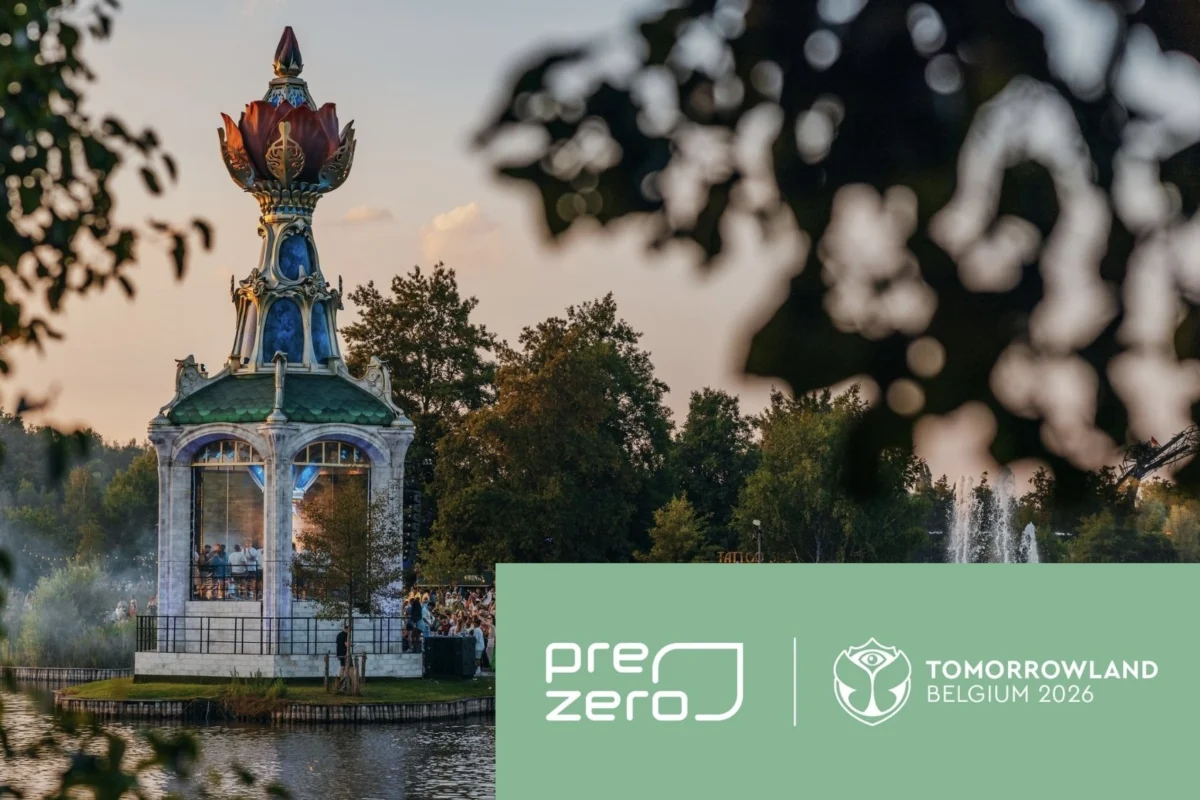
The landscape of international mega-events is undergoing a fundamental transformation as sustainability moves from a peripheral concern to a core operational mandate. In a landmark collaboration announced in July 2026, PreZero, a leading global environmental service provider, and Tomorrowland, one of the world’s most prominent electronic dance music festivals, have entered into a strategic partnership aimed at revolutionizing resource management within the event industry. This alliance seeks to address the staggering environmental footprint of large-scale gatherings by implementing sophisticated circular economy solutions directly on the festival grounds in Boom, Belgium. By treating the festival as a microcosm of a modern "Smart City," the partners intend to prove that even the most logistically challenging environments can transition toward a zero-waste reality through data-driven innovation and cross-industry cooperation.
Operational Excellence and the Schwarz Group Ecosystem
The partnership represents a unique synergy within the Schwarz Group, one of the world’s largest retail conglomerates. While Tomorrowland is globally recognized for its immersive storytelling and high-production values, the operational backbone of this sustainability initiative is powered by the integrated capabilities of PreZero and its sister company, Lidl. This collaboration creates a closed-loop system: Lidl provides the essential infrastructure for visitor sustenance through pop-up bakeries, fresh food stations, and retail outlets, while PreZero manages the resulting material streams.
During the 2026 festival season, this ecosystem is being tested at an unprecedented scale. Lidl’s presence on-site ensures that food packaging and organic waste are controlled from the point of sale. PreZero then takes over the logistics of recovery, ensuring that plastic, glass, aluminum, and organic materials are not merely discarded but captured as high-quality recyclables. This "cradle-to-cradle" approach within a temporary event setting serves as a pilot program for broader urban applications, demonstrating how retail and waste management can synchronize to minimize environmental impact.
Innovative Waste Capture: The Human Element of Circularity
One of the most visible components of the partnership is the introduction of mobile recycling teams designed to tackle the challenge of waste generation in high-density areas. Traditional stationary bins often prove insufficient during peak performances when thousands of attendees occupy the dance floors. To mitigate this, PreZero has deployed "Circular Ambassadors"—professional performers equipped with specialized recycling backpacks. These backpacks allow for the immediate, source-separated collection of beverage containers and other recyclables directly within the crowd.
This strategy serves two purposes: it maintains the cleanliness of the festival environment in real-time and engages the audience in a participatory sustainability effort. By gamifying the recycling process and utilizing performers to interact with guests, the partnership transforms a chore into a shared community value. According to internal projections, this method of "at-source" collection can increase the purity of collected plastic streams by up to 40%, significantly enhancing the economic viability of the subsequent recycling processes.
The Love Tomorrow Summit: A Platform for Global Dialogue
The strategic alliance extends beyond physical waste management into the realm of intellectual leadership and policy advocacy. On July 23, 2026, the partnership will take center stage at the Love Tomorrow Summit, an annual conference held on the Tomorrowland grounds that focuses on sustainability, technology, and the future of society. A headline panel titled "Circularity at Scale" will feature leadership from PreZero and Tomorrowland alongside representatives from UEFA, the governing body of European football.
The inclusion of UEFA is a calculated move to demonstrate the universality of the challenges faced by the entertainment and sports sectors. PreZero already serves as a strategic partner for UEFA, assisting in the implementation of circular economy solutions across major football stadiums and international tournaments. By bringing these two massive industries together, the Love Tomorrow Summit aims to establish a standardized framework for resource management at large-scale events.
Marcus Sagitz, Managing Director of Marketing & Corporate Affairs at PreZero International, emphasized that the goal is to shift the narrative from "waste disposal" to "resource security." Sagitz noted that the logistical peaks of a mega-event like Tomorrowland provide the ultimate stress test for supply chains. If a circular system can function effectively under the pressure of 400,000 festival-goers, it can be scaled to meet the needs of complex industrial environments and permanent urban infrastructures.
Data-Driven Sustainability and Resource Sovereignty
A critical element of the PreZero-Tomorrowland partnership is the focus on measurable outcomes. In the modern economic climate, sustainability claims must be backed by rigorous data. The 2026 initiative utilizes advanced tracking technologies to monitor the volume and composition of waste streams in real-time. This data allows for the optimization of collection routes and the identification of bottlenecks in the recycling chain.
From a broader economic perspective, this partnership aligns with the European Union’s goals for resource sovereignty. As the global supply of raw materials becomes increasingly volatile, the ability to recover high-quality secondary raw materials from domestic waste streams is a strategic necessity. PreZero views festivals like Tomorrowland not just as entertainment venues, but as "urban mines" where valuable plastics and metals can be harvested to feed back into the European manufacturing sector. By proving the scalability of these solutions, PreZero and Tomorrowland are contributing to a more resilient and self-sufficient European economy.
Chronology of the 2026 Circularity Initiative
The implementation of this partnership follows a multi-stage timeline designed to maximize impact and data collection:

- January – April 2026: Preliminary planning and infrastructure design. PreZero and Tomorrowland engineers collaborated to map the festival site and identify high-waste zones.
- May 2026: Recruitment and training of the "Circular Ambassadors." Over 200 staff members were trained in both performance arts and material science to facilitate on-site recycling.
- June 2026: Integration of Lidl’s logistics. The setup of the pop-up stores was optimized for minimal packaging and maximum recyclability.
- July 17–19 & 24–26, 2026: Active festival operations. Real-time monitoring of waste streams and deployment of mobile recycling units.
- July 23, 2026: The Love Tomorrow Summit. High-level strategic discussions and the public unveiling of initial data insights.
- August – September 2026: Post-event analysis and material processing. Collected materials are sent to PreZero’s state-of-the-art sorting facilities to be converted into new products.
The Broader Impact on the Event Industry
The success of the PreZero and Tomorrowland partnership is expected to set a new benchmark for the global event industry. For years, music festivals have struggled with the "leave no trace" philosophy, often falling short due to the sheer volume of attendees. The 2026 model suggests that the solution lies not in asking attendees to do less, but in building a more intelligent, invisible infrastructure that handles resources more effectively.
Industry analysts suggest that this partnership will likely trigger a "green arms race" among major festivals. As ticket holders become more environmentally conscious, the sustainability credentials of an event will become as important as the lineup of performers. Furthermore, the collaboration between a waste management giant like PreZero and a cultural icon like Tomorrowland bridges the gap between industrial pragmatism and emotional engagement.
Joris Beckers, founder of the Love Tomorrow Summit, noted that the visitors to the summit are looking for tangible evidence of the future. By demonstrating circularity in action, the partnership provides a blueprint for how entertainment and environmental stewardship can coexist. The collaboration proves that the transition to a circular economy is not merely a regulatory requirement but an opportunity for innovation, brand differentiation, and long-term economic stability.
Conclusion: A Blueprint for the Future
As the 2026 festival season progresses, the partnership between PreZero and Tomorrowland stands as a testament to the power of cross-sector alliances. By combining the logistical expertise of the Schwarz Group with the cultural influence of Tomorrowland, the initiative has moved beyond symbolic gestures to implement real, scalable solutions. The lessons learned in the fields of Boom, Belgium, are poised to ripple through the European economy, offering a data-backed path toward a future where "waste" is a term of the past, and every material is treated as a vital resource for the next cycle of production.
