

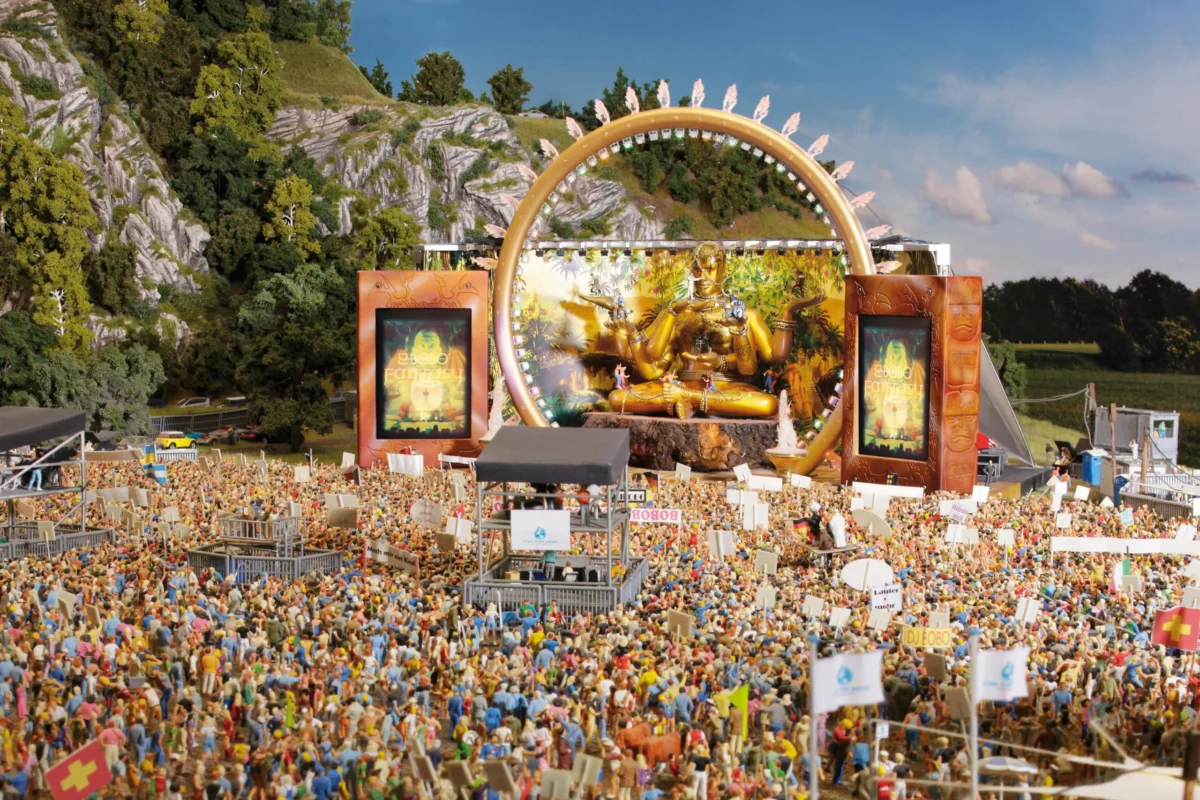
The Miniatur Wunderland in Hamburg, officially recognized by Guinness World Records as the largest model railway installation on the planet, has been confirmed as a primary location for an exclusive series of technical backstage tours scheduled for October 6, 2026. This initiative, organized as a high-profile side event for the 2026 industry summit, aims to provide professional delegates and "Backstage Pass" holders with an unprecedented look into the complex engineering and logistical frameworks that sustain one of Germany’s most visited tourist attractions. Located in the historic Speicherstadt warehouse district—a UNESCO World Heritage site—the facility represents a pinnacle of miniature engineering, integrating advanced automation, lighting design, and software-driven logistics that mirror large-scale industrial operations.
Strategic Integration and Event Overview
The selection of Miniatur Wunderland as a side event venue underscores the growing trend of integrating cultural and technical landmarks into professional trade fair programs. While the primary convention activities for the 2026 summit will be hosted at the Hamburg Messe fairgrounds, this external program offers a practical laboratory for professionals interested in the intersection of entertainment technology and precision engineering. The tours are structured to provide a 60-minute deep dive into the facility’s "inner workings," moving beyond the standard visitor experience to highlight the sophisticated control systems required to manage thousands of moving parts simultaneously.
The programming for October 6 is divided into two distinct blocks to accommodate the schedules of conference attendees. The morning sessions are slated for 8:40–9:40 AM and 9:00–10:00 AM, targeting those who wish to visit the site before the main exhibition halls open. For delegates concluding their daily business, evening sessions will run from 6:00–7:00 PM and 6:40–7:40 PM. Access is strictly controlled, reserved exclusively for individuals possessing a valid Backstage Pass, ensuring that the groups remain small enough to allow for detailed technical inquiries and unobstructed views of the maintenance corridors.
A Chronology of Innovation: From Vision to Global Landmark
To understand the significance of the 2026 side event, one must examine the trajectory of Miniatur Wunderland since its inception. Founded by twin brothers Gerrit and Frederik Braun alongside Stephan Hertz, the project began in 2001 with three sections: Central Germany, Knuffingen, and Austria. Over the past two and a half decades, the facility has undergone continuous expansion, evolving from a local attraction into a global benchmark for the model-building industry.
By 2026, the facility will have completed several major expansion phases, including the highly anticipated integration of the South American and Asian sections. The "Bridge of Worlds," a glass-bottomed pedestrian walkway spanning the Fleet (canal) to connect the original warehouse with the new expansion space, serves as a literal and metaphorical link between the facility’s heritage and its future. The 2026 tours will likely highlight the technical challenges of this cross-canal synchronization, where data and power must be seamlessly transmitted between two separate historic buildings.
Technical Infrastructure and Supporting Data
The scale of Miniatur Wunderland is often cited in terms of visitor numbers—regularly exceeding 1.5 million guests annually—but for the professionals attending the 2026 side event, the internal data points are more revealing. As of the most recent technical audits, the facility encompasses:
- Railway Logistics: Over 16,000 meters of track, supporting more than 1,100 trains with approximately 10,000 wagons. The system is managed by sophisticated "Railware" software, which prevents collisions and optimizes traffic flow across dozens of distinct topographical zones.
- Automated Vehicle Systems: The "Knuffingen" section and subsequent areas utilize a proprietary car system featuring over 300 self-driving vehicles. These units use magnetic sensors and infrared technology to navigate roads, obey traffic signals, and even respond to simulated emergency calls.
- Lighting and Atmospheric Design: The facility employs over 500,000 individual LED lights, all controlled by a centralized DMX-based system. Every 15 minutes, the entire Wunderland undergoes a day-to-night transition, a process that requires the precise synchronization of room lighting with tens of thousands of miniature streetlights, building interiors, and vehicle headlamps.
- Aerospace Simulation: The Knuffingen Airport, one of the most complex sections of the park, features a functional runway where model aircraft take off and land using a hidden "flight" mechanism. This section alone requires its own dedicated server rack to manage the telemetry of the planes and the ground support equipment.
For the 2026 event, guides will explain how these disparate systems are integrated into a single, cohesive "Smart City" environment. This includes the management of heat dissipation from the massive server rooms and the custom-built ventilation systems required to maintain air quality and dust control in the sensitive model environments.
Operational Responses and Stakeholder Perspectives
Representatives from the event’s organizing committee have indicated that the decision to partner with Miniatur Wunderland was driven by the facility’s reputation for "hidden excellence." A spokesperson for the 2026 summit noted that while many attendees are familiar with the visual spectacle, few understand the rigorous maintenance schedules and the bespoke software development that occur behind the scenes.
"Miniatur Wunderland is essentially a massive, 24/7 stress test for automation and control software," a technical coordinator for the event stated. "For our delegates, seeing how a team manages 1.2 million hours of manual labor and converts it into a reliable, automated system provides invaluable insights into project management and technical resilience."
The management of Miniatur Wunderland has expressed a similar enthusiasm for the professional-tier tours. By 2026, the facility will have moved further into the realm of Virtual Reality (VR) with its "YULLBE" experiences, and the backstage tours are expected to touch upon how physical models are being digitized for immersive guest experiences. The interaction between the "real" miniature world and the digital layer is a key area of interest for the 2026 tech summit.
Broader Impact and Implications for the Event Industry
The 2026 side event at Miniatur Wunderland represents a broader shift in how technical conferences are structured. No longer satisfied with static showroom floors, industry professionals are increasingly seeking "living examples" of technology in action. The Wunderland serves as a microcosm of the challenges faced by the modern event industry: crowd management, high-uptime requirements, complex lighting integration, and the need for constant innovation to maintain audience engagement.

Furthermore, the event highlights Hamburg’s status as a premier destination for MICE (Meetings, Incentives, Conventions, and Exhibitions) tourism. By leveraging its unique cultural assets like the Speicherstadt and the Wunderland, the city demonstrates an ability to offer experiences that cannot be replicated in standard convention centers. The economic impact of such side events is significant, driving foot traffic to the historic district and fostering networking opportunities in informal, yet highly stimulating, environments.
Logistics and Participation Guidelines
Participants are reminded that the October 6 tours require advance registration due to the strictly limited capacity of the backstage corridors. The nature of the facility—featuring narrow walkways and sensitive electronic equipment—necessitates small group sizes, typically limited to 10–15 people per guide.
The morning slots are designed for early risers who wish to see the facility in its "startup" phase, where technicians perform daily diagnostics before the general public enters at 9:00 or 10:00 AM. The evening slots, conversely, provide a look at the "shutdown" or "night-maintenance" preparations. It is important to note that these tours are not held at the Hamburg Messe; attendees are responsible for their own transport to the Speicherstadt, though the district is well-served by the U3 subway line (Baumwall station) and various bus routes.
Following the conclusion of the 60-minute guided portion, Backstage Pass holders will be granted general admission to the park, allowing them to explore the public areas at their own pace. This allows for a comprehensive comparison between the polished front-end experience and the raw technical infrastructure viewed during the tour.
Conclusion: A Microcosm of Technical Excellence
As the 2026 industry summit approaches, the Miniatur Wunderland side event stands out as a highlight of the technical program. It offers a rare opportunity to witness the convergence of craftsmanship and high-tech automation. For the professional community, the value of this event lies not just in the "smallness" of the models, but in the "largeness" of the engineering solutions required to keep them moving. In an era where digital simulation is becoming the norm, the physical, tactile complexity of the Wunderland serves as a powerful reminder of the enduring importance of mechanical precision and creative engineering.
