

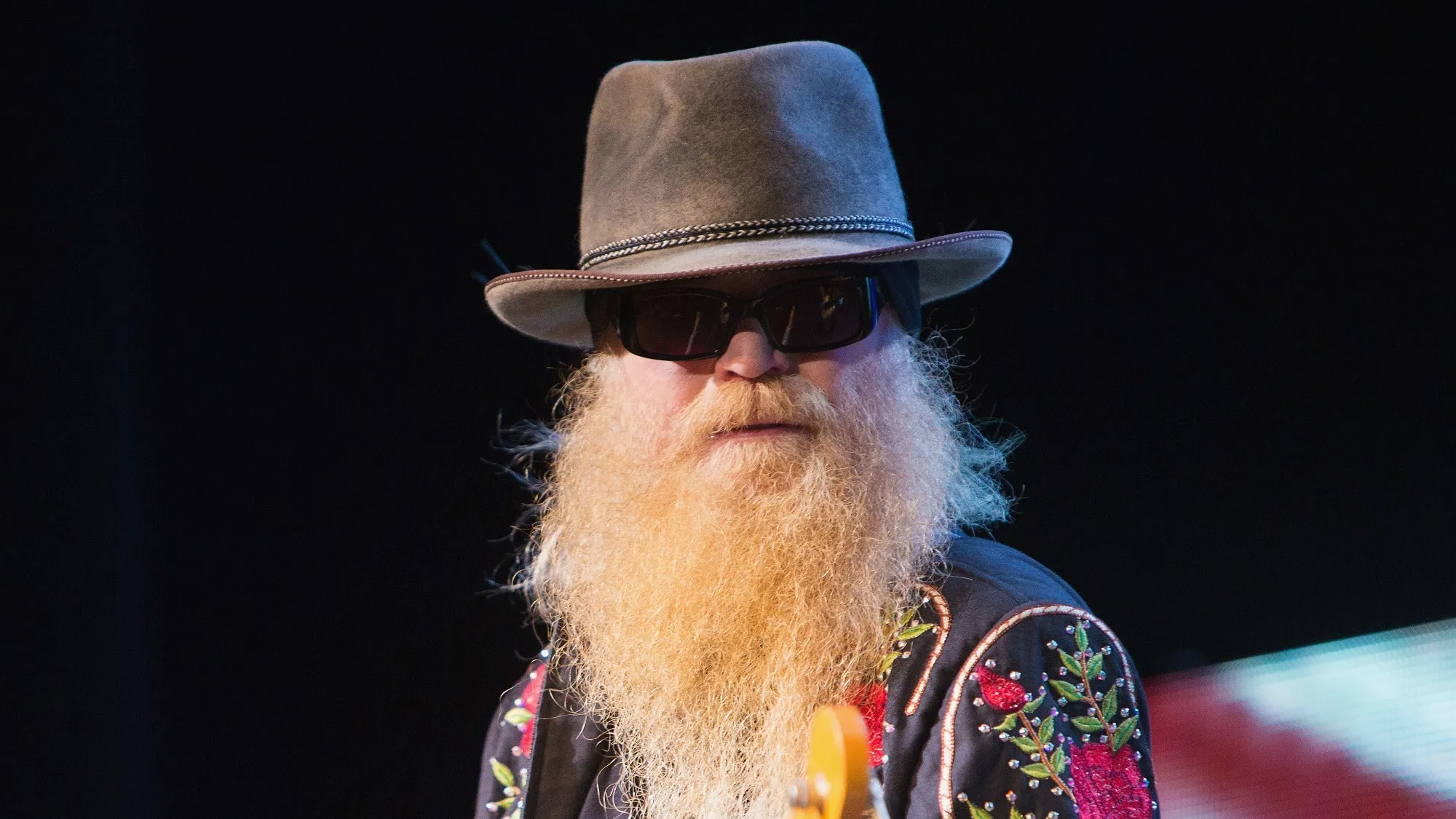
On July 28, 2021, the rock and roll community lost one of its most recognizable and steadying influences when Joseph Michael "Dusty" Hill died in his sleep at his home in Houston, Texas. At 72 years old, Hill had spent more than five decades as the bassist, co-vocalist, and secondary visual icon of ZZ Top, the Houston-born trio that evolved from gritty blues-rockers to global MTV superstars. His passing marked the end of an era—specifically, the end of a 51-year streak in which ZZ Top maintained the same three-man lineup, a feat virtually unheard of in the volatile world of professional music.
Born on May 19, 1949, in Dallas, Hill’s journey into the pantheon of rock history was characterized by a blue-collar work ethic and a deep-seated commitment to the "groove." Unlike many of his contemporaries who sought the spotlight through virtuosic solos and technical flash, Hill embraced the foundational role of the bass guitar, providing the rhythmic bedrock upon which guitarist Billy Gibbons and drummer Frank Beard built their "Texas shuffle" sound.
The Early Years and the Formation of a Power Trio
Dusty Hill’s musical education began in the bars and clubs of Dallas. By the age of eight, he was singing for money alongside his brother, Rocky Hill. However, his transition to the bass guitar was born of necessity rather than design. In the mid-1960s, Rocky’s band needed a bassist, and Dusty, then a guitarist, stepped into the role. He famously recalled that he essentially learned the instrument on stage, motivated by the "embarrassment" of playing poorly under the house lights.
Throughout the late 1960s, Hill and drummer Frank Beard were inseparable, playing together in various local outfits including the Warlocks and the Cellar Dwellers. Their chemistry was already solidified by the time they relocated to Houston. In 1969, Billy Gibbons, who had gained notoriety with his psychedelic band The Moving Sidewalks—even earning praise from Jimi Hendrix—was looking to form a new project. After a brief period with other musicians, Beard joined Gibbons, followed shortly by Hill.
The chemistry was instantaneous. On February 10, 1970, the trio played their first show together in Beaumont, Texas. By the time they released "ZZ Top’s First Album" in 1971, the blueprint was set: a heavy, blues-infused rock sound that paid homage to the Mississippi Delta while adding a distinctively Texan swagger.
A Chronology of Success: From the Blues to the Billboard Charts
The 1970s saw ZZ Top ascend to the top of the rock hierarchy. The release of "Tres Hombres" in 1973 was a turning point, featuring the hit "La Grange," which showcased Hill’s ability to lock in with Beard’s drumming to create a hypnotic, driving rhythm. This period established the band as a premier live act, culminating in the massive "Worldwide Texas Tour" in 1976, which famously featured live buffalo, rattlesnakes, and vultures on stage.
However, it was the 1980s that transformed Dusty Hill from a respected musician into a cultural icon. With the release of "Eliminator" in 1983, ZZ Top integrated synthesizers and sequencers into their blues-rock foundation. The move was a gamble that paid off exponentially. "Eliminator" sold over 10 million copies in the United States alone, certified Diamond by the RIAA. Hill’s steady, pulsing bass lines on tracks like "Sharp Dressed Man," "Legs," and "Gimme All Your Lovin’" became the heartbeat of the decade’s airwaves.
During this era, Hill and Gibbons also adopted their signature look: chest-length beards, trench coats, and sunglasses. This visual branding, coupled with iconic music videos featuring the "Eliminator" Ford coupe, made ZZ Top one of the most recognizable bands on the planet. Despite the high-gloss production of the 80s, Hill remained adamant that the "feel" of the music remained rooted in the blues.
The Musical Philosophy of the "Dusty Groove"
Hill’s approach to the bass was often described as deceptive. While his lines were frequently minimalist—often sticking to root notes or simple pentatonic scales—his timing and "pocket" were regarded as impeccable by industry peers. He cited influences ranging from the jazz complexities of Charles Mingus to the aggressive blues-rock of Cream’s Jack Bruce.
"When I started playing in a three-piece, I realized that you have to do the song, not your personal performance," Hill once explained. This selflessness allowed Billy Gibbons the sonic space to explore intricate guitar textures. Hill’s philosophy was that if the audience didn’t necessarily "notice" the bass, it meant he was doing his job perfectly by filling the sonic gaps and supporting the arrangement.
Beyond his playing, Hill was a vital vocal presence. His high-tenor voice provided a sharp contrast to Gibbons’ gravelly baritone. Hill took lead vocals on several of the band’s most beloved tracks, including the high-octane "Tush" and "Beer Drinkers & Hell Raisers."
The Passing and the "Bottom End" Succession
The news of Dusty Hill’s death on July 28, 2021, came as a shock to the industry, despite the bassist having dealt with various health issues in the years prior, including a hip injury and a bout with Hepatitis C in the early 2000s. The band was in the middle of a tour when Hill returned home to Houston to address what was initially thought to be a minor health concern.
In the wake of his passing, Billy Gibbons revealed a poignant final directive from his longtime friend. Hill had insisted that the band continue without him, specifically requesting that their longtime guitar tech, Elwood Francis, take over the bass duties.
"Dusty emphatically grabbed my arm and said, ‘Give Elwood the bottom end, and take it to the top,’" Gibbons shared in a statement shortly after the funeral. "He meant it, amigo. He really did."
This transition was handled with a level of grace and continuity rare in the music business. Elwood Francis, who had worked for the band for over 30 years, already knew the repertoire, the stage presence, and the internal dynamics of the group. In a tribute to Hill’s sense of humor, Francis even grew out a long beard to maintain the band’s iconic aesthetic.
Tributes and Industry Reactions
The outpouring of grief from the music world following Hill’s death underscored his status as a "musician’s musician." Flea, the bassist for Red Hot Chili Peppers, praised Hill’s "true blue-rock style," while Alice Cooper described him as a "gentleman" and a "foundational element of American rock."
The Rock and Roll Hall of Fame, which inducted ZZ Top in 2004, issued a statement noting that "Dusty Hill’s beard and signature bass playing were the heartbeat of ZZ Top." The induction ceremony in 2004, where they were introduced by Keith Richards of the Rolling Stones, remains a highlight of the band’s career, cementing their place as one of the few groups to bridge the gap between 1950s blues influences and 21st-century rock.
Statistical Legacy and Broader Impact
To understand Dusty Hill’s impact, one must look at the sheer scale of ZZ Top’s success during his tenure. The band has sold an estimated 50 million albums worldwide. They achieved 11 gold, seven platinum, and three multi-platinum albums. Even in the streaming era, their hits maintain massive footprints; "La Grange" and "Sharp Dressed Man" have hundreds of millions of plays on platforms like Spotify, proving that the rhythm sections Hill anchored continue to resonate with younger generations.
Beyond the numbers, Hill represented a specific type of American cool. He was a link to a fading era of the "Texas Roadhouse" musician—someone who could play a dive bar or a stadium with the same level of intensity and authenticity. His death served as a reminder of the mortality of the classic rock era’s giants, yet the band’s decision to continue has provided a case study in legacy management.
The Future of ZZ Top
Three years after his passing, the "Little Ol’ Band from Texas" continues to tour extensively. In 2024, ZZ Top remains a major draw on the summer concert circuit, frequently co-headlining with other legendary acts like Lynyrd Skynyrd. While the absence of Hill is felt by longtime fans, the inclusion of Elwood Francis has been widely accepted as an authentic extension of Hill’s wishes.
The band also released the album "RAW" in 2022, which served as a soundtrack to the documentary "That Little Ol’ Band from Texas." The recordings featured the original trio in a stripped-back setting, providing one of the final documented captures of Hill’s synergy with Gibbons and Beard.
Dusty Hill’s legacy is etched into the very fabric of American music. He proved that you could be a global superstar while remaining a "team player," and that the most important part of any song is the foundation. As Billy Gibbons and Frank Beard continue to "take it to the top," they do so with the "bottom end" legacy of Dusty Hill firmly intact, ensuring that the shuffle he helped perfect will continue to be heard for decades to come.
