

The Evolution of Alternative MIDI Control
The concept of transforming a game controller into a MIDI input device is not entirely new, with various experimental tools and niche applications surfacing over the past decade. Early attempts, often developed by enthusiasts, laid the groundwork for solutions like MIDIpad. These initial efforts, while sometimes rudimentary, highlighted the inherent potential in gamepads: their ergonomic design, diverse array of buttons, joysticks, and sometimes even touchpads or motion sensors, all presented a rich palette for expressive control. The appeal stemmed from several factors: affordability, widespread availability, and the familiarity many users already had with these devices through gaming. For many aspiring producers or those with limited budgets, a game controller offered a cost-effective alternative to dedicated MIDI hardware, which historically could be quite expensive. The ability to manipulate parameters like filter cutoff with a sensitive joystick, as one user recounted from a decade ago, demonstrated a unique tactile feedback that traditional controllers sometimes lacked.
MIDIpad, however, elevates this concept to a professional-grade level, moving beyond simple mapping utilities to deliver an experience that feels remarkably like a purpose-built musical instrument. This leap in sophistication is evident in its nuanced design, robust feature set, and thoughtful integration of advanced MIDI capabilities.
MIDIpad’s Core Functionality: Chords and Drums
At the heart of MIDIpad are its two primary instruments: Chords and Drums, each meticulously designed to leverage the distinct features of modern game controllers.
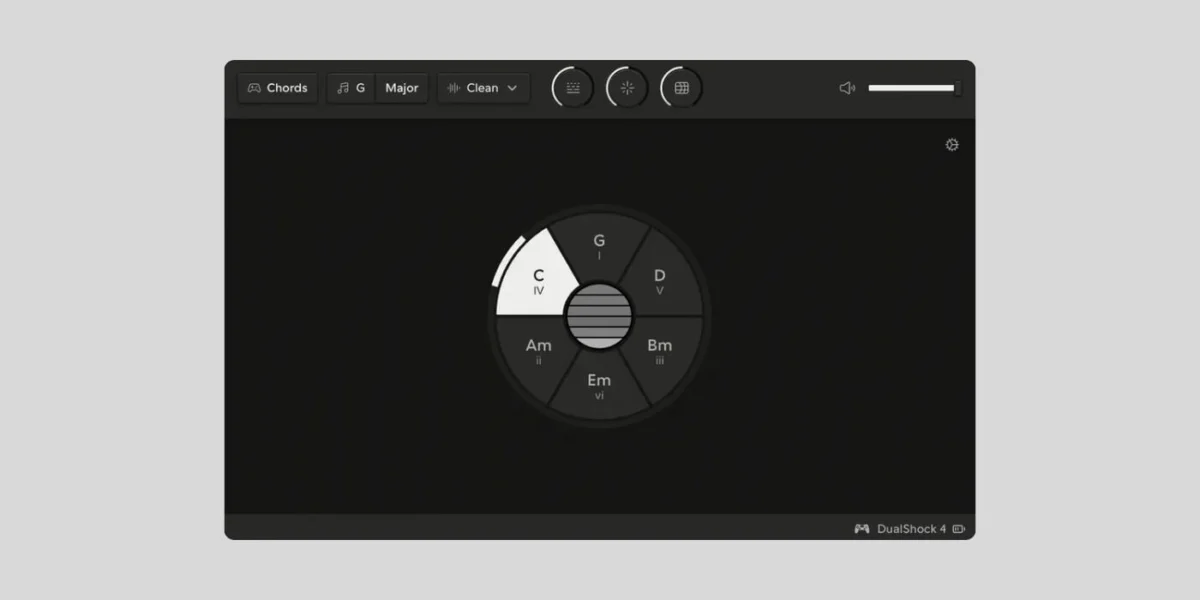
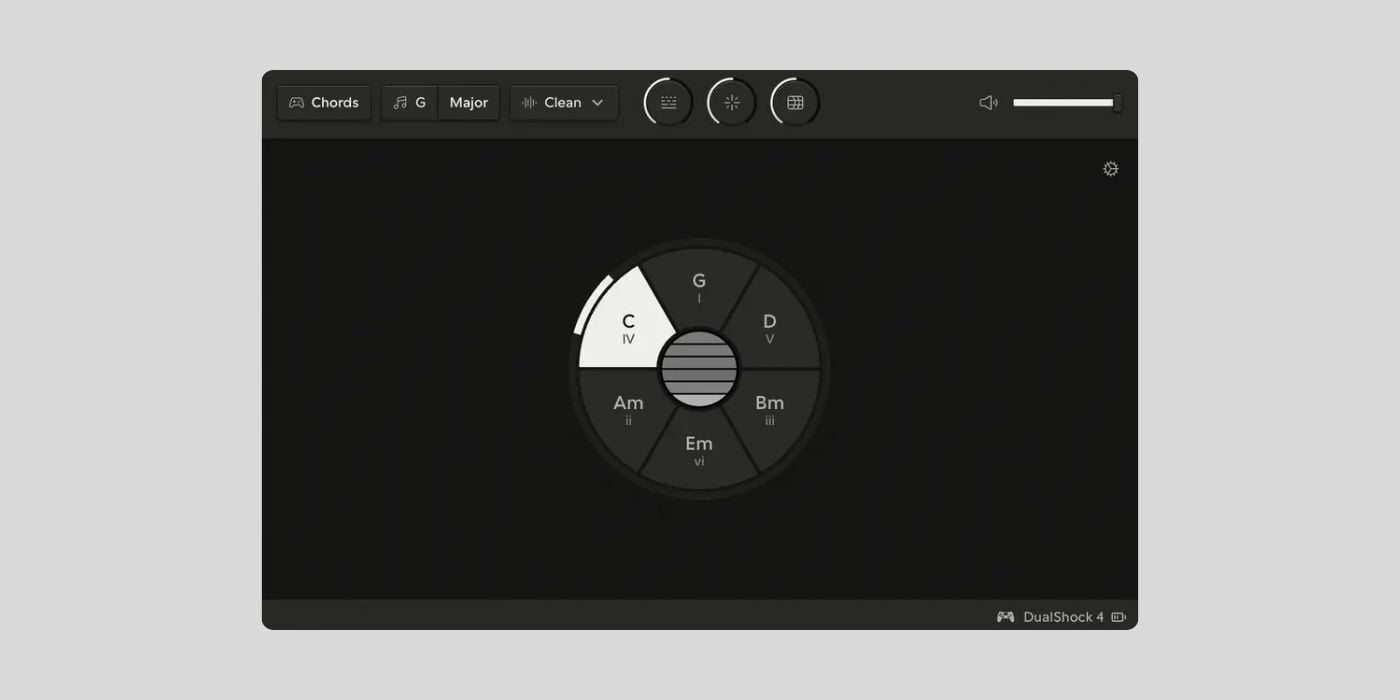
Chords Module: The Chords module operates akin to a tactile, guitar-style chord machine, offering an intuitive method for harmonic progression. Users navigate a virtual "chord wheel" using the left thumbstick, effectively selecting chord roots and types. This innovative interface is designed to maintain musical coherence by keeping all selectable chords within a specified key, thereby preventing discordant outputs. This intelligent design ensures that even accidental selections result in musically viable chords, fostering experimentation without the fear of producing random cacophony. Once a chord is chosen, "strings" are strummed using the touchpad on PlayStation controllers or the right stick on other compatible gamepads. This haptic interaction provides a surprisingly organic feel, mimicking the physical act of playing a stringed instrument. Beyond basic chord triggering, MIDIpad integrates advanced control possibilities through various controller buttons. These can be assigned to trigger tension chords, introduce chord color changes (e.g., adding 7ths or 9ths), or even simulate palm muting, adding layers of expression and dynamism to performances. The thoughtful inclusion of these advanced controls transforms the game controller from a simple input device into a highly expressive musical tool, capable of nuanced harmonic variations.
Drums Module: Complementing the harmonic capabilities, the Drums module functions as a gestural rhythm machine. Here, the game controller’s sticks become the primary drivers of the groove, allowing users to sculpt rhythmic patterns through dynamic movements. Individual drum hits are triggered via the controller’s buttons, offering precise control over percussive elements. This gestural approach to rhythm creation encourages a more fluid and improvisational style of drumming, moving away from rigid sequencing towards a performance-oriented workflow. The separation of these two instruments is also reflected in MIDIpad’s system integration: it appears as two distinct MIDI inputs—"MIDIpad Chords" and "MIDIpad Drums"—within a user’s Digital Audio Workstation (DAW). This dual input system allows for independent routing and processing of the harmonic and rhythmic elements, providing maximum flexibility in a studio environment. Producers can assign Chords to a synthesizer track and Drums to a drum sampler, enabling complex arrangements and sophisticated sound design.
Standalone Capabilities and Internal Voices
A significant feature that distinguishes MIDIpad from many basic MIDI mapping applications is its ability to generate sound independently, without the immediate need for a DAW. This standalone functionality makes it an ideal tool for spontaneous creative sessions or live performances where minimal setup is desired. The internal voices within MIDIpad are not merely generic samples; they are derived from the acclaimed open-source Plaits and Braids code from Mutable Instruments. Mutable Instruments is renowned in the Eurorack modular synthesis community for its sophisticated and sonically rich digital oscillators and sound processors. By incorporating this esteemed codebase, MIDIpad offers a high-quality, diverse palette of synthesized sounds right out of the box. Users can simply plug in a game controller and begin playing, exploring a wide range of timbres from classic synthesis to complex textures, without the initial hurdle of configuring a DAW or external virtual instruments. This immediate gratification lowers the barrier to entry for casual users and provides a powerful, self-contained instrument for more experienced musicians. The integration of open-source technology also highlights a broader trend in music technology, where community contributions and collaborative development are driving innovation and accessibility.
Controller Compatibility and MPE Support
MIDIpad has been optimized for specific game controllers to harness their full expressive potential. The PlayStation DualShock 4 and DualSense controllers are particularly well-suited for MIDIpad, primarily due to their integrated touchpad and advanced motion sensors (gyroscope and accelerometer). These features provide an unparalleled expressive surface, allowing for intricate control over musical parameters. The touchpad, for instance, can facilitate nuanced strumming or continuous parameter sweeps, while the motion sensors enable gestural control, such as recharging strings for tactile swells or introducing modulation through physical movement.
While optimized for PlayStation controllers, MIDIpad also supports Xbox and Nintendo Switch Pro controllers. However, users should be aware of some limitations due to the absence of features like touchpads or the specific implementation of motion sensing in these alternative gamepads. Despite these minor compromises, the broader compatibility ensures that a wide range of users can engage with MIDIpad, regardless of their preferred gaming console ecosystem.
A notable feature available in the licensed version of MIDIpad is MIDI Polyphonic Expression (MPE) support. MPE is a revolutionary extension of the MIDI standard that allows individual notes to carry their own expressive data, such as pitch bend, timbre (aftertouch), and volume, independently. In MIDIpad’s MPE implementation, each of the six "strings" can operate on its own dedicated MIDI channel. This means that a user can, for example, bend the pitch of one "string" while simultaneously applying vibrato to another, all within the same chord. The gyro/accelerometer shake can be utilized to recharge the strings, enabling dynamic and tactile swells that add a new dimension to expressive performance. This level of polyphonic expression significantly enhances the musicality and nuance achievable with MIDIpad, bringing it closer to the performance capabilities of high-end MPE controllers. In contrast, the free version consolidates all Chords output onto a single MIDI channel, providing a solid foundation but without the granular per-note control offered by MPE.
The Generous Freemium Model
Steve Mitchell has adopted a remarkably generous freemium model for MIDIpad, making it highly accessible to a broad audience. The developer explicitly describes the "demo mode" as "free forever," emphasizing that it comes with no time limits, no intrusive nagging messages, and full access to both the Chords and Drums instruments. Crucially, every playing gesture available in the full version is present in the free version, as are the built-in sounds derived from Mutable Instruments. Furthermore, commercial use is permitted with the free version, a policy that is rare among software developers and significantly empowers independent artists and producers. This open approach allows users to fully explore MIDIpad’s capabilities and integrate it into their creative workflows without any financial commitment.
For users seeking advanced functionalities and deeper integration, a paid early access license is available. This license unlocks full MIDI/MPE routing, allowing for complete control over how MIDI data is sent and received within a complex studio setup. It also enables audio routing, offering more sophisticated options for integrating MIDIpad’s internal sounds with external effects or mixing consoles. The licensed version further expands the sonic palette with more voices and provides deeper customization options, allowing users to fine-tune the instrument to their precise preferences. This tiered approach strikes an excellent balance, providing a robust, fully functional free product while offering compelling reasons for professional users or dedicated enthusiasts to invest in the licensed version.
Design Philosophy and User Experience
Beyond its technical prowess, MIDIpad stands out for its elegant design and intuitive user experience. The application features a minimal and clean aesthetic, prioritizing clarity and ease of use. This thoughtful design ensures that users can focus on musical expression rather than being bogged down by complex interfaces. The visual feedback within the app is clear and responsive, providing immediate confirmation of user input and musical output.
The entire concept of MIDIpad is imbued with a sense of playful innovation, encouraging users to experiment and find new ways to interact with their music. The idea of repurposing familiar gaming tools for creative music-making taps into a universal desire for accessible and engaging artistic expression. The developer’s personal connection to game controllers, particularly the PlayStation DualShock 4, which he describes as his favorite and has spent hundreds of hours using for gaming, underscores the passion and understanding that went into designing MIDIpad. This personal touch translates into an experience that feels deeply considered and genuinely enjoyable. The seamless integration of a device traditionally associated with entertainment into a serious musical instrument blurs the lines between play and production, fostering a more fluid and creative approach to music creation.
Technical Availability and Future Outlook
Currently, MIDIpad is exclusively available for macOS, supporting both Apple Silicon and Intel Macs. This ensures compatibility across the modern Macintosh ecosystem, from high-performance studio machines to portable laptops. The developer has indicated that Windows and Linux versions are being explored, signaling a potential expansion to broader platforms in the future. However, there is no definitive timeline or release for these platforms yet. Developing for multiple operating systems presents unique challenges, particularly concerning driver compatibility for various game controllers and optimizing performance across diverse hardware configurations. Nevertheless, the prospect of MIDIpad becoming available on Windows and Linux would significantly broaden its reach and impact within the global music production community.
The continued evolution of operating system APIs and game controller standards will likely facilitate such cross-platform development. As game controllers become increasingly sophisticated and standardized, the technical hurdles for developers like Steve Mitchell to create powerful, multi-platform music tools will gradually diminish, paving the way for even more innovative applications in the future.
Broader Implications and Impact
MIDIpad represents more than just another music application; it embodies several significant trends and implications for the future of music technology and creative arts:
Democratization of Music Production: By leveraging ubiquitous and affordable game controllers, MIDIpad significantly lowers the financial barrier to entry for aspiring musicians and producers. Individuals who may not be able to afford dedicated MIDI keyboards or MPE controllers can now access sophisticated musical control with hardware they already own. This democratizes music creation, making advanced expressive capabilities accessible to a wider audience, including gamers who might discover a new passion for music.
Innovation in Controller Design and Repurposing: MIDIpad exemplifies the ongoing trend of repurposing existing consumer electronics for creative applications. This approach not only provides cost-effective solutions but also challenges traditional notions of what a "musical instrument" can be. It encourages developers to think outside the box, exploring how everyday devices can be transformed into powerful tools for artistic expression. This paradigm shift could inspire further innovations in controller design, potentially leading to new hybrid devices that seamlessly blend gaming and music functionalities.
Enhancing Creative Workflows: For established producers and artists, MIDIpad offers a fresh perspective and a unique tactile experience that can inject new energy into creative workflows. Its gestural control and intuitive chord system can facilitate rapid idea generation, improvisation, and live performance in ways that traditional controllers might not. It could find a niche in experimental music, electronic live sets, or even as a unique input device for sound designers working on game audio.
The Intersection of Gaming and Music: The release of MIDIpad further blurs the lines between the gaming and music industries. As both sectors increasingly rely on interactive digital experiences, tools that bridge this gap will become more prevalent. This convergence opens up new possibilities for collaborative projects, interactive musical experiences within games, and innovative educational tools that leverage the engagement inherent in gaming.
In conclusion, Steve Mitchell’s MIDIpad is a remarkable achievement, transforming a familiar gaming peripheral into a sophisticated and expressive musical instrument. Its thoughtful design, powerful features, generous free version, and potential for MPE integration position it as a significant contribution to the evolving landscape of music technology. By making advanced musical control accessible and enjoyable, MIDIpad not only caters to the immediate needs of musicians but also inspires a new generation of creators to explore the boundless possibilities at the intersection of technology, gaming, and art.
