

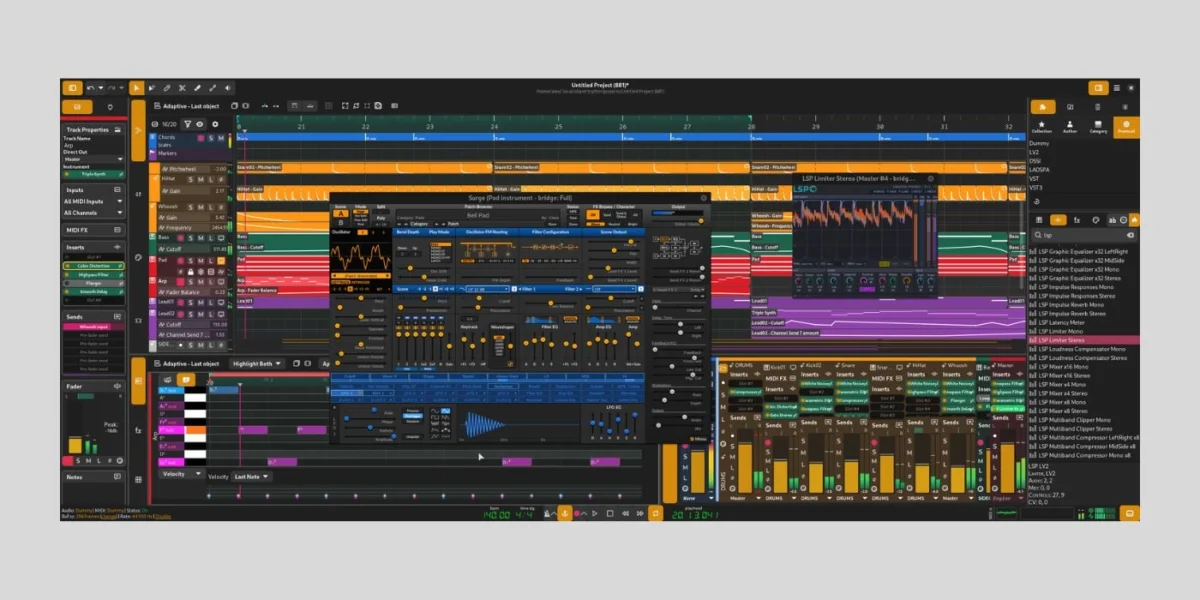
The Alpha version of Zrythm v2, a free and open-source Digital Audio Workstation (DAW), is now accessible for public testing, marking a significant milestone in the development of this ambitious cross-platform audio production suite. This release provides a preliminary look at a substantially re-engineered core and user interface, aiming to solidify Zrythm’s position within a rapidly evolving audio software landscape.
The Evolving Landscape of Digital Audio Workstations
The digital audio workstation market has undergone considerable transformation in recent years, characterized by dynamic shifts in licensing models, product lifecycles, and technological innovation. Traditionally dominated by established players like Avid Pro Tools, Ableton Live, Logic Pro, and Cubase, the industry has seen a notable increase in the availability and sophistication of free and open-source alternatives. This trend is partly a response to commercial strategies that have, in some instances, seen old favorites discontinued, rebranded under new ownership, or transition towards subscription-based models that limit features unless ongoing payments are made. For example, Cakewalk SONAR, once a prominent commercial DAW, was acquired by BandLab and re-released as a completely free product, Cakewalk by BandLab, disrupting previous market expectations. Concurrently, the proliferation of hardware platforms and the increasing accessibility of development tools have fostered an environment ripe for new DAWs to emerge, often from independent developers or community-driven projects, promising a continuous influx of innovative solutions.
This evolving landscape underscores a growing demand for flexibility, transparency, and cost-effectiveness in music production tools. Many producers, from hobbyists to professionals, seek alternatives that offer robust functionality without the often-substantial financial commitment associated with premium proprietary software. The rise of open-source projects like Zrythm directly addresses this need, providing a different paradigm for software development and user engagement.
Zrythm’s Genesis and Open-Source Philosophy
Zrythm, conceived and developed by Alexandros Theodotou, first emerged a few years ago as a fledgling yet promising entrant into the DAW ecosystem. Its journey, while still relatively early, has been underpinned by a clear commitment to the principles of free and open-source software (FOSS). Zrythm is released under a copyleft license, typically a GNU General Public License (GPL) or GNU Lesser General Public License (LGPL) in the context of FOSS audio tools. This licensing model ensures that users are granted the freedom to run, study, modify, and distribute the software and its derivatives. Crucially, the copyleft clause mandates that any new version or modification derived from Zrythm must also be shared under the same license, preventing proprietary forks that would "lock down" the code or sell it as a closed-source commercial product. This philosophy stands in stark contrast to the proprietary models prevalent in the industry, fostering an environment of collaborative development and community ownership.
The appeal of a free and open-source DAW extends across several dimensions. For technically inclined producers, the ability to customize their setup by directly modifying the source code offers unparalleled flexibility. This can range from minor UI tweaks and workflow optimizations to the implementation of entirely new features or the independent resolution of bugs—a level of control simply unavailable with closed-source applications. Furthermore, the FOSS movement has historically been a lifeline for users on less commonly supported platforms. Many premium DAWs prioritize macOS and Windows, leaving a significant gap for Linux users. Open-source projects like Zrythm, alongside others such as Ardour and LMMS, provide essential, high-quality options for the Linux audio community, fostering a diverse and inclusive ecosystem.
Beyond customization and platform support, the FOSS model offers inherent benefits in transparency and long-term viability. The open nature of the codebase allows for community scrutiny, potentially leading to more secure and stable software over time as multiple eyes review and contribute to the code. It also mitigates the risk of software becoming obsolete due to a company’s change in strategy or cessation of operations, as the community can theoretically maintain and evolve the project independently. For many, the complete avoidance of the often "scandalous costs" associated with proprietary software—where professional DAWs can range from hundreds to thousands of dollars for licenses and upgrades—is a primary motivator.
However, the sustainability of FOSS projects, particularly those as complex as a DAW, presents unique challenges. While the core software is free, developers still require resources for ongoing development, infrastructure, and support. Donations, a common funding model for FOSS, are often insufficient to sustain dedicated, full-time development. To address this, Zrythm, like many open-source projects, offers a variety of support mechanisms. These commonly include direct financial contributions via platforms like Patreon or Liberapay, opportunities for commercial support or bespoke feature development for institutional users, and potentially a tiered model where advanced features or pre-compiled binaries might be offered for a nominal fee or as part of a "pro" version, while the core software remains freely available and modifiable. Such diversified funding strategies are critical to ensuring the project’s longevity and continued evolution.
Key Features and Workflow in Zrythm v1
Before delving into the advancements of v2 Alpha, it’s essential to understand the foundation laid by Zrythm v1. The free version of Zrythm offers a suite of basic internal plugins, including essentials like delay, compression, and a couple of small synthesizers. These plugins are characterized by their extremely simple, no-frills interfaces, a design choice that appeals to users seeking straightforward functionality without complex parameters. While serving as a decent introduction for beginners, most users quickly find themselves reaching for their extensive third-party plugin collections.
In this regard, Zrythm excels with broad compatibility, supporting a comprehensive range of plugin formats: AU (Audio Units), VST2, VST3, LV2, CLAP, and JSFX. This extensive support covers all major industry standards, including the relatively new and open CLAP format, and LV2, which is particularly prevalent in the Linux audio ecosystem. The integration of Carla, a powerful plugin host and wrapper, further extends Zrythm’s capabilities, adding support for SFZ/SF2 soundfonts and providing sandboxing for enhanced plugin stability. A visually appealing plugin browser is designed to allow searching by author, type, or protocol, with a favorites function. However, users of v1 have reported stability issues with this browser, noting that it could become unusable, failing to display most plugins, including host plugins, after prolonged use—an area ripe for improvement in v2.
A core tenet of Zrythm’s design philosophy, in terms of functionality, is an intuitive approach to common tasks and editing. Rather than overwhelming users with a myriad of specialized tools for basic operations, Zrythm provides a focused set of tools and keyboard shortcuts for essential tasks such as moving, cutting, joining, cloning, and looping regions. Notable workflow enhancements include the ability to quickly switch between repeating loops or stretch looped parts within the same region, reducing the need for cumbersome conversion or merging operations often required in other DAWs. The adaptive snap options further exemplify this focus on efficiency; when working with numerous MIDI regions, users can fine-tune snapping behavior to prevent tedious misplacements and even maintain object offsets when moving items to new positions.
Zrythm also offers extensive automation capabilities, featuring the familiar line, ramp, and curve workflow, managed within a dedicated automation editor. For audio editing, a built-in editor provides easy access to fundamental functions such as fade, reverse, normalize, and pitch shift. The piano roll, while functionally similar to those found in other DAWs, includes thoughtful additions like the "Highlight" function. This feature, integrated with the Chord Assistance system, illuminates piano roll notes that are diatonic to a selected scale or even notes within a currently active chord, serving as a valuable aid for music theory beginners and an efficient compositional tool for experienced producers.
The Chord Assistance feature itself is one of the few instances where Zrythm ventures beyond basic functionality, especially in the absence of built-in step sequencers or arpeggiators. It offers an intuitive method for generating backing tracks or temporary compositional placeholders, complete with various presets tailored to musical genres and chord progression types. This functionality positions Zrythm as more than just a recording and mixing environment, providing creative assistance from the outset.
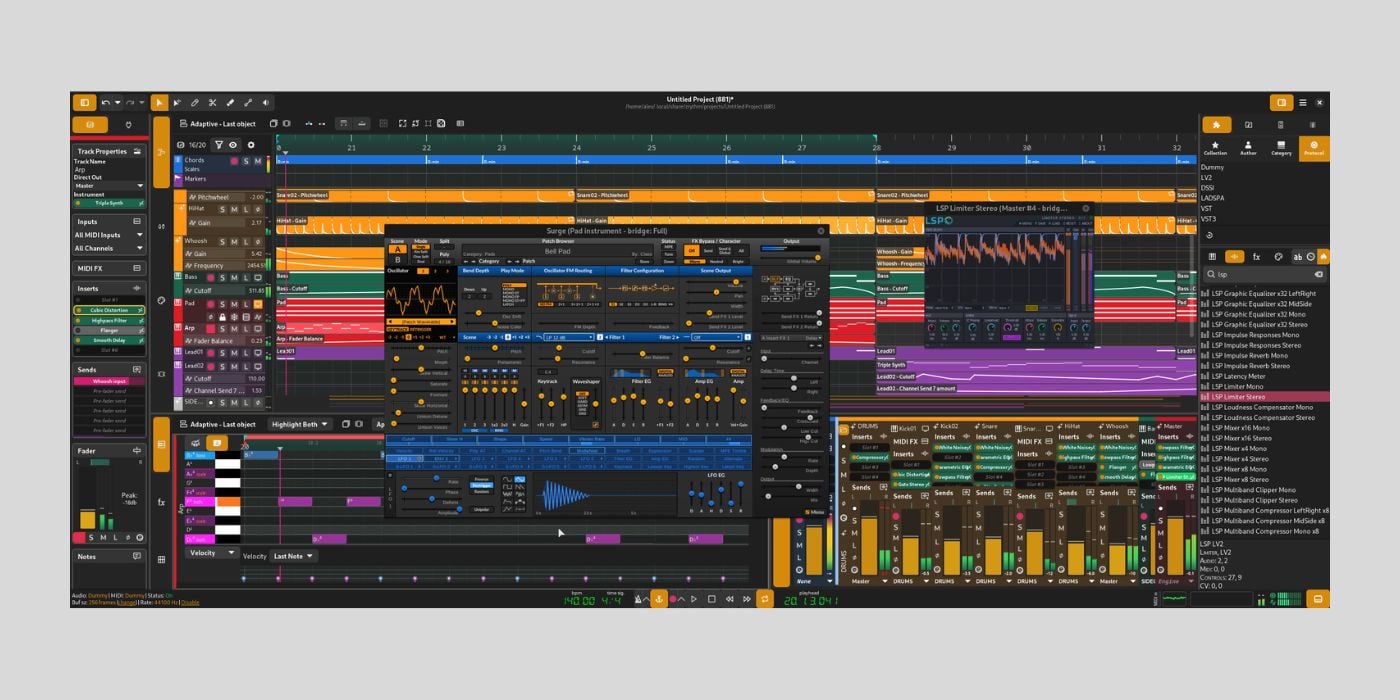
The user interface (UI) and overall workflow in Zrythm v1 generally adhere to established DAW conventions, allowing users familiar with other platforms to quickly orient themselves. While some elements, like the transport controls being positioned at the bottom of the screen rather than the top, might initially require adjustment, the overall layout is logical. The UI is structured with multiple panels: the main panel provides the classic timeline view, alongside additional views for port connections and MIDI CC settings. A significant usability feature is the ability to detach panels into separate windows, highly advantageous for users with multiple monitor setups. The bottom panel consolidates editors, the piano roll, modulation macros, the mixer, and chord pads. The left and right panels house track/plugin inspectors and plugin/file browsers, respectively. The main timeline view, which defaults to showing master and chord tracks, includes a handy filter function, allowing users to focus on specific track types without visual clutter, particularly useful in projects with numerous tracks.
However, a notable limitation in the free version of Zrythm v1 is the 25-track limit. While many professional projects can indeed be completed with fewer than 25 tracks, a substantial number require far more, making this limit a significant inconvenience for some and a potential dealbreaker for others, especially those involved in orchestral scoring, complex sound design, or large-scale productions. A partial workaround exists through the use of multiple lanes within each track, allowing layers of MIDI, audio, and automation to be stacked. While this offers some flexibility, it does not provide the full organizational and routing freedom of individual tracks. Despite these minor differences and the track limit, the workflow and interface of Zrythm v1 are generally considered user-friendly and appealing, particularly given its open-source nature.
Under the Hood: Major Changes in Zrythm v2 Alpha
The release of Zrythm v2 Alpha represents a substantial overhaul, going far beyond a typical point update. This version introduces fundamental changes to the core engine and underlying framework, reflecting a strategic decision to modernize the entire application. The most significant technical shift is the migration of the codebase from C to C++23. This move to a modern C++ standard brings numerous benefits, including enhanced type safety, improved memory management features, better support for object-oriented programming paradigms, and access to a wealth of modern language features that can lead to more robust, maintainable, and potentially more performant code. C++23 also facilitates the use of contemporary development tools and libraries, streamlining future development and reducing the likelihood of common programming errors.
Concurrently, the user interface framework has been completely rewritten, transitioning from GTK to Qt6/QML. GTK (GIMP Toolkit) has long been a staple for Linux desktop applications, but Qt, particularly with its QML declarative language, offers significant advantages for cross-platform UI development. Qt6/QML enables the creation of highly responsive, visually appealing, and consistent user interfaces across macOS, Windows, and Linux. This change is expected to improve the overall aesthetic, fluidity, and user experience of Zrythm, providing developers with more powerful tools for designing sophisticated and adaptive interfaces. Small but impactful tweaks, such as the repositioning of transport controls (which were at the bottom in v1) and more refined view tabs, are part of this UI modernization effort, aiming to align Zrythm more closely with common DAW interface conventions while leveraging the capabilities of Qt6/QML.
It is crucial to emphasize that Zrythm v2 is currently in its Alpha stage. This designation signifies that the software is still under heavy development, and while many core changes are in place, some functionalities and features present in v1 may still be missing or incomplete. The primary purpose of this Alpha release is for rigorous testing and feedback collection from the community. It is explicitly not recommended for use in critical production projects, as instability and data loss are inherent risks in early development versions. The development team relies heavily on community engagement during this phase to identify bugs, provide performance metrics, and offer insights that will shape the final, stable v2 release.
Performance and Stability: A Critical Assessment
While the ambition and technical scope of Zrythm v2 Alpha are commendable, its current performance and stability, particularly on macOS, present significant challenges. Initial testing on a Mac Mini M4 with 16GB of RAM, running macOS Tahoe 26.1, revealed severe performance bottlenecks and stability issues. Despite the M4 chip being a capable processor that comfortably handles most projects in Logic Pro, Zrythm exhibited persistent sluggishness and clunky behavior. Every movement, click, or interaction within the application was met with a noticeable lag and delayed response, creating a frustrating user experience that felt reminiscent of running demanding software on underpowered hardware, even though CPU usage readings did not always indicate heavy strain.
More critically, the Alpha version was prone to frequent and often predictable crashes. Specific actions consistently triggered the DAW to quit unexpectedly. For instance, while loading an instrument by double-clicking it might succeed, attempting to drag any plugin into a MIDI track or onto the new track icon invariably resulted in a crash. Beyond these reproducible issues, numerous seemingly random crashes occurred, leading to a highly unreliable environment unsuitable for any serious work. This pattern of instability is particularly concerning as similar issues were reported on macOS during earlier evaluations of Zrythm in 2023. The persistence of these core stability problems, even with a major architectural overhaul in v2 Alpha, suggests deep-seated compatibility or optimization challenges on the macOS platform, especially concerning Apple Silicon architecture and its specific APIs.
The open-source model, however, provides a pathway for addressing these issues. The community plays a vital role in identifying, reporting, and, for those with the requisite skills, even contributing fixes to bugs. Detailed bug reports, including steps to reproduce crashes, system specifications, and log files, are invaluable for developers. While Alpha versions are inherently unstable, the severity and frequency of the observed crashes on macOS pose a significant barrier to initial adoption and feedback, as users struggle to even perform basic tests.
Given the historical challenges faced by FOSS audio applications on macOS, which often requires specific optimizations for Core Audio and Metal/OpenGL graphics, it is plausible that Zrythm’s stability might be comparatively better on Windows and, particularly, on Linux. Linux, being the traditional stronghold of the FOSS community, often benefits from more direct developer engagement and a more homogeneous underlying software stack (e.g., ALSA/JACK audio systems, Wayland/Xorg graphics). Feedback from users on these alternative platforms will be crucial in painting a complete picture of Zrythm v2 Alpha’s current state across its supported operating systems. Until these fundamental performance and stability issues are thoroughly addressed, Zrythm’s potential, especially for Mac users, remains largely untapped.
The Road Ahead for Zrythm
Zrythm holds significant potential as a straightforward, focused DAW that prioritizes making essential features easily accessible, understandable, and actionable. In an industry where software often becomes bloated with an overwhelming array of options, Zrythm’s minimalist approach could carve out a distinct niche. There is a discernible market for producers who prefer a less distracting environment, believing that an excess of options can sometimes stifle creativity. Zrythm’s intuitive editing, comprehensive plugin support, and unique compositional aids like Chord Assistance position it well to serve this segment of the production community.
However, the critical importance of addressing the reported performance and stability issues cannot be overstated. A DAW, regardless of its feature set or philosophical underpinnings, must first and foremost be a reliable and responsive tool. The current state of stability, particularly on macOS, fundamentally undermines Zrythm’s beneficial elements and hinders its broader adoption. The journey from Alpha to a stable v2 release will critically depend on the development team’s ability to iron out these core issues, leveraging the power of community feedback and contributions.
For Zrythm to succeed in the long term, several factors will be crucial:
- Robust Bug Fixing: Prioritizing and systematically resolving the crashes and performance bottlenecks reported by testers across all platforms.
- Community Engagement: Actively fostering a vibrant community through clear communication channels (forums, GitHub issues), responsive developer interactions, and encouragement of code contributions.
- Documentation and Tutorials: Providing comprehensive documentation and user-friendly tutorials to help new users navigate the software and understand its unique workflow.
- Sustainable Funding: Continuing to explore and solidify diverse funding models to ensure consistent development resources.
Zrythm represents an ongoing example of innovation within the FOSS audio ecosystem, embodying the spirit of independent development and community collaboration. Its ambition to provide a modern, cross-platform, and feature-rich DAW under an open-source license is laudable. While the v2 Alpha currently presents significant hurdles in terms of stability, particularly for some users, it also offers a compelling glimpse into a future where audio production tools are more accessible, transparent, and user-controlled. The project’s trajectory will serve as an important case study for the challenges and triumphs inherent in building complex software within the open-source paradigm, with the ultimate goal of empowering a new generation of producers. The development team’s commitment and the community’s active participation will be pivotal in steering Zrythm towards a stable and successful full release.
