

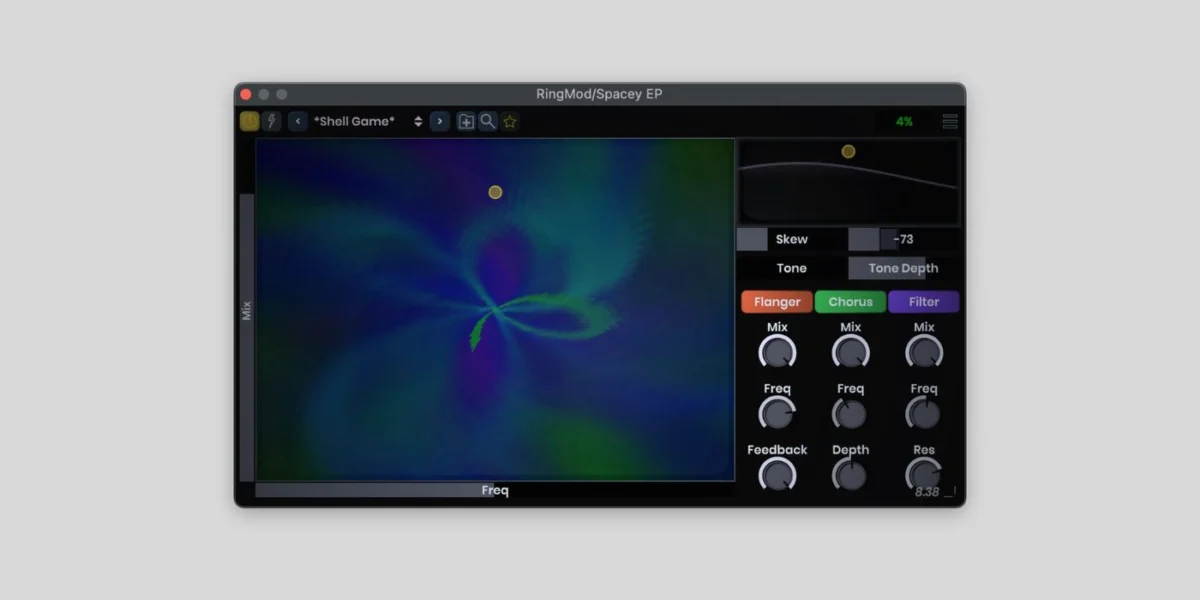
Chicago-based audio software developer Stagecraft Software has announced that its highly regarded RingMod plugin, a sophisticated ring modulator effect, is now available for free. Previously retailed at $30, this strategic move makes a powerful sound design tool accessible to a broader audience of music producers, sound designers, and audio enthusiasts. The plugin is immediately available for download directly from the Stagecraft Software product page, supporting AU, VST3, and AAX formats across both macOS and Windows operating systems. This decision underscores a growing trend in the music technology industry towards democratizing advanced creative tools, fostering innovation, and engaging with the global production community.
The Strategic Shift to Freeware
Stagecraft Software, known for its innovative approach to audio processing and intuitive user interfaces, has not explicitly stated the rationale behind making RingMod free. However, industry analysts suggest several potential motivations. One primary factor could be to increase brand visibility and user base in a highly competitive market. By offering a high-quality plugin at no cost, Stagecraft Software can attract new users to its ecosystem, potentially encouraging them to explore and purchase other products from their catalog. This "freemium" model, where a core product is given away to build a user base for more advanced or premium offerings, has proven successful for numerous software companies.
Another plausible reason is community engagement. Providing valuable tools for free can foster goodwill within the music production community, generating positive word-of-mouth and cultivating a loyal user base. This strategy aligns with a broader industry movement where developers prioritize accessibility and creative empowerment, especially for independent artists and bedroom producers who might operate on limited budgets. The timing of this release, following the free availability of their FlowFilter plugin, suggests a deliberate strategy to expand their reach and influence within the digital audio workstation (DAW) landscape.
RingMod: A Deep Dive into its Capabilities
RingMod distinguishes itself from conventional ring modulation plugins through a suite of advanced features designed to offer greater creative control and sonic flexibility. While traditional ring modulators often limit users to a sine waveform for the carrier signal, RingMod liberates sound designers by allowing the use of additional waveforms. This fundamental enhancement enables a profound transformation of the sound at its core, moving beyond the stereotypical metallic or robotic textures often associated with the effect. By altering the carrier waveform, users can sculpt unique timbres, from subtle harmonic shifts to aggressive, complex distortions, significantly broadening the plugin’s application.
A standout feature of RingMod is its versatile syncing options. Beyond standard BPM synchronization, which locks the modulation frequency to the host DAW’s tempo, RingMod introduces the capability to quantize the sync frequency to pitch. This innovative function allows the modulation to be musically coherent with the input signal’s melodic content, rather than purely rhythmic. Such pitch-based synchronization opens up new avenues for harmonically rich and evolving textures, where the ring modulation effect complements the musicality of the source audio. This precision control makes it invaluable for crafting intricate soundscapes and adding controlled movement to static sounds.
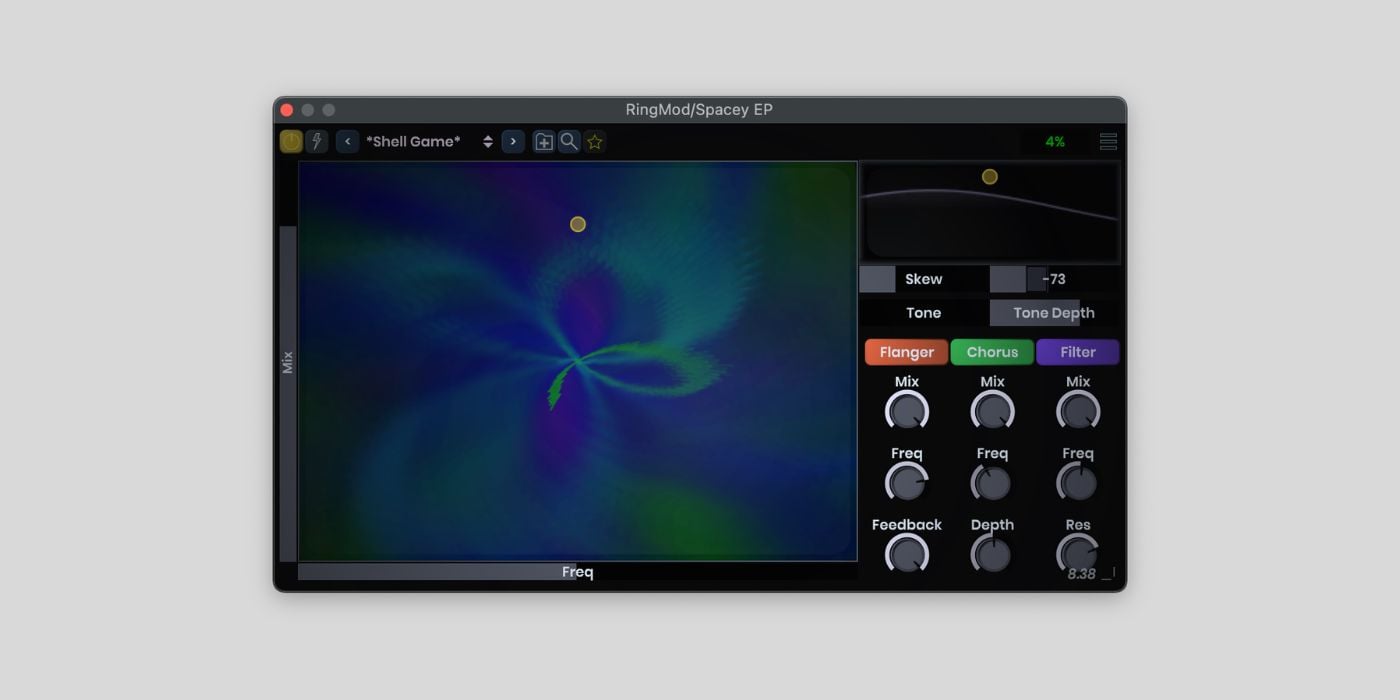
Furthermore, RingMod offers full automation of all its parameters, a crucial feature for dynamic sound design. This capability allows producers to record or program changes to the modulation frequency, depth, waveform, and syncing options over time, enabling the creation of evolving and textural soundscapes. Imagine a Rhodes piano gently undulating with subtle ring modulation, which then swells dramatically to accent the end of a melodic phrase, before receding back into the background—all precisely controlled through automation. This level of dynamic control transforms ring modulation from a static effect into an expressive, performance-ready tool.
To assist users in exploring its vast potential, RingMod comes equipped with a comprehensive collection of factory presets. These presets cover a wide array of applications, from cutting leads and lush pads to experimental soundscapes, providing excellent starting points for both novice and experienced users. This curated selection helps demonstrate the plugin’s versatility and can significantly accelerate the sound design process.
The Historical and Cultural Significance of Ring Modulation
Ring modulation, a fundamental audio effect, has a rich history deeply intertwined with electronic music and sound design. At its core, ring modulation involves multiplying two input signals—a carrier signal (often a sine wave or another waveform generated internally by the effect) and a modulator signal (the audio input). This multiplication process generates new frequencies that are the sum and difference of the original signals’ frequencies, while simultaneously suppressing the original signals. The resulting sound is often characterized by its metallic, bell-like, inharmonic, or robotic qualities, depending on the relationship between the carrier and modulator frequencies.
One of the earliest and most iconic mainstream applications of ring modulation emerged in the 1956 sci-fi classic Forbidden Planet. The film’s groundbreaking electronic score, composed by Louis and Bebe Barron, famously utilized ring modulation to create otherworldly, alien soundscapes that were unprecedented for their time. Their innovative use of electronic circuits, including ring modulators, for the entire soundtrack, marked a pivotal moment in film scoring and brought this esoteric effect into public consciousness, influencing generations of sound designers and musicians.
Just a few years later, ring modulation cemented its place in popular culture with the unmistakable voice of the Daleks in the BBC’s long-running science fiction series Doctor Who, which first aired in 1963. The menacing, metallic, and utterly alien vocalizations of the Daleks were achieved by processing human speech through a ring modulator, creating one of television’s most iconic sound signatures. This application demonstrated the effect’s power to transform familiar sounds into something entirely new and unsettling, leaving an indelible mark on sci-fi aesthetics.
Beyond film and television, ring modulation has been a mainstay in various musical genres, particularly among keyboardists and guitarists seeking unique sonic textures. A celebrated example is Jon Lord’s distinctive Hammond organ sound on Deep Purple’s 1972 track "Space Truckin’." Lord often experimented with overdrive and modulation effects, and ring modulation contributed to the aggressive, cutting, and sometimes almost synth-like character of his organ, pushing the boundaries of rock instrumentation.
Throughout the decades, ring modulation has found its way into experimental electronic music, industrial tracks, synth-pop, and even jazz fusion. Its ability to generate complex harmonics and introduce a sense of dissonance or alien quality makes it a versatile tool for sound designers looking to create everything from subtle atmospheric movements to overtly aggressive sonic assaults. Modern producers continue to rediscover its potential, applying it to drums for metallic percussive hits, to synthesizers for evolving pads, or even to vocals for avant-garde effects.
Broader Implications for the Music Production Community
The decision by Stagecraft Software to make RingMod freely available has several significant implications for the music production community. Firstly, it democratizes access to a professional-grade sound design tool. Aspiring producers, students, and hobbyists who might have been hesitant to invest in a paid plugin can now experiment with advanced ring modulation techniques without financial barriers. This accessibility can foster greater creativity and innovation, as more individuals gain the opportunity to explore complex soundscapes and unique sonic textures.
Secondly, it lowers the barrier to entry for learning about ring modulation. With a high-quality, free plugin, educators and online tutorials can more easily recommend a consistent tool for students to follow along, ensuring everyone has access to the same capabilities. This can lead to a broader understanding and more sophisticated application of this powerful effect across the community.
Thirdly, this move reinforces a growing trend within the audio software industry where developers release premium plugins for free, often to build brand loyalty, expand their user base, or celebrate milestones. This trend benefits the entire community by increasing the pool of available high-quality tools, pushing the boundaries of what is expected for free software, and potentially driving innovation among competitors.
Stagecraft Software’s other recent free offering, FlowFilter, further illustrates this commitment to accessibility. FlowFilter, also available for macOS and Windows, provides another essential tool for sonic manipulation, suggesting a deliberate strategy by the company to build a strong foundation of free, high-quality plugins that showcase their development prowess.
In a broader context, this generosity from developers like Stagecraft Software runs parallel with other notable free giveaways in the industry. For instance, the mention of IK Multimedia’s Pianoverse Black Pearl giveaway, while requiring a newsletter signup, highlights the value propositions that companies are increasingly offering. Pianoverse, known for its realism and unexpectedly wild presets, demonstrates that even premium, highly detailed instruments can be part of promotional strategies that benefit users immensely. These initiatives collectively enrich the toolkit available to producers, enabling them to achieve professional results with greater ease and affordability.
The availability of RingMod for free is more than just a promotional giveaway; it represents a commitment to empowering creators. By removing the financial hurdle, Stagecraft Software invites a wider array of musicians and sound designers to explore the profound capabilities of ring modulation, ensuring its historical significance continues to inspire contemporary sound design and music production. This strategic generosity is poised to enhance the creative output of countless individuals, further cementing ring modulation’s place as an indispensable tool in the modern audio landscape.
