

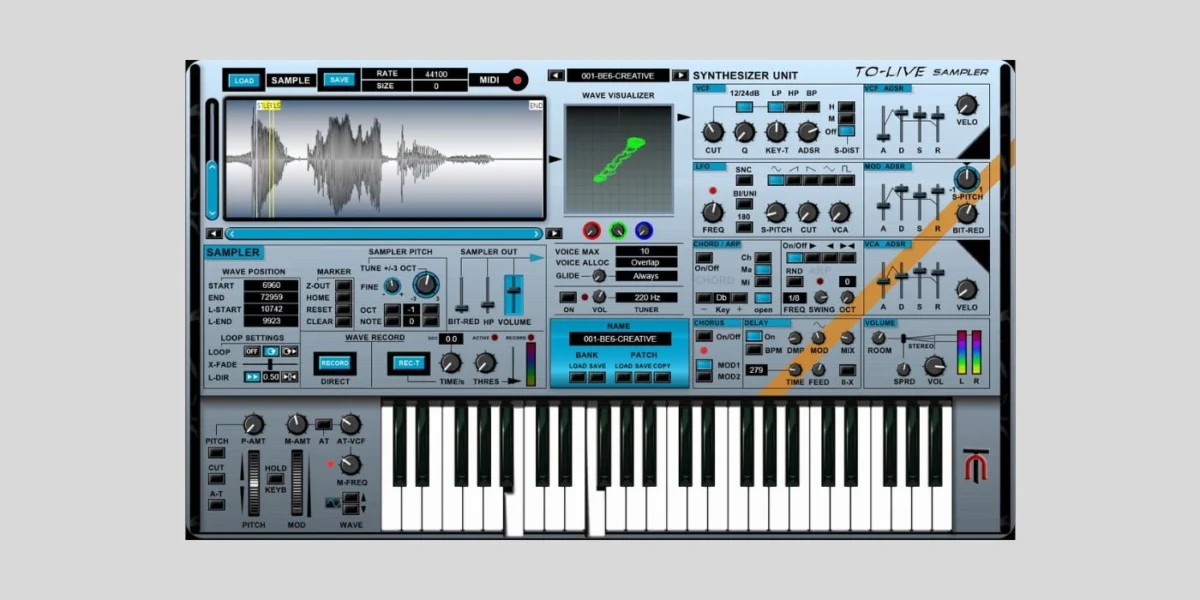
TubeOhm, a developer recognized for its contributions to the digital audio workstation (DAW) plugin ecosystem, has announced the release of TO-Sampler, a new, free software instrument available as both a VST3 plugin and a standalone application for Windows operating systems. This release is notable not only for providing a robust, cost-free sampling tool but also for its broader implications within the context of recent advancements in plugin development platforms, particularly the long-anticipated macOS support introduced in SynthEdit 1.6.
TO-Sampler: A Detailed Overview of Functionality
At its core, TO-Sampler is designed as a straightforward yet powerful software sampler, equipped with a suite of synth-style features that extend its utility beyond mere sample playback. The plugin allows users to either record audio directly into the sampler, facilitating immediate sound capture and manipulation, or to import existing WAV files. This dual input method provides flexibility for both spontaneous sound design and the integration of pre-recorded material.
Upon loading a sample, users are presented with a clear waveform display, enabling precise visual editing of critical parameters. These include the sample’s start point, end point, loop start point, and loop end point. This granular control is essential for fine-tuning the playback of audio segments, allowing for creative cropping, selective playback, and the crafting of sustained textures. A particularly valuable feature for creating smooth, playable instruments from shorter samples is crossfade looping. This technique seamlessly blends the end of a loop with its beginning, eliminating audible clicks or abrupt transitions that can often plague simple loop implementations. This is crucial for maintaining sonic integrity, especially when designing pads, drones, or other continuous sounds where an uninterrupted flow is paramount.
However, TO-Sampler is not intended for the management of vast, multi-gigabyte sample libraries. The maximum sample size is listed at 5 MB, clearly positioning it as a tool for quick sound design, the creation of lo-fi textures, one-shots, and compact custom instruments, rather than a platform for orchestral libraries or extensive soundscapes. This specific limitation underscores its niche as an agile, focused sound manipulation utility, distinguishing it from more expansive, resource-intensive commercial samplers like Native Instruments’ Kontakt or Arturia’s Pigments.
Beyond its sampling capabilities, TO-Sampler integrates a comprehensive synthesis section. This includes a multimode filter, offering low-pass, high-pass, and band-pass modes, which are fundamental for shaping the tonal characteristics of any sound. Separate ADSR (Attack, Decay, Sustain, Release) envelopes are provided for both the filter and the amplifier, allowing for independent control over the amplitude and spectral evolution of the sound. An additional modulation envelope and a dedicated Low-Frequency Oscillator (LFO) further enhance its sound design potential. The LFO can be routed to modulate pitch, filter cutoff, and amplitude, introducing rhythmic movement, vibrato, tremolo, or evolving timbres.
The effects section of TO-Sampler adds further creative dimensions. It features bit reduction, capable of lowering the resolution down to a distinctive 2-bit quality, ideal for achieving classic lo-fi or vintage digital sounds. A soft distortion unit provides warmth or subtle grit, while a stereo chorus effect can thicken and widen sounds. Spatial effects include a delay and a room reverb, adding depth and atmosphere. A stereo spread control allows for further manipulation of the stereo image. For melodic and harmonic exploration, TubeOhm has incorporated an arpeggiator and a chord generator, tools that can quickly inspire new musical ideas or add complexity to existing ones. The plugin can store up to 128 presets, making it convenient for users to save and recall their custom instruments and patches.
The SynthEdit Context: A Historical Perspective and Recent Evolution
The release of TO-Sampler gains additional significance when viewed through the lens of its development environment: SynthEdit. For decades, SynthEdit has been a foundational, albeit often unsung, tool for plugin developers, primarily within the Windows ecosystem. It operates as a visual development environment, allowing non-programmers or those without extensive coding expertise to construct virtual instruments and effects by connecting pre-made modules. This "no-code" or "low-code" approach democratized plugin creation, enabling a vibrant community of independent developers to transform their ideas into functional VST plugins without the arduous task of writing every line of code by hand.
Historically, SynthEdit’s reputation has been mixed. While it lowered the barrier to entry, the quality of plugins produced varied widely. Many early SynthEdit creations were indeed "rough, generic, or badly optimized," a consequence of the ease of development sometimes overshadowing the intricacies of efficient coding and polished user experience. This led to a perception among some users that SynthEdit plugins were inherently inferior. However, this perspective overlooks the substantial body of high-quality freeware and commercial plugins that have also emerged from the platform. Developers like TubeOhm are prime examples of those who have consistently produced solid, reliable, and innovative instruments and effects using SynthEdit over the years, demonstrating the platform’s true potential when wielded by experienced hands.
A Pivotal Shift: SynthEdit 1.6 and macOS Support
A critical turning point for the SynthEdit ecosystem occurred on August 8, 2026, with the release of SynthEdit 1.6. This update marked a monumental shift by finally adding native macOS support. For decades, SynthEdit had been a Windows-first environment, limiting developers to a single platform for native exports. The introduction of macOS compatibility effectively doubles the potential audience for new SynthEdit-based plugins and opens up opportunities for existing Windows-only creations to be ported.
The timing of TO-Sampler’s release, just two days after the SynthEdit 1.6 update, is particularly illustrative. While TO-Sampler is currently Windows-only, its arrival immediately after this major platform update highlights the potential future trajectory for such plugins. It serves as a tangible example of the type of instrument that could significantly benefit from the new export options. Developers like TubeOhm, who have a proven track record with SynthEdit, are now positioned to leverage these new capabilities to reach a broader user base, potentially leading to a new wave of cross-platform releases.
Inferred Statements and Community Reactions
While no explicit statements from TubeOhm regarding future macOS compatibility for TO-Sampler have been made, the context of its release within days of SynthEdit 1.6’s macOS update implicitly suggests a forward-looking perspective. The decision to release a new SynthEdit-based plugin at this juncture can be interpreted as TubeOhm maintaining its commitment to the platform while subtly signaling an awareness of its expanded horizons.
From the broader developer community, the sentiment is largely one of anticipation and cautious optimism. Many independent developers who previously shied away from SynthEdit due to its Windows-only limitation are now re-evaluating the platform. The prospect of developing a single plugin that can natively target both Windows and macOS without extensive recoding or reliance on less efficient bridging technologies is a significant draw. This could lead to a revitalization of the freeware and budget plugin market, as more developers gain the tools to create and distribute their work more broadly.
For macOS users, the release of TO-Sampler, even in its current Windows-exclusive state, represents a beacon of potential. The existence of high-quality, free SynthEdit plugins on Windows implies that similar offerings could soon become available on their platform. This shift addresses a long-standing disparity in the freeware plugin landscape, where Windows users historically had a much wider selection of free and independent VSTs.
Broader Implications and Market Impact
The convergence of a capable new free sampler like TO-Sampler and the significant platform expansion of SynthEdit 1.6 has several broader implications for the music technology industry:
-
Democratization of Plugin Development: SynthEdit 1.6 further lowers the barrier to entry for aspiring plugin developers. Individuals with strong sound design ideas but limited coding knowledge can now realistically aim for cross-platform releases, fostering greater innovation and diversity in the plugin market.
-
Increased Freeware Availability: A likely outcome is an increase in the number of high-quality freeware plugins available for both Windows and macOS. This benefits producers and musicians at all levels, providing accessible tools that can enhance their creative workflows without financial investment.
-
Shifting Market Dynamics: Free, feature-rich tools like TO-Sampler can influence the market for entry-level commercial samplers. While not designed to compete with high-end, feature-packed offerings, they provide excellent starting points and specialized solutions, potentially prompting commercial developers to innovate further in their own budget-friendly offerings.
-
Re-evaluation of "Vibe-Coded" vs. Functional Plugins: The original article referenced a discussion about "vibe-coded" plugins, which often prioritize aesthetic appeal and intuitive interfaces over raw functionality. TO-Sampler, as a classic SynthEdit plugin, leans towards robust functionality and utilitarian design. This release re-emphasizes that there is a strong demand for tools that prioritize direct sound manipulation and creative features, regardless of a highly stylized interface. Both approaches have their place, and the expanding SynthEdit ecosystem ensures a continued supply of functionally driven tools.
-
Enhanced Sound Design Accessibility: For producers focusing on specific sonic textures—be it lo-fi, quick one-shots, or custom instrument creation—TO-Sampler provides a dedicated, efficient solution. Its focused feature set means users are not overwhelmed by complex options, making it an excellent tool for specific sound design tasks.
Conclusion
TubeOhm’s release of TO-Sampler is more than just another free plugin; it is a timely demonstration of the ongoing evolution within the digital audio production landscape. While currently a valuable asset for Windows users seeking a flexible and free sampler, its foundation in SynthEdit places it at the forefront of a significant platform shift. The long-awaited macOS support in SynthEdit 1.6 paves the way for a potential future where well-regarded tools like TO-Sampler could transcend platform boundaries, enriching the creative possibilities for a broader community of musicians and producers. This development signifies a renewed era for SynthEdit, promising an invigorated ecosystem of accessible, innovative, and potentially cross-platform audio tools.
TO-Sampler is available for free download via TubeOhm’s official channels and KVR Audio.
Last Updated on August 10, 2026.
