

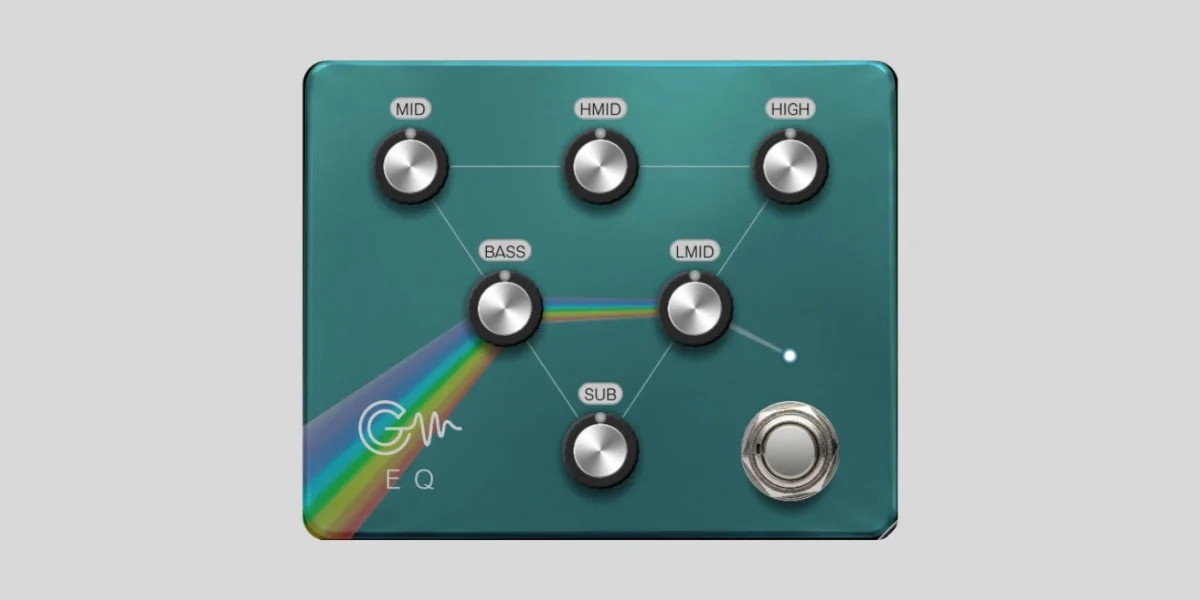
The launch of Air-G EQ Pedal marks a significant expansion within Air-G Audio’s burgeoning Guitar Collection, a specialized series of guitar-pedal-inspired effects designed around the esteemed open-source digital signal processing (DSP) code developed by Chris Johnson, creator of Airwindows. This release follows closely on the heels of the highly successful Air-G Plugins Collection, which previously introduced custom graphical user interfaces (GUIs) to eighteen distinct Airwindows processors, significantly enhancing their accessibility and user-friendliness. The Air-G EQ Pedal itself is meticulously crafted based on Airwindows’ ‘PearEQ’ algorithm, leveraging the identical robust processing engine found in Air-G Prism, one of the more comprehensive offerings within the larger Air-G Plugins Collection, yet presented in a streamlined, compact, pedal-style interface.
The Genesis of Air-G Audio and the Airwindows Legacy
To fully appreciate the significance of Air-G EQ Pedal, it is crucial to understand the foundational principles driving both Air-G Audio and the pioneering work of Chris Johnson’s Airwindows. Chris Johnson has cultivated a legendary reputation within the audio production community for his unwavering commitment to creating high-quality, CPU-efficient, and sonically transparent DSP algorithms. His Airwindows plugins are celebrated for their unique processing capabilities, often offering distinctive sonic characteristics not easily replicated by other commercial plugins. However, a hallmark of Airwindows plugins has traditionally been their minimalist, often command-line-like interfaces, which, while appealing to some purists, posed a barrier for many users accustomed to more visually intuitive controls.
This is precisely where Air-G Audio steps in. Recognizing the immense potential and sonic excellence embedded within the Airwindows code, Air-G Audio embarked on a mission to democratize these powerful tools by wrapping them in modern, aesthetically pleasing, and highly functional GUIs. The Air-G Plugins Collection, launched on July 7, 2026, was the first major stride in this direction, bringing a consistent visual language and improved usability to a wide array of Airwindows processors, ranging from compressors and saturators to spatial effects and utility tools. The positive reception to this initial collection underscored a clear demand for accessible, well-designed interfaces for these highly regarded DSP algorithms.
The Guitar Collection, of which Air-G EQ Pedal is a prominent new member, represents a focused effort to cater specifically to guitarists and musicians seeking intuitive, pedal-like effects for their digital workflows. This strategic specialization allows Air-G Audio to design interfaces that mimic the familiar tactile experience of physical stompboxes, thereby bridging the gap between hardware and software in a manner that resonates deeply with musicians.
Deconstructing the Air-G EQ Pedal: Features and Functionality
The Air-G EQ Pedal is engineered for precision and immediacy, offering a six-band graphic equalizer designed for rapid and intuitive tone shaping. The six fixed frequency bands are thoughtfully selected to cover a broad spectrum of the audible range, labeled as Sub, Bass, Low Mid, Mid, High Mid, and High. Each band is equipped with a single gain control, allowing users to either boost or cut frequencies around its designated center point. A neutral, flat response is achieved when the control is at its center position, with clockwise rotation introducing a boost and counter-clockwise rotation enacting a cut.
A key distinction of the Air-G EQ Pedal is its nature as a graphic equalizer rather than a parametric one. Unlike parametric EQs, which offer adjustable frequency points, Q-factors (bandwidth), and gain, the Air-G EQ Pedal maintains fixed frequency centers and bandwidths, simplifying the control set to purely gain adjustments. This design choice contributes significantly to its ease of use, making it an ideal tool for quick, broad strokes in tonal adjustment rather than surgical frequency manipulation.
At its core, the plugin employs a sophisticated subtractive crossover design. This advanced DSP technique meticulously splits the incoming audio signal into six distinct, adjacent frequency bands. Each band can then be independently shaped through the gain controls. Crucially, when all gain controls are set to their flat, neutral position, the bands are recombined transparently, ensuring no unwanted coloration or phase artifacts are introduced into the signal. This transparent recombination is a hallmark of high-quality DSP and reflects the Airwindows legacy of sonic purity.
The visual design of the Air-G EQ Pedal is a testament to Air-G Audio’s design philosophy: clean, precise, and uncomplicated. The pedal-style interface is not merely an aesthetic choice; it embodies the plugin’s functional ethos. It mirrors the directness and immediacy of physical guitar pedals, encouraging a hands-on, intuitive approach to sound sculpting. This minimalist yet effective visual representation perfectly aligns with the underlying Airwindows philosophy of efficient DSP and direct controls. The challenge of providing a compelling visual interface for Airwindows plugins without overcomplicating them is expertly met here, resulting in a tool that is both powerful and approachable.
Adding to its practical utility, the pedal incorporates a true-bypass-style footswitch. This digital equivalent of a hardware bypass mechanism is linked directly to the host application’s bypass function, allowing users to seamlessly toggle the effect on and off without introducing latency or unwanted artifacts. For users requiring a more granular level of control and visual feedback, Air-G Audio offers Air-G Prism, which utilizes the same core EQ engine but provides a larger interface featuring a real-time response graph, individual bypass switches for each band, and precise gain readouts. This strategic differentiation allows users to choose the tool best suited for their specific workflow requirements, whether it’s quick, intuitive shaping or detailed, analytical equalization.
Versatility Beyond the Guitar Rig
While the Air-G EQ Pedal is a proud member of the Guitar Collection, its utility extends far beyond just guitar amplification. The product page explicitly highlights its versatility, recommending its application across a diverse range of instruments and mixing contexts. This includes bass guitars, keyboards, lush pads, drums, and vocals. Furthermore, its transparent nature makes it suitable for use on full mix buses, where subtle yet effective tonal adjustments can significantly enhance the overall sonic balance and clarity of a production.
The reasons for its broad applicability are rooted in its fundamental design. A fixed-band graphic EQ, especially one with a transparent crossover design, is an invaluable tool for:
- Quick Tone Shaping: Before an amp simulator, it can fine-tune the frequency balance of a guitar or bass signal, preparing it for optimal interaction with the amp’s characteristics.
- Corrective EQ: It can quickly address common frequency issues in various instruments, such as muddy bass, harsh highs, or boxy mids, without requiring intricate knowledge of parametric controls.
- Creative Sound Design: By emphasizing or de-emphasizing specific frequency ranges, it can dramatically alter the character of a synth pad, add punch to drums, or bring presence to vocals.
- Broad Mix Adjustments: On a mix bus, it can provide subtle, sweetening adjustments or address overall tonal imbalances, allowing the engineer to achieve a cohesive sound. The "transparent recombination" ensures that even with significant cuts or boosts, the phase relationships between bands are maintained, preserving the integrity of the stereo image and overall mix.
In a modern production environment, where producers often work with diverse sound sources and require efficient workflows, a tool like the Air-G EQ Pedal proves indispensable. Its ability to offer impactful sonic changes with minimal fuss positions it as a go-to utility for both novice and experienced producers.
Accessibility, Availability, and the Donation Model
A cornerstone of Air-G Audio’s approach, mirroring the open-source spirit of Airwindows, is the commitment to accessibility. The Air-G EQ Pedal is offered completely free of charge, making high-quality DSP readily available to a global community of music creators regardless of their budget. This free distribution model aligns with a growing trend in the audio software industry, where developers build communities and garner support through optional donations.
Users who wish to support Air-G Audio’s ongoing development efforts have the option to make donations via Ko-fi. Furthermore, Air-G Audio actively encourages users to support Chris Johnson’s Patreon, recognizing that direct contributions to the original Airwindows developer are the most direct and impactful way to ensure the continued innovation and maintenance of the underlying DSP code. This symbiotic relationship between Air-G Audio and Chris Johnson exemplifies a collaborative ecosystem where different entities contribute to the overall enrichment of the audio production landscape. This model fosters sustainability for developers while simultaneously empowering users with professional-grade tools without financial barriers.
Regarding system compatibility, the Air-G EQ Pedal is provided in a 64-bit VST3 format, ensuring compatibility with most modern digital audio workstations (DAWs) on its supported platforms. It requires Windows 10 or higher for PC users and Linux systems running GLIBC 2.35 or higher. As of its release, a macOS version is not yet available. This geographical and operating system specificity might be attributed to various factors, including development resources, the technical complexities of cross-platform compatibility, or a strategic focus on segments of the market where Windows and Linux users might historically have fewer free, high-quality options for such specialized tools. The growing Linux audio community, in particular, stands to benefit significantly from such dedicated releases.
Broader Implications and Industry Context
The release of Air-G EQ Pedal, and indeed the entire Air-G Audio initiative, carries several broader implications for the audio production industry:
Democratization of DSP: By offering powerful, high-quality plugins for free, Air-G Audio significantly lowers the barrier to entry for aspiring music producers. This democratization of tools means that financial constraints are less of an impediment to creating professional-sounding music, fostering innovation and creativity across a wider demographic. The availability of free yet professional-grade tools empowers home studio enthusiasts and independent artists to compete with larger studios.
Impact of Open-Source DSP: The success of Air-G Audio highlights the immense value and potential of open-source DSP projects like Airwindows. Chris Johnson’s dedication to creating and sharing his algorithms has created a fertile ground for derivative projects that enhance usability and reach. This collaborative model demonstrates how the open-source philosophy can drive innovation and community engagement in specialized fields like audio software development. It also validates the idea that excellent DSP does not always need to be proprietary or expensive.
Trend of "Pedal-Style" Plugins: The sustained popularity of plugins that emulate the look and feel of hardware guitar pedals reflects a broader trend in the industry. Musicians often prefer interfaces that mimic physical controls, as they offer a more intuitive and less abstract interaction with the software. This approach leverages muscle memory and visual familiarity, streamlining workflow and making the digital environment feel more tangible. This trend indicates a strong user preference for tactile and visually engaging designs, especially within the guitar and bass communities.
Future of Air-G Audio and Airwindows: The consistent release schedule and the strategic expansion of Air-G Audio’s collections suggest a robust development roadmap. The success of the Air-G Plugins Collection and the ongoing growth of the Guitar Collection indicate a strong user base and a sustainable model for future development. For Airwindows, it means its celebrated algorithms are reaching a much wider audience, cementing its legacy and encouraging further contributions to its open-source codebase. The symbiotic relationship ensures that Airwindows’ core innovation continues, while Air-G Audio focuses on user experience and accessibility.
Competition in the EQ Market: The market for equalizer plugins is arguably one of the most saturated in audio software. However, the Air-G EQ Pedal carves a distinct niche through its direct lineage to Airwindows DSP, its transparent subtractive crossover design, and its streamlined, pedal-style interface. These unique selling propositions differentiate it from the myriad of other free and paid EQ plugins, appealing specifically to users who prioritize sonic purity, CPU efficiency, and a straightforward workflow. Its fixed-band nature also positions it differently from highly flexible parametric EQs, appealing to those seeking quick, musical adjustments rather than forensic audio analysis.
In conclusion, the Air-G EQ Pedal is more than just another free plugin; it represents a continuation of Air-G Audio’s commitment to making high-quality, open-source DSP accessible to a broader audience. By wrapping Chris Johnson’s renowned Airwindows algorithms in a clean, intuitive, pedal-style interface, Air-G Audio has delivered a versatile, efficient, and sonically transparent graphic equalizer that is poised to become a valuable tool in the arsenals of music producers across Windows and Linux platforms. Its free availability, coupled with transparent donation options, underscores a community-driven approach that benefits both developers and the global music production ecosystem.
