

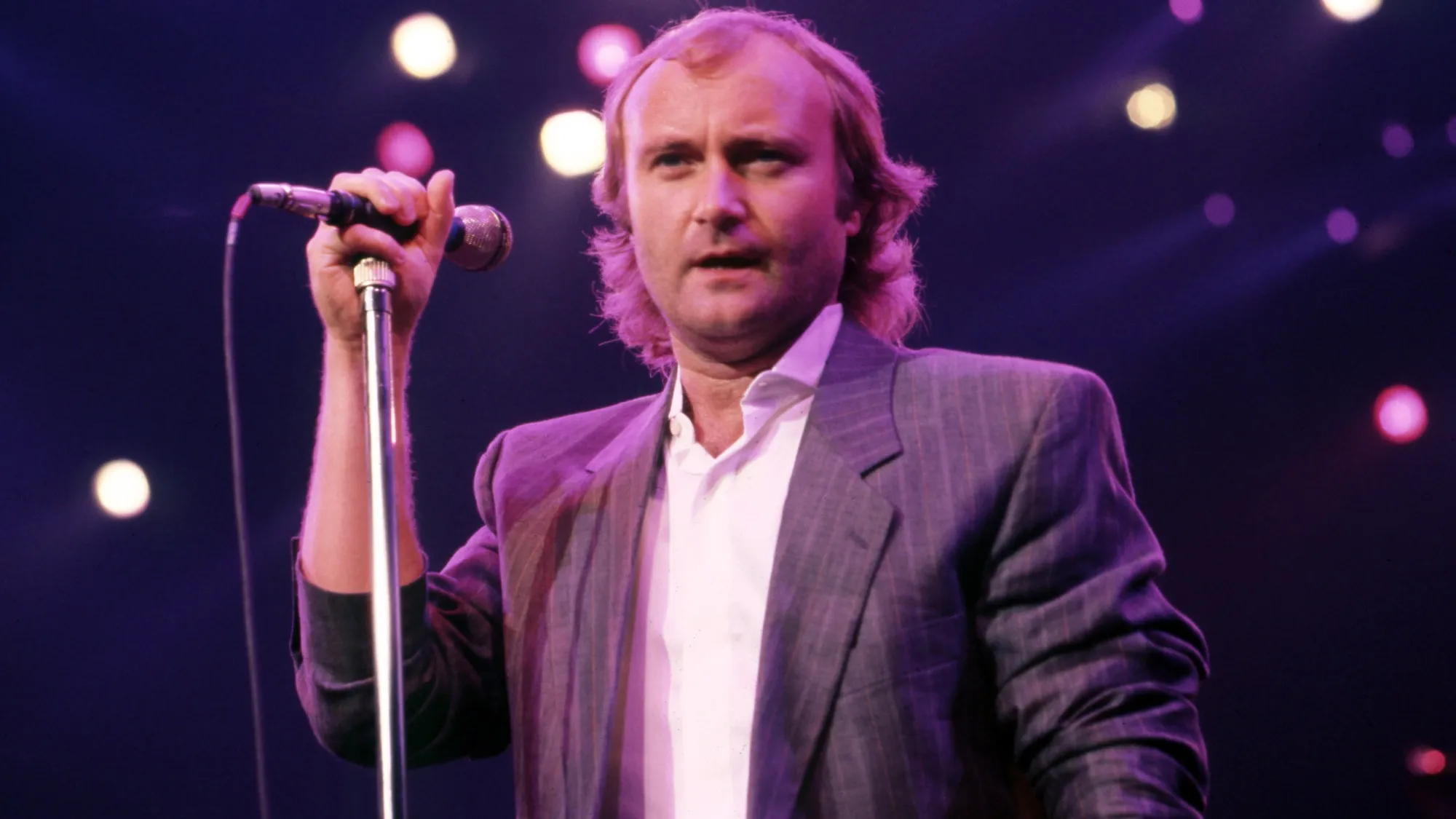
Phil Collins, a musician whose career spans decades as both the frontman of Genesis and a prolific solo artist, has long been regarded as one of the most influential percussionists in rock and pop history. His contribution to the medium is perhaps most famously encapsulated in the gated reverb drum fill of "In the Air Tonight," a moment so culturally ubiquitous that it remains a touchstone for air-drummers globally. However, despite his status as a virtuoso, Collins has remained a lifelong student of the craft, particularly regarding the R&B and soul foundations that shaped his early musical sensibilities. This reverence for the past was the driving force behind his 2010 studio album, Going Back, a project dedicated to covering Motown and soul classics. Yet, the recording process revealed that even for a technician of Collins’ caliber, the seemingly simple rhythms of the 1960s Hitsville U.S.A. era possessed a level of nuance and "fingerprint" detail that proved remarkably difficult to replicate.
The Ambition of Authenticity in the Going Back Sessions
When Phil Collins announced the production of Going Back, his eighth solo studio album, he emphasized that the project was not intended to be a modern reimagining of classic tracks. Instead, his goal was to achieve a sonic profile that was as close to the original 1960s recordings as possible. This necessitated an obsessive attention to detail, not just in the vocal delivery, but in the specific textures of the instrumentation. To achieve this, Collins recruited three surviving members of the Funk Brothers—the legendary Motown house band—to play on the sessions: guitarists Eddie Willis and Ray Monette, and bassist Bob Babbitt.
The inclusion of the Funk Brothers highlighted the high stakes of the project. Collins was not merely playing along to covers; he was attempting to slot himself into a rhythm section that had defined the sound of American popular music. For the drumming specifically, Collins took on the monumental task of recreating the parts originally laid down by the "Holy Trinity" of Motown drummers: Benny Benjamin, Uriel Jones, and Richard "Pistol" Allen. These men were known for their distinct "swing" and idiosyncratic approaches to the kit, which Collins described as being as unique and identifiable as a human fingerprint.
The Technical Enigma of Dancing In The Street
Among the various tracks recorded for the album, the 1964 Martha and the Vandellas hit "Dancing In The Street" presented the most significant technical hurdle. On the surface, the song is a straightforward, high-energy anthem. However, the opening drum fill—a signature flourish that announces the track—became a point of obsession for Collins. The difficulty lay in the ambiguity of the recording’s percussion mix. In the 1960s, Motown’s Studio A, known as the "Snake Pit," was a basement room with unique acoustic properties where multiple instruments were often captured on a limited number of tracks, leading to a "bleed" that created a cohesive, "breathing" sound.
Collins noted that the specific sequence of the opening fill was nearly impossible to unpick through casual listening. The debate centered on the orchestration of the hits: was it a tom-tom followed by a snare drum, or a snare drum followed by a tom-tom? To the average listener, the distinction is negligible, but for a drummer attempting a faithful recreation, it was the difference between success and failure. Collins estimated that he and his engineering team played the original recording upwards of 1,000 times, attempting to isolate the frequencies and determine the exact physical movement of the original drummer.
He famously described the sound of the fill as being "like this little furry animal," suggesting a softness and organic quality that defied the clinical precision of modern digital recording. This "breath" in the music is a hallmark of the Motown era, where the slight imperfections and the physical resonance of the room contributed to the "warmth" of the track.
The Legacy of the Motown Drummers
To understand Collins’ struggle, one must examine the men he was trying to emulate. Benny Benjamin, often cited as Berry Gordy’s favorite drummer, was known for his "pop" and his ability to execute complex fills that still felt "in the pocket." Uriel Jones brought a heavier, more driving feel, while Pistol Allen was a master of the shuffle and the high-hat work that kept the Motown beat moving forward.
In the case of "Dancing In The Street," the original recording featured a combination of these influences. The track is credited to the songwriting team of Marvin Gaye, William "Mickey" Stevenson, and Ivy Jo Hunter. While the specific drummer on the 1964 session is often debated among historians—with many attributing the primary kit work to Uriel Jones—the recording also featured snow chains being beaten against a piece of lumber to provide the metallic "clack" on the two and four beats. This layering of unconventional percussion added to the difficulty Collins faced; he wasn’t just competing with a drum kit, but with a wall of sound created by multiple rhythmic elements.
Physical Limitations and the Recording Timeline
The timeline of the Going Back sessions adds another layer of complexity to Collins’ efforts. Recorded between 2009 and 2010, the album came at a time when Collins was battling significant health issues. Years of drumming had taken a toll on his body, resulting in dislocated vertebrae in his neck and subsequent nerve damage in his hands. By the time he began work on the Motown project, he found it difficult to even hold his drumsticks.
To complete the album, Collins had to tape the sticks to his hands, a testament to his dedication to the project. This physical struggle likely exacerbated the difficulty of nailing the "Dancing In The Street" fill. The Motown sound requires a certain "snap" and fluidity of the wrist—something that nerve damage directly impairs. Despite these obstacles, Collins insisted on performing the drum parts himself rather than hiring a session drummer, viewing the project as a personal tribute that required his direct participation.
Broader Impact and Critical Analysis
When Going Back was released in September 2010, it was met with a mixture of commercial success and critical curiosity. The album reached Number 1 on the UK Albums Chart, proving that there was still a massive audience for Collins’ work and a lingering affection for the Motown catalog. Critics noted that while the album was a "labor of love," it also served as a musicological study. Collins’ struggle with the "Dancing In The Street" fill highlights a broader truth about the evolution of music production: that modern technology, for all its clarity, often struggles to replicate the "soul" of analog, room-based recordings.
From a journalistic perspective, Collins’ admission of difficulty serves to humanize a musical giant. It also places a spotlight on the often-underappreciated session musicians of the 1960s. By vocalizing his struggle to "unpick" the parts of the Funk Brothers, Collins redirected the narrative toward the technical brilliance of the original Motown architects.
The implications of this effort are significant for the preservation of musical history. Collins’ meticulous approach ensured that the techniques of the past were documented and analyzed by one of the modern era’s greatest practitioners. His concession that he "kind of got it" but remained trepidatious reflects the humility of a master recognizing the inimitable nature of his predecessors.
Conclusion: The Persistence of the Motown Fingerprint
The story of Phil Collins and the "Dancing In The Street" fill is more than a footnote in a rock star’s biography; it is an exploration of the intersection between technical skill and artistic "feel." Even with a career defined by percussive excellence, Collins found that the secrets of the Motown sound remained elusive, locked away in the specific acoustics of a Detroit basement and the muscle memory of drummers who played by instinct rather than sheet music.
Ultimately, Going Back stands as a bridge between two eras of music. It serves as a reminder that while gear and technology change, the "singularity" of a musician’s touch—what Collins calls the fingerprint—remains the most vital and hardest-to-replicate element of any recording. For Collins, the 1,000 listens and the physical pain of the sessions were a necessary price to pay for a moment of connection with the rhythms that originally inspired him to pick up the sticks. The "little furry animal" of the "Dancing In The Street" fill remains a symbol of that elusive perfection that continues to drive artists toward the pursuit of the "just right" sound.
