

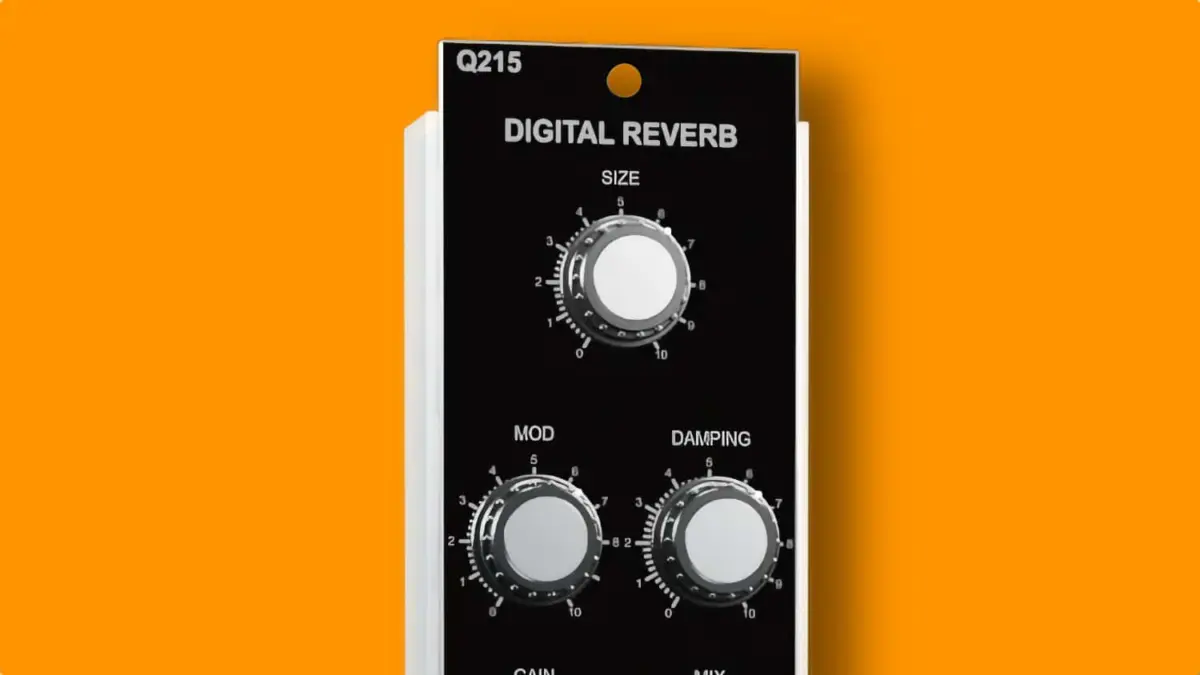
Synthesizers.com, a leading manufacturer of Moog-unit (MU) format modular synthesizers, has officially announced the release of the Q215 Digital Reverb, a sophisticated multi-mode stereo effects processor designed specifically for large-format modular environments. This new addition to the Q-series lineup represents a significant technological bridge between traditional analog synthesis and modern digital signal processing (DSP), offering MU enthusiasts a dedicated spatial tool that maintains the aesthetic and tactile standards of the 5U format. The Q215 Digital Reverb is engineered to provide a comprehensive suite of reverberation algorithms, ranging from classic emulations to experimental textures, all while providing the high-voltage headroom required for modular signal paths.
The introduction of the Q215 comes at a time when the MU modular community is seeing a resurgence in demand for integrated, high-quality spatial effects. While the MU format has traditionally been associated with purely analog signal paths—often utilizing physical spring reverb tanks like the Q115—the Q215 offers a vastly expanded sonic palette. By incorporating twelve distinct algorithms and specialized "period accurate" sample rate adjustments, Synthesizers.com aims to provide users with the grit and character of vintage digital hardware alongside the clarity of contemporary DSP.
Technical Architecture and Signal Routing
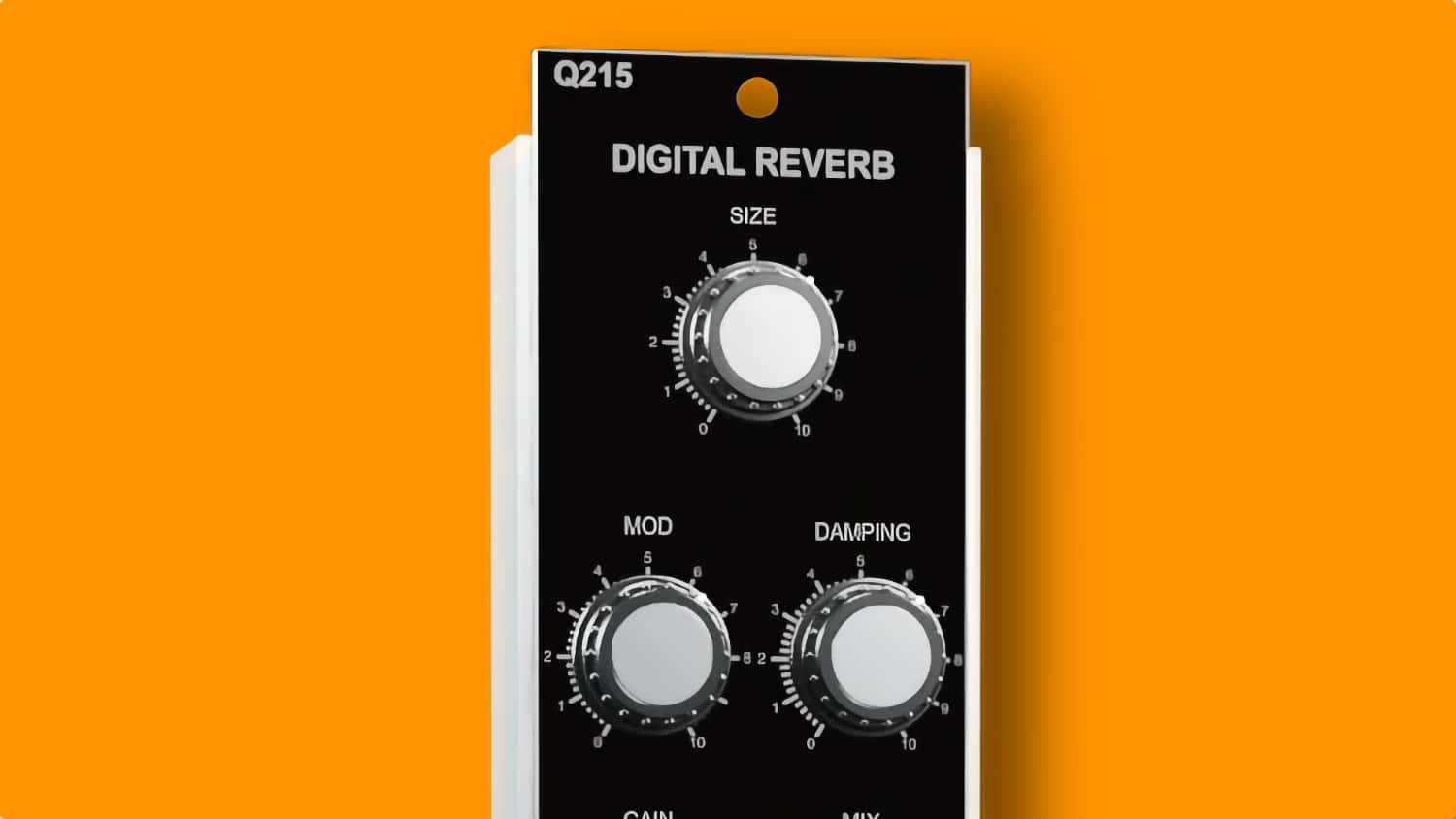
The Q215 Digital Reverb is housed in a standard double-width MU module, featuring the signature black textured faceplate and large-format 1/4-inch jacks characteristic of the Synthesizers.com aesthetic. At its core, the module is designed for versatility in signal routing. It accepts either a mono or stereo input and produces a full stereo output, allowing it to serve as the final spatializing stage in a complex patch.
A critical feature of the Q215 is its ability to interface with various signal levels. While optimized for the standard +/-5V (10V peak-to-peak) signals common in modular synthesis, the module includes an integrated GAIN control. This high-headroom input stage allows the Q215 to process line-level signals from external hardware, such as drum machines, desktop synthesizers, or studio outboard gear, without the need for external level shifting. The GAIN control is not merely a utility; it is designed to allow users to push the input into slight clipping. This intentional saturation adds harmonic complexity to the signal before it hits the digital converters, mimicking the behavior of early digital rack units that were often "driven" for a specific saturated tone.
The module’s internal processing utilizes a variety of sample rates depending on the selected algorithm. Notably, the "Abstract Large Hall" modes operate at a 32kHz sample rate. In the realm of digital audio, a lower sample rate naturally limits the high-frequency response (Nyquist frequency), resulting in a "darker" and "grittier" sound. This design choice is a deliberate nod to the early era of digital reverberation, such as the late 1970s and early 1980s, where hardware limitations contributed significantly to the "warmth" and character of the effect.
Comprehensive Algorithm Selection
The Q215 is equipped with 12 distinct reverb algorithms, categorized to cover the entire spectrum of spatial synthesis. These modes are selectable via a dedicated rotary encoder, providing immediate access to different acoustic environments and surreal textures.
- Room: A short-decay algorithm designed to simulate small, reflective spaces, ideal for adding "air" to percussive sequences.
- Plate: An emulation of classic mechanical plate reverbs, known for their bright, dense initial reflections and smooth decay, frequently used on lead synthesizers.
- Spring: A digital recreation of the iconic spring tank sound, providing the "boing" and metallic character without the physical footprint or sensitivity to mechanical vibration of a real tank.
- Hall: A standard concert hall simulation with a balanced frequency response and natural decay.
- Cathedral: An expansive, highly reflective algorithm with a long decay time, designed for massive, cinematic soundscapes.
- Shimmer: A modern classic effect that adds pitch-shifted octaves to the reverb tail, creating an ethereal, orchestral sheen.
- Gated: A vintage-style reverb that is abruptly cut off, a signature sound of 1980s drum production.
- Reverse: An effect where the reverb tail builds up before the dry signal, or the tail itself is played backward, creating haunting, psychedelic textures.
- Abstract Large Hall 1 (32kHz): A specialized mode focusing on the "dark and gritty" textures of early digital units, characterized by a rolled-off top end and distinct digital artifacts.
- Abstract Large Hall 2 (32kHz): A variation of the first abstract hall, offering different reflection patterns and a more pronounced mid-range resonance.
- Delay + Reverb: A combination mode that places a digital delay in series with a reverb, allowing for complex rhythmic echoes that melt into a wash of sound.
- Chorus + Reverb: A modulation-heavy mode that adds thickness and movement to the reverb tail, reminiscent of classic 1980s rack processors.
Historical Context and Development Timeline
The release of the Q215 represents a milestone in the evolution of Synthesizers.com. Founded by Roger Arrick in 1996, the company was instrumental in the "modular renaissance," reviving the 5U format popularized by Moog Music in the 1960s and 70s. For nearly three decades, Synthesizers.com has been synonymous with robust, analog-centric hardware that prioritizes the user experience through large knobs and clear signal paths.
The development timeline of the Q215 reflects a broader trend in the modular industry toward hybrid systems.
- 1996–2010: Synthesizers.com focused almost exclusively on traditional analog modules (VCOs, VCFs, VCAs), establishing the "Q-series" as the gold standard for MU enthusiasts.
- 2011–2020: The company began introducing digital utility modules and MIDI interfaces, recognizing the need for modular systems to communicate with modern DAWs and controllers.
- 2021–2025: Research and development intensified for high-end DSP modules. During this period, the community expressed a growing desire for an integrated stereo reverb that did not require the maintenance or space of a physical spring tank.
- October 2026: Official announcement of the Q215 Digital Reverb and opening of pre-orders.
- Late November 2026: Expected commencement of shipping for the first production run.
Market Impact and Professional Implications
The Q215 Digital Reverb addresses a specific "pain point" for MU modular users: the lack of high-quality, stereo-native spatial effects within the rack. In the Eurorack market, digital reverbs are abundant, but for users of the MU format, the options have historically been limited. Many MU users have had to rely on external rack-mount processors or pedals, which require impedance matching and additional cabling that can clutter a performance setup.
By integrating a professional-grade digital reverb directly into the MU ecosystem, Synthesizers.com provides a more cohesive workflow. The ability to patch stereo signals directly into the Q215 and then into a final output module or mixer simplifies the signal chain. Furthermore, the inclusion of "period accurate" sample rates appeals to sound designers looking for a specific vintage aesthetic that modern, ultra-clean digital plugins often fail to replicate.
Industry analysts suggest that the Q215 may signal a new direction for Synthesizers.com, where the company continues to explore the intersection of digital convenience and analog character. The $379 USD price point positions the Q215 as a premium module, reflective of its build quality and the complexity of its DSP algorithms. It is expected to become a staple in large-format systems used for film scoring, ambient music production, and live electronic performance.
Pricing and Availability
Synthesizers.com has confirmed that the Q215 Digital Reverb is currently available for pre-order through their official online store. The module is priced at $379 USD. This price includes the standard power cable compatible with the Synthesizers.com power distribution system.
Production is currently underway, with the first units scheduled to begin shipping to customers at the end of November 2026. Given the specialized nature of the MU format and the high demand for new modules from this manufacturer, early batches are expected to sell through quickly.
Conclusion and Analysis
The Q215 Digital Reverb is more than a simple effect module; it is a calculated expansion of the MU modular philosophy. By embracing digital technology to provide textures that are difficult or impossible to achieve through purely analog means, Synthesizers.com has enhanced the versatility of the 5U format. The decision to include lower sample rate modes demonstrates a deep understanding of the "vintage digital" appeal, ensuring that the module feels at home alongside the warm, harmonic-rich oscillators and filters for which the company is famous. As modular synthesis continues to evolve, the Q215 stands as a testament to the enduring relevance of the large-format modular system in the modern recording studio.
