

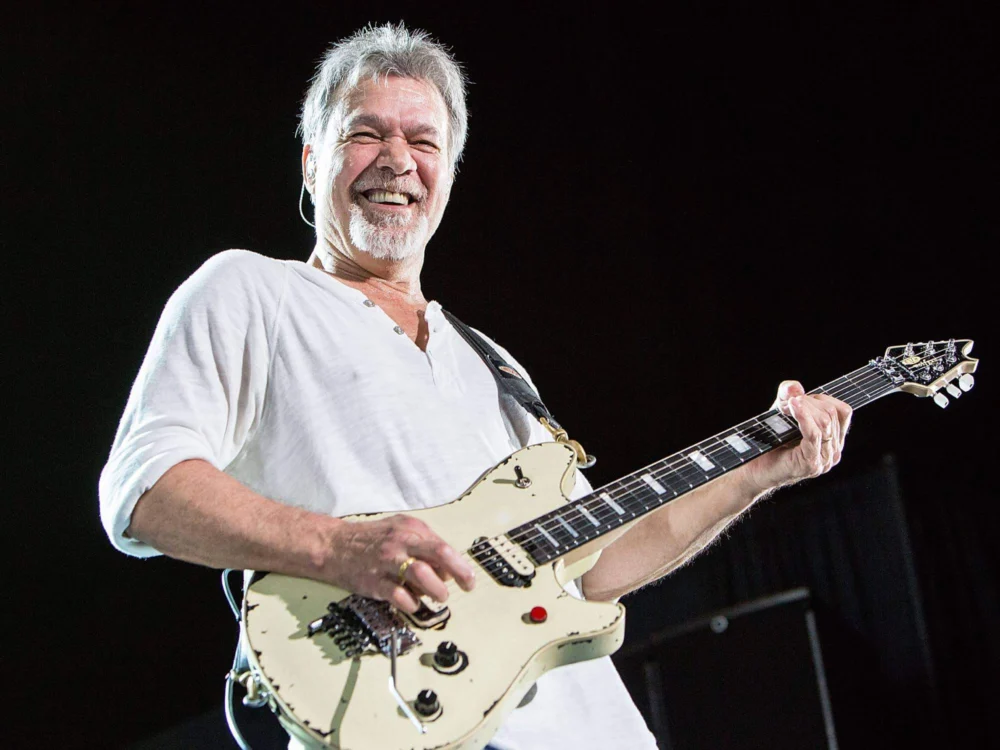
The intricate world of guitar manufacturing, often hidden behind the glamour of stage lights and stadium tours, occasionally reveals stories that underscore the profound connection between legendary musicians and the master craftspeople who bring their visions to life. Such narratives emerge from the experiences of individuals like Andy Hicks, a distinguished luthier at Fender, whose career has been punctuated by unique encounters with rock titans such as Eddie Van Halen and Dave Murray, shaping some of the most revered instruments in modern music history. These interactions not only highlight the meticulous dedication involved in creating signature models but also offer rare glimpses into the personalities of artists committed to their craft, even down to the smallest detail of their instruments.
The Genesis of a Visionary: Eddie Van Halen’s Pursuit of Perfection
Eddie Van Halen, widely regarded as one of the most influential guitarists of all time, was famously uncompromising when it came to his instruments. His disdain for "store-bought, off-the-rack guitars" in the 1970s was not merely a preference but a foundational philosophy that propelled him into a lifelong journey of customization and innovation. This ethos led to the creation of his iconic "Frankenstrat," a guitar assembled from disparate parts that defied conventional manufacturing, setting a precedent for artists demanding instruments tailored precisely to their unique playing styles and sonic requirements. This DIY spirit eventually evolved into formal collaborations with manufacturers, culminating in his most celebrated signature model, the EVH Wolfgang.
The Wolfgang, a testament to Eddie’s relentless pursuit of perfection, was designed to embody his ideal balance of playability, tone, and roadworthiness. Its distinctive features included a comfortably carved basswood body, a quarter-sawn maple neck with a compound radius fretboard (typically 12"-16"), stainless steel frets for durability and smooth bending, and custom-designed direct-mount humbucking pickups. Crucially, the Wolfgang incorporated a Floyd Rose tremolo system with Eddie’s patented D-Tuna, allowing for instant drop-D tuning—a feature born out of his practical needs on stage. Each element of the Wolfgang was a deliberate choice, reflecting Eddie’s hands-on approach and his insistence on instruments that could withstand the rigors of his dynamic performances while delivering his signature sound. The development of the Wolfgang was a multi-year process, involving several iterations and collaborations, ultimately leading to its production under the EVH brand, a subsidiary of Fender Musical Instruments Corporation.
An Unseen Audit: Andy Hicks’ Production Line Encounter
It was during the production phase of the EVH Wolfgang that Andy Hicks, then working on the manufacturing line at Fender, found himself at the center of an unexpected and revealing interaction with the guitar legend. Hicks’ account, shared in a recent interview with Premier Guitar, paints a vivid picture of Eddie Van Halen’s deep involvement and genuine interest in the craftsmanship of his signature instruments.
The setting was a bustling Fender factory, where skilled luthiers meticulously shaped and assembled guitar necks. Hicks recalls the routine nature of his work, oblivious to the fact that the very designer of the instrument he was crafting was observing his every move. Fender facilities, being hubs of musical innovation, frequently host tours for various guests, making the presence of an unfamiliar face a common occurrence. Hicks initially dismissed the observer as "some dad wearing a baseball hat," an unassuming figure leaning over his workstation. This initial anonymity underscores Eddie’s preference for observation without fanfare, seeking an authentic understanding of the production process and the challenges faced by the craftspeople.
The true identity of the observer soon dawned on Hicks, a realization that brought a mixture of awe and professional intensity. "Eddie Van Halen is just standing here watching us work," he mentally noted, a moment of profound significance for any luthier. However, the revelation had not yet reached his immediate colleagues, leading to a candid and humorous exchange that epitomized Eddie’s character. Hicks’ fellow luthier, unaware of the iconic presence, began to air a common production-line grievance. The Wolfgang’s specification of stainless steel frets, while beneficial for players due to their durability and smooth feel, presented a more arduous task for the builders. "Man, these stainless steel frets. With just these Wolfgangs, we’ve gotta do 12 stainless steel necks today," the colleague reportedly complained, highlighting the additional effort and specialized tooling required for this particular material compared to traditional nickel-silver frets.
Rather than taking offense at the implied criticism of his design choices, Eddie Van Halen responded with characteristic humility and a playful wit. Hicks recounts Eddie’s lighthearted interjection: "He said something along the lines of, ‘I’m sorry my guitar is such a pain in the butt,’" a remark that immediately broke the tension and endeared him further to the production team. This spontaneous apology, delivered by an artist of Eddie’s stature, was not just a moment of levity; it was a powerful affirmation of respect for the labor and skill invested in realizing his vision. It demonstrated a deep understanding of the practical challenges faced by the luthiers and a genuine empathy for their demanding work. For Hicks, the experience was "incredible," a testament to Eddie’s down-to-earth nature and his unwavering commitment to every aspect of his guitars, from conception to final assembly.
A Gesture of Gratitude: The Forum Invitation
Eddie Van Halen’s appreciation for the Fender production team extended far beyond a playful comment on the factory floor. In a remarkable display of gratitude and camaraderie, he later extended an invitation to the entire Wolfgang production crew for an ultra-exclusive Van Halen show in 2012. This particular concert was a highly anticipated event, a private "friends and family" gig held at the iconic Forum in Inglewood, California, serving as a warm-up for the band’s A Different Kind of Truth tour, which marked the return of David Lee Roth as lead vocalist and Wolfgang Van Halen on bass.
Such an invitation from a band of Van Halen’s magnitude was an extraordinary gesture, providing the luthiers with a rare opportunity to witness their craftsmanship in action on the grand stage, played by the very artist for whom they toiled. It underscored Eddie’s understanding that the success of his instruments was a collective effort, acknowledging the vital role played by every individual on the production line. This act of inclusion undoubtedly fostered a deeper sense of pride and ownership among the Fender employees, strengthening the bond between the artist and the manufacturing team. It moved beyond a transactional relationship, evolving into a mutual respect for shared dedication to musical excellence.
The event also provided a memorable anecdote for Andy Hicks, involving his proud father and another rock legend. Amidst the excitement of the private concert, Hicks’ father, brimming with paternal pride, found himself conversing with Rage Against the Machine guitarist Tom Morello. "My dad was sitting next to Tom Morello, telling him that his son made Eddie Van Halen’s guitar," Hicks recalled, a moment of humorous embarrassment for him. Despite his attempts to discreetly interject ("Dad, please stop talking to Tom Morello…"), his father’s enthusiasm was uncontainable. "He was so excited to talk to somebody, and he just happened to be talking to Tom Morello!" Hicks added, capturing the unique confluence of rock royalty and personal pride that defined that unforgettable evening. This story not only highlights the personal impact of such career milestones but also illustrates the interconnectedness of the music community, where artists and craftsmen often cross paths in unexpected and delightful ways.
Crafting for Legends: Andy Hicks and Dave Murray’s Signature Stratocaster
Andy Hicks’ expertise extends beyond the realm of hard rock and into the heavy metal pantheon, with another significant contribution to a legendary artist’s arsenal: Dave Murray of Iron Maiden. Murray, renowned for his fluid, melodic lead guitar work and his long-standing allegiance to the Fender Stratocaster, is an icon whose signature sound is instantly recognizable to millions of fans worldwide. His guitars are not merely tools but extensions of his artistry, demanding precision and reliability for Iron Maiden’s famously rigorous touring schedules.
Hicks was entrusted with the honor of crafting a guitar for Murray, a task that required meticulous attention to detail and close collaboration with the artist’s technical team. "It was completely insane," Hicks recounted, describing the pressure and privilege of working on an instrument destined for one of heavy metal’s most enduring figures. The project coincided with Iron Maiden’s preparations for a multi-year global tour, emphasizing the critical need for an instrument that would not only meet Murray’s exacting specifications but also withstand the immense demands of extensive live performances. Hicks worked "really closely with his tech, fine-tuning his model a little bit," a process that involved subtle adjustments to playability, electronics, and setup to ensure the guitar was perfectly calibrated for Murray’s unique style and stage requirements.
The culmination of this collaborative effort was the shipment of the completed guitar to Murray. Hicks described the ensuing period as a "Schrödinger’s cat situation," reflecting the profound anxiety and anticipation that master builders often experience when their work is sent to an artist of such stature. When an email arrived from Dave Murray with the subject line "Regarding the guitar," Hicks faced a moment of truth. "I’m gonna open this email, and one of two things happens: He either likes the guitar, and that’s good, or he doesn’t like it, and now what do I do?" This sentiment encapsulates the personal investment and vulnerability inherent in high-level lutherie, where months of painstaking work are subject to the ultimate judgment of the artist.
The relief was palpable when Murray’s email conveyed unequivocal satisfaction. "He said how much he loved it," Hicks confirmed, an immense validation of his skill and dedication. The ultimate testament to the quality of Hicks’ work came from Murray’s guitar tech, who subsequently reached out to inform Hicks that the instrument was slated to be Murray’s "number-one for the tour." For a professional touring musician, the designation of a guitar as the "number one" instrument is the highest possible endorsement, signifying absolute trust in its performance, reliability, and sonic integrity under the most demanding conditions. This not only solidified Hicks’ reputation but also highlighted the critical role of custom-built instruments in the careers of touring musicians, where consistency and flawlessness are paramount.
From Workshop to Retail: The Legacy of Signature Instruments
The collaborative success between Andy Hicks and Dave Murray, much like the EVH Wolfgang, eventually translated into an opportunity for fans to own a piece of this musical legacy. In December, Fender announced the release of an exclusive, high-end Masterbuilt Stratocaster inspired by Murray’s touring instrument, priced at $11,000. This special release was strategically timed to coincide with Iron Maiden’s 50th anniversary, serving as both a celebration of the band’s enduring legacy and a tribute to the craftsmanship behind their iconic sound.
The market for such high-end signature instruments is a niche but significant segment of the guitar industry. These Masterbuilt models, crafted by Fender’s elite builders in their Custom Shop, represent the pinnacle of guitar manufacturing, often featuring premium materials, meticulous attention to detail, and specifications directly mirroring those of the artist’s personal instruments. For fans, these guitars are more than just instruments; they are collectible artifacts, tangible connections to their musical heroes, and investments in exceptional craftsmanship. The elevated price point reflects the rarity of materials, the hundreds of hours of skilled labor, and the prestige associated with a Masterbuilt instrument from Fender, particularly one tied to a legend like Dave Murray.
The success of signature models, from the EVH Wolfgang to Dave Murray’s Stratocaster, underscores several key dynamics within the music industry. Firstly, it highlights the immense influence of legendary artists not only on musical trends but also on instrument design and manufacturing. Their specific demands push the boundaries of guitar building, leading to innovations that often trickle down to more accessible production models. Secondly, it elevates the status of skilled luthiers and master builders like Andy Hicks, whose expertise is recognized and sought after by the world’s most discerning musicians. Their ability to translate an artist’s vision into a tangible, playable instrument is an art form in itself. Finally, these collaborations strengthen brand loyalty for both the artist and the manufacturer. Fans often gravitate towards the brands favored by their idols, and manufacturers gain credibility and prestige by associating with top-tier musicians.
Conclusion: The Enduring Craftsmanship in Modern Music
Andy Hicks’ journey through the hallowed halls of Fender’s Custom Shop offers a compelling narrative of dedication, skill, and the often-unseen human element behind the creation of iconic musical instruments. His encounters with Eddie Van Halen and Dave Murray are more than just anecdotes; they are windows into the profound relationships that can develop between artists and the craftspeople who enable their sonic expression.
Eddie Van Halen’s hands-on involvement with the Wolfgang, his humility on the factory floor, and his generous invitation to the production team exemplify a rare blend of artistic genius and genuine appreciation for the manufacturing process. Similarly, Dave Murray’s trust in Hicks to fine-tune his primary touring instrument, culminating in its designation as his "number one," speaks volumes about the level of expertise and precision demanded at the highest echelons of professional music.
These stories serve as a powerful reminder that while technology and mass production play significant roles in the modern music industry, the artistry and personal touch of skilled luthiers remain indispensable. The instruments that define genres and inspire generations are not merely products; they are the result of tireless innovation, meticulous craftsmanship, and a deep, often unspoken, collaboration between visionary musicians and the dedicated individuals like Andy Hicks, who work diligently behind the scenes to bring their musical dreams to life. Their work ensures that the legacy of rock and metal continues to be built on foundations of unparalleled quality and profound artistic partnership.
