

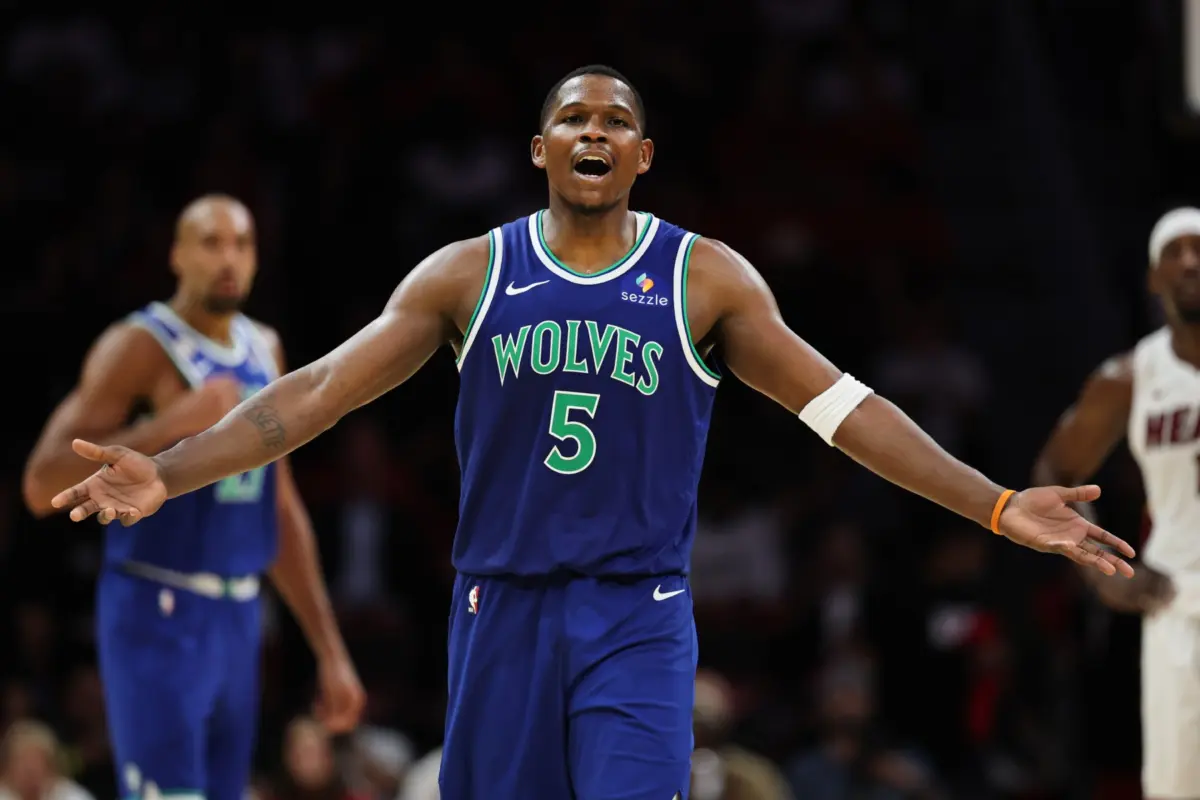
The ongoing, highly visible "sneaker war" between NBA phenom Anthony Edwards, backed by Adidas, and the formidable duo of Kevin Durant and Drake, representing Nike, has reached a new crescendo. In a recently unveiled promotional campaign for his latest signature shoe, the Adidas AE 3, Edwards, through the comedic stylings of actor and comedian Hasan Minhaj, launched a direct and pointed counter-attack against the Toronto-based rapper and the sportswear giant. This marks the second time Edwards has overtly responded to a Nike commercial from earlier this year, signaling a determined effort by Adidas to challenge Nike’s dominance in the lucrative basketball footwear market by leveraging cultural commentary and a rising star’s audacious persona. The battle, which transcends mere product promotion, has evolved into a compelling narrative of brand allegiance, celebrity influence, and the strategic deployment of wit in high-stakes marketing.
The Genesis of the Sneaker Skirmish: Nike’s Initial Salvo
The origins of this spirited marketing skirmish can be traced back to June, when Nike released a commercial promoting a new purple colorway for Kevin Durant’s nineteenth signature shoe, the KD 19. Durant, a perennial NBA All-Star and one of Nike’s most prominent endorsers, boasts a long-standing and highly successful partnership with the Oregon-based sportswear behemoth. His signature line is a cornerstone of Nike’s basketball division, consistently performing well in sales and maintaining a strong presence among professional and amateur players alike.
In this particular ad, Nike strategically enlisted the cultural gravitas of Grammy-winning artist Drake. Known for his multifaceted influence spanning music, fashion, and sports fandom, Drake’s involvement lent a significant pop-culture appeal to the campaign. The commercial depicted the new purple KD 19s, along with Drake himself, being delivered to the Houston Rockets forward’s residence in a distinctive wooden box. As Drake extolled the virtues of the new kicks, he delivered a pointed jab directly at Anthony Edwards’ nascent signature sneaker line. "‘Hey Ant-Man, can you drop your purple shoes?’ Said four kids in Minnesota," Drake quipped, continuing, "Like no one wants to see those, they want the KDs." This statement, delivered with Drake’s signature blend of casual confidence and playful arrogance, was clearly designed to assert Nike’s and Durant’s established supremacy while simultaneously diminishing Edwards’ growing presence in the market. It was a direct challenge, designed not just to promote a product but to establish a hierarchy within the competitive landscape of basketball footwear.
Edwards’ First Counter-Punch: The PrizePicks Parody
Anthony Edwards, a burgeoning superstar for the Minnesota Timberwolves, has rapidly ascended the NBA ranks since being drafted first overall in 2020. His electrifying play, charismatic personality, and undeniable swagger have quickly made him one of the league’s most marketable young talents. Recognizing his immense potential, Adidas signed Edwards to a significant endorsement deal, launching his first signature shoe, the AE 1, to considerable anticipation. Edwards, known for his competitive spirit on the court, proved equally tenacious in the advertising arena.
Earlier this month, Edwards delivered his first direct response to Drake’s challenge through a commercial for PrizePicks, a daily fantasy sports platform. This ad masterfully parodied the original Nike spot, mirroring its visual cues and narrative structure. In Edwards’ version, a similar wooden box was delivered, but with a crucial modification: "FRAGILE: RETURN TO TORONTO" was boldly stenciled on its side. The implication was clear – Drake, the Toronto native, was metaphorically trapped inside, being sent back. Adding another layer of cultural commentary, a voice from within the box could be heard asking for "Kevin," further solidifying the parody.
The ad continued to escalate its playful aggression. As Edwards’ friends pondered who might be inside, one borrowed a now-iconic line from Kendrick Lamar: "Man, buddy ain’t nothin’." This reference was particularly significant, tapping into the widely publicized and intensely debated rap beef between Kendrick Lamar and Drake that had dominated music headlines earlier in the year. Lamar’s diss tracks had heavily scrutinized Drake’s perceived authenticity and connections to various cities, including Atlanta, suggesting he adopted cultural elements rather than genuinely embodying them. The line, "You know he had to run to Atlanta to get the swag, anyway," directly echoed Lamar’s criticisms, implicitly linking Drake’s association with Atlanta’s hip-hop scene to a lack of original "swag." This strategic inclusion not only amplified the ad’s comedic value but also skillfully leveraged a broader cultural conversation to Edwards’ and Adidas’s advantage, painting Drake as an outsider or appropriator in contrast to Edwards’ perceived authenticity. After replacing the box’s contents with Edwards’ own sneakers, the group parked in front of a crowd, where Edwards’ friend declared, echoing Drake’s original jab, "I heard only four people in Minnesota wanted these," turning the insult back on its originator. This initial response established Edwards’ willingness to engage in direct, humorous, and culturally relevant brand warfare.
The Latest Offensive: Adidas AE 3 and Hasan Minhaj’s Sharp Tongue
The recent unveiling of the Adidas AE 3 commercial marks a significant escalation in this ongoing brand rivalry. For this latest ad, Adidas brought in critically acclaimed comedian and actor Hasan Minhaj to portray "The official Anthony Edwards insider." Minhaj, renowned for his incisive wit and ability to deliver sharp social commentary with comedic flair, proved to be an ideal choice to amplify Edwards’ challenging persona. His casting underscores Adidas’s intent to infuse their marketing with a blend of humor, directness, and cultural awareness.
Minhaj’s segment in the AE 3 ad wasted no time in launching a multi-pronged attack. After a humorous opening joke about "your mom," Minhaj swiftly moved to target established figures and rival brands. He took a subtle yet clear shot at LeBron James, another iconic Nike athlete, and then directly addressed Nike’s financial performance by referencing its stock price. This broad approach aimed to position Edwards and Adidas as disruptors challenging the entire established order of the sneaker industry’s elite.
The most direct and potent jab, however, was reserved for Drake. Minhaj, looking directly at the camera, delivered a cutting remark: "Oh, and meanwhile, somewhere in Toronto, a certain bandwagon fan is facing FOMO and buried in lawsuits. Really sorry about that!" This statement is rich with implications and directly leverages recent public narratives surrounding Drake. The mention of "FOMO" (Fear Of Missing Out) playfully suggests that despite his immense success, Drake is envious of the buzz and cultural momentum surrounding Edwards. More significantly, the phrase "buried in lawsuits" directly references ongoing legal challenges and controversies that have shadowed Drake. For instance, reports and legal filings have emerged concerning alleged copyright infringement, including a prominent case involving a songwriter suing Drake over the track "Janice Freestyle" and accusations of copying a demo. While the ad doesn’t delve into specific legal details, the general reference taps into a widely understood aspect of Drake’s recent public profile, painting a picture of an artist embroiled in external pressures, contrasting with Edwards’ seemingly unburdened rise. This strategic deployment of current events in an advertisement highlights the sophisticated and often ruthless nature of modern brand competition, where cultural narratives are as important as product features.
The Broader Battlefield: Nike vs. Adidas in the Basketball Market
This escalating "sneaker war" is not merely a celebrity spat; it represents a significant front in the perennial battle between two global sportswear behemoths: Nike and Adidas. Nike has long held a dominant position in the basketball footwear market, boasting an unparalleled roster of iconic athletes including Michael Jordan (whose Jordan Brand is a Nike subsidiary), LeBron James, Kevin Durant, and Kobe Bryant (posthumously). Their market share in basketball shoes has historically been overwhelming, often exceeding 80% in key segments. This dominance is built on decades of innovation, strategic endorsements, and powerful marketing narratives.
Adidas, while a global powerhouse in sportswear, has faced an uphill battle in consistently challenging Nike’s basketball supremacy. After a period of fluctuating fortunes, including the high-profile Yeezy partnership which eventually ended, Adidas has refocused its efforts, particularly in basketball. The signing of Anthony Edwards and the launch of his signature line are central to this renewed strategy. Signature shoe lines are incredibly valuable assets for both brands and athletes. For athletes, they represent a significant financial boon, a testament to their star power, and a direct connection with fans. For brands, they are powerful sales drivers, marketing vehicles, and tools for establishing cultural relevance. The financial stakes are immense, with top signature shoe lines generating hundreds of millions, if not billions, in revenue over their lifespan. By investing heavily in a dynamic young star like Edwards, Adidas aims to carve out a larger slice of this lucrative market and introduce a fresh narrative to consumers.
Strategic Implications and Brand Narratives
Adidas’s strategy in this "sneaker war" is clear: position Anthony Edwards as the authentic, audacious challenger to Nike’s established, perhaps even complacent, empire. By allowing Edwards to engage directly and humorously with Nike’s top talent and celebrity endorsers, Adidas cultivates an image of a brand that is nimble, culturally astute, and unafraid to shake up the status quo. Edwards’ persona, characterized by his confidence and directness, perfectly aligns with this narrative. The ads aim to resonate with a younger demographic that appreciates authenticity and irreverence, potentially seeing Edwards as a more relatable and exciting figure than the long-reigning kings of the court.
Nike, with its decades of dominance, typically opts for a more measured response to challengers, often relying on its established legacy and sheer market power. However, the direct nature of Edwards’ responses, particularly the cultural jabs involving Drake and Kendrick Lamar, could prompt a more direct counter from Nike or its endorsers to maintain their perceived supremacy. The engagement itself, regardless of who "wins," generates significant buzz. These ads are designed for virality, to be dissected and shared across social media platforms, fueling conversations among fans, sneakerheads, and sports enthusiasts alike. This constant engagement keeps both Edwards’ name and Adidas’s AE 3 line in the public consciousness, which is a victory in itself for the challenger brand.
The Cultural Undercurrents: Hip-Hop, Sports, and Media
The intertwined nature of hip-hop, sports, and media is on full display in this sneaker rivalry. Drake’s initial jab, Edwards’ Kendrick Lamar reference, and Minhaj’s comments on Drake’s legal issues demonstrate a sophisticated understanding of contemporary cultural dynamics. The use of rap beef allusions is particularly potent, as it taps into a highly engaged and passionate audience that follows these cultural battles closely. It blurs the lines between entertainment and advertising, making the commercials feel less like traditional endorsements and more like extensions of ongoing cultural conversations.
This evolution in sports marketing reflects a broader trend where brands leverage not just the athletic prowess of their endorsers, but also their personality, their cultural relevance, and even their rivalries. The goal is to create narratives that are compelling, relatable, and shareable, transforming product promotion into a form of cultural commentary. The ads become talking points, generating organic discussion and extending their reach far beyond traditional media buys. This approach is particularly effective in an era dominated by social media, where authentic (or seemingly authentic) interactions and narratives are highly valued.
Looking Ahead: The Future of the Sneaker War
The critical question now is whether Nike, Kevin Durant, or Drake will respond to Edwards’ latest, most direct challenge. Drake, known for his ability to turn perceived slights into lyrical ammunition, could potentially address Edwards in a future song or social media post, further escalating the non-traditional brand battle. Nike, too, might choose to either ignore the jabs, confident in its market position, or strategically deploy another counter-campaign featuring Durant or other prominent athletes.
Regardless of future direct responses, this sneaker war has already proven highly effective for Anthony Edwards and Adidas. It has injected significant excitement and personality into the launch of the AE 3, positioning Edwards as a confident, authentic voice in a crowded market. It has also reaffirmed Adidas’s commitment to challenging Nike’s long-held dominance in basketball by embracing a bold, culturally informed marketing strategy. As the lines between sports, entertainment, and brand building continue to blur, this ongoing rivalry serves as a compelling case study in the power of strategic marketing, celebrity influence, and the art of the well-timed jab in the competitive world of global sportswear. The anticipation for the next move, whether on the court or in a commercial, underscores the captivating nature of this modern marketing phenomenon.
