

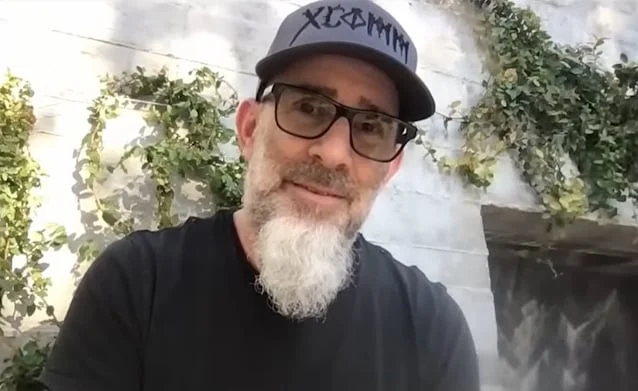
In a recent in-depth interview with Jaimunji, Anthrax guitarist and founding member Scott Ian provided a candid look into the band’s approach to crafting setlists for their highly anticipated return to Australia. With their four-date headlining tour scheduled to commence on March 23 in Brisbane, Ian shed light on the meticulous, yet often intuitive, process of selecting songs that resonate with both the band and their dedicated fanbase. This discussion also delved into the intriguing phenomenon of how fan favorites are shaped by modern streaming culture, offering a glimpse into the enduring legacy and evolving impact of the thrash metal pioneers.
The Art of the Setlist: Balancing Classics and Curiosities
Scott Ian articulated that the development of an Anthrax setlist is a dynamic undertaking, influenced by past performances and the desire to offer a compelling experience for audiences. "We’ll figure it out," Ian stated, emphasizing the collaborative and adaptive nature of the process. "I always like to take a look and see the last few times we were somewhere and what we played. There’s always gonna be at least a dozen songs that are gonna get played no matter what." These core tracks, he explained, represent the anthemic cornerstones of Anthrax’s extensive catalog, songs that have become synonymous with the band’s identity and are expected by concertgoers.
However, the challenge lies in the subsequent selection, particularly when revisiting a territory after a significant hiatus. "And then you figure out maybe there’s some different ones we could play from the last time," Ian continued. "Although if it’s been that long [more than two decades] since we headlined [a tour of Australia], really, it doesn’t matter what we do at this point because it’s been so long." This sentiment highlights the unique opportunity presented by a prolonged absence, allowing for a broader exploration of their discography without the immediate pressure of extensive repetition. Ian contrasted this with more frequent touring cycles: "But generally, if you’re in a place that you were just in, say, 18 months or two years ago, obviously I would wanna try and do at least half the set different." This suggests a commitment to freshness and a desire to avoid audience fatigue, even among the most devoted fans.
Deep Cuts and Fan Favorites: A Shifting Perception
The conversation then pivoted to the band’s willingness to incorporate less frequently played, yet cherished, tracks into their live performances. Ian refuted the notion that certain songs are inaccessible due to their rarity, asserting, "Well, it’s not a case of ‘we don’t get to’, because we could play anything." He cited recent tour experiences as evidence of this flexibility. "On this last run, we started the tour. We had ‘Deathrider’ in the set from ‘Fistful Of Metal’, which hasn’t been in the set very often in the last 35 years." The introduction of such a deep cut demonstrates a deliberate effort to unearth gems from their early catalog.
This willingness to experiment was further illustrated by a mid-tour adjustment. "And then halfway through the tour we said, ‘Let’s put ‘Metal Thrashing Mad’ back in, ’cause we missed playing it. So we switched up ‘Deathrider’ and ‘Metal Thrashing Mad’." This spontaneous decision-making underscores the band’s connection with their own music and their responsiveness to internal creative impulses.
Ian also touched upon the historical significance of certain songs within their live sets. "But, yeah, we were opening the show with ‘A.I.R.’, which, of course, back in 1985, ’86, we would open our show with ‘A.I.R.’. It was cool to switch out ‘Among The Living’ for ‘A.I.R.’." The act of reopening a show with a song from their 1985 album "Spreading The Disease" signifies a deliberate choice to revisit formative eras of their sound.
The Paradox of Popularity: "A.I.R." and the Streaming Effect
A particularly insightful segment of the interview explored the subjective nature of what constitutes a "deep cut" and how fan perception can diverge from the artist’s own perspective. Ian expressed amusement at this disconnect. "It’s funny, ’cause sometimes what people think are deep tracks I don’t, or what I think is a deep track other people don’t." He used "A.I.R." as a prime example. "To me, ‘A.I.R.’ is not a deep track. It’s the first song on ‘Spreading The Disease’. I get the big ones off that album – ‘Madhouse’ is a really big song, and ‘Medusa’ is like a hit, you know what I mean? And people love ‘Gung-Ho’, even though I would consider that more of a deep track."
Ian elaborated on the audience’s reaction to "A.I.R." during their live sets. "But, to me, I always thought ‘A.I.R.’ is one of the big ones, yet we would open with it and it was almost like people didn’t know what song we were playing. And then we would go into ‘Got The Time’ or ‘Madhouse’ second, and all of a sudden the place would erupt, like, ‘Oh, here’s Anthrax. We don’t even know what that first song was.’ It’s always odd to me what people know and don’t know off our records."
This observation led Jaimunji to introduce a critical point about the influence of modern music consumption habits. The proliferation of streaming services like Spotify, Apple Music, and Tidal, with their algorithm-driven playlists and curated "essentials," has demonstrably altered how fans discover and engage with music. Ian acknowledged that this had not previously crossed his mind. "I didn’t even think of that. ‘Cause I don’t pay attention to playlists. I stream, but I’m generally playing albums and stuff like that. I don’t ever go into top songs or essentials or any of that stuff. So, yeah, I never thought of it that way."
He further reflected on the quantifiable evidence of this phenomenon. " ‘Cause I have looked on our Apple Music, the top 50 songs or whatever, and the top 20 is always the same top 20 songs – always the same ones. And then if you’re out playing a show and there’s 8,000 people there, most of those 8,000 people are all gonna know those 20 songs and a lot less than 8,000 are gonna know, like, song number 73." This stark contrast between the widely recognized hits and the lesser-known tracks underscores a potential shift in fan engagement, where algorithmic popularity can overshadow deeper, more nuanced appreciation.
The Australian Tour: A Landmark Return
Anthrax’s upcoming Australian tour marks a significant event for their fanbase in the region. The tour is set to commence on March 23 at Fortitude Music Hall in Brisbane. Following their Brisbane performance, the band will proceed to Adelaide’s Hindley Street Music Hall on March 25, before gracing Melbourne’s Festival Hall on March 26. The tour will conclude on March 28 at the Enmore Theatre in Sydney, bringing their electrifying live performance to four major Australian cities. This marks the band’s first headlining tour of Australia in over two decades, amplifying the excitement and anticipation surrounding these dates.
A New Album on the Horizon: "The New Album"
Adding to the fervent anticipation, Anthrax is on the cusp of releasing their long-awaited new studio album. Tentatively scheduled for a May release in North America via Megaforce and in Europe through Nuclear Blast, the album represents the latest chapter in the band’s prolific career. Notably, crucial mixing and some recording sessions for this new body of work took place at the esteemed Studio 606 in Northridge, California, owned by Foo Fighters frontman Dave Grohl. This choice of location suggests a commitment to achieving a high-fidelity and powerful sonic output.
The band has once again enlisted the production expertise of Jay Ruston. Ruston has a proven track record with Anthrax, having previously helmed their critically acclaimed 2016 album "For All Kings" and the comeback LP "Worship Music" from 2011. His continued collaboration indicates a strong creative synergy and a shared vision for the band’s evolving sound.
A Legacy Forged in Thrash Metal History
Anthrax’s journey began in Queens, New York, on July 18, 1981, when Ian, alongside bassist Dan Lilker, laid the foundation for what would become a cornerstone of the thrash metal movement. Emerging from the East Coast scene, Anthrax quickly established themselves as pioneers, standing shoulder-to-shoulder with contemporaries like Metallica, Slayer, and Megadeth in defining the genre.
Over the past five decades, Anthrax has amassed an impressive discography, releasing 11 studio albums. Their contributions to music have been recognized with multiple gold and platinum certifications and six Grammy nominations. Since their inception, they have embarked on extensive global tours, performing thousands of shows worldwide, including legendary headlining performances at Madison Square Garden and a historic appearance at Yankee Stadium as part of the "Big Four" concerts.
The critical reception of "For All Kings" in 2016, with some critics hailing it as Anthrax’s strongest album to date, marked a significant resurgence. This period of renewed critical acclaim followed a five-year span that saw the band experience a notable rebirth, partly fueled by their inclusion in the groundbreaking "Big Four" tour and the successful release of "Worship Music," which signaled a powerful return to form after a period of change. The upcoming album is poised to continue this trajectory, building upon a legacy of innovation and relentless energy.
Broader Implications: The Enduring Power of Live Performance and Artistic Evolution
Scott Ian’s reflections on setlist construction and fan recognition offer a microcosm of broader trends within the music industry. The shift towards algorithmic curation on streaming platforms presents both opportunities and challenges for artists. While it can facilitate discovery for new listeners, it also risks homogenizing popular taste, potentially overshadowing the deeper cuts that often hold significant artistic merit and emotional weight for dedicated fans.
Anthrax’s approach, characterized by a willingness to experiment, unearth forgotten treasures, and adapt their live sets, stands as a testament to the enduring power of live performance as a space for genuine connection and musical exploration. Their upcoming Australian tour, especially after such a long absence, provides a crucial platform to bridge the gap between their iconic hits and the breadth of their catalog, allowing fans to engage with their music on multiple levels. The anticipation for their new album further signifies that, despite decades of activity, Anthrax remains a vital and evolving force in heavy music, demonstrating that legacy and innovation can coexist, captivating both long-time adherents and new generations of fans. The band’s continued commitment to exploring their discography, both old and new, ensures their place in the pantheon of influential heavy metal acts for years to come.
