

In a candid interview that delves into the evolving landscape of music creation, veteran guitarist John Ricci, a foundational figure in the thrash metal band Exciter and the driving force behind the contemporary outfit POWERRAGE, has articulated his perspective on the burgeoning trend of artificial intelligence (AI) being utilized in the songwriting process. Speaking with Robert Edwards of "Talkin’ Bout Rock" on March 14, 2026, Ricci expressed a nuanced yet firm stance, emphasizing the irreplaceable value of the human element in crafting authentic musical expressions.
Ricci’s remarks come at a time when AI-powered music generation tools are gaining traction, capable of producing melodies, harmonies, and lyrical content based on sophisticated algorithms and machine learning models. While acknowledging the potential utility of AI in various creative domains, Ricci drew a clear distinction regarding its application in songwriting. "Well, I think A.I. has a purpose," he stated, as transcribed by BLABBERMOUTH.NET. "I don’t agree [with] using A.I. to write music, ’cause music is like a human factor, and you have to keep that, you have to keep the music honest."
He elaborated on this core belief, drawing a parallel between the raw emotion embedded in powerful music and the inherent limitations of AI. "When you hear a wicked heavy metal song, and it’s precise and every note’s perfect and the speed of the song is perfect, it does sound fabricated," Ricci observed. This perceived artificiality, in his view, detracts from the visceral connection that listeners forge with music born from human experience and artistic intent.
The AI Debate: A Creative Crossroads
The integration of AI into creative fields has sparked widespread discussion, with musicians, artists, and industry professionals grappling with its implications. AI music generators, such as those developed by Amper Music, AIVA, and OpenAI’s Jukebox, can analyze vast datasets of existing music to generate novel compositions. These tools offer potential benefits, including democratizing music creation for those without formal training and accelerating the production process for established artists.
However, critics, including Ricci, voice concerns about the potential dilution of artistic integrity and the erosion of the unique qualities that define human-created art. The debate centers on whether AI can truly replicate the nuanced emotional depth, personal narrative, and spontaneous creativity that characterize groundbreaking music. For many, music is not merely a collection of notes and rhythms, but a reflection of lived experiences, cultural contexts, and individual consciousness.
Ricci’s perspective aligns with a significant segment of the artistic community that views songwriting as an intimate act of self-expression. He proposed that AI could find a more appropriate role in assisting with aspects of the creative process that do not directly involve the core emotional and conceptualization of a song. "Now, if you wanna use A.I. for other things, like artwork or graphics of some sort, even though you have the idea but you wanna A.I. it, that part of it I don’t have a problem with," he clarified. This suggests a willingness to embrace AI as a supplementary tool for visual presentation or conceptual ideation, rather than a co-creator of the musical essence itself.
POWERRAGE: A New Chapter for John Ricci
Beyond his commentary on AI, John Ricci is actively forging ahead with his new musical endeavor, POWERRAGE. The band represents a deliberate departure from his past, a conscious effort to build something fresh and distinct. This ambition is underscored by the presence of vocalist Jacques Bélanger, who previously contributed to three Exciter albums: "The Dark Command" (1997), "Blood Of Tyrants" (2000), and "New Testament" (2004). The POWERRAGE lineup is further bolstered by bassist Todd Pilon, formerly of Witchkiller, and drummer Lucas Dery.
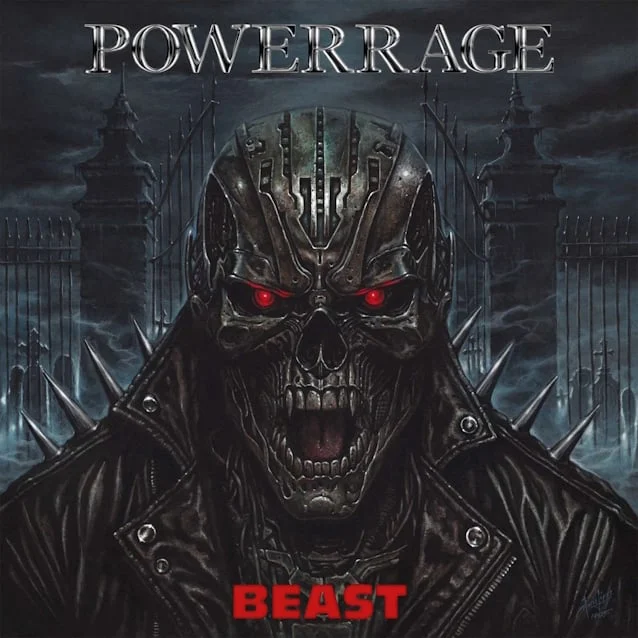
The band’s debut album, titled "Beast," is slated for release on April 24, 2026, via High Roller Records. The LP has undergone professional mixing and mastering by Dan Swanö at Unisound, with artwork contributed by Mario Lopez. This meticulous production process indicates a commitment to delivering a high-quality sonic experience that honors the spirit of traditional heavy metal while carving out its own identity.
The second single from "Beast," a track named "Dragon Man," is provisionally scheduled for release on March 23, 2026, offering a preview of the band’s musical direction.

A Conscious Evolution Beyond Exciter
Ricci’s decision to form POWERRAGE stems from a clear desire to forge an independent path, distinct from the legacy of Exciter. "Well, with this band I didn’t want to be another Exciter," he stated in a press release. "It was time to move on. Even though Exciter was based around my guitar style, and it was a successful formula, I wanted to start from scratch and start all over again." This sentiment highlights a personal journey of artistic reinvention, a drive to prove his capabilities beyond the confines of his influential past.
He acknowledged the inherent challenges of such a transition: "Starting over and not depending on your past accomplishments is definitely a very difficult task but I feel confident enough I can make it happen." This declaration speaks to Ricci’s resilience and his unwavering belief in his artistic vision.
A History with Exciter: A Legacy of Metal
John Ricci’s connection to Exciter is deeply intertwined with the history of Canadian thrash metal. He was a pivotal member during the band’s formative and most influential years. Ricci’s initial tenure with Exciter concluded in 1985, following the release of the band’s first three seminal albums: "Heavy Metal Maniac" (1983), "Violence & Force" (1984), and "Long Live The Loud" (1985). These records are widely regarded as classics of the genre, establishing Exciter as a significant force in the global metal scene.
His departure marked a significant shift for the band, and over the years, Exciter experienced various lineup changes. Ricci eventually rejoined Exciter, and his involvement as the sole remaining original member was noted on the band’s 2010 album, "Death Machine," released via Massacre Records. In 2014, Ricci reunited with drummer/vocalist Dan Beehler and bassist Allan Johnson, embarking on a period of sporadic live performances. His most recent departure from Exciter occurred in September 2018. The guitarist position in Exciter was subsequently filled by Daniel Dekay, who had previously been associated with the band Diemons.
The enduring impact of Exciter, particularly during Ricci’s initial years, cannot be overstated. The band’s raw energy, aggressive sound, and distinctive guitar work laid crucial groundwork for the thrash metal movement. Ricci’s guitar playing, often characterized by its speed, technicality, and aggressive riffing, became a hallmark of Exciter’s sound and influenced countless aspiring guitarists.
Broader Implications for the Music Industry
Ricci’s perspective on AI in songwriting touches upon a broader debate within the music industry regarding intellectual property, authorship, and the very definition of creativity. As AI tools become more sophisticated, questions arise about the ownership of AI-generated music, the potential for copyright infringement, and the economic impact on human musicians.
The ease with which AI can generate commercially viable music raises concerns about market saturation and the devaluing of human artistry. If AI can produce music quickly and affordably, it could potentially disrupt the livelihoods of songwriters, composers, and producers.
Conversely, proponents argue that AI can serve as a powerful collaborator, augmenting human creativity rather than replacing it. They envision a future where AI tools empower artists with new possibilities, enabling them to explore uncharted sonic territories and streamline their creative workflows. The key, as suggested by Ricci’s nuanced approach, may lie in finding a balance – leveraging AI for its technical capabilities while preserving the essential human touch that imbues music with its profound emotional resonance and cultural significance.
The conversation initiated by John Ricci underscores the ongoing dialogue about the future of music creation. As technology continues to advance, the industry will undoubtedly face further challenges and opportunities in navigating the complex relationship between artificial intelligence and human artistry. The emphasis on honesty, authenticity, and the irreplaceable "human factor" in songwriting, as articulated by Ricci, serves as a crucial reminder of what makes music a uniquely powerful and enduring form of human expression.
