

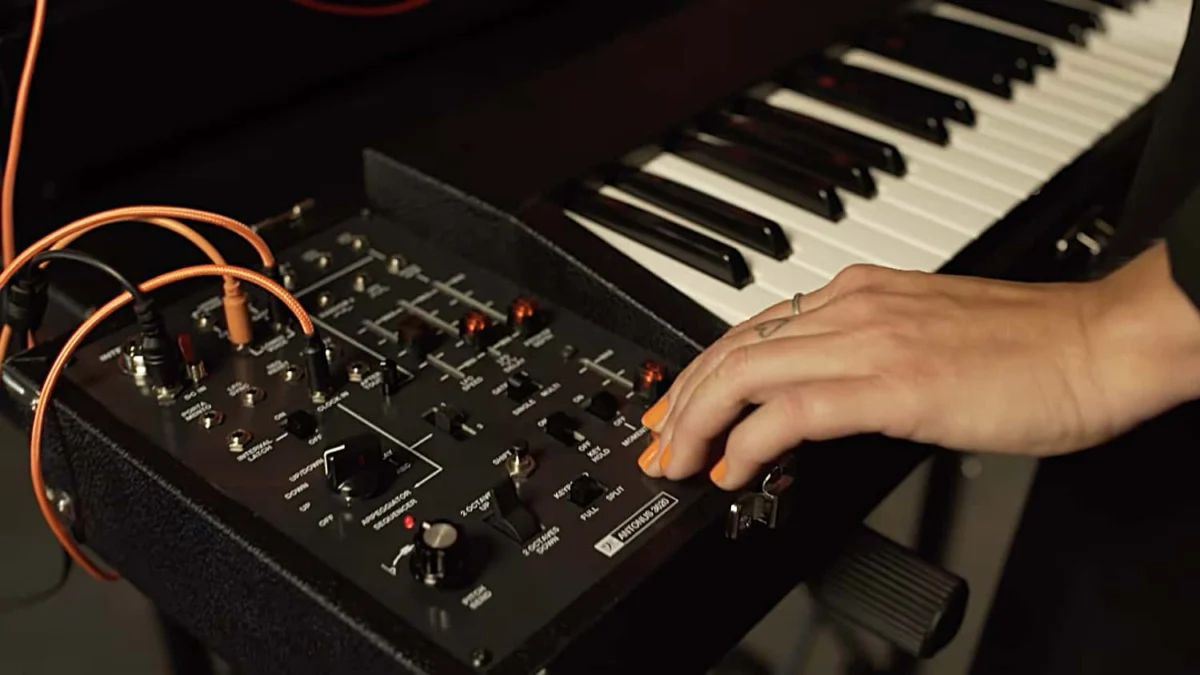
The Antonus 3620 has officially entered the musical instrument market as a full-size keyboard controller specifically engineered to bridge the gap between vintage analog philosophy and modern digital versatility. Developed by Antonus, a manufacturer recognized for its high-fidelity recreations of classic synthesis hardware, the 3620 is modeled after the control architecture and aesthetic of the original ARP 3620 keyboard, which was famously paired with the ARP 2600 semi-modular synthesizer in the 1970s. This new iteration serves not only as a companion to Antonus’s own line of boutique instruments but also as a comprehensive standalone controller capable of driving a wide array of Control Voltage (CV) and MIDI-equipped hardware.
The release of the Antonus 3620 comes at a time of renewed interest in tactile, menu-free electronic music interfaces. By prioritizing a "one-function-per-knob" layout, Antonus aims to provide performers and studio engineers with a more intuitive and immediate connection to their sound sources. The controller is designed to support a variety of playing modes, including monophonic, duophonic, biphonic, and bi-timbral configurations, making it a flexible centerpiece for complex studio rigs or live performance setups.
Historical Context and the Legacy of the ARP 3620
To understand the significance of the Antonus 3620, one must look back to the early 1970s when Alan R. Pearlman and his company, ARP Instruments, Inc., released the ARP 2600. While the 2600 was a powerhouse of synthesis, its accompanying keyboards—the 3604 and later the 3620—were essential for making the instrument playable in a traditional musical sense. The original 3620 was particularly lauded for introducing duophonic capabilities, allowing two notes to be played simultaneously, a rarity for monophonic synthesizers of that era. It also featured a dedicated Low-Frequency Oscillator (LFO), which freed up the main synthesizer’s oscillators for audio duties rather than modulation.
Antonus has spent years establishing a reputation for meticulously recreating the "ARP sound" and workflow. Their flagship Antonus 2600 is often cited by enthusiasts as one of the most faithful modern interpretations of the original hardware. The development of the Antonus 3620 keyboard is the logical conclusion of this trajectory, offering a control surface that matches the build quality and electronic precision of high-end analog clones while integrating the MIDI functionality required by contemporary producers.
Technical Specifications and Hardware Architecture
The Antonus 3620 is built around a premium Fatar keybed, a choice that signals its positioning as a professional-grade instrument. Fatar, an Italian manufacturer, is widely considered the industry standard for high-quality keyboard actions. The 3620 supports both velocity and aftertouch, allowing for expressive performances that were not possible on the original vintage hardware. These performance gestures can be mapped to various CV outputs or sent via MIDI to external software and hardware.
One of the most striking features of the 3620 is its simultaneous MIDI and CV operation. In an era where musicians often juggle vintage analog gear alongside modern digital audio workstations (DAWs), the ability to output both signals at once is a significant workflow advantage.
Control Voltage (CV) Capabilities
For analog enthusiasts, the CV implementation is the heart of the device. The 3620 supports several distinct modes:
- Monophonic: Standard one-note-at-a-time operation.
- Duophonic: Mimics the classic ARP behavior where two notes can be played, typically used to control two different oscillators within a single synthesizer.
- Biphonic and Bi-timbral: These modes allow the keyboard to control two separate synthesizer voices or even two entirely different instruments simultaneously, providing a level of control usually reserved for high-end modular sequencers.
The unit also includes CV-controlled portamento, an interval latch feature, and two independent random generators. These features allow for the introduction of generative elements and complex pitch slides into a performance without needing to touch the main synthesizer panel.
MIDI and Polyphony
While the original ARP hardware was strictly analog, the Antonus 3620 embraces the digital age with full MIDI implementation. Unlike the CV modes, which are limited by the physical patching of the connected synthesizer, the MIDI output supports full polyphony. This allows the 3620 to function as a standard controller for polyphonic software instruments or hardware modules. It also supports bi-timbral split operation via MIDI, enabling the user to play two different sounds on different sections of the keyboard.
Design Philosophy: The Absence of Menus
In a move that distinguishes it from the majority of modern MIDI controllers, the Antonus 3620 features no digital display and no menu-based navigation. This design choice is a deliberate attempt to preserve the "sweet spot" of analog interaction. All functions—from arpeggiator settings to sequencer steps—are controlled via dedicated switches, sliders, and knobs.

This "display-less" philosophy is intended to reduce the cognitive load on the musician. By removing the need to scroll through sub-menus to change a MIDI channel or adjust a clock divider, Antonus encourages a more tactile and experimental approach to music-making. The company maintains that this immediacy is essential for live improvisation, where split-second adjustments can define the energy of a performance.
Integrated Performance Tools
Beyond its role as a simple keyboard, the Antonus 3620 includes several onboard tools for melodic and rhythmic generation.
Arpeggiator and Step Sequencer
The inclusion of an integrated arpeggiator and step sequencer allows the 3620 to function as a standalone compositional tool. Users can program sequences or trigger arpeggios that are then sent out via CV and MIDI. Because these tools are built directly into the keyboard’s interface, they can be manipulated in real-time, allowing for dynamic changes to rhythm and melody during a set.
LFO Synchronization and Modulation
The unit features a dedicated LFO that can be synchronized to an external clock. This LFO is a critical component for those using the 3620 with an ARP-style synthesizer, as it provides a modulation source that is physically located on the keyboard, mirroring the ergonomic layout of the original 1970s design. The addition of two random generators further expands the modulation possibilities, providing "sample and hold" style voltages that can introduce unpredictable, organic variations to a patch.
Pricing, Configurations, and Market Availability
Antonus has launched the 3620 in four distinct configurations to cater to different aesthetic preferences and studio requirements. The variations are primarily based on the number of keys and the material used for the enclosure.
- 37-Key Tolex Version (€1,450): This version features the classic wooden frame wrapped in Tolex (a vinyl-coated fabric), designed to perfectly match the aesthetic of vintage ARP 2600 units and the Antonus 2600.
- 49-Key Tolex Version (€1,500): A larger version of the Tolex model, providing an extra octave for performers who require a wider range.
- 37-Key Metal Version (€1,050): A more industrial, modern design housed in a metal chassis. This version is more affordable and is likely aimed at Eurorack users who do not require the vintage "tolex" look.
- 49-Key Metal Version (€1,100): The large-format metal version, offering the most keys at a lower price point than the Tolex equivalent.
Note: All prices are listed excluding Value Added Tax (VAT), which will vary depending on the purchaser’s location.
The Antonus 3620 is currently available for order directly through the Antonus website. Given the boutique nature of the company, units are typically produced in limited batches, often leading to high demand within the synthesizer community.
Industry Implications and Analysis
The release of the Antonus 3620 is a significant event for several reasons. First, it addresses a persistent gap in the market. While there are many MIDI controllers available, very few offer high-quality CV implementation with a vintage-correct layout. For owners of original ARP 2600s—many of which are now over 50 years old—the original keyboards are often failing or have been lost over time. The Antonus 3620 provides a reliable, modern replacement that actually expands upon the original’s capabilities without sacrificing its soul.
Second, the 3620 represents the continued growth of the "luxury boutique" segment of the synth market. While mass-market manufacturers like Behringer have produced affordable clones of the ARP 2600 and its keyboard, Antonus is targeting a different demographic: the professional musician and serious collector who values build quality, historical accuracy, and high-end components like the Fatar keybed.
Finally, the 3620 highlights the ongoing "hybridization" of the modern studio. By offering simultaneous CV and MIDI, Antonus is acknowledging that the modern musician does not choose between analog and digital but rather uses both in tandem. A controller that can trigger a vintage Moog via CV while simultaneously playing a software synth in Ableton Live via MIDI is a powerful asset in a contemporary production environment.
As the electronic music industry continues to evolve, the Antonus 3620 stands as a testament to the enduring appeal of the designs of the 1970s. By refining those designs with modern technology and a focus on tactile playability, Antonus has created a tool that respects the past while serving the needs of the future. Whether used as a faithful companion to an Antonus 2600 or as a versatile hub for a diverse modular setup, the 3620 is poised to become a staple for enthusiasts of high-end analog control.
